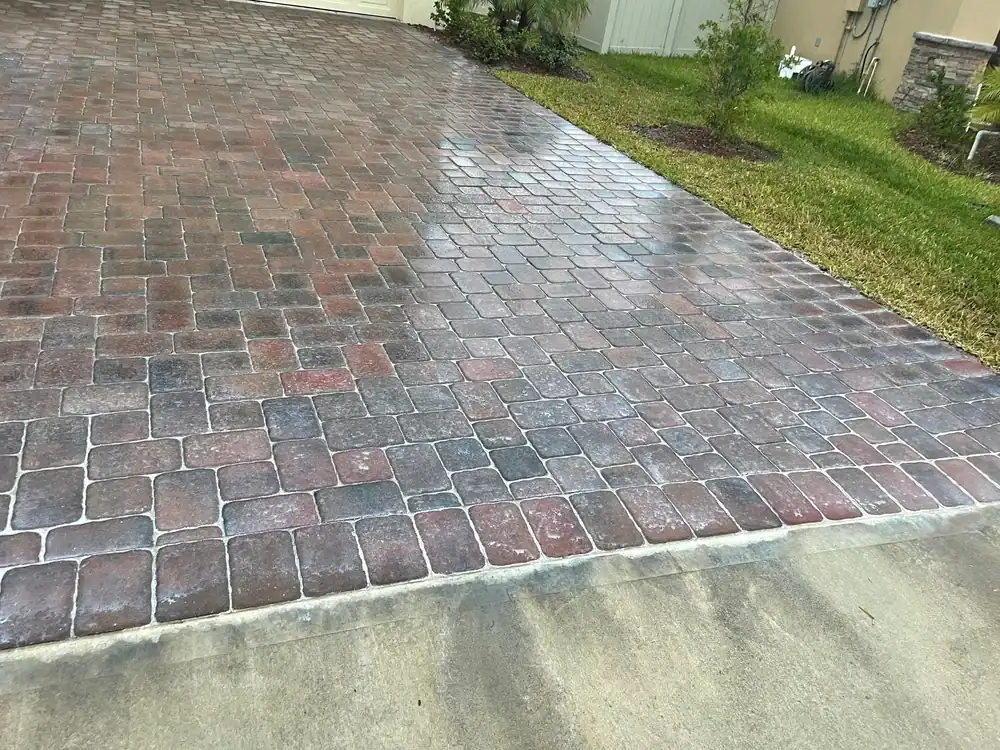
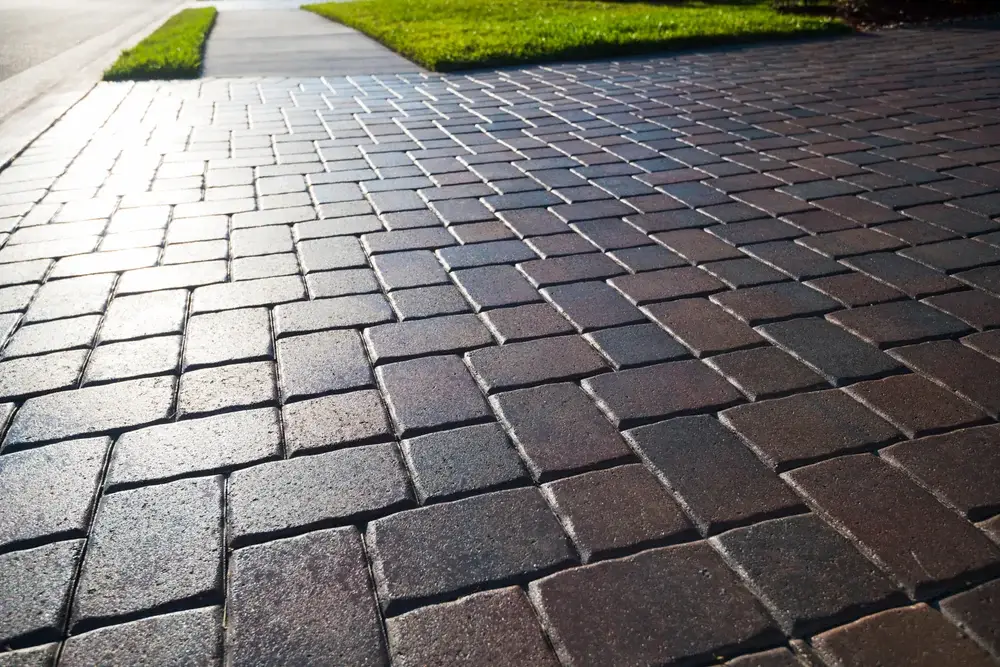
Sealed pavers don’t shift when it rains. They don’t fade under relentless UV exposure. Weeds don’t push through the joints, and that white haze from efflorescence doesn’t creep across the surface every few months.
You get years added to your hardscape’s life. The color stays vibrant, the surface stays level, and the sand between your pavers stays where it belongs. Your driveway, patio, or pool deck looks like it did the day it was installed, not like it’s been battling Florida weather for years.
That’s what professional paver sealing in Belleview, FL actually does. It creates a barrier between your investment and everything trying to break it down. Less maintenance, fewer repairs, and an outdoor space you’re not constantly worrying about.
We’ve been sealing pavers in Belleview, FL since 1995. We’re a family-owned paver sealing company that understands exactly what Florida’s humidity, rainstorms, and heat do to outdoor hardscapes because we’ve been fixing and protecting them for three decades.
We’re the exclusive Seal ‘n Lock distributor in Citrus County and authorized contractors for Tremron, Flagstone, and Belgard. That means access to premium sealing products and manufacturer-backed quality you won’t find with every contractor.
We’re also your neighbors. We help with hurricane cleanup, support Toys for Tots, and offer discounts to military and first responders. When you hire us for paver sealing service in Belleview, FL, you’re working with people who live here and plan to stay.
First, we clean your pavers completely. That means removing dirt, organic growth, efflorescence, and any old sealer that’s breaking down. You can’t seal over contamination and expect it to last.
Next, we re-sand the joints if needed. Florida’s rain washes joint sand away, and without stable joints, your pavers shift and settle unevenly. We make sure everything is compacted and level before sealing.
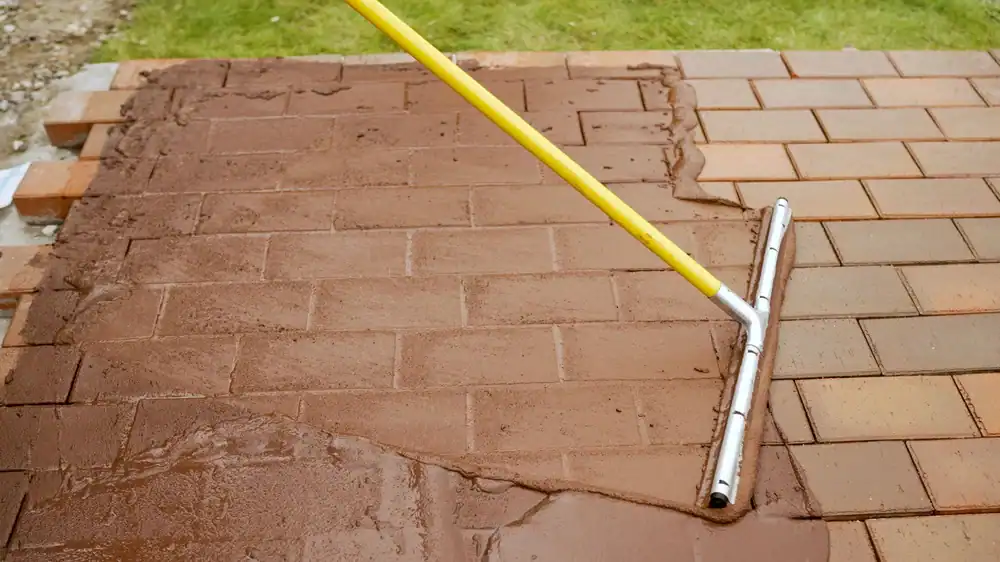
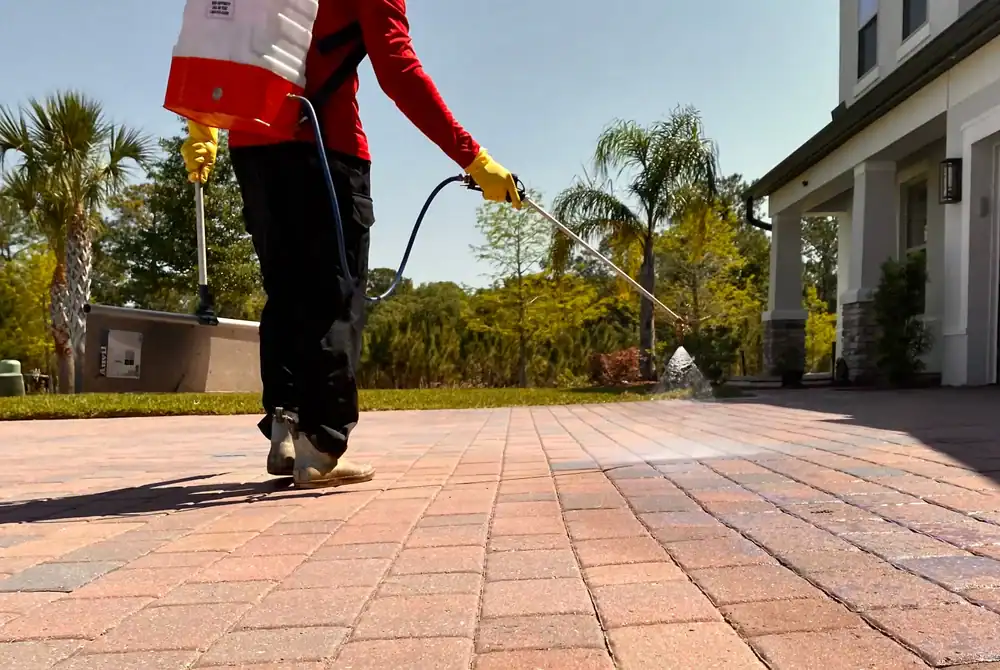
Then we apply the sealer. We use professional-grade products designed for Florida’s climate, not big-box store options that fail in six months. The sealer penetrates the surface, locks in the joint sand, and creates a protective barrier against moisture, UV rays, and organic growth.
After application, we let it cure properly. Rushing this step leads to cloudiness, poor adhesion, and early failure. We follow manufacturer guidelines for temperature and humidity so the sealer performs the way it should. You get a hardscape that’s protected, stable, and ready to handle whatever Florida throws at it.
Ready to get started?
Our patio paver sealing in Belleview, FL covers every surface: driveways, walkways, patios, pool decks, and any other interlocking paver installation on your property. We handle the full process from start to finish.
You get thorough cleaning that removes years of buildup, proper joint stabilization so pavers don’t shift, and premium sealer application that’s matched to your specific paver type and exposure. We don’t use one product for everything because different installations face different challenges.
In Citrus County, your pavers deal with intense afternoon thunderstorms, high humidity that encourages mold and mildew, and UV exposure that breaks down unprotected surfaces. Our sealing service accounts for all of it. We’re applying products designed for this exact climate, not generic solutions that work in drier states but fail here.
You also get honest guidance on resealing timelines. In Florida, sealed pavers typically need reapplication every two to three years depending on exposure and traffic. We’ll tell you what to expect so there are no surprises down the road.
In Belleview, FL, you’re looking at resealing every two to three years. Florida’s climate is harder on sealers than most other states because of the combination of UV exposure, humidity, and frequent rain.
High-traffic areas like driveways may need attention closer to the two-year mark. Patios and walkways with less wear can often stretch to three years. Pool decks fall somewhere in between depending on sun exposure and chemical exposure from pool water.
The sealer doesn’t just disappear one day. You’ll notice it wearing down gradually—color starts fading, joint sand loosens, water stops beading on the surface. Those are signs it’s time to reseal before damage starts. Waiting too long means you’re back to dealing with weeds, shifting pavers, and stains that could have been prevented.
Fall through early spring is your window. You want dry weather and moderate temperatures, which means avoiding Florida’s rainy season that runs from May through October.
Sealer needs time to cure without moisture interference. If it rains within 24 to 48 hours of application, you risk cloudiness, poor adhesion, and uneven coverage. November through April gives you the most consistent dry days and lower humidity, which helps the sealer bond properly and cure completely.
Temperature matters too. Extreme heat causes sealer to dry too fast, leading to application issues and reduced penetration. Cooler months provide better working conditions and better results. If you’re planning patio paver sealing in Belleview, FL, schedule it during the dry season and you’ll avoid the headaches that come with fighting the weather.
You can attempt it yourself, but the results usually show the difference. DIY paver sealing often leads to uneven coverage, trapped moisture, premature failure, and wasted money on products that don’t hold up.
Professional paver sealing service in Belleview, FL means proper surface prep, correct product selection for your specific pavers and climate, and application techniques that ensure even coverage and proper penetration. We also have access to commercial-grade sealers that outperform retail products. The equipment matters too—professional sprayers and rollers create consistent coverage that’s hard to replicate with consumer tools.
The bigger issue is what happens when it goes wrong. Stripping failed sealer and starting over costs more than hiring us from the start. If you’re protecting a significant investment in hardscaping, it makes sense to have it done right the first time by a paver sealing company that’s been doing this for decades.
It depends entirely on the sealer used. Glossy, film-forming sealers can create slippery surfaces when wet, which is a legitimate safety concern around pool decks. That’s why product selection matters.
We use sealers appropriate for the application. For pool decks and high-traffic areas where slip resistance is important, we apply penetrating sealers or products with slip-resistant additives. These protect the pavers and stabilize the joints without creating a slick surface when water is present.
This is another area where professional paver sealing in Belleview, FL makes a difference. We match the product to the location and use. Your pool deck gets a different treatment than your driveway because the performance requirements are different. You shouldn’t have to choose between protection and safety—the right sealer provides both.
Your pavers will deteriorate faster than they should. Florida’s climate is aggressive—constant moisture, UV exposure, temperature swings, and organic growth all work against unprotected hardscapes.
You’ll see joint sand wash away during rainstorms, which leads to paver shifting and uneven surfaces. Weeds and moss will grow between pavers because there’s nothing preventing seeds and spores from taking root. Efflorescence, that white chalky residue, will appear as moisture pulls salts to the surface. The color will fade from UV exposure, and stains from organic matter will set into the porous surface.
Eventually, you’re looking at repairs or replacement years earlier than necessary. Sealing interlocking pavers in Belleview, FL isn’t just cosmetic—it’s structural protection that extends the life of your investment. The cost of sealing every few years is significantly less than the cost of repairing or replacing damaged hardscapes that weren’t maintained properly.
For most residential projects in Belleview, FL, plan on one to two days depending on the size of the area and the condition of your pavers. Heavily soiled or stained pavers need more prep work, which adds time.
Day one typically involves cleaning, repairs if needed, and re-sanding joints. We need the surface completely dry before sealing, so if humidity is high or we’re working in a shaded area, we may wait until the next day to apply sealer. Rushing this step causes problems.
Day two is sealer application and curing. Once applied, you’ll need to stay off the pavers for 24 to 48 hours depending on temperature and humidity. We’ll give you specific guidance based on conditions during your project. The timeline isn’t something we cut short because proper curing is what determines how long the sealer lasts and how well it performs.
Useful Links
Other Services we provide in Belleview