
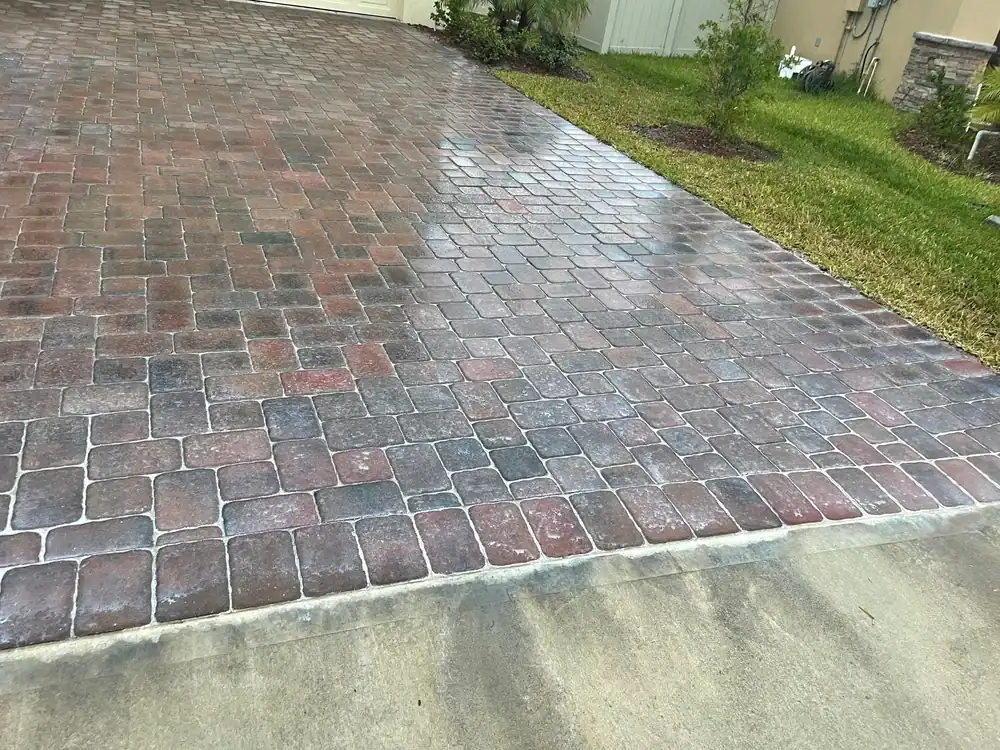
Your pavers take a beating in Citrus County. Between the UV exposure that bleaches color out of concrete, the afternoon storms that wash joint sand into your yard, and the humidity that turns unsealed surfaces into weed gardens, you’re looking at constant maintenance or early replacement if you skip sealing.
Professional paver sealing in Dunnellon, FL changes that equation. A proper seal locks color in, keeps water from penetrating the surface, and creates a barrier that weeds and algae can’t break through. You’re not just protecting the surface—you’re extending the life of your entire hardscape investment by years.
The difference shows up fast. Sealed pavers resist stains from pool chemicals, barbecue grease, and the tannins that drip from oak trees. Rain doesn’t wash your joint sand away every summer. And when you do need to clean your patio or driveway, a quick rinse handles it instead of an afternoon with a pressure washer and a bag of replacement sand.
We’ve been handling paver installations and sealing in Dunnellon, FL since 1995. We’re not a franchise or a crew that showed up last year—we’re a family-owned operation that’s been working in Citrus County longer than most paver sealing companies have existed.
We’re authorized contractors for Tremron, Flagstone, and Belgard, which means we’re trained on the products we install and seal. We’re also the exclusive Seal ‘n Lock distributor in the county, so we’re using commercial-grade sealers that aren’t available at the big box stores or through most other contractors.
You’re working with people who know how Florida weather affects pavers because we’ve been dealing with it for three decades. We’ve seen what works, what fails, and what causes callbacks. That experience matters when you’re trusting someone with a $15,000 paver patio.
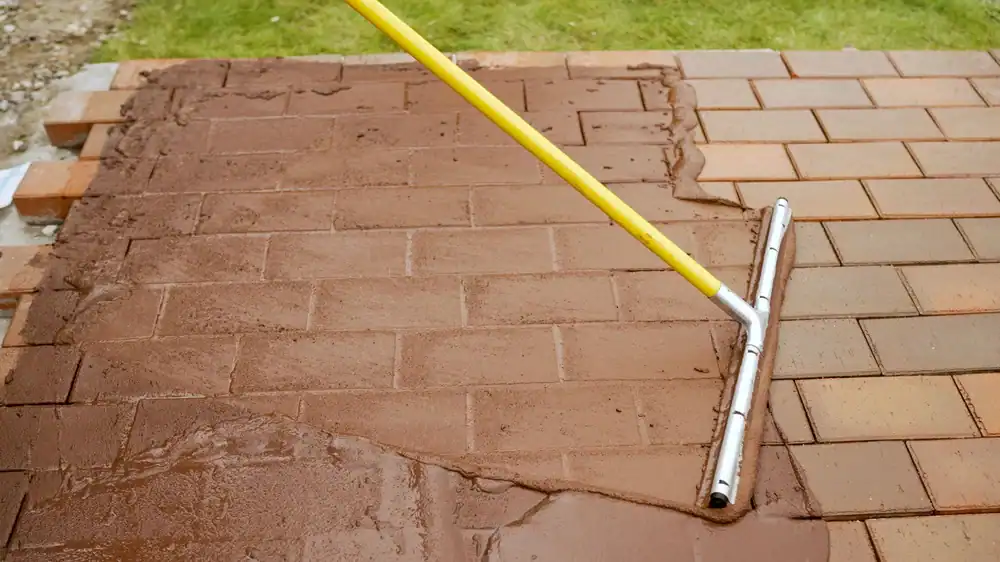
Sealing interlocking pavers in Dunnellon, FL isn’t complicated, but it has to be done in the right order or you’re wasting money. We start with a thorough cleaning—power washing to remove dirt, algae, old sealer, and any stains that have set in. If there are oil spots or rust stains, we treat those separately before moving forward.
Once the surface is clean, we let it dry completely. This is where most sealer failures happen in Florida—moisture trapped under the sealer causes that milky white haze that requires stripping and starting over. We don’t seal until we’re sure the pavers are dry, even if that means coming back another day.
Next, we re-sand the joints with polymeric sand if needed. This locks the pavers together and prevents sand washout during heavy rain. Then we apply the sealer in even coats, making sure we’re getting full coverage without puddling or streaking. You’ll choose between a natural matte finish or a wet-look finish that brings out the color. Either way, you’re getting a seal that’s designed for Florida’s climate—high UV resistance, breathable enough to handle ground moisture, and durable enough to last 2-3 years before you need to think about resealing.
Ready to get started?
When we seal your pavers in Dunnellon, FL, you’re getting a complete prep-to-finish process. That includes power washing, stain treatment, joint re-sanding with polymeric sand, and two coats of commercial-grade sealer. We’re not cutting corners with a single coat or skipping the cleaning because “it looks fine.”
Florida’s climate demands sealers that can handle intense sun and heavy rainfall without breaking down. We use products specifically formulated for high-humidity environments—sealers that breathe so ground moisture doesn’t get trapped underneath, but still create a waterproof barrier on top. That balance is what keeps your pavers from developing that white haze or peeling after six months.
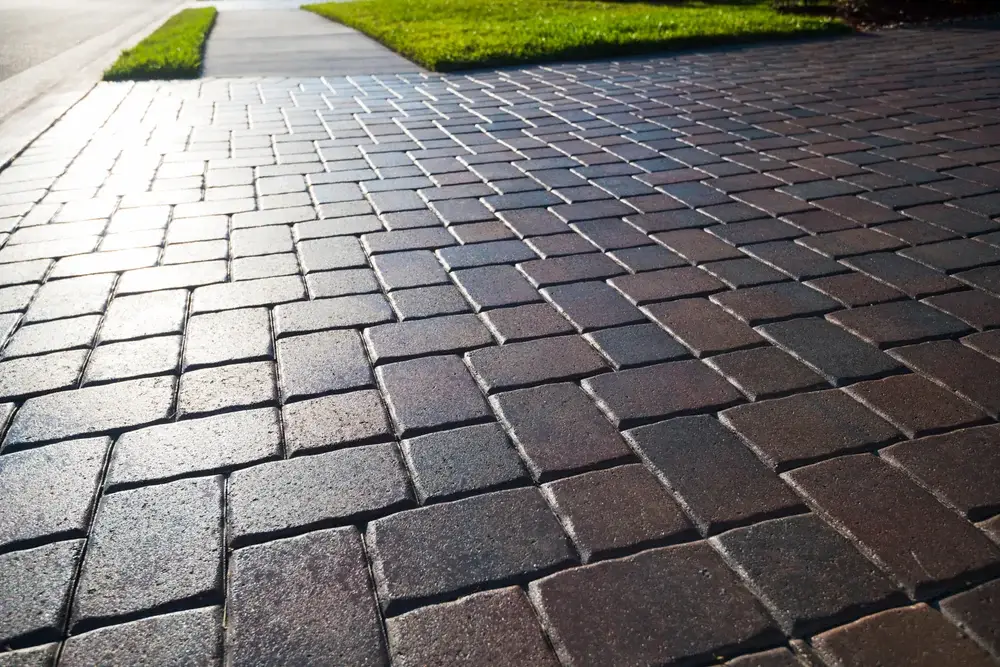
We also offer both finish options. The wet-look finish enhances color and gives pavers a glossy appearance that makes them look brand new. The natural matte finish protects without changing the appearance much—it’s there, but it’s subtle. Both finishes offer the same protection; it’s just a matter of what look you prefer for your driveway, pool deck, or patio.
You’re also working with a company that gives back to Citrus County. We’ve been involved in hurricane cleanup, Toys for Tots, and youth programs here for years. And if you’re military or a first responder, we offer a discount as a thank you for your service.
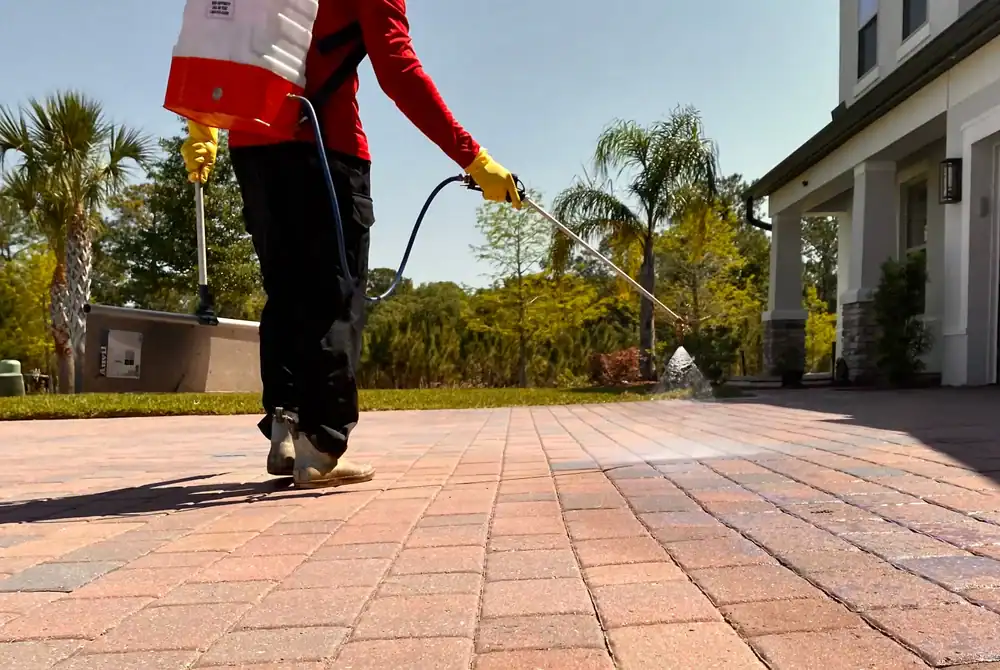
Most professional paver sealing jobs in Dunnellon, FL last between two and three years before you need to reseal. That timeline depends on a few factors—how much traffic the pavers get, whether they’re in full sun or shaded, and how well they were sealed in the first place.
High-traffic areas like driveways wear faster than a back patio that only sees weekend use. Pavers around pools take more abuse from chemicals and foot traffic. And if the sealer wasn’t applied correctly—wrong product, poor surface prep, or sealing over moisture—it might fail in under a year.
The key is using a sealer designed for Florida’s climate. Cheap sealers break down fast under UV exposure and heavy rain. We use commercial-grade products that are formulated to handle the heat, humidity, and ground moisture that come with living in Citrus County. When the sealer does start to wear, you’ll notice it—colors will look duller, water won’t bead up anymore, and weeds might start poking through the joints. That’s when it’s time to reseal.
Unsealed pavers deteriorate faster in Florida than almost anywhere else. The UV exposure fades the color, sometimes by 75% or more over a few years. Rain washes the joint sand out, which lets pavers shift and creates gaps where weeds grow. And the humidity creates perfect conditions for algae, mildew, and moss to take over the surface.
You’ll also deal with staining. Unsealed pavers absorb everything—oil from cars, tannins from trees, rust from patio furniture, pool chemicals. Once those stains soak in, they’re nearly impossible to remove without aggressive treatments that can damage the pavers themselves.
The bigger issue is structural. When joint sand washes away, pavers lose the friction that holds them in place. They start rocking, sinking, or spreading apart. At that point, you’re looking at a repair job that involves pulling pavers up, re-leveling the base, and reinstalling everything. Sealing prevents most of that damage. It’s a lot cheaper to seal every few years than to replace or repair pavers that have been neglected.
Yes, but the old sealer has to be in decent shape or completely removed first. If the existing sealer is peeling, flaking, or has that white hazy look, we’ll strip it off before applying new sealer. Sealing over failed sealer just traps the problem and makes it worse.
If the old sealer is still intact but just wearing thin, we can clean the surface and apply a fresh coat. We’ll power wash to remove dirt and algae, let everything dry completely, and then reapply sealer. This is the most common scenario—pavers that were sealed a few years ago and are due for a refresh.
The tricky part is knowing what type of sealer was used originally. Some sealers don’t bond well with others, so if we’re unsure, we’ll test a small area first. Water-based and solvent-based sealers don’t always play nice together. That’s why it helps to work with a company that knows what products were likely used and how to handle them. We’ve been sealing pavers in Dunnellon, FL long enough to recognize most products on sight and know how to prep for a recoat.
Wet-look sealers give pavers a glossy, just-rained-on appearance that makes colors pop. If your pavers have faded or you want them to look as vibrant as the day they were installed, a wet-look finish delivers that. It’s a dramatic change—especially on pavers that have been sitting unsealed for years.
Natural finish sealers protect without changing the appearance much. The pavers look clean and slightly enhanced, but not shiny. If you prefer a more understated look or you’re sealing a driveway where high gloss might look out of place, natural finish is the way to go.
Both options offer the same level of protection. They prevent fading, block stains, and keep water from penetrating the surface. The only real difference is aesthetic. Some people love the bold look of a wet finish. Others think it’s too much and prefer the subtlety of a natural seal. We can show you examples of both so you know exactly what you’re getting before we start.
Paver sealing in Dunnellon, FL typically runs between $1.25 and $2.50 per square foot for basic service, and up to $4.00 per square foot for premium service with extensive prep work. The final cost depends on the size of the area, the condition of the pavers, and what type of sealer you choose.
If your pavers are in good shape and just need cleaning and sealing, you’re looking at the lower end of that range. If we’re dealing with heavy staining, old sealer that needs stripping, or joints that need complete re-sanding, the price goes up. Larger jobs cost less per square foot than small ones because the setup and prep time gets spread across more area.
It’s worth comparing that cost to what you’d pay to replace pavers that have deteriorated from lack of sealing. Paver replacement runs $10 to $20 per square foot or more, depending on the product. Sealing every few years is a fraction of that cost and keeps your pavers looking good for decades. We’ll give you a free estimate based on your specific situation—no pressure, just a clear number so you know what you’re working with.
Most paver sealing failures in Florida come down to poor sealer selection or bad surface prep. Florida’s climate is tough on sealers—high humidity, intense UV, and ground moisture that rises up through the pavers. If you use a sealer that’s not designed for those conditions, it fails fast.
The white hazy look that ruins so many sealing jobs happens when moisture gets trapped under the sealer. Either the pavers weren’t dry when they were sealed, or the sealer isn’t breathable enough to let ground moisture escape. Once that haze sets in, the only fix is stripping the sealer and starting over.
Peeling and flaking usually mean the surface wasn’t cleaned properly before sealing. If there’s dirt, algae, or old sealer residue on the pavers, the new sealer can’t bond. It just sits on top and starts peeling off within months. That’s why we power wash and treat stains before we seal anything. The other issue is inexperience. Paver sealing doesn’t require a contractor’s license in Florida, so there are a lot of people offering the service who don’t know what they’re doing. They’re using the wrong products, skipping steps, or sealing in the wrong conditions. You end up paying twice—once for the bad job, and again to have it fixed.
Useful Links
Other Services we provide in Dunnellon