
You’re tired of pool decks that turn into hot plates by noon. The kind where kids won’t walk barefoot and guests avoid the shallow end because the surface is unbearable.
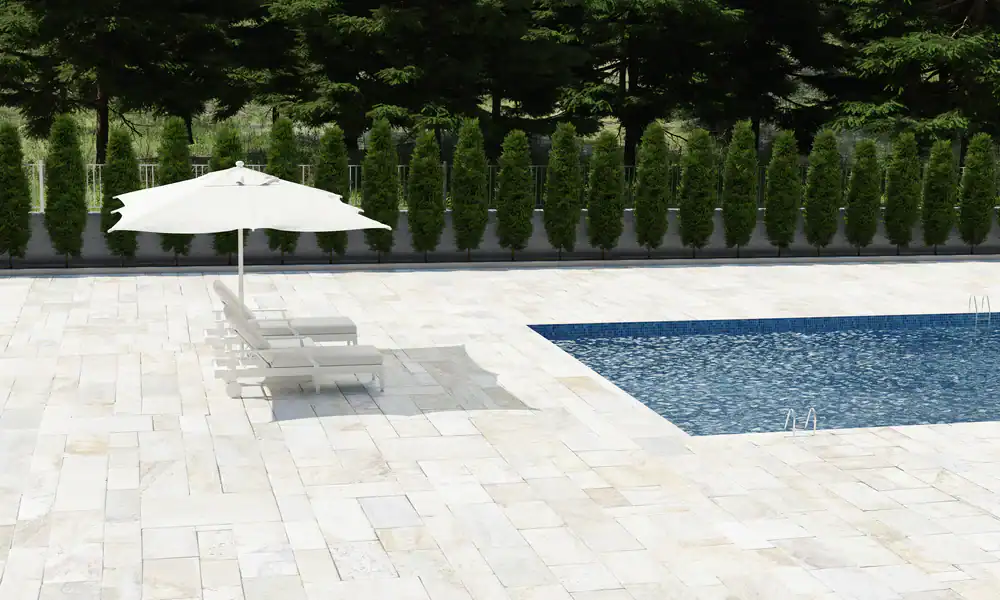
Light-colored pool pavers in High Point, FL reflect sunlight instead of absorbing it. Travertine and lighter porcelain options stay cooler underfoot, even during peak summer heat. You get a pool deck you can actually use all day without planning around temperature.
And when Florida’s afternoon storms roll through, proper slip resistance matters. Natural stone and textured pavers give you traction when wet, which means less worry about kids running from the pool or elderly family members navigating slick surfaces. The right pool deck pavers don’t just look good—they perform when it counts.
We’ve installed swimming pool deck pavers throughout Citrus County and North Central Florida for nearly three decades. We’re authorized contractors for Tremron, Belgard, and Flagstone—which means access to premium materials and manufacturer-backed warranties you won’t get from unlicensed crews.
Our state-licensed teams know how Florida’s soil, drainage patterns, and weather cycles affect paver installations. High Point sits in an area where proper base preparation isn’t optional—it’s the difference between a pool deck that lasts 20 years and one that starts sinking after the first rainy season.
We’re also the exclusive Seal ‘n Lock distributor in Citrus County. That protective treatment keeps your pavers looking new longer and makes maintenance easier, which matters when you’re dealing with pool chemicals, foot traffic, and UV exposure year-round.
First, we assess your existing pool deck area and discuss what you’re dealing with—whether it’s a new pool that needs pavers or a concrete deck you want replaced. We measure, evaluate drainage, and talk through material options based on your budget and how you actually use the space.
Once you approve the design, we prep the base. This step determines whether your pool pavers in High Point, FL will hold up or start shifting within a year. We excavate to proper depth, install compacted base material, and grade for drainage away from your pool and home. Florida’s heavy rains and sandy soil make this critical.
Then we install your chosen pavers with proper joint spacing and edge restraints. After setting, we apply polymeric sand that locks pavers in place and resists washout. If you opt for Seal ‘n Lock treatment, we apply that after everything cures—it protects against stains, fading, and makes future cleaning easier.
Most residential pool deck paver installations in High Point, FL wrap up within a few days once we start. You’ll know the timeline upfront, and we don’t leave until the job’s done right.
Ready to get started?
Choosing the best pavers for pool deck installations in High Point, FL comes down to three factors: heat resistance, slip resistance, and durability under Florida’s weather extremes.
Travertine remains popular because it stays naturally cool and provides excellent traction when wet. It’s porous, which helps with drainage, but requires sealing to protect against pool chemicals and staining. Porcelain pavers offer similar benefits with less maintenance—they resist fading, don’t absorb water, and come in styles that mimic natural stone.
Concrete pavers from Tremron and Belgard give you more color options and patterns while staying budget-friendly. When installed with proper base preparation and sealed correctly, they perform well in Citrus County’s climate. The key is choosing lighter colors that reflect heat rather than darker tones that absorb it.
We also install permeable pavers for homeowners dealing with drainage issues or wanting to reduce runoff. These allow water to filter through the surface, which helps during heavy rain events and reduces standing water around your pool area. That means safer surfaces and less erosion over time.
Most residential pool deck paver projects take three to five days once we start construction. That timeline assumes normal weather conditions and a standard-sized pool deck without major complications.
The process breaks down into base prep (usually one to two days), paver installation (one to two days), and finishing work like polymeric sand application and sealing (one day). Larger or more complex designs with curves, multiple levels, or extensive drainage work can extend that timeline.
Weather plays a role since we can’t pour base material or apply certain sealants during rain. We schedule around Florida’s afternoon storms when possible, but summer months sometimes require flexibility. You’ll get a specific timeline during your consultation based on your project’s scope.
Pavers handle Florida’s weather cycles better than poured concrete because they move independently. When soil shifts or settles—which happens frequently in our sandy soil—individual pavers adjust without cracking. Concrete slabs crack, and once they do, water infiltration accelerates damage.
Pavers also stay cooler underfoot because the joints between them allow heat to dissipate. Light-colored pavers reflect sunlight rather than absorbing it, which makes a real difference when you’re walking barefoot on a 95-degree afternoon.
If a paver gets damaged or stained, you replace that one piece. With concrete, you’re looking at patching that never quite matches or replacing entire sections. And when installed with proper base preparation and drainage, quality pool pavers in High Point, FL last 20 to 30 years with minimal maintenance beyond occasional re-sanding and sealing.
Sealing isn’t required, but it significantly extends the life and appearance of your pool deck pavers. Unsealed pavers absorb pool chemicals, sunscreen, dirt, and organic stains that become harder to remove over time. Sealing creates a protective barrier that makes cleaning easier and helps pavers maintain their color.
How often you reseal depends on the sealer type and your pool deck’s exposure. Most quality sealers last two to four years before needing reapplication. High-traffic areas or pools with heavy chemical use may need more frequent treatment.
We use Seal ‘n Lock products because we’re the exclusive distributor in Citrus County. This system penetrates deeper than topical sealers and provides better protection against Florida’s UV exposure and moisture. You’ll notice the difference in how your pavers shed water and resist staining, especially around the pool where splashing and chemicals are constant.
Lighter colors reflect more sunlight and stay significantly cooler than darker pavers. Ivory, cream, light gray, and beige tones are your best options for pool decks in High Point, FL where summer temperatures regularly hit the 90s.
Travertine in lighter shades naturally stays cool because of its composition and color. Light-colored porcelain and concrete pavers also perform well when you choose whites, tans, or soft grays. Avoid charcoal, dark brown, or black pavers unless they’re in fully shaded areas—those absorb heat and become uncomfortable by mid-morning.
The finish matters too. Smooth surfaces retain more heat than textured ones. Tumbled or brushed finishes create small shadows and air pockets that help dissipate heat. When you’re selecting swimming pool deck pavers, bring samples home and leave them in direct sunlight for a few hours. Walk on them barefoot. That test tells you more than any spec sheet.
Proper base preparation prevents 90% of settling and shifting issues with pool deck pavers. We excavate to the correct depth, install a compacted aggregate base, and grade for drainage before any pavers go down. Skipping or rushing this step is why you see pool decks with sunken areas or pavers that have lifted.
Edge restraints keep perimeter pavers from creeping outward over time. We install these along all borders so your pool deck maintains its shape even with heavy foot traffic and Florida’s freeze-thaw cycles (yes, even in Citrus County we get occasional temperature swings that affect soil).
Polymeric sand between joints locks pavers together and resists washout from rain and pool splashing. Regular concrete sand washes away, which lets pavers shift. Quality polymeric sand hardens when wet but remains flexible enough to accommodate minor movement without cracking. We’ve seen pool decks where contractors used regular sand, and homeowners end up with weeds growing through joints and pavers that move underfoot within a year.
Yes, if the existing concrete is in good structural condition. The concrete needs to be level, stable, and free from major cracks or settling. We can install a thin paver overlay system that adds minimal height while giving you all the benefits of pavers—better aesthetics, cooler surface, and easier repairs.
This approach works well for homeowners who want to upgrade their pool deck without the cost and disruption of complete removal. The existing concrete becomes the base, and we install pavers with a modified setting bed. You get a new look without starting from scratch.
However, if your concrete has significant cracking, settling, or drainage issues, overlay won’t fix those problems—it’ll just hide them temporarily. In those cases, removal and proper reinstallation is the better long-term investment. We assess your existing deck during consultation and give you an honest recommendation based on what we find, not what’s easier to sell.
Useful Links
Other Services we provide in High Point