
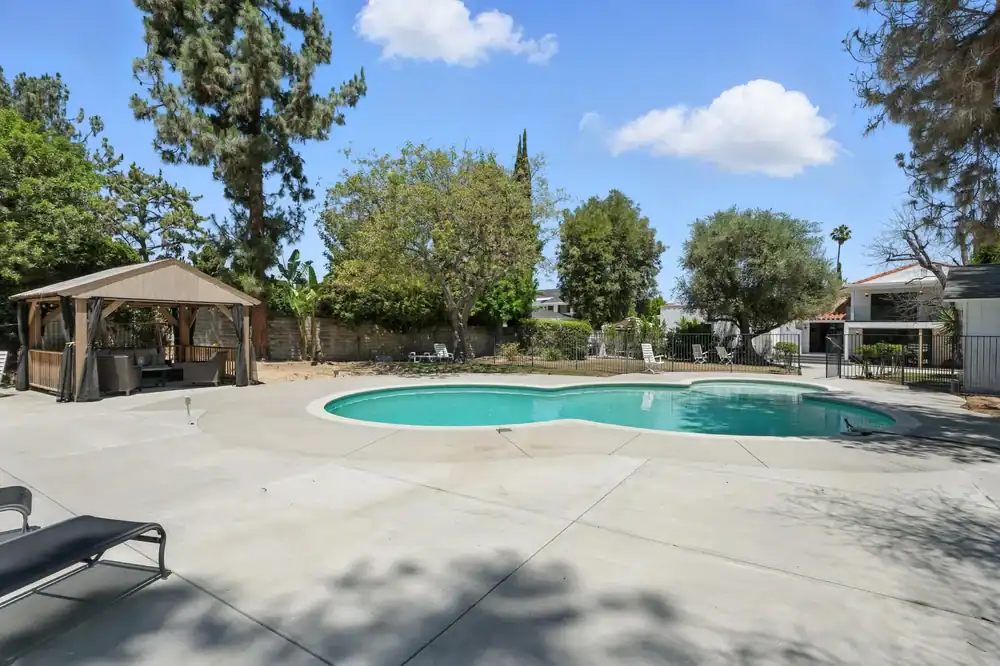
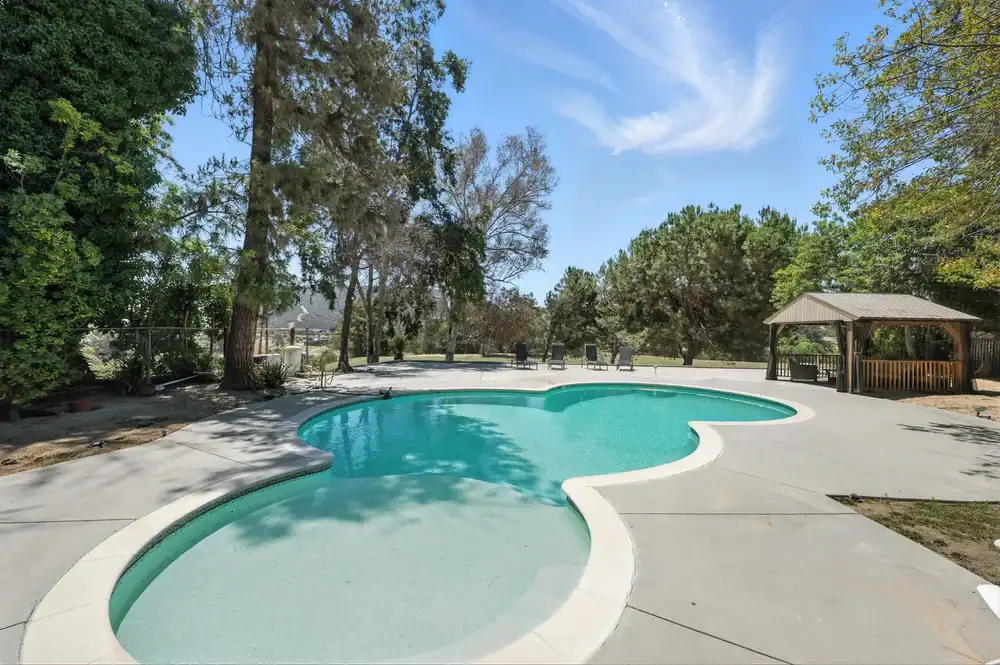
You get a surface that stays cool enough to walk on barefoot, even when the sun is directly overhead. Travertine and properly selected pavers run 20-30 degrees cooler than standard concrete. That’s the difference between sprinting across your deck and actually enjoying your outdoor space.
The textured surface grips when wet, so your family can move around the pool without slipping. No more holding your breath every time someone runs to grab a towel.
Beyond comfort and safety, you get a surface that actually lasts. No cracks developing after a few years. No expensive resurfacing projects. Individual pavers can be replaced if needed, but the overall deck stays level and beautiful for decades with minimal maintenance.
Since 1995, we’ve been installing pool deck pavers throughout Inverness Highlands South and Citrus County. We’re Authorized Contractors for Tremron, Flagstone, and Belgard, which means we install with professional-grade products designed specifically for Florida’s climate.
We’re a family-owned business, and we’re the exclusive Seal ‘n Lock distributor in Citrus County. Our installation follows proven methods we’ve developed over nearly three decades working in this exact area.
You’re dealing directly with people who live here, understand how Florida weather affects outdoor surfaces, and have installed hundreds of pool decks in neighborhoods just like yours. We offer military and first responder discounts because we appreciate the people who serve this community.
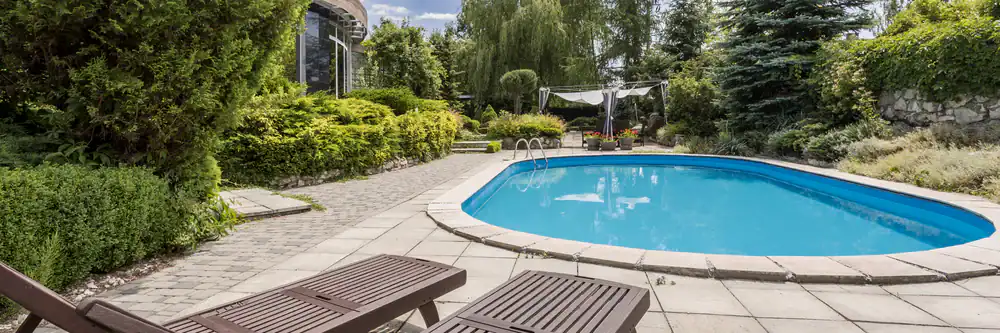
We start by removing your existing concrete deck if needed, then prepare a proper base. This step matters more than most homeowners realize because Florida’s soil shifts. We excavate to the right depth and create a compacted base that won’t settle unevenly over time.
Next comes the edge restraints and bedding layer. We install these according to manufacturer specifications because cutting corners here leads to the problems you’re trying to avoid. The pavers go down in your chosen pattern, cut precisely around your pool’s curves.
After setting the pavers, we fill the joints with polymeric sand that locks everything together. The final sealing step protects against pool chemicals, UV damage, and Florida’s weather extremes. Most pool deck projects in Inverness Highlands South require 4-6 days for completion, though size and design complexity affect the timeline.
Ready to get started?
The material you choose determines how your deck performs. Travertine stays remarkably cool and provides natural slip resistance. Coral stone offers similar benefits with a different aesthetic. Textured porcelain pavers give you more design options while maintaining the safety features you need around water.
In Inverness Highlands South and throughout Citrus County, homeowners prioritize outdoor living spaces. Your pool area isn’t just a feature—it’s where your family spends time. That’s why we only work with Tremron, Belgard, and Flagstone products that are engineered for this climate.
Proper installation matters as much as material selection. The base preparation, joint filling, and sealing process all contribute to how well your deck handles Florida’s afternoon storms, intense UV exposure, and the constant wet-dry cycles around a pool. With correct installation and basic maintenance, you’re looking at 20-30 years or more of use. That’s not marketing language—that’s what properly installed pool pavers actually deliver.
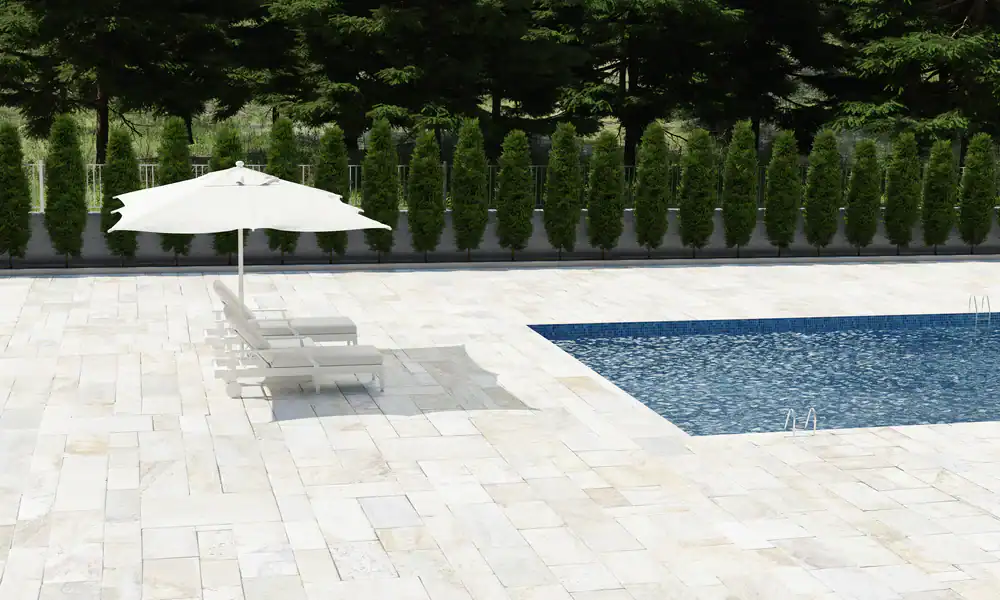
Installing pavers around a pool typically costs between $12 to $25 per square foot in many markets, but here in Citrus County, you’re looking at closer to $7 per square foot installed. That puts most pool deck projects between $5,000 and $20,000 depending on size and design complexity.
The lower cost here isn’t about lower quality. Florida has more specialized paver installers and more competition, which keeps labor costs reasonable. You’re also getting crews who install pavers every day and understand exactly how to handle Florida-specific challenges like soil conditions and weather patterns.
Your actual cost depends on your pool’s size, the paver material you choose, and any custom design elements. Travertine runs higher than standard concrete pavers, but it also stays cooler and lasts longer. We can give you an exact number after seeing your specific situation.
The material composition makes the difference. Concrete absorbs and holds heat, especially darker colors. Standard concrete can reach temperatures that cause burns within seconds of contact when Florida’s sun hits it directly.
Travertine, coral stone, and certain other pavers have a different thermal mass and reflective properties. They don’t absorb heat the same way. The surface temperature difference is dramatic—often 20-30 degrees cooler than concrete in the same conditions.
This isn’t a minor comfort upgrade. It’s the difference between your kids being able to use the pool deck comfortably all day versus only being able to walk on it early morning or after sunset. If you’ve ever had to spray down a concrete deck with the hose just to cross it, you know exactly why this matters.
You replace that individual paver. That’s one of the biggest practical advantages over concrete. When concrete cracks, you’re looking at either living with it, attempting a repair that rarely looks good, or replacing entire sections.
With pavers, we can pull out the damaged piece, drop in a replacement, and you’d never know anything happened. No demolition, no waiting for concrete to cure, no trying to match old concrete with new.
This matters more than most people realize when they’re making the initial decision. Over 20-30 years, something will probably happen—a heavy object drops, a tree root pushes up one section, whatever. With pavers, that’s a minor fix instead of a major project. You’re not calling us back for a full deck replacement because one area failed.
Cracks are the obvious sign, especially if they’re widening or if you’re seeing settlement where sections have sunk. If you’re dealing with multiple cracks or if the surface has become uneven, you’re past the point where repairs make sense.
Surface deterioration is another indicator. If your concrete is flaking, developing a rough texture, or showing significant discoloration beyond normal aging, the material is breaking down. Florida’s UV exposure and constant moisture accelerate this process around pools.
Safety issues force the decision. If the surface is slippery when wet or if it’s getting too hot to walk on comfortably, you’re dealing with functionality problems that affect how your family uses the space. At that point, you’re not just fixing cosmetic issues—you’re addressing real safety concerns that won’t improve on their own.
With proper installation and basic maintenance, you’re looking at 20-30 years or more. That’s not a best-case scenario—that’s standard performance for quality pavers installed correctly in Florida’s climate.
The longevity comes from how pavers handle stress differently than concrete. They flex slightly with soil movement instead of cracking. They’re designed to handle freeze-thaw cycles in northern climates, so Florida’s conditions are actually easier on them than what they’re engineered for.
Maintenance is minimal but not zero. You’ll need to reseal every few years to maintain protection against pool chemicals and UV damage. Joint sand may need topping off occasionally. But you’re not dealing with the resurfacing cycles that concrete requires, and you’re not replacing the entire deck when one section fails. The individual pavers themselves, if they’re quality products from manufacturers like Tremron or Belgard, will outlast most other pool deck options available.
Travertine is hard to beat for Florida pool decks. It stays cooler than almost any other option, provides excellent slip resistance naturally, and handles our climate well. The stone has been used around water for centuries because it works.
Coral stone gives you similar performance with a different look. It’s a local material that fits the Florida aesthetic and performs well in heat and moisture. Textured porcelain pavers are becoming more popular because they offer more design flexibility while maintaining the cooling and slip-resistant properties you need.
The “best” choice depends on your priorities. If staying cool underfoot is your top concern, travertine wins. If you want specific colors or patterns, porcelain gives you more options. If you’re working within a tighter budget, quality concrete pavers with the right texture and color can still outperform your current concrete deck significantly. We can show you samples and explain the real-world differences based on what matters most to you and your family.
Useful Links
Other Services we provide in Inverness Highlands South