
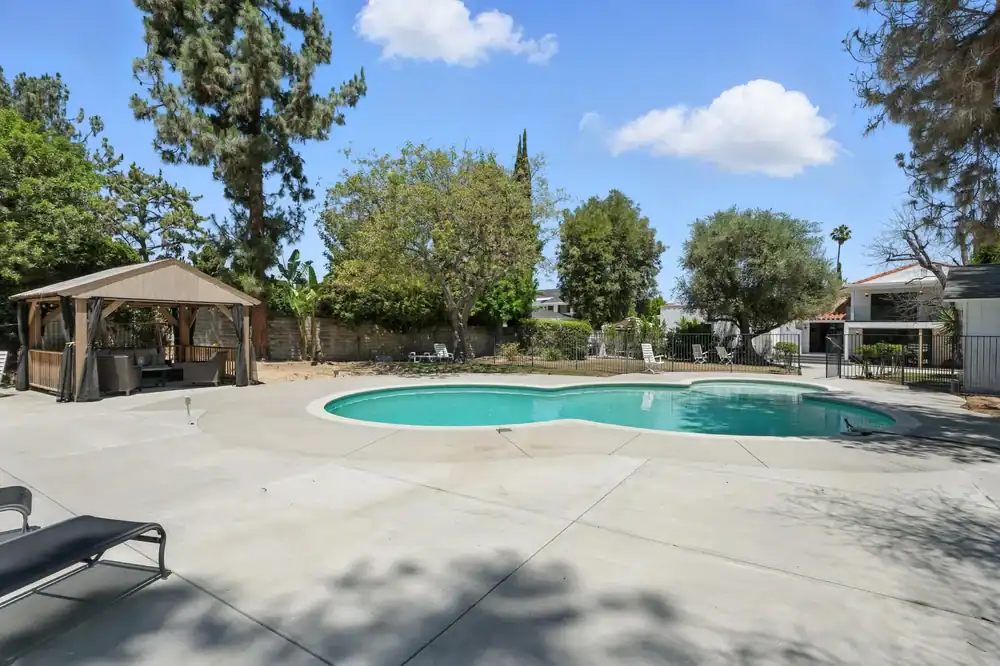
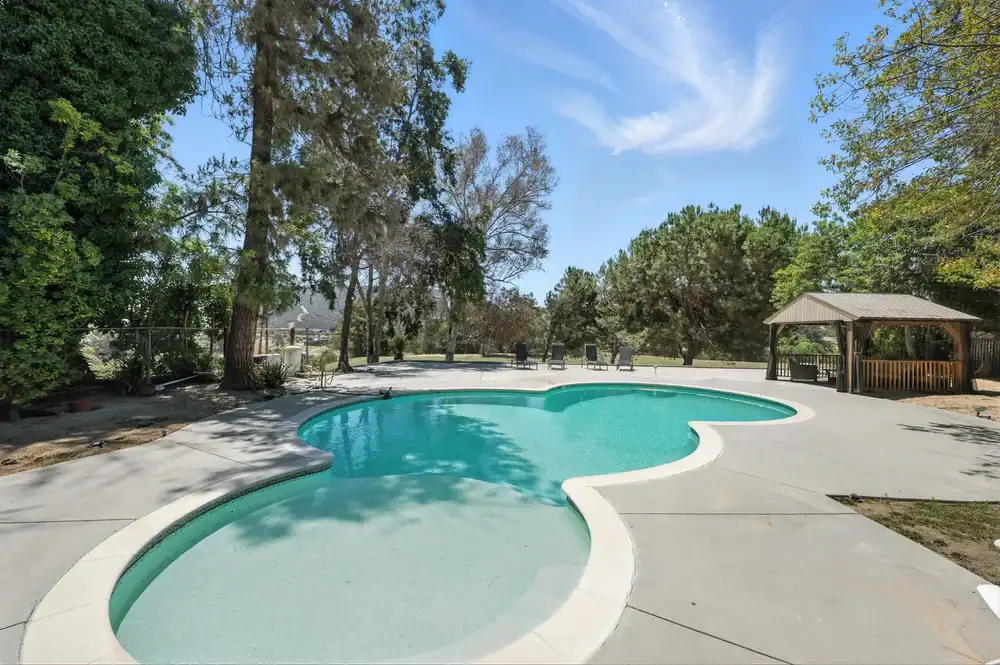
Your pool area becomes the place everyone actually wants to be. Not because you told them to use it, but because it’s comfortable, safe, and doesn’t feel like walking on hot coals in July.
The right pool pavers in North Brooksville stay cool underfoot. Travertine and natural stone don’t absorb heat the way concrete does, so you’re not hopping across the deck to get to the water. They also grip when wet, which matters when kids are running or your parents are visiting.
And when Florida storms roll through, proper drainage keeps water moving instead of pooling. Individual pavers can be pulled and replaced if one cracks or shifts. You’re not tearing out an entire slab because one section failed.
This isn’t about making your backyard look like a resort. It’s about making it work like one, without the maintenance headaches or safety risks that come with cheaper materials or rushed installs.
We’ve been a family-owned pool paver contractor in North Brooksville since 1995. We’re authorized installers for Tremron, Belgard, and Flagstone, which means access to premium materials and the training to install them correctly.
Our crews are state-licensed. The installs are done right the first time, with proper base prep, grading for drainage, and attention to edge details that prevent shifting. We’re also the exclusive Seal ‘n Lock distributor in Citrus County, so your pavers get protective treatment that keeps them looking clean longer.
We’ve worked through hurricane seasons, helped neighbors with cleanup, and built hundreds of outdoor spaces across this area. You’re hiring people who live here, know the soil conditions, understand the weather, and aren’t going anywhere after the job’s done.
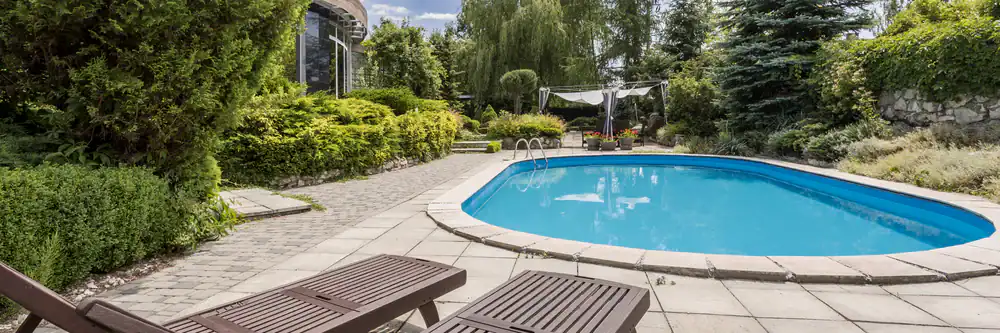
First, we assess your existing pool deck. If there’s old concrete, we determine whether it needs full removal or can serve as a stable base. We also check drainage, grade, and any areas where water currently pools.
Next comes base preparation. For swimming pool deck pavers in North Brooksville to last, the foundation has to be right. That means compacted aggregate base, proper slope away from the pool and house, and edge restraints to prevent shifting over time.
Then we lay the pavers. Patterns get planned based on your pool shape, entry points, and how you actually use the space. Cuts are made for curves, drains, and equipment access. Joints are filled with polymeric sand that locks everything in place and resists washout during heavy rain.
Finally, we clean and seal. If you choose Seal ‘n Lock protection, it goes on after everything’s set. You get a finished surface that resists stains, stays cleaner between pressure washes, and holds color better under UV exposure. The whole process typically takes several days depending on size, but you’ll know the timeline upfront.
Ready to get started?
When you’re looking at the best pavers for pool deck installations in North Brooksville, material choice affects everything. Travertine stays cool and offers natural slip resistance. Coral stone handles Florida’s humidity without breaking down. Porcelain pavers are newer but extremely durable and come in more modern finishes.
Light colors are trending because they reflect heat instead of absorbing it. Ivory, cream, and soft gray tones keep surface temperatures down and give that coastal look a lot of homeowners want. Warmer earth tones like beige and taupe are also popular and hide dirt better between cleanings.
Florida building codes require a minimum 1% slope on pool decks for drainage. We typically exceed that to make sure water moves, especially during storm season when several inches can fall in an hour. Slip resistance is measured by DCOF ratings, and anything above 0.42 is considered safe for wet areas. Most textured natural stone exceeds that easily.
You’ll also want to think about long-term costs. Pavers installed correctly can last decades. They don’t crack like poured concrete. Individual pieces can be replaced without disturbing the whole deck. And if you ever want to change the layout or expand, it’s far easier to work with pavers than trying to match old concrete.
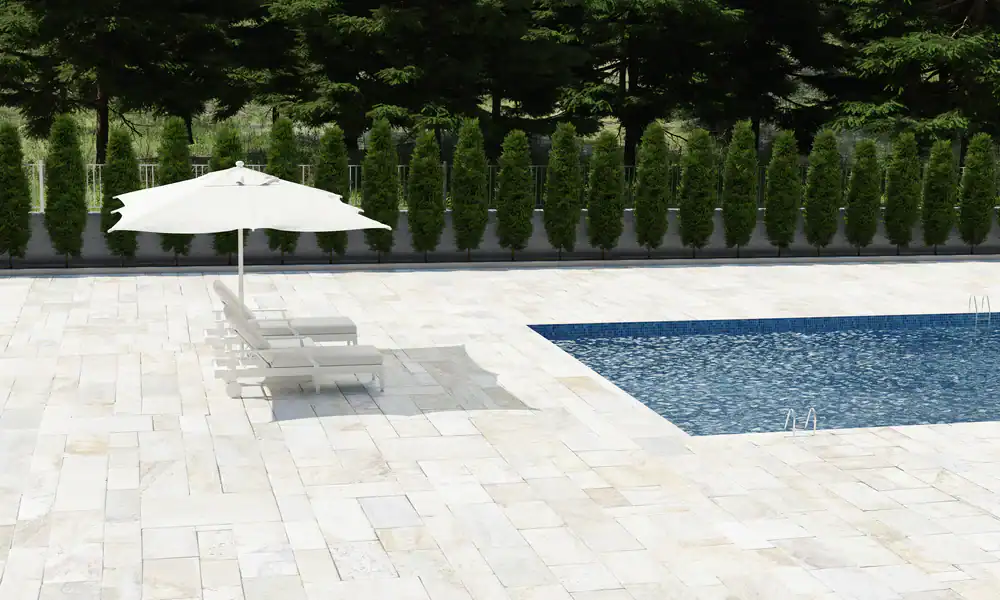
Most pool deck paver projects in North Brooksville run between $12 and $25 per square foot installed. That includes materials, labor, base prep, and finishing. A typical pool deck ranges from 400 to 800 square feet, so you’re looking at $5,000 to $20,000 depending on size, material choice, and design complexity.
Travertine tends to be on the higher end because of the material cost and the skill required to install it properly. Concrete pavers are more affordable but still durable when installed with the right base. Porcelain is newer and prices vary based on style and availability.
Curved layouts, custom patterns, and intricate cuts add to the cost because they take more time and generate more waste. But those details also make the deck look intentional and finished, not like a basic rectangle someone slapped down in a weekend. If budget’s tight, we can work with simpler patterns or phase the project so you’re not paying for everything at once.
Travertine is the most popular choice for pool decks in Florida, and for good reason. It stays cool even in direct sun because of its light color and porous structure. The natural texture provides slip resistance when wet, which is critical around pools. It also handles freeze-thaw cycles and humidity without deteriorating.
Coral stone is another solid option. It’s a local limestone that’s been used in Florida for decades. It has a natural, rustic look and excellent durability in wet conditions. It does require sealing to prevent staining, but it holds up well to heavy use.
Porcelain pavers are gaining traction because they’re extremely low maintenance and come in a wide range of colors and finishes, including wood-look and stone-look styles. They don’t absorb water, so they resist mold and algae growth. The downside is they can be slippery when wet unless you choose a textured finish, and they’re typically more expensive than concrete pavers.
A typical pool deck paver installation in North Brooksville takes three to seven days, depending on the size of the area, the complexity of the design, and weather conditions. Smaller decks with simple patterns can be done faster. Larger projects with curves, multiple levels, or intricate layouts take longer.
Day one is usually demolition and base prep if you’re replacing an old deck. We remove existing concrete or pavers, grade the area, and compact the aggregate base. Day two and three involve laying the pavers, making cuts, and ensuring everything is level and properly sloped for drainage.
The final day or two is joint filling, compacting the sand, cleaning the surface, and applying sealant if you’ve chosen that option. We don’t rush the process because shortcuts lead to settling, shifting, and premature failure. You’ll get a timeline before we start, and we’ll let you know if weather delays anything.
It depends entirely on the material and color you choose. Dark pavers and standard concrete absorb heat and can become uncomfortable or even painful to walk on barefoot during summer. Light-colored natural stone like travertine, coral stone, and certain porcelain pavers stay significantly cooler because they reflect sunlight instead of absorbing it.
Travertine is especially known for staying cool. Even on 95-degree days, the surface temperature remains comfortable for bare feet. That’s why it’s the go-to choice for pool decks in Florida. Concrete pavers in lighter shades also perform well, though not quite as effectively as natural stone.
If you’re set on a darker color for aesthetic reasons, there are cool-deck coatings and certain paver technologies designed to reduce heat absorption. But the simplest and most effective solution is choosing a light-colored, natural stone material from the start. It’s one less thing to worry about when you’re trying to enjoy your pool.
Pavers are far less likely to crack than poured concrete because they’re individual units with joints between them. Those joints allow for expansion and contraction as temperatures change, which is constant in Florida. Concrete slabs have no flexibility, so they crack when the ground shifts or temperatures fluctuate.
If a paver does crack due to impact or settling, you replace that one piece. You don’t tear out a whole section or try to patch it and hope it blends in. That’s a huge advantage for long-term maintenance and cost control.
Shifting can happen if the base wasn’t installed correctly. That’s why proper base preparation, compaction, and edge restraints matter so much. A well-installed paver deck with a solid aggregate base and polymeric sand in the joints will stay locked in place for decades. We’ve seen pavers installed in the late ’90s that are still perfectly level and functional today because the groundwork was done right.
Yes, in many cases you can install pavers over existing concrete as long as the slab is in good condition. It needs to be stable, relatively level, and free of major cracks or heaving. If the concrete is already breaking apart or has significant drainage issues, it’s better to remove it and start fresh.
Installing pavers over concrete is called an overlay, and it can save time and money compared to full removal. We still need to ensure proper slope for drainage and may need to add a leveling layer or adjust edges. The pavers are then set on the concrete with adhesive or a thin sand bed, depending on the situation.
The downside is you’re raising the height of the deck, which can affect door thresholds, coping, or step heights. We measure everything before deciding whether an overlay makes sense or if removal is the better long-term option. Either way, you’ll know what’s involved and why we’re recommending one approach over the other.
Useful Links
Other Services we provide in North Brooksville