
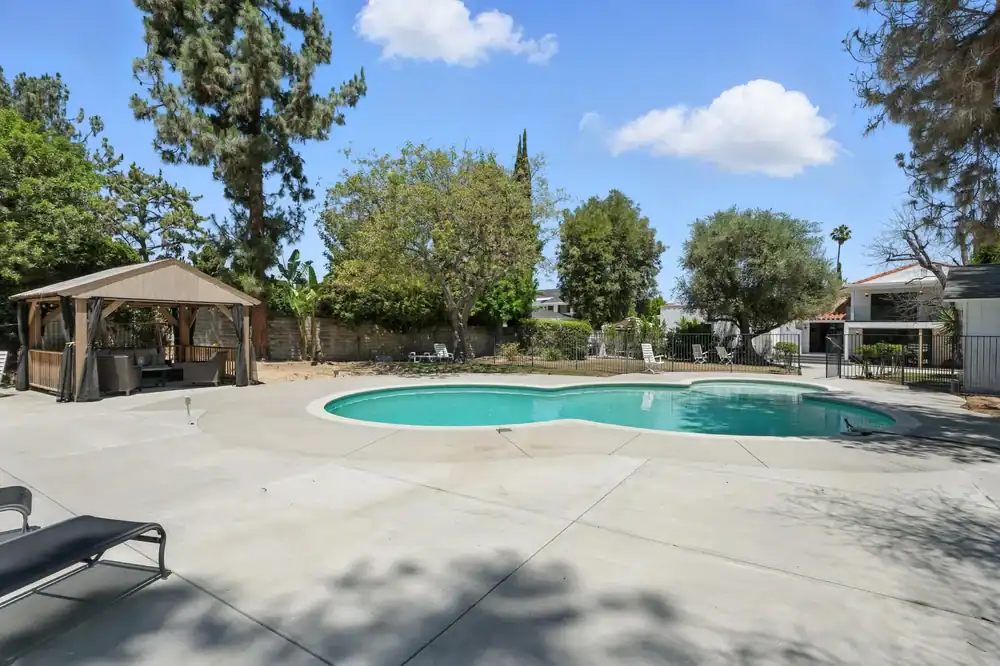
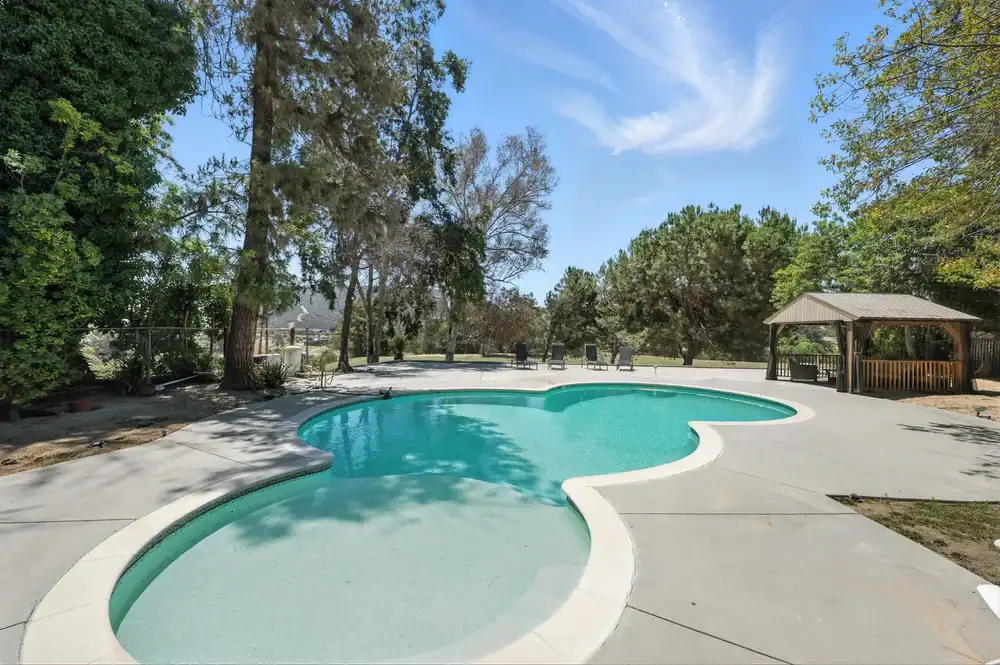
Your pool deck stops being a problem. No more scorching concrete that burns your feet in July. No more slippery surfaces that make you nervous when the kids are running around wet.
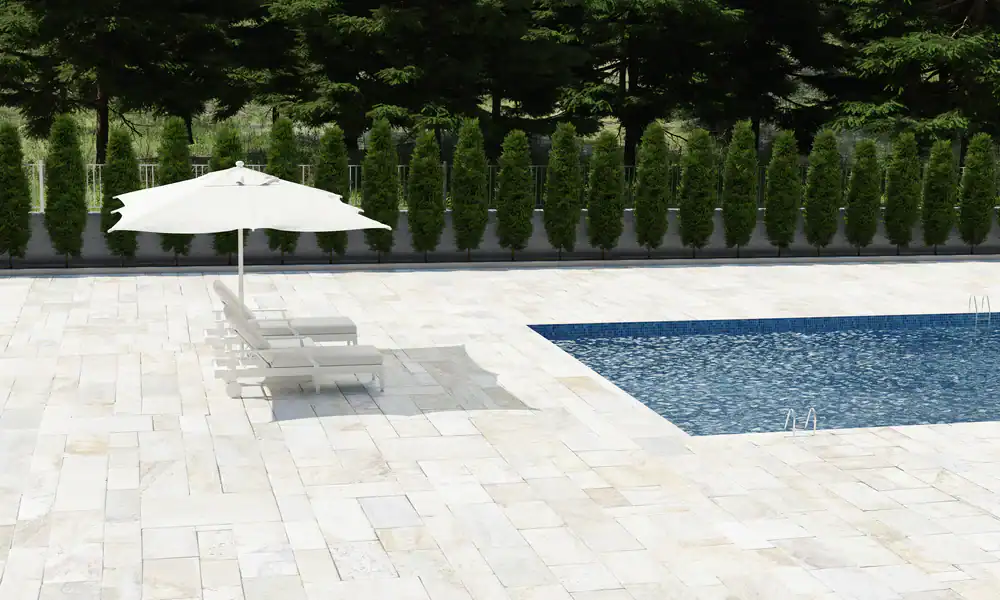
The pavers stay cool to the touch even in direct sun. Travertine doesn’t absorb heat like concrete or darker materials, which means you can walk barefoot from the house to the pool without doing that awkward hop-dance across burning surfaces.
Drainage works the way it should. Proper base prep and grading mean water flows away from your pool and your house instead of pooling up or causing pavers to shift and settle. That’s the difference between an installation that lasts decades and one that starts failing in a few years.
You get a surface that looks high-end but doesn’t require constant maintenance. Sealed properly with commercial-grade products, your pool pavers resist staining, fading, and the kind of wear that comes from Florida’s UV exposure and year-round outdoor use. The result is a pool deck that actually adds value to your property instead of becoming another thing you have to fix.
We’ve been family-owned and operating in Citrus County since 1995. We’re not a franchise or a crew that shows up from out of town. We live here, and we’ve been installing pool deck pavers in Ocklawaha and throughout North Central Florida long enough to know exactly what works in this climate and what doesn’t.
We’re Authorized Contractors for Tremron, Flagstone, and Belgard—the top paver manufacturers—and the exclusive Seal ‘n Lock distributor in the county. That means you’re getting premium materials installed by people who are trained and backed by the manufacturers themselves.
We handle everything from design to final sealing. You’re not coordinating between multiple contractors or hoping the excavation guy and the paver guy are on the same page. One crew, one point of contact, and a reputation we’ve spent three decades building in this community.
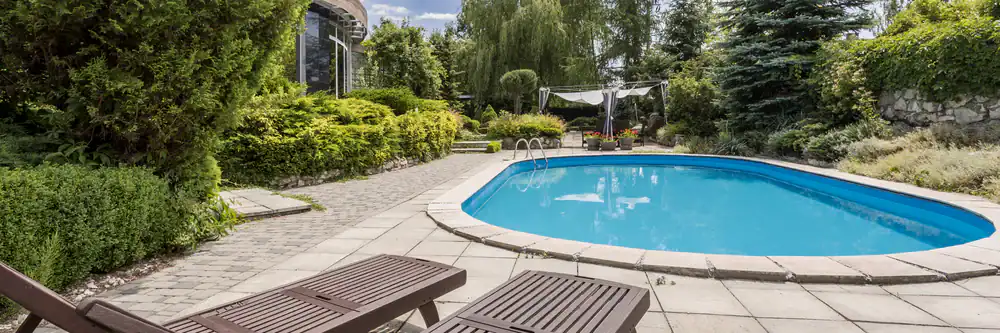
We start with the base, because that’s where most pool paver installations in Ocklawaha fail. Proper excavation and compacted base material create a stable foundation that won’t shift when Florida’s heavy rains saturate the ground. We’re talking about engineered drainage slopes that move water away from your pool and foundation—not just eyeballing it and hoping for the best.
Next comes the paver installation itself. Each paver gets set with proper joint spacing and alignment. We’re checking levels constantly because even small variations create trip hazards and drainage problems down the line. If you’re going with travertine—which most of our pool deck clients do—we’re selecting and placing each piece to maximize the natural variation and color consistency.
The final step is edge restraint and sealing. Edge restraints keep your pavers locked in place so they don’t creep or spread over time. Then we apply commercial-grade sealant that protects against UV fading, water penetration, and staining from pool chemicals, sunscreen, and everything else that ends up on a pool deck.
Most pool paver installations in Ocklawaha take between three and seven days depending on size and design complexity. You’ll know the timeline upfront, and we’ll walk you through what to expect at each stage so there are no surprises.
Ready to get started?
Not all pool pavers perform the same in Ocklawaha’s climate. You’re dealing with intense UV exposure, humidity that never quits, temperature swings, and enough rainfall to test any drainage system. The best pavers for pool decks here are travertine and premium concrete pavers from manufacturers like Tremron and Belgard.
Travertine stays naturally cool underfoot and provides excellent slip resistance when wet—two things that matter every single day you use your pool. It’s also porous enough to handle moisture without trapping it, which prevents the kind of deterioration you see with denser materials that can’t breathe in Florida’s humidity.
Proper installation matters more than the pavers themselves. We see pool decks all the time where someone used quality materials but skipped steps on base preparation or drainage design. A few years later, pavers are sinking, shifting, or developing standing water problems that require tearing everything out and starting over.
The right sealing product makes maintenance simple. Seal ‘n Lock—which we’re the exclusive local distributor for—protects your investment without creating that glossy, artificial look some sealers leave behind. It penetrates the paver surface to block stains and moisture while letting the material breathe. You can hose off your deck or use a mild cleaner when needed, but you’re not scrubbing or pressure washing constantly to keep it looking good.
Most pool deck paver installations in Ocklawaha run between $25 and $50 per square foot installed. That range covers everything from materials and labor to base prep, drainage work, and sealing.
The lower end of that range typically means standard concrete pavers with a simpler layout and minimal site prep. The higher end covers premium travertine, complex patterns, significant grading or drainage work, or larger projects where economies of scale don’t apply as much.
Your specific cost depends on the size of your pool deck, the pavers you choose, and what kind of site conditions we’re working with. If your existing concrete deck needs removal or if we’re dealing with drainage issues that require more extensive base work, that affects the price. We’ll give you an exact number after looking at your property—not a vague estimate that changes later.
Travertine is the best overall choice for pool decks in Florida. It stays significantly cooler than concrete or darker pavers, provides natural slip resistance when wet, and handles our climate without deteriorating the way some materials do.
Premium concrete pavers from Tremron or Belgard are the other solid option. They offer more color and pattern choices than travertine, and when manufactured to high standards, they hold up well to UV exposure and moisture. The key is avoiding cheap pavers that fade, become porous and rough over time, or don’t maintain their slip resistance.
What you want to avoid are smooth concrete, most natural stones that aren’t travertine, and any paver that gets dangerously hot in direct sun. Your pool deck is a barefoot area, and if you can’t comfortably walk on it in July, it’s the wrong material. We only install pavers we’d put around our own pools—materials we know perform in this specific climate after nearly 30 years of seeing what lasts and what fails.
Most pool deck paver installations take between three and seven days from start to finish. Smaller, simpler decks can be done in three to four days. Larger projects or ones that involve significant drainage work, removal of existing concrete, or complex patterns take closer to a week.
Weather can add time, especially during Florida’s rainy season. We’re not laying pavers in standing water or on saturated base material, because that compromises the installation. If we need to pause for weather, we’ll make sure your property is secure and let you know the revised timeline.
You’ll have a clear schedule before we start. We don’t show up for a day, disappear for a week, then come back. Once we begin your pool paver installation, we work straight through to completion unless weather or an unforeseen site condition requires a pause. You’ll know what’s happening and when, and you’ll have direct contact with us throughout the project.
Yes. Sealing your pool pavers protects them from UV fading, moisture damage, staining from pool chemicals and sunscreen, and the general wear that comes from year-round outdoor use in Florida.
Unsealed pavers become porous and rough over time. They absorb stains, fade unevenly, and can develop mold or mildew in the pores that’s difficult to remove without aggressive pressure washing. That’s when homeowners start hating their pavers and wishing they’d spent the money on proper sealing upfront.
We use Seal ‘n Lock, and we’re the exclusive distributor in Citrus County. It’s a commercial-grade product that penetrates the paver surface instead of just sitting on top like cheaper sealers. You get protection without that artificial glossy look, and the pavers can still breathe so moisture doesn’t get trapped underneath. Resealing every few years keeps your pool deck looking new and makes maintenance as simple as hosing it off when needed.
Sometimes, but it depends on the condition of your existing concrete and whether the height increase creates problems with door thresholds, pool coping, or drainage.
If your concrete is relatively level, structurally sound, and properly sloped for drainage, we can install pavers over it using a thin-set method. This saves the cost and mess of concrete removal. But if your concrete is cracked, settling, or has drainage issues, installing pavers over it just transfers those problems to your new surface.
Most of the time, removing the old concrete and starting with a proper base is the better long-term solution. It costs more upfront, but you get a pool deck that’s built correctly from the ground up with proper drainage and a stable foundation. We’ll assess your existing deck and tell you honestly whether an overlay makes sense or whether removal is the smarter investment. We’re not going to install pavers over a failing concrete deck just to get the job—it’ll come back to haunt both of us.
Poor base preparation. That’s the reason for almost every pool paver installation in Ocklawaha that fails prematurely. If the base material isn’t properly compacted or if drainage wasn’t designed correctly, water saturates the base during heavy rains and causes settling.
Florida gets serious rainfall, and pool decks deal with additional water from splashing and runoff. When that water doesn’t drain away properly, it weakens the base material. Pavers sink, gaps open up, and the surface becomes uneven. Some installers skip steps on compaction or use inadequate base depth to save time and money. It looks fine initially, but problems show up within a year or two.
The other common cause is poor edge restraint. Without proper edging to lock pavers in place, they gradually shift and spread outward. This creates gaps, unevenness, and trip hazards. We install commercial-grade edge restraints on every pool deck and compact the base in lifts to ensure stability. It takes longer than cutting corners, but your pool deck won’t be sinking or shifting five years from now.
Useful Links
Other Services we provide in Ocklawaha