
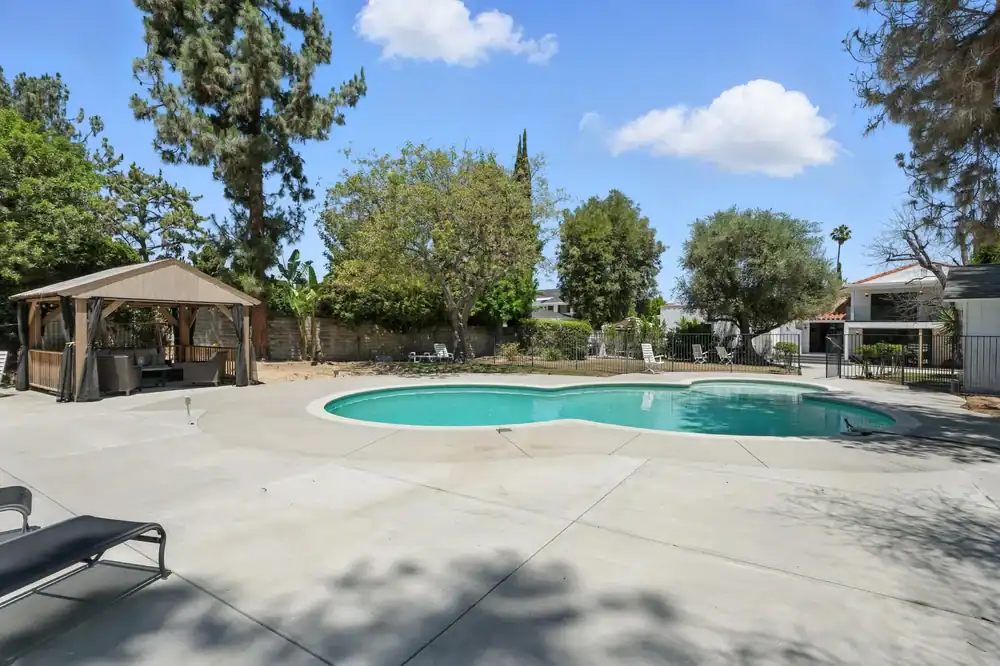
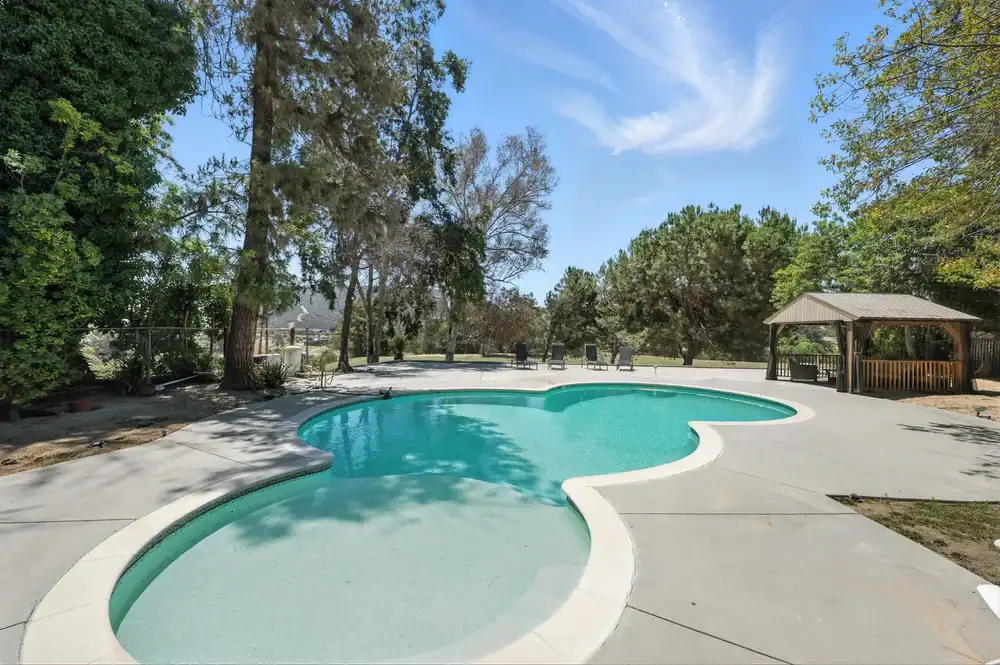
You’re not just getting pavers laid down. You’re getting a pool deck that stays cooler underfoot than concrete, even during July and August. Travertine and certain concrete pavers reflect heat instead of absorbing it, which matters when you’re walking barefoot from the house to the water.
The right pool deck pavers in Rainbow Park also mean you’re not waiting days to use your pool. When the job’s done, it’s done. No curing time like poured concrete requires.
And if a paver cracks or chips years down the road, you replace that one piece. With a concrete slab, you’re looking at the whole section. That’s the difference between a quick fix and a major headache.
The surface stays slip-resistant when wet. It flexes with ground movement instead of cracking. And it doesn’t fade or deteriorate from chlorine exposure the way cheaper materials do.
We’ve been installing pool pavers in Rainbow Park and throughout Citrus County since 1995. That’s long enough to see which installations hold up and which ones don’t. Long enough to know how the soil shifts here, how drainage needs to work, and what materials perform best in this specific climate.
We’re authorized contractors for Tremron, Flagstone, and Belgard. That means access to premium materials and manufacturer-backed installation standards. We’re also the exclusive Seal ‘n Lock distributor in Citrus County, so your pavers get protection other contractors can’t offer.
You’re working with state-licensed crews who understand Florida building codes and permit requirements. We handle that process because it matters for safety, drainage, and your home’s foundation.
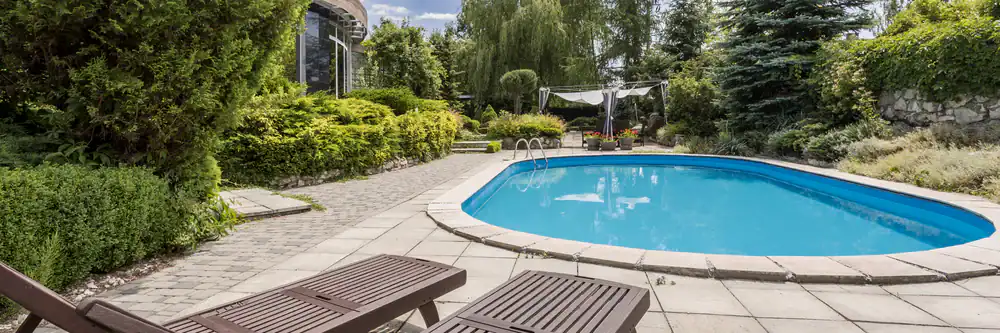
First, we assess your pool area and test the ground. Citrus County has sandy, shifting soil in many areas, and the base needs to account for that. Skimping here is where most installations fail within a few years.
We excavate to the right depth and build a properly compacted base. This isn’t optional. A solid base prevents wobbling, sinking, and uneven pavers that become trip hazards.
Then comes the sand layer, set and leveled correctly. Your pavers go down in whatever pattern and layout you’ve chosen. We’re working with the exact spacing and alignment that keeps everything stable and visually clean.
After the pavers are set, we apply polymeric sand in the joints. This locks everything in place and prevents weed growth between pavers. Then we seal the surface with Seal ‘n Lock if you want that extra layer of protection against stains, fading, and moisture.
The whole process typically takes about a week for a standard pool deck. When we’re finished, you can use it immediately. No waiting period.
Ready to get started?
You’re getting a full consultation on the best pavers for pool deck applications in this climate. Travertine stays coolest and looks high-end, but it costs more. Concrete pavers give you tons of design options at a lower price point. Brick pavers offer a classic look with serious durability.
We handle all permits and ensure the work meets local building codes in Rainbow Park. That’s not just paperwork. It affects your insurance, your liability, and whether the job passes inspection.
The installation includes proper drainage planning. Florida gets heavy rain, and your pool deck needs to channel water away from your home’s foundation. We slope it correctly and account for existing drainage patterns.
You also get a deck built to handle Florida’s UV exposure without fading, pool chemicals without deteriorating, and ground movement without cracking. The materials we use are rated for this environment specifically.
If you want sealing, we apply Seal ‘n Lock, which we exclusively distribute in Citrus County. It protects against stains, makes cleaning easier, and extends the life of your pavers. Most homeowners choose it because it’s a small upfront cost that saves maintenance headaches later.
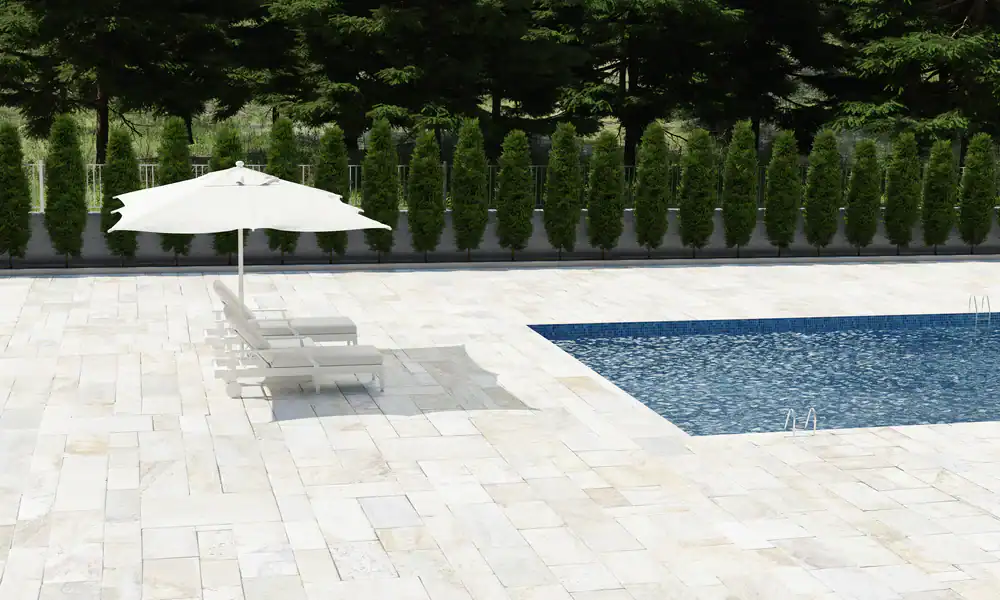
For a standard pool deck using mid-range pavers, you’re typically looking at around seven to eight dollars per square foot in Citrus County. That’s higher than basic concrete, which runs about four dollars per square foot, but it includes the base work, materials, labor, and proper installation.
The price changes based on paver type. Travertine costs more than concrete pavers. Complex patterns or curves add labor time. If your site needs extra excavation or drainage work, that affects the total.
Here’s what matters: the base construction is where corners get cut by low bidders. A proper compacted base costs more upfront but prevents the wobbling, sinking, and repairs that cheap installations need within a few years. You’re paying for a deck that lasts decades, not one that looks good for a season.
Travertine is the top choice if staying cool underfoot is your priority. It reflects heat instead of absorbing it, so it’s comfortable to walk on barefoot even in summer. It also looks high-end and holds up well against pool chemicals and UV exposure.
Concrete pavers are the most versatile. They come in tons of colors, shapes, and textures. You can mimic natural stone or go with modern geometric patterns. They’re durable, cost less than travertine, and handle Florida’s climate without issues when properly sealed.
Porcelain pavers are gaining popularity because they’re heat-resistant, slip-resistant, and extremely low-maintenance. They mimic natural stone textures but don’t absorb water or stain as easily. Brick pavers offer a classic look with serious durability, though they can retain more heat than travertine.
The “best” choice depends on your budget, how the deck will be used, and what look you’re going for. All of these options outperform poured concrete in Florida’s climate when installed correctly.
Yes, in most cases. Florida building codes require permits for work done around pools because changes to your pool deck affect drainage, safety, and potentially your home’s foundation. Citrus County enforces this, and skipping the permit process can create problems with insurance, resale, and liability.
The permit ensures the work meets local codes for things like slope, drainage, and setback requirements. It also means an inspector verifies the job was done correctly. That protects you if something goes wrong later.
We handle the permit process as part of the installation. It’s not something you need to figure out yourself. The cost is minimal compared to the risk of doing unpermitted work, and it keeps everything above board if you ever sell your home or file an insurance claim.
A typical pool deck takes about a week from start to finish. That includes excavation, base prep, paver installation, and sealing. Larger decks or complex designs might take a bit longer. Smaller projects can be done in a few days.
Weather can affect the timeline since we need dry conditions for base compaction and sealing. Florida’s afternoon storms sometimes mean we pause and resume the next day. But overall, it’s a much faster process than poured concrete, which requires days of curing time before you can use it.
When we finish, you can walk on it and use your pool immediately. There’s no waiting period. That’s one of the practical advantages of pavers over other pool deck options.
No, not in the same way. Concrete slabs crack because they’re rigid. When the ground shifts—which it does constantly in Florida’s sandy soil—concrete can’t flex. It just cracks.
Pavers are individual pieces with joints between them. When the ground moves, the pavers shift slightly but stay intact. The system is designed to handle movement without breaking. That’s why properly installed pool deck pavers in Rainbow Park last longer than poured concrete in this climate.
If a paver does get damaged from something like a heavy object dropping on it, you replace that single paver. You don’t tear out and repour an entire section. We recommend keeping a few extra pavers from your original installation for exactly this reason. It makes repairs simple and inexpensive.
Maintenance is minimal. Rinse them off with a hose when they get dirty. Power wash once or twice a year if you want to keep them looking brand new. That’s about it for regular upkeep.
If you seal your pavers with Seal ‘n Lock, you’ll need to reapply every few years depending on use and exposure. Sealing makes cleaning easier and protects against stains from sunscreen, leaves, and pool chemicals. It’s not required, but most homeowners prefer the look and easier maintenance.
Watch for moss or algae growth in shady areas, especially during wet seasons. A quick treatment with a mild cleaner handles it. If weeds pop up in the joints—which is rare with polymeric sand—pull them or spot-treat them. The key is addressing small issues before they become bigger problems, but overall, pavers require way less maintenance than most people expect.
Useful Links
Other Services we provide in Rainbow Park