Not sure whether patio pavers or concrete make more sense for your backyard? We break down what actually matters when you're investing in outdoor space.
Share:
Summary:
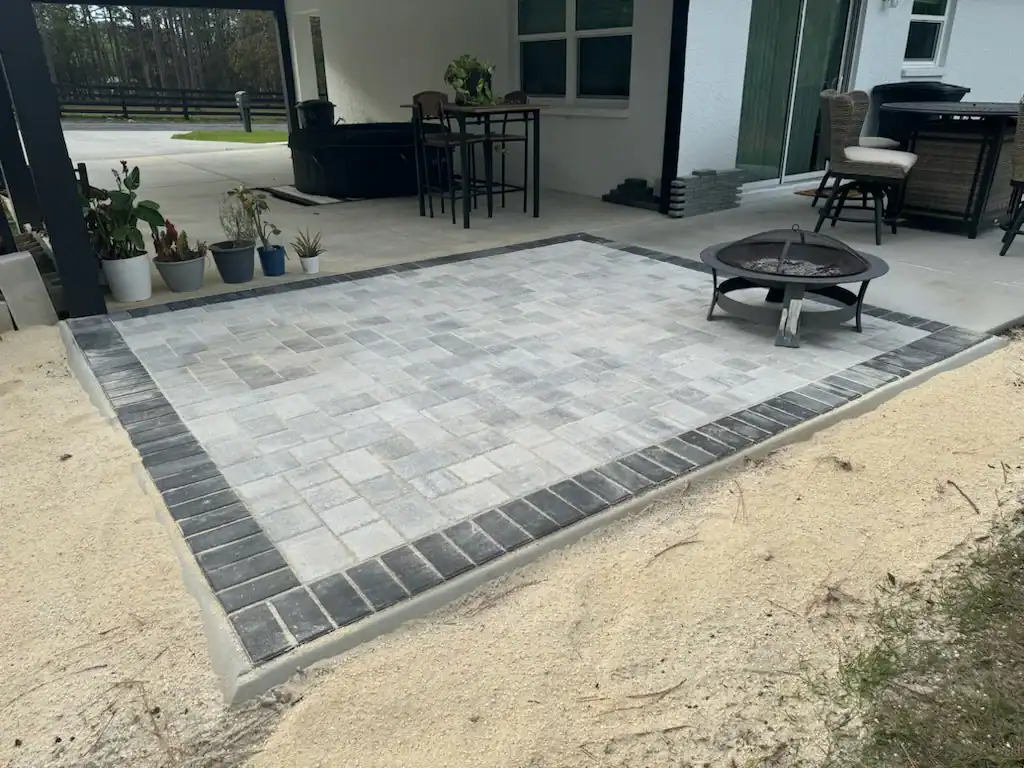
Poured concrete is exactly what it sounds like. A crew shows up, pours a slab, smooths it out, and you’ve got a solid surface once it cures. Patio pavers are individual units—brick, concrete, or stone—that get laid piece by piece over a prepared base. They lock together without mortar, which gives them flexibility concrete doesn’t have.
The key difference isn’t just how they’re installed. It’s how they respond to movement, temperature swings, and the inevitable settling that happens in Florida’s sandy soil. Concrete is rigid. When the ground shifts or temperatures fluctuate, that rigidity can work against it. Pavers move with the ground instead of fighting it, which changes how they hold up over time.
Florida throws a lot at outdoor surfaces. Intense sun, afternoon storms, high humidity, and soil that shifts when it gets saturated. Concrete expands when it heats up and contracts when it cools down. In a place like Ocala where temperatures swing daily, that constant push and pull creates stress. Over time, you get cracks.
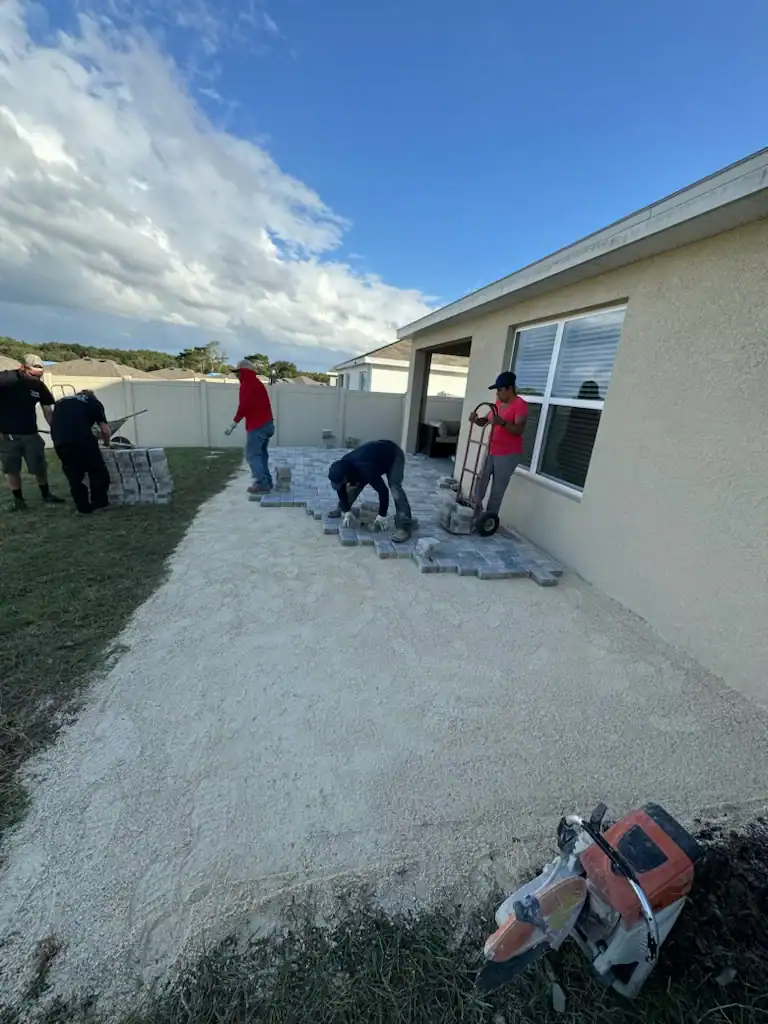
Patio pavers don’t have that problem the same way. Because they’re individual units with joints between them, they can expand and contract without cracking. The base underneath does the heavy lifting, and the pavers themselves stay intact. If one does crack or stain beyond repair, you replace that one piece. Not the whole patio.
The other advantage is heat retention. Walk barefoot on concrete in July and you’ll feel it. Pavers, especially lighter-colored brick patio pavers, stay cooler underfoot. That matters if you’ve got kids running around or if your patio connects to a pool deck. Slip resistance is another factor. Pavers have texture built in, while concrete can get slick when wet unless you add a finish or sealant.
Maintenance is part of the equation too. Both options need some upkeep. Concrete requires sealing every few years to protect against moisture and staining. Pavers need the same, but if you skip a year, the consequences aren’t as severe. You might see some fading or a weed popping up between joints, but the structure stays sound. With concrete, moisture intrusion can lead to bigger issues like spalling or subsurface damage that’s expensive to fix.
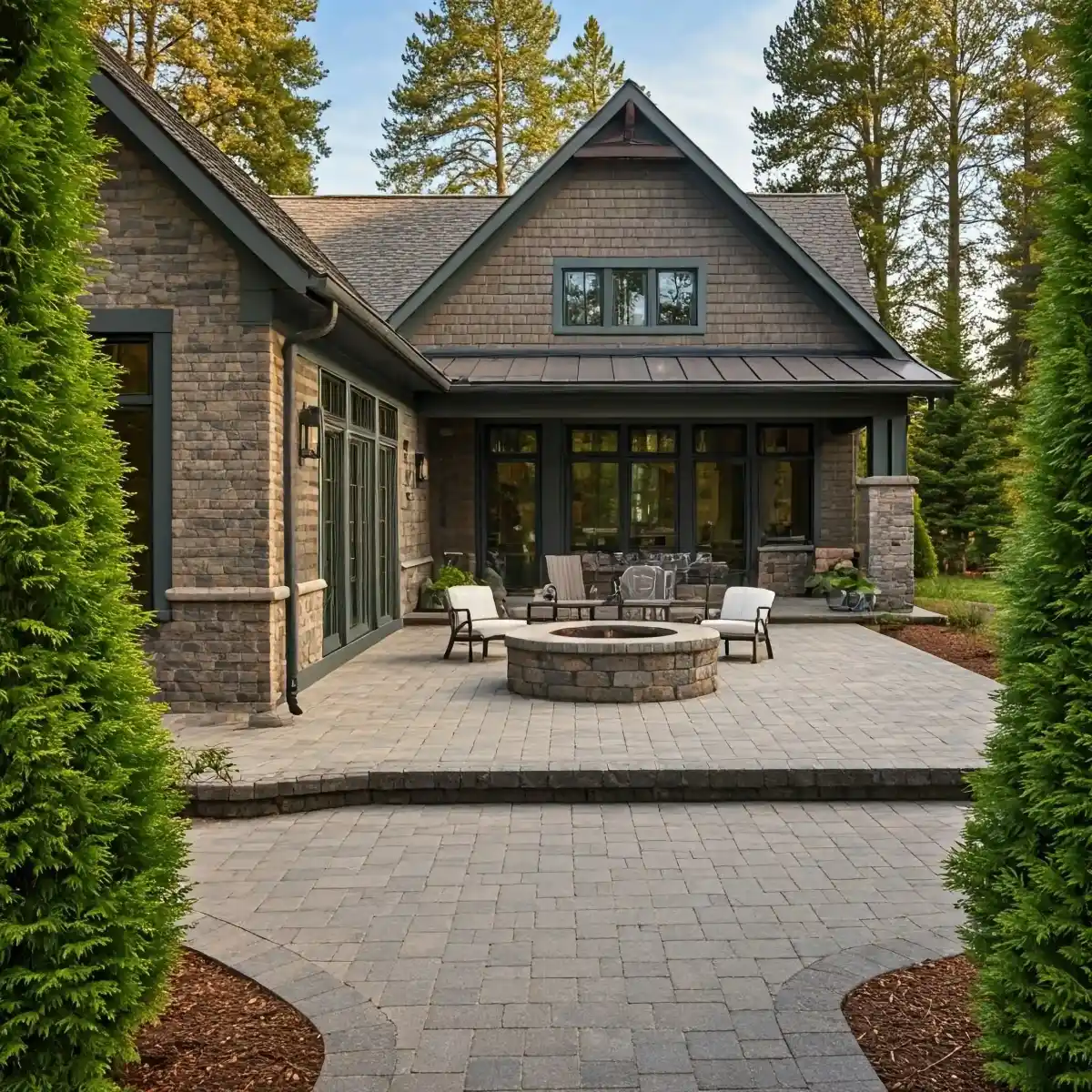
If you want your patio to look like every other poured slab in the neighborhood, concrete works fine. But if you’re thinking about patterns, colors, or an outdoor patio design that actually complements your home’s architecture, pavers open up options concrete can’t touch.
You can mix sizes, create borders, lay herringbone or basketweave patterns, or combine colors to define different zones. Want a fire pit area that feels separate from your dining space? Use a different paver style or color to create that visual break. These are the kinds of backyard patio ideas that turn a basic slab into an actual outdoor room. Concrete doesn’t give you that flexibility unless you’re paying for stamping or scoring, which adds cost and still doesn’t match the range you get with pavers.
The other piece is customization down the road. Say you want to add an outdoor kitchen or extend your patio in a few years. With pavers, you can match the existing material and blend the addition seamlessly. With concrete, you’re pouring a new slab that may or may not match the color and finish of what’s already there. Even if the mix is identical, weathering and UV exposure change how concrete looks over time, so new sections often stand out.
Design isn’t just about aesthetics either. It’s about function. Pavers let you build in better drainage by adjusting joint spacing or using permeable options that let water filter through instead of pooling on the surface. That’s a real advantage in a state where afternoon storms dump inches of rain in an hour. Concrete relies on proper slope and grading to shed water, and if that wasn’t done right during installation, you’re stuck with puddles or runoff issues that are expensive to correct.
There’s also the resale angle. Buyers notice outdoor spaces. A well-designed paver patio signals quality and thoughtfulness. It shows the homeowner invested in making the space functional and attractive. Concrete can look good, but it doesn’t have the same visual impact unless it’s been customized, which most standard installs aren’t.
Want live answers?
Connect with a MainStreet Landscaping expert for fast, friendly support.
Concrete wins on upfront cost. A basic poured slab runs between $4 and $15 per square foot installed, depending on thickness and finish. Patio paver installation starts around $10 per square foot and can go up to $25 or more for premium materials. If you’re working with a tight budget and need something functional fast, concrete makes sense.
But upfront cost isn’t the whole story. Concrete cracks, especially in Florida. When it does, repairs are visible and often require resurfacing or replacing entire sections. Pavers let you swap out individual pieces without touching the rest of the surface. That difference matters when you’re looking at a 20 or 30-year timeline instead of just the first few years.
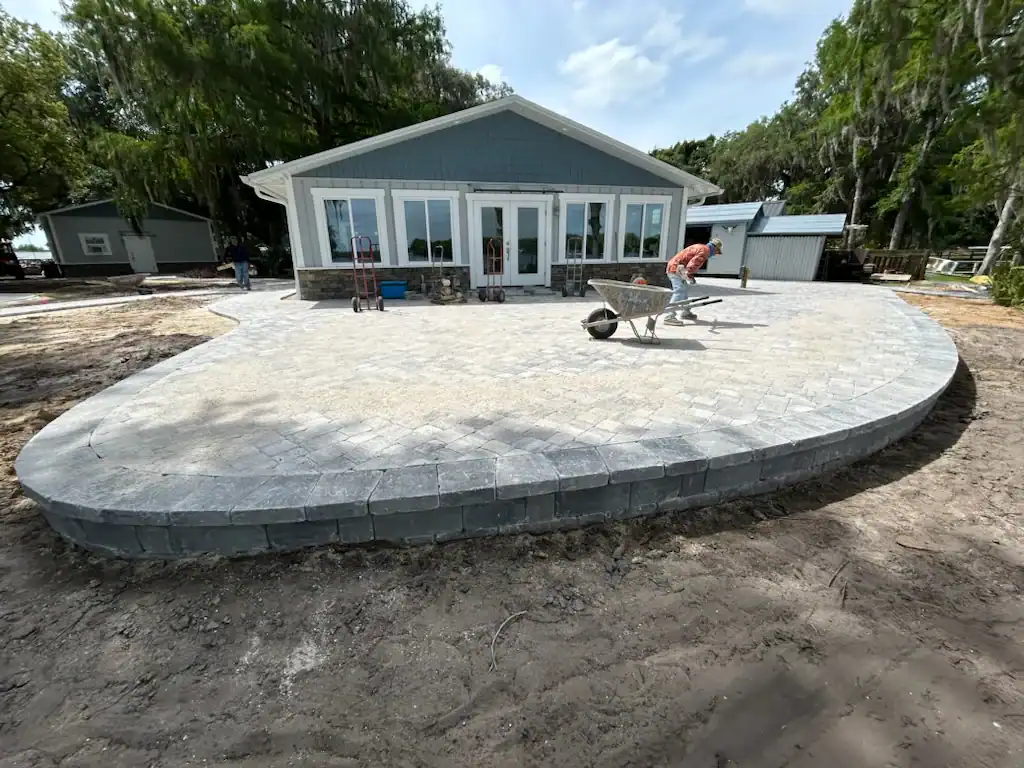
Paver installation costs more because it’s more labor-intensive. The crew has to excavate, build a compacted base, lay edge restraints, place each paver individually, and fill the joints with sand. That takes time. Concrete is faster—pour, smooth, cure, done. But that speed comes with trade-offs.
The base prep for pavers is more involved, but it’s also what makes them last. A properly compacted gravel base prevents settling and shifting. Edge restraints keep everything locked in place. Joint sand allows for movement without losing stability. All of that adds to the labor cost, but it’s also why paver patios hold up better over time.
Material cost varies too. Concrete pavers are the most affordable option if you’re going the paver route. Brick pavers cost a bit more. Natural stone sits at the high end. But even concrete pavers give you more design flexibility than a poured slab, so you’re not sacrificing aesthetics to stay on budget.
One cost people don’t always factor in is the timeline. Concrete needs time to cure before you can use it—usually a few days to a week depending on weather. Pavers are ready to walk on as soon as installation is done. If you’re trying to finish a project before a specific event or season, that difference matters.
Another hidden cost is mistakes. Concrete is unforgiving. If the pour goes wrong, you’re tearing it out and starting over. With pavers, adjustments are easier. A paver gets chipped during install? Swap it out. Need to adjust the layout midway through? You can. That flexibility reduces the risk of costly errors, especially if you’re working with a less experienced crew.
Both concrete and pavers need sealing every few years. That’s a wash. Where they differ is in what happens when something goes wrong. Concrete cracks, and those cracks let water in. Water causes more cracks, especially when it freezes and expands. In Florida, you don’t get freeze-thaw cycles like northern states, but you do get moisture intrusion that weakens the slab from below.
Fixing a cracked concrete patio isn’t cheap. You’re looking at resurfacing, patching, or in severe cases, replacement. Even patching leaves visible repairs that don’t match the original surface. With pavers, maintenance is simpler. Sweep off debris, rinse with a hose, reseal every few years. If a paver cracks, you pop it out and drop in a new one. Total cost? The price of one paver and maybe an hour of labor.
Weed growth is something people worry about with pavers, and it’s a fair concern. Weeds can grow in the joints if you don’t use polymeric sand or keep up with basic maintenance. But pulling a weed is easier than fixing a crack. And if you’re diligent about sealing and using the right joint material, weeds aren’t a major issue.
The long-term value equation comes down to this: concrete saves you money upfront but costs more to maintain and repair. Pavers cost more initially but hold their value better and require less invasive maintenance. If you’re planning to stay in your home for a decade or more, pavers usually come out ahead. If you’re flipping the property or need something functional on a tight budget, concrete might be the right call.
There’s also the resale consideration. A well-maintained paver patio adds curb appeal and signals quality to buyers. Concrete can too, but only if it’s in good shape. A cracked, stained concrete slab hurts resale value. A paver patio that’s been kept up looks almost as good at year 20 as it did at year one, and buyers notice that.
There’s no universal answer here. Concrete works if you need something affordable, functional, and fast. Pavers make sense if you’re prioritizing longevity, design flexibility, and ease of repair. Both can give you a solid outdoor space. The difference is in how they perform over time and what you’re willing to invest upfront versus down the road.
If you’re still weighing options, think about how you’ll actually use the space. Is this a high-traffic area where durability matters? Do you care about aesthetics and customization? How long do you plan to be in the home? Those questions matter more than picking based on material alone.
We’ve been helping homeowners in Citrus County make these decisions since 1995. If you want to talk through what makes sense for your specific yard and budget, reach out. We’ll walk you through the options without the sales pitch.
Article details:
Share:
Continue learning: