
Webster’s soil doesn’t hold water. That’s just the reality of living on sandy Central Florida ground — and it means your plants are working harder than they should just to survive the summer. A properly applied layer of mulch slows that moisture loss down dramatically, keeping root zones hydrated between rain events without you running the irrigation system every other day. On larger rural lots like most in the Webster area, that adds up to real savings on your water bill over the course of a season.
Weed pressure here is relentless. Florida’s heat doesn’t give weeds a slow season, and once they take hold in your garden beds, you’re pulling them every week. The right mulch depth — two to three inches, applied cleanly and completely — cuts off the sunlight those seeds need to germinate. You stop fighting the same battle over and over.
Beyond moisture and weeds, mulch keeps your soil temperature stable during the stretches of summer heat that push past 90 degrees. For established fruit trees, ornamental plantings, or the kind of productive garden beds that fit right in with Webster’s agricultural roots, that thermal protection matters. It’s the difference between plants that thrive and plants that just survive.
Mainstreet Landscaping has been a family-owned operation since 1995. That’s close to three decades of working in the same regional soil types, the same subtropical climate, and the same kind of large rural properties that define Webster and the surrounding communities throughout Sumter County. When we assess your property, we’re not guessing — we’re drawing on experience that’s been built one job at a time across this part of Central Florida.
We’re based in Citrus County, which puts us right next door to Sumter County. We know the landscape here — literally. The sandy soils along SR 471, the larger lot sizes that come with rural Webster properties, the way Florida’s summer rain events can wash thin mulch applications right out of a bed. We’ve seen it all, and we know how to handle it right.
We also offer discounts for military and first responder clients, because that’s a meaningful part of the communities we serve. If you’ve served or you serve now, we want to work with you.
It starts with a look at what you’re working with. Every property is different, and in Webster, that means accounting for lot size, existing plant material, soil drainage, and what’s already in your beds. We assess the condition of your current mulch if there is any, check for weed growth that needs to be addressed before new material goes down, and identify any areas where water pooling or erosion is already creating problems.
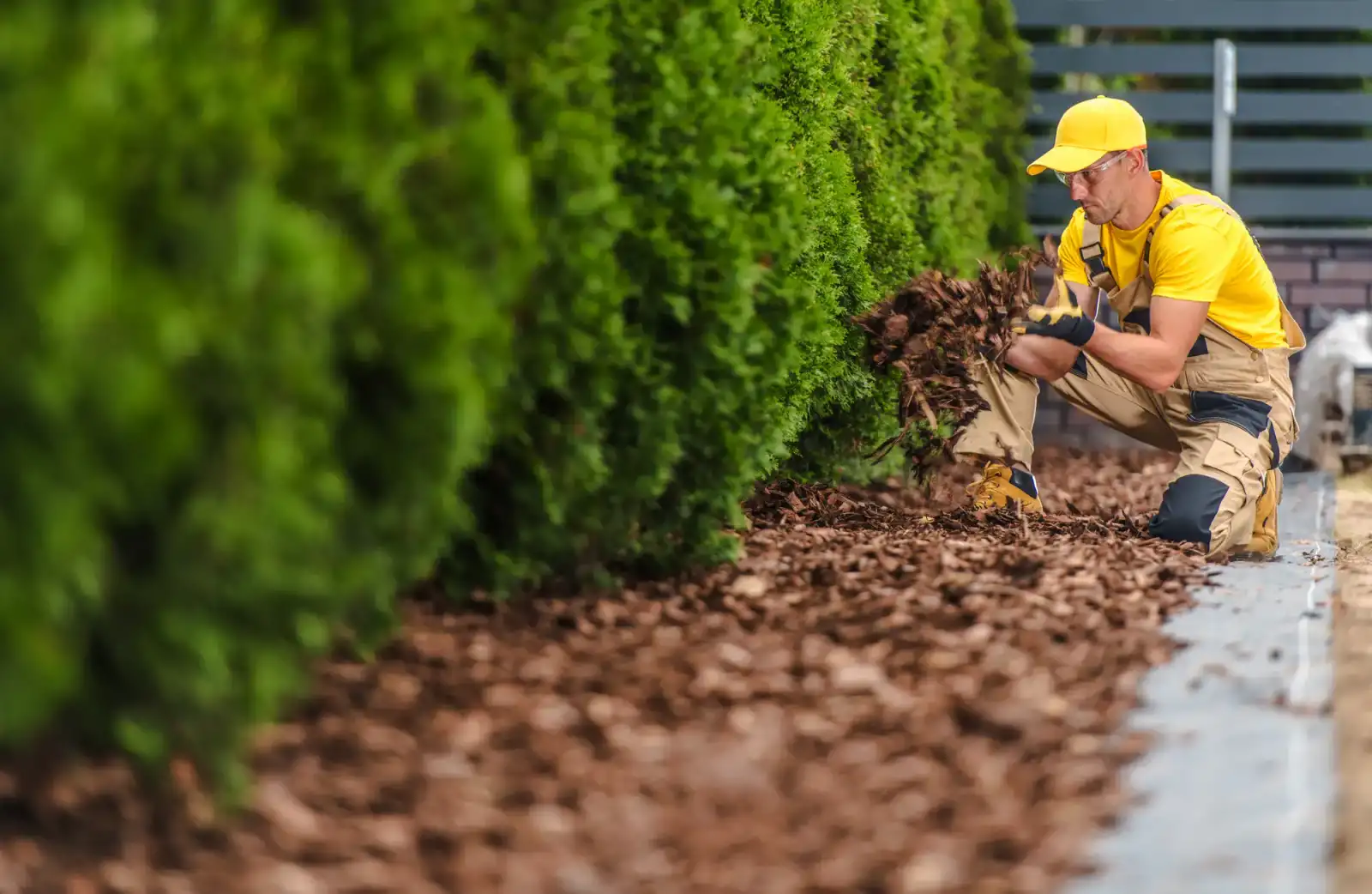
From there, we clear the beds, edge cleanly, and apply fresh mulch at the correct depth — two to three inches is the standard for Florida-Friendly Landscaping, and it’s the depth that actually does the work. Too shallow and you lose the weed suppression. Too deep and you risk moisture buildup against plant stems and root rot. We also maintain proper clearance from your home’s foundation and any wood framing — an important detail in Florida where improper mulch placement can create termite pathways that most homeowners don’t think about until it’s a problem.
After Florida’s hurricane season brings heavy rain and wind, mulch beds often need replenishment or restoration. We handle post-storm cleanup and bed restoration as part of what we do — something that comes up regularly for Webster properties that take on weather from June through November.

Ready to get started?
Mulching isn’t just dropping bags of material and spreading it around. What you get from us is a complete bed service — weed removal before new mulch goes down, clean edging to define the bed lines, and professional-grade application at the right depth for your specific plant material and soil conditions. For Webster properties, that typically means accounting for larger bed areas and more square footage than you’d see on a standard suburban lot, so we come prepared with the volume and crew to do the job completely in a single visit.
We work with organic mulch options that break down over time and actually improve your soil — relevant for homeowners in the Webster area who maintain vegetable gardens, citrus trees, or other productive plantings that benefit from improved soil health as the material decomposes. We’ll talk through the right mulch type for your specific beds before we start, because what works for a decorative ornamental bed isn’t always the best fit for a fruit tree surround or a garden area.
We’re a full-service landscaping operation, which means if your visit surfaces other issues — irrigation that needs attention, bed edging that’s lost its shape, or areas that need replanting — we can handle those too. One call, one company, no coordinating between multiple contractors.

In most parts of the country, mulch lasts a full season or longer before it needs refreshing. In Webster and throughout Sumter County, the combination of intense summer heat and Florida’s humidity accelerates the decomposition of organic mulch faster than homeowners usually expect. Most properties here benefit from fresh mulch at least once a year — and twice a year is often the better approach, with one application in the spring before the heat peaks and another in the fall to protect root systems heading into the cooler months.
Beyond decomposition, Florida’s hurricane season runs from June through November, and heavy rain events can scatter or compact mulch beds significantly. If your property takes on a major storm, the beds may need replenishment sooner than your regular schedule. We can assess the condition of your current mulch during a site visit and give you a straightforward answer on what actually needs to be done.
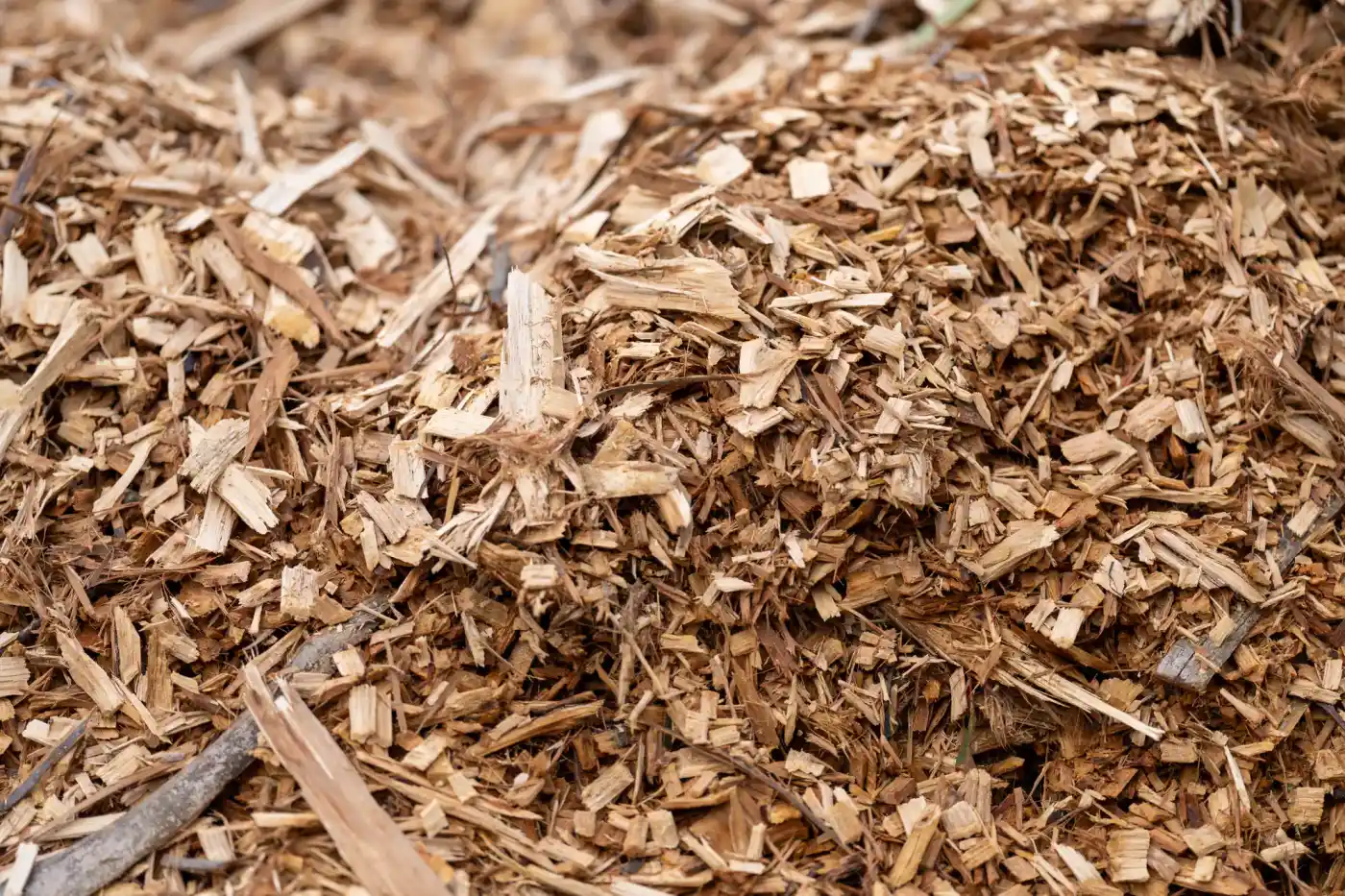
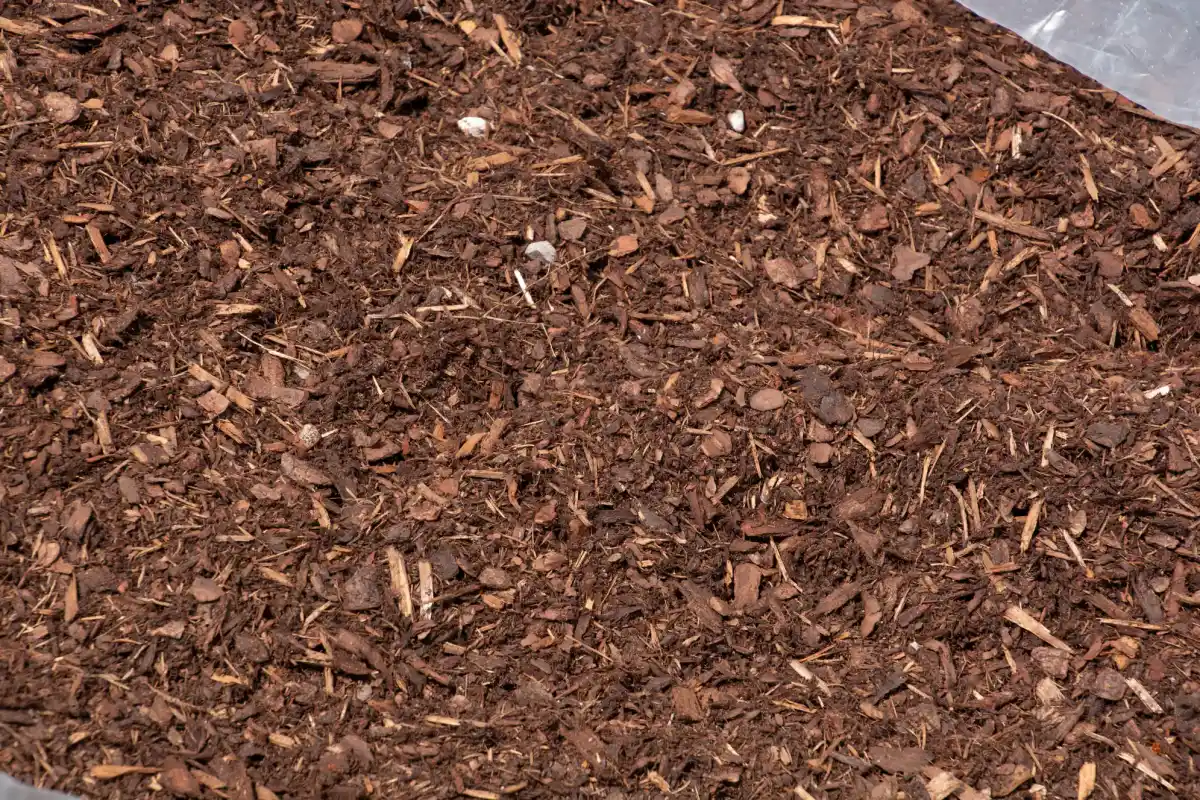
Sandy soil drains fast — that’s the core challenge for most Webster homeowners trying to keep plants healthy through a Florida summer. The best mulch for that environment is an organic option like pine bark, eucalyptus, or shredded hardwood. These materials break down gradually and add organic matter back into the soil as they decompose, which over time actually improves the soil’s ability to hold moisture. That’s a long-term benefit that inorganic mulches like rubber or rock simply don’t provide.
Pine bark mulch is one of the most common and effective choices in this part of Central Florida — it’s widely available, holds its color reasonably well, and doesn’t compact as quickly as finer materials. For garden beds or fruit tree surrounds, where soil health matters as much as weed suppression, a shredded hardwood or compost-blend mulch can be a strong option. We’ll talk through what makes the most sense for your specific beds before anything gets applied.
Mulch at the right depth is one of the most effective weed suppression tools available — but depth is everything. At two to three inches, organic mulch blocks the sunlight that weed seeds need to germinate. That alone eliminates the majority of weed pressure in a well-maintained bed. In Florida’s climate, where weeds grow year-round and don’t slow down the way they do in cooler states, that consistent suppression makes a real difference in how much time you spend maintaining your yard.
That said, mulch isn’t a total replacement for every situation. If you already have established perennial weeds or invasive root systems in a bed, those need to be removed before new mulch goes down — otherwise you’re just covering the problem. We address existing weed growth as part of our mulching process, so you’re starting clean. After that, a properly applied mulch layer significantly reduces how often you need to spray or hand-pull, which is the goal.
This is one of the most important details to get right, and it’s something that DIY mulch jobs frequently get wrong. In Florida, mulch that’s piled against your home’s foundation or wood framing creates two real problems. First, it traps moisture against the structure, which leads to rot over time. Second, it creates a direct pathway for subterranean termites — and Florida has some of the highest termite activity in the country, including species like the Formosan termite that are particularly aggressive.
The standard practice is to maintain at least a six-inch clearance between your mulch and any wood or foundation material. This keeps the moisture management benefits of mulching intact while eliminating the structural risk. Our crews are trained on proper clearance and application — it’s not an afterthought, it’s part of how the job gets done. If you’ve had mulch piled against your home before, we’ll pull it back and reapply it correctly.
Mulching cost depends primarily on the square footage of your bed areas and the type of mulch selected. For Webster properties — which tend to run larger than typical suburban lots, often sitting on half-acre to multi-acre parcels — the total bed area is usually significantly more than what you’d see in a denser neighborhood. That affects both the volume of material needed and the labor involved in applying it correctly across the full property.
Rather than give you a number that may not reflect what your specific property actually needs, we’d rather take a look and give you a real quote. What we can tell you is that professional mulching is one of the more cost-effective landscaping services when you factor in what it saves you — reduced water usage, less time weeding, healthier plants that don’t need replacing as often. For military and first responder clients, we offer a direct discount on services, so if that applies to you, make sure to mention it when you reach out.
Yes — and it’s something we pay close attention to, because mulching around productive plantings like fruit trees and vegetable garden beds is different from mulching a standard ornamental bed. Around fruit trees, you want mulch pulled back from the trunk — contact between mulch and bark can cause crown rot, which is a genuine threat to established citrus trees and other fruit-bearing species. The mulch should form a ring around the tree, not a mound against it.
For vegetable garden beds, the mulch type matters more than it does in a decorative setting. Organic materials that break down and contribute nutrients to the soil are the right call here — and in Webster, where a lot of homeowners maintain gardens that reflect the area’s deep agricultural history, that’s a detail worth getting right. We’ll assess your specific plantings before we start and apply the right material in the right way for each area of your property.
Useful Links
Other Services we provide in Webster