Five practical mulching hacks built for Citrus County's sandy soil, water restrictions, and relentless summer heat, so your garden actually stays healthy.
Share:
Summary:
If you’ve ever pulled weeds out of your flower beds on a Saturday morning only to see them back by Wednesday, you already know the frustration. Citrus County’s heat, sandy soil, and once-a-week watering restrictions create a tough environment for any garden; without the right ground cover working in your favor, you’re fighting an uphill battle every single week. Mulch is the fix most homeowners either skip, underapply, or apply incorrectly. These five hacks aren’t complicated, but they’re the difference between beds that look great all summer and beds that look like a weed farm by July.
Most people picture mulching as spreading some brown stuff around plants and calling it done. Professional mulching services go considerably further than that, and the difference shows up within weeks.
A proper job starts with bed preparation: clearing existing weeds, applying a granular pre-emergent herbicide to stop new seeds from germinating, and then applying mulch at the correct depth across the entire bed. Not just the easy-to-reach spots. Clean bed edging is part of it too, since that sharp line between your lawn and your mulch beds is what makes a yard look finished rather than just maintained.
The final step is cleanup. We leave your driveway, walkways, and patio the way we found them. That walkthrough at the end is what separates a professional job from someone who dropped a load and left.
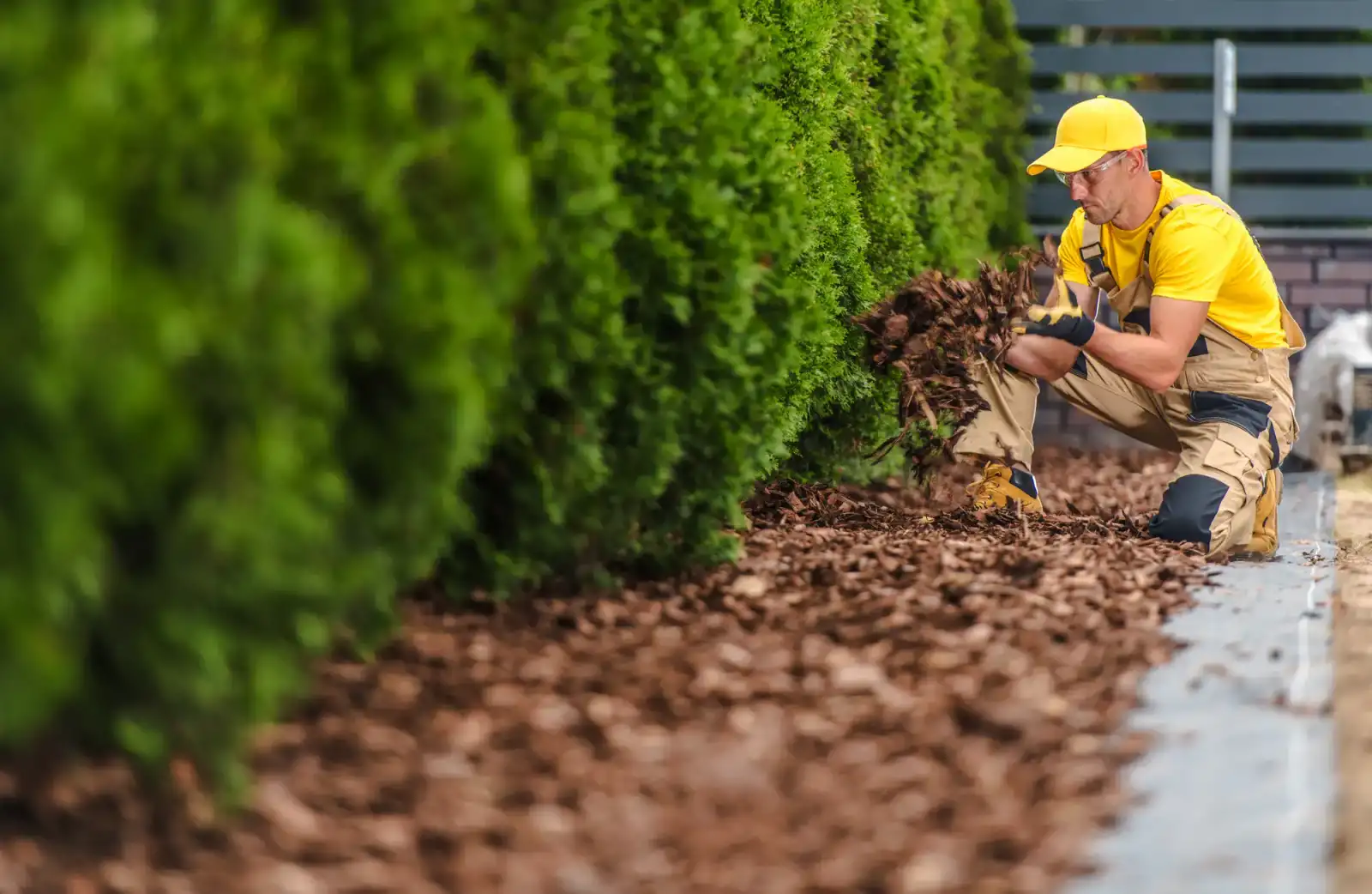
This is where most DIY mulching falls apart. The industry standard for Florida is 2 to 4 inches, with 3 inches being the professional sweet spot. Go thinner than 2 inches and weed seeds get the light they need to push through. Go thicker than 4 inches and you’re suffocating roots, trapping moisture against plant stems, and creating a warm, damp environment that invites fungal disease and pests.
The reason depth matters even more in Citrus County than in other parts of the state comes down to the soil itself. Sandy soil drains fast, sometimes within hours of watering. Without a proper mulch layer acting as insulation and a moisture barrier, your plants are drying out between your one allowed watering day and the next. Research from the University of Florida found that mulch reduces soil water evaporation by roughly 33% compared to uncovered ground. On a once-a-week watering schedule enforced by the Southwest Florida Water Management District, that retained moisture isn’t a bonus; it’s what keeps plants alive through August.
Soil temperature is the other piece most homeowners don’t think about. Florida’s summer soil surface can exceed 100°F. Research from Bartlett Tree Laboratories showed that wood chip mulch kept daily soil temperature swings within 9 degrees, while bare soil fluctuated by more than 21 degrees in the same period. That kind of thermal stability is what allows roots to function normally through the hottest months rather than shutting down under heat stress.
Getting the depth right across an entire bed, not just the center and not just the visible areas, is harder than it sounds when you’re working by hand with bags from a hardware store. It’s one of the main reasons professionally applied mulch outperforms DIY results even when the same material is used.
Walk through almost any neighborhood in Homosassa, Sugarmill Woods, or Pine Ridge and you’ll spot them: trees with mulch piled high against the trunk in a cone shape. It looks intentional. It looks like someone cared. But it’s one of the most damaging things you can do to a tree you paid good money to plant.
That cone shape, called a mulch volcano, traps moisture directly against the bark. Bark isn’t designed to stay wet. Over time, that trapped moisture invites fungal rot, creates habitat for insects and rodents, and can cause girdling roots, which are roots that grow in circles around the base of the trunk and eventually strangle the tree from below. By the time the damage is visible above ground, it’s often too late to reverse it.
The correct approach is what landscapers call the donut shape. Mulch is spread wide around the base of the tree, ideally out to the drip line if possible, but kept several inches away from the trunk itself. Flat, not piled. The gap around the trunk lets the bark breathe, prevents moisture buildup, and removes the conditions that attract pests.
This detail alone is a strong reason to have a professional handle mulching rather than relying on whoever happens to be available. It’s not that the technique is complicated; it’s that most people have seen mulch volcanoes so often they assume it’s correct. It isn’t, and the long-term cost of replacing a mature tree is far higher than the cost of having it mulched properly the first time.
The same principle applies to shrubs and perennials. Keeping mulch a couple of inches away from the base of any plant, not just trees, allows air circulation, reduces disease pressure, and keeps the crown of the plant from rotting during Citrus County’s rainy season when the ground stays saturated for days at a time.
Want live answers?
Connect with a MainStreet Landscaping expert for fast, friendly support.
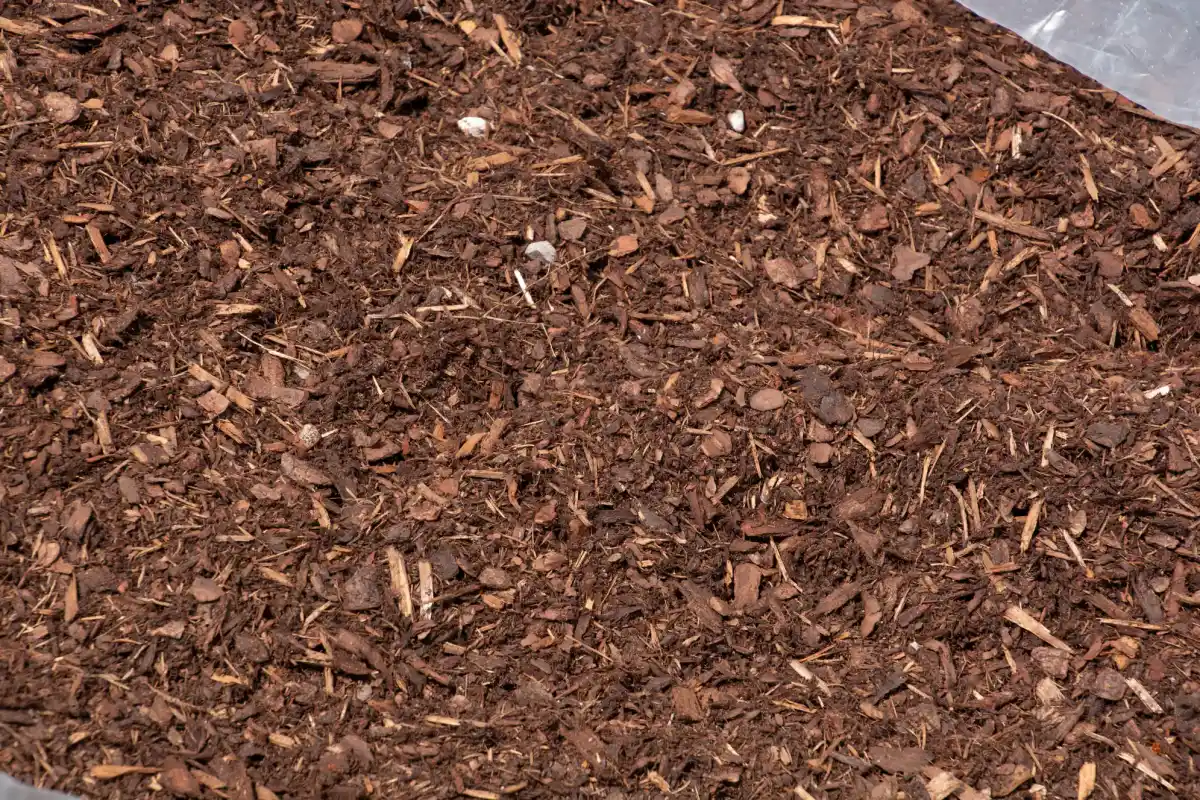
Not all mulch performs the same way in Florida’s heat and humidity, and what works well in Georgia or the Carolinas isn’t necessarily the right call here. Citrus County’s sandy, nutrient-poor soil benefits most from organic mulches that break down over time and add organic matter back into the ground: pine bark, wood chips, and pine straw are the most commonly recommended options.
Rubber mulch gets used occasionally because it doesn’t break down, but that’s actually the problem. It retains heat aggressively, doesn’t enrich the soil, and can raise bed temperatures rather than regulate them. In a Florida summer, the last thing your plants need is more heat radiating up from the ground.
This comes up constantly, and the short answer is no, but it’s worth explaining why, because it feels logical on the surface.
Landscape fabric seems like a smart addition. You lay it down, cut holes for your plants, and then apply mulch on top. The idea is that the fabric blocks weeds from below while the mulch handles the surface. The reality is that it blocks the organic breakdown process that makes mulch valuable in the first place. As organic mulch decomposes, it slowly releases nutrients and builds organic matter in the soil, which is exactly what Citrus County’s sandy soil needs. Landscape fabric stops that from happening.
The weed problem doesn’t go away either. Annual weeds eventually root into the fabric itself, and once that happens, removal becomes far more difficult than if you’d never used it. You end up with a tangled mess of roots, degrading plastic, and weeds that are harder to pull than they would have been from bare soil.
What actually works is organic mulch applied directly on prepared soil, at the right depth, with a pre-emergent herbicide applied first. The pre-emergent targets weed seeds before they germinate, and the mulch layer blocks the light they need to get started. That combination (pre-emergent plus proper depth) is what we use at Mainstreet Landscaping, and it outperforms landscape fabric in both weed control and long-term soil health.
One more thing worth noting: organic mulch in Florida doesn’t last as long as it does in cooler climates. The heat and humidity accelerate decomposition, which means beds that looked great in March can look thin and ineffective by September. Refreshing mulch every 6 to 12 months, rather than the 1 to 2 year cycle common in northern markets, keeps the protective layer intact and the benefits consistent year-round. For homeowners in communities like Spruce Creek or Riverhaven where curb appeal matters and HOA standards apply, staying on a regular refresh schedule is the difference between beds that look maintained and beds that look neglected.
Mulching doesn’t exist in isolation. When it’s done well, it works with everything else in your yard, and when it’s skipped or done poorly, the problems show up across the board.
The clearest connection is to irrigation. With Citrus County’s one-day-per-week watering restriction, every drop of water matters. Mulch that reduces evaporation by 33% effectively extends what each watering session delivers. If your sprinkler system is working properly but your plants still look stressed by midweek, the missing piece is often the mulch layer that should be holding that moisture in place. We handle both irrigation and mulching, which means we can look at how your beds and your watering schedule are working together, not just one piece in isolation.
Lawn care and mulching are closely linked too. Clean, well-defined bed edges prevent grass from creeping into mulched areas, which reduces the maintenance burden and keeps the visual contrast sharp between your lawn and your beds. When edging is part of the mulching process, not an afterthought, the whole yard looks more intentional.
And if you have hardscaping, like a paver driveway, a fire pit area, or a pool deck, mulched beds around those features are what tie the outdoor space together. A paver patio surrounded by weedy, bare beds undersells the investment you made in the hardscape. Freshly mulched, well-maintained beds around those same pavers make the whole yard feel designed rather than assembled piece by piece. Professional landscaping, including consistent mulching, can increase property value by up to 17%; for a $200,000 home in Citrus County, that’s a meaningful return on what is, in practice, a relatively modest annual maintenance cost.
The point isn’t that you need to do everything at once. It’s that these services reinforce each other, and working with one company that understands how they connect, rather than coordinating three separate contractors, makes the whole process simpler and the results more consistent.
Mulching done right is one of the highest-return things you can do for your yard in this climate. It protects your plants from Citrus County’s summer heat, stretches your limited watering days further, keeps weed pressure manageable, and makes your property look genuinely cared for.
The details (including depth, material, clearance from plant bases, pre-emergent treatment, and regular refreshing) are what separate results that last from results that disappoint.
If your beds have been a source of frustration, or if you’ve tried mulching before and didn’t see the difference you expected, the issue is almost always in the application, not the concept.
We’ve been working in Citrus County since 1995, and we know this soil, this climate, and these neighborhoods. No matter if your beds need their very first professional treatment or a seasonal refresh before summer peaks, reach out to Mainstreet Landscaping and let’s take a look at what your yard actually needs.
Article details:
Share:
Continue learning: