Thinking about adding a fire pit to your backyard? Here's what to consider before you build — from placement and materials to fuel type and local permits.
Share:
Summary:
Most people don’t overthink a fire pit until they’re already sitting around someone else’s and thinking, “I want this.” Then comes the research spiral — wood or gas, how big, how far from the house, do I need a permit, who do I even call? It gets complicated fast, and most of what you find online isn’t written for someone in Citrus County, FL. It’s written for a generic homeowner somewhere with a flat backyard and no HOA. That’s not always the reality here. This guide is. We’ll walk you through what actually matters when planning a fire pit installation — starting with the decision most people get wrong first.
Before you think about materials or fuel type, you need to know where the fire pit is going. This is the step most homeowners skip, and it causes the most problems later.
The standard minimum clearance is 10 to 15 feet from your home, fencing, overhanging trees, and anything else that can catch a spark. That’s not a suggestion — it’s the baseline safety requirement, and it significantly narrows your placement options on a typical residential lot in Citrus County.
You also need to think about wind patterns, seating space, and how the fire pit connects to the rest of your outdoor area. A fire pit that’s technically safe but awkwardly positioned — too close to the pool deck, too far from the patio — gets used a lot less than one that’s naturally integrated into the flow of your backyard.
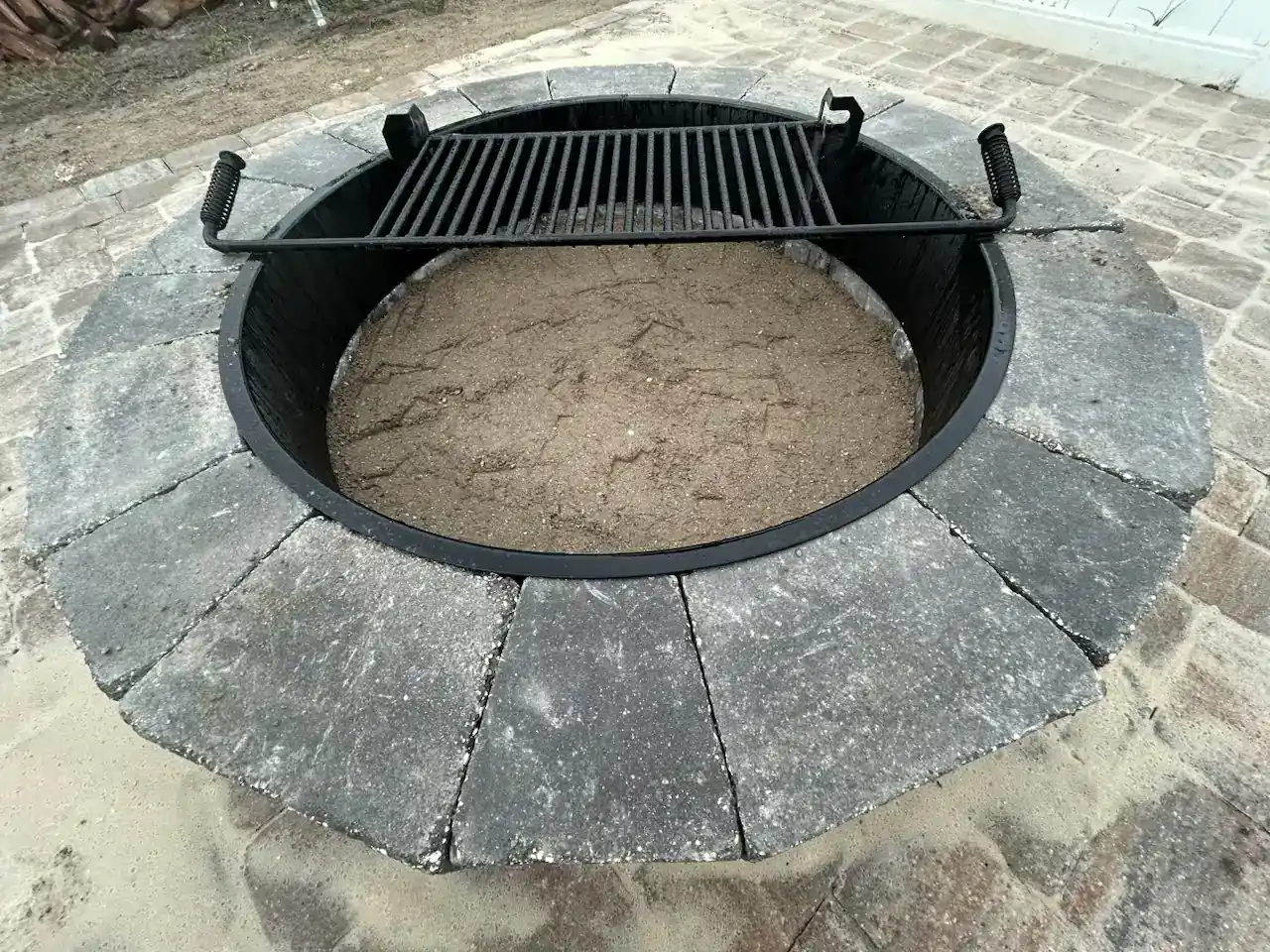
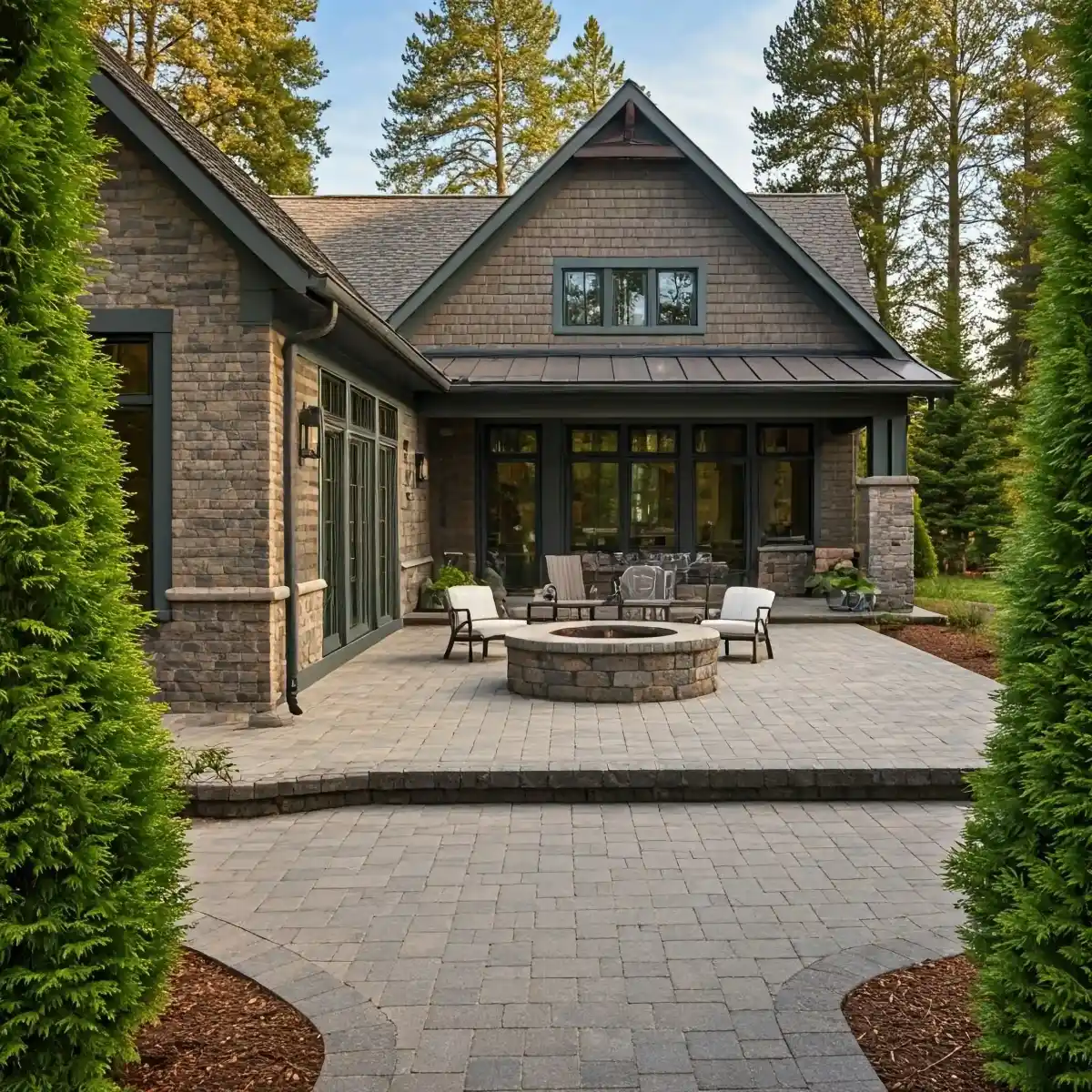
Size is one of those things that sounds like a personal preference but actually has a practical answer. For most residential backyard settings, an interior diameter of 36 to 44 inches hits the sweet spot — large enough to throw real heat, small enough that conversation doesn’t require shouting across the fire. If you’re building for larger gatherings, 48 to 60 inches gives you more flexibility without the fire feeling like a bonfire.
Height matters too, and it’s more functional than most people realize. A standard fire pit sits 12 to 14 inches tall. If you want the outer edge to double as a seating wall — which works beautifully on a paver patio — you’re looking at 20 inches. That extra height makes a real difference in comfort, especially for longer evenings outside.
What often gets overlooked is how the fire pit’s footprint interacts with the surrounding space. You need enough room for seating on all sides — typically a minimum of three to four feet of clear space between the pit edge and any chairs or furniture — plus room to move around without feeling cramped. When we’re designing a fire feature as part of a larger patio project, we think about the whole outdoor room, not just the pit itself. The fire pit should anchor the space, not compete with it.
One more thing worth mentioning: the inner wall of any fire pit needs to be built from fire-rated materials — fire brick or a certified fire ring. Not standard concrete block, not decorative stone, and definitely not river rock or pea gravel. Those last two are genuinely dangerous. They hold moisture and can crack or explode under heat. It’s not a common-knowledge fact, but it’s the kind of thing that separates a well-built fire feature from a liability.
This is usually the question people spend the most time on, and honestly, it comes down to how you plan to use it.
Wood-burning fire pits have the look and feel most people picture when they imagine a backyard fire — crackling sound, real flames, that campfire quality. The tradeoff is management. You’re dealing with ash cleanup, smoke direction depending on wind, and the need to fully extinguish the fire before you go inside. For some people, that’s part of the experience. For others, it’s just extra work.
Propane is a middle ground. It burns clean, produces no smoke, and connects to a portable LP tank that you can swap out when it runs low. The flame is controllable, the startup is simple, and you don’t have to store firewood. The limitation is that you’re dependent on having a tank on hand, and the tank itself needs to be stored a safe distance from the pit.
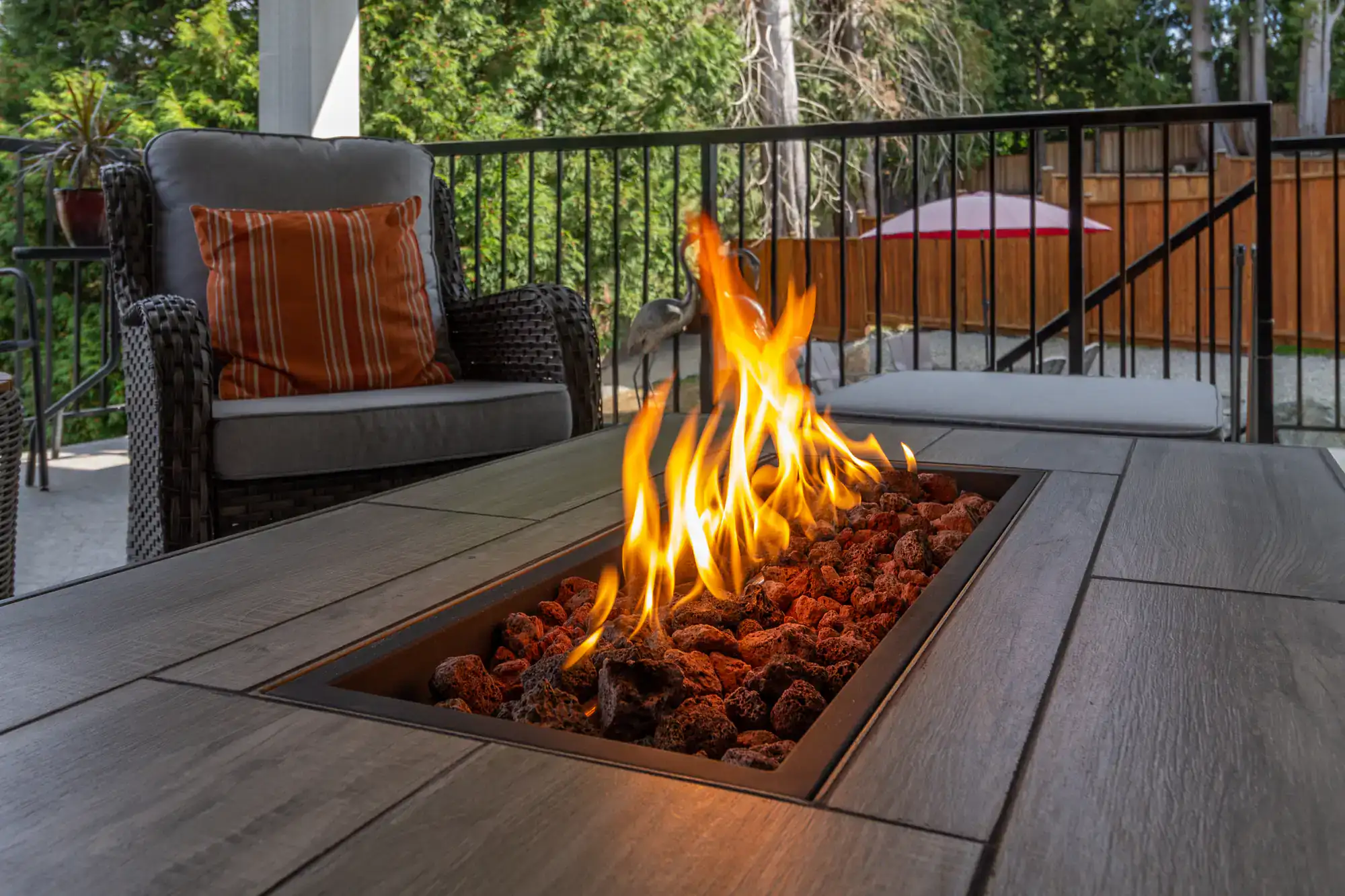
Natural gas is what most of our clients end up choosing, especially when the fire pit is part of a larger patio or outdoor living project. It connects directly to your home’s gas supply, turns on with a valve or a switch, and never runs out mid-evening. The installation requires a licensed gas technician to make the connection — that’s not optional, and it’s not something to cut corners on — but once it’s done, the convenience is hard to argue with.
Here in Citrus County, the fire pit season runs roughly October through April. Evening temperatures regularly drop into the 50s and low 60s, which is genuinely comfortable fire weather, and it’s when outdoor entertaining picks up for most residents. A lot of people who moved here from Ohio, Michigan, or New York specifically want to recreate that backyard fire experience from up north — and a natural gas fire pit makes it as easy as flipping a switch after dinner.
Want live answers?
Connect with a MainStreet Landscaping expert for fast, friendly support.
There’s a version of fire pit installation that looks simple on YouTube. Dig a hole, stack some stones, done. And for a temporary, freestanding setup, maybe that’s fine. But a permanent fire feature — one that’s integrated into your patio, connected to a gas line, and built to hold up through Florida summers and hurricane season — is a different scope entirely.
Done right, it starts with excavation. A proper in-ground base requires six to eight inches of excavation, followed by compacted gravel and a sand layer that creates a level, stable foundation. Skip that step and you get settling, cracking, and a fire pit that looks rough within two or three years. The base is the part nobody sees, but it’s the part that determines how long everything above it lasts.
From there, the inner lining goes in — fire brick or a certified fire ring — followed by the outer wall, which can be built to match your existing patio materials. If you’re using pavers from Tremron, Belgard, or Flagstone around the fire pit surround, those surfaces should be sealed after installation to protect against heat staining and weathering.
This is one of the most common questions we hear, and the honest answer is: it depends on what you’re building.
A freestanding, portable fire pit sitting on an existing patio? Generally no permit required. A permanent, in-ground fire feature with a gas line connection? That’s a different conversation. In Citrus County, permanent outdoor structures and any work involving gas connections fall under building department oversight, and the permit requirements exist for good reason — they ensure the installation meets safety codes and doesn’t create issues if you ever sell the home.
The gas line piece is non-negotiable regardless of permit status. Florida requires a licensed gas technician to make the connection to a natural gas supply. This isn’t a gray area, and it’s not something a general handyman should be doing. Beyond the legal requirement, a gas connection done wrong is a serious safety risk.
If you live in one of Citrus County’s HOA communities — Citrus Hills, Beverly Hills, and similar neighborhoods — there’s another layer to navigate. HOAs in this area often have specific rules about outdoor fire features: what materials are acceptable, where the pit can be located relative to property lines, and sometimes even aesthetic requirements about how it has to look. We’ve worked in enough of these communities to know the approval process, and we handle that coordination as part of the project. You shouldn’t have to figure out HOA submittal requirements on top of everything else.
The short version: if you’re building something permanent in Citrus County, assume there’s a process to follow. A contractor who knows the local building department and HOA landscape will save you time, money, and the headache of having to redo work that wasn’t approved.
The contractor question is where a lot of homeowners get burned — sometimes literally, but more often financially. A fire pit installation looks straightforward enough that it attracts a wide range of people willing to do it, and not all of them have the background to do it well.
A few things worth looking for before you sign anything. First, ask about their hardscape experience specifically. Fire pit installation involves base preparation, drainage, fire-rated materials, and often paver work around the surround. A general lawn care company that occasionally does hardscape is not the same as a contractor whose primary work is paver patios, retaining walls, and custom fire features. The difference shows up in the finished product.
Second, ask about manufacturer relationships. If your fire pit surround is going to use Tremron, Belgard, or Flagstone pavers — which are the right materials for this climate — an authorized contractor for those brands has access to products, warranties, and installation training that unlicensed or non-affiliated contractors simply don’t. That matters when something needs to be addressed down the road.
Third, ask how long they’ve been operating locally. There’s no substitute for years of work in the same market. A contractor who’s been building fire features and hardscapes in Citrus County since the mid-1990s understands the soil conditions, the drainage patterns, the HOA landscape, and what actually holds up through Florida’s wet summers and occasional hurricane seasons. That institutional knowledge doesn’t come from a training course.
We’ve been doing this work in Citrus County since 1995. We’re authorized contractors for Tremron, Flagstone, and Belgard, and we’re the only Seal ‘n Lock distributor in the county — which means after your fire pit and paver surround are installed, we can protect those surfaces with a sealing system no other local contractor can offer. We also handle everything around the fire pit: the paver patio, the landscape lighting, the lawn care, the mulching. If you want a complete outdoor space and not just a standalone feature, we can build the whole thing without you managing multiple vendors.
A fire pit done right becomes one of those features you use constantly — the reason people linger outside after dinner, the thing guests always comment on, the part of your yard you’re genuinely glad you invested in. A fire pit done wrong becomes a cracked, settling eyesore that you stop using after the first season.
The difference is almost always in the planning and the base work, not the stones you can see from the surface. Get the placement right, choose materials that are actually rated for heat, and work with someone who understands what permanent outdoor construction in Florida requires.
If you’re in Citrus County and starting to think seriously about a fire pit installation — whether it’s a standalone feature or part of a larger patio project — we’re worth a conversation. Reach out and tell us what you’re envisioning. We’ll take it from there.
Article details:
Share:
Continue learning: