Your driveway is showing cracks, pooling water, or settling unevenly. These aren't just cosmetic issues—they're warning signs that repairs won't cut it anymore.
Share:
Summary:
A few hairline cracks aren’t the end of the world. You can fill those and move on. But when you’re seeing cracks wider than a quarter inch, cracks that connect to form patterns, or cracks that reappear every year in the same spots—that’s your driveway telling you the foundation underneath has issues.
Concrete is rigid. When Florida’s sandy soil shifts—and it shifts constantly, especially after heavy rain or during dry spells—concrete has nowhere to go. It can’t flex. It can’t adjust. So it cracks.
Patching these cracks might look better for a season or two, but water still gets in. That water erodes the base material underneath. Then the crack opens again, wider this time. You’re not fixing the problem. You’re just covering it up temporarily.
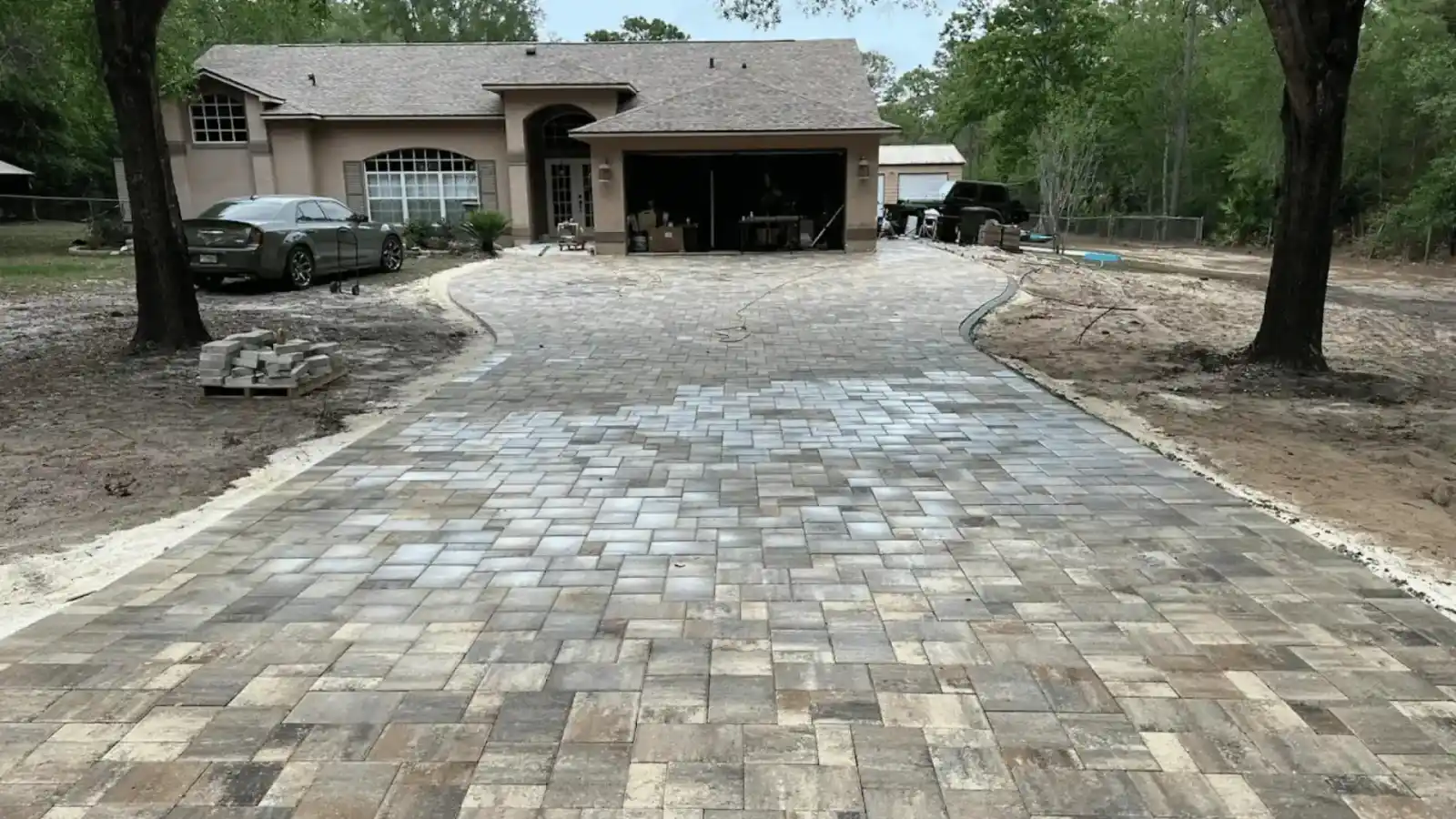
Citrus County sits on sandy soil that doesn’t provide stable, consistent support the way clay or rocky soil does in other parts of the country. When it rains—and we get plenty of rain here—that sand shifts and settles. When it’s dry, the soil contracts. This constant movement puts stress on anything rigid sitting on top of it.
Concrete driveways are poured as one continuous slab. They’re designed to be strong and solid, which works great in stable soil conditions. But in Florida, that rigidity becomes a weakness. The slab can’t move with the ground, so it fights against natural soil movement. Eventually, the concrete loses that fight.
You’ll see this show up as cracks first, usually starting at weak points like the edges or where the driveway meets the garage. Those cracks spread because the underlying problem—unstable soil and a rigid surface—hasn’t changed. The concrete is still trying to stay in one piece while the ground underneath keeps shifting.
This is why you see ten-year-old concrete driveways in Citrus County with significant cracking while a properly installed paver driveway from the same era still looks solid. The difference isn’t the age. It’s how the two materials respond to ground movement.
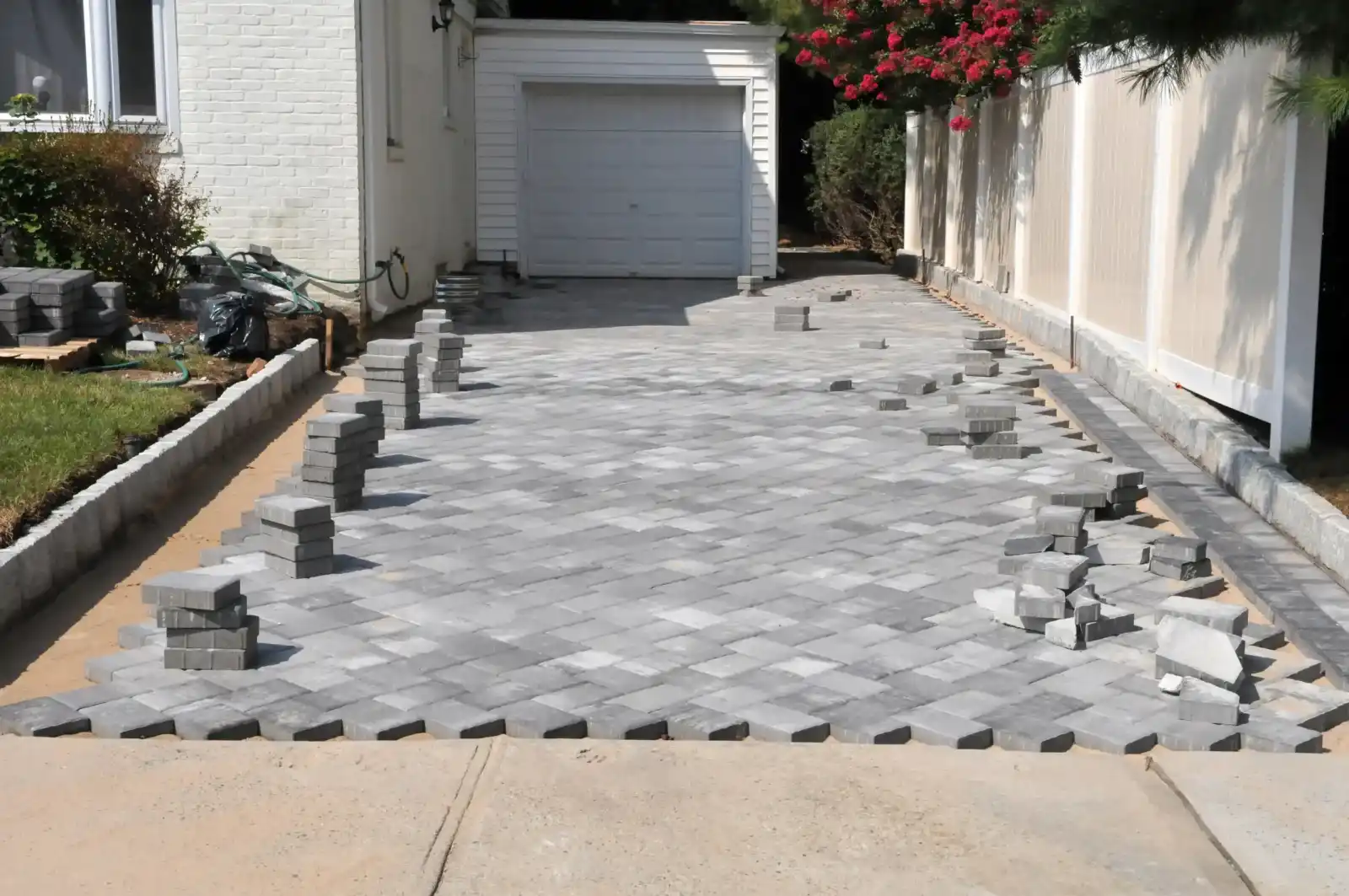
Pavers are individual units that interlock. When the soil shifts, the pavers shift with it—slightly, almost imperceptibly—without breaking. The joints between pavers allow for that movement. It’s not a design flaw. It’s engineered flexibility that works with Florida’s soil conditions instead of fighting them.
If you’re dealing with widespread cracking that keeps coming back no matter how many times you seal or patch it, you’re seeing the fundamental incompatibility between rigid concrete and shifting sandy soil. Repairing the surface won’t fix the problem underneath. That’s when driveway replacement becomes the smarter choice.
Not all cracks mean your driveway is beyond repair. Small, thin cracks—about an eighth of an inch wide—are often just surface issues caused by temperature changes or minor settling. These can usually be filled and sealed without major concern.
But when cracks are wider than a quarter inch, when they’re deep enough that you can see aggregate or base material underneath, or when they form interconnected patterns that look like alligator skin—those are foundation problems. The base layer under your driveway has failed, and no amount of surface patching will fix that.
Here’s how to tell the difference: surface cracks are usually isolated, relatively straight, and don’t change much over time. Foundation cracks spread, widen, develop branches, and often correspond with areas where the driveway has settled or become uneven. If you’re seeing multiple cracks in different areas, or if the cracks seem to be growing and connecting, you’re looking at structural failure.
Water plays a huge role in turning surface cracks into foundation problems. When water gets into a crack, it doesn’t just sit there. It seeps down into the base material—the compacted gravel and sand that’s supposed to provide stable support for the concrete. Once water saturates that base material, it loses its load-bearing capacity. The base shifts, settles, or washes away, and the concrete above it cracks even more.
This is especially problematic in Florida because we don’t just get occasional rain. We get afternoon thunderstorms that dump inches of water in a short time. We get tropical storms and hurricanes. All that water finds its way into cracks, and once it’s in the base layer, the damage accelerates.
If you’re seeing cracks that have gotten wider over the past year or two, cracks that now have grass or weeds growing in them, or cracks where one side of the concrete is noticeably higher than the other—those are clear signs the foundation is compromised. At that point, you’re not repairing a driveway. You’re managing the decline of a failing structure.
Paver installations address this differently because they’re built as a system, not a slab. The base is engineered with proper drainage in mind. The pavers themselves allow water to drain through the joints instead of pooling on the surface. And when one section does settle—which can happen with any driveway—you can lift and reset those specific pavers without tearing out the entire area. That’s not possible with a concrete slab.
Want live answers?
Connect with a MainStreet Landscaping expert for fast, friendly support.
If you’re seeing puddles on your driveway hours after the rain stops, or if water is flowing toward your house instead of away from it, you have a drainage problem that goes beyond the driveway itself. This is one of the most serious issues because it affects your home’s foundation, not just your driveway.
Proper drainage isn’t optional in Florida. With the amount of rain we get, water needs somewhere to go. When your driveway holds water or directs it the wrong way, that’s usually because the driveway has settled, the original grading was inadequate, or the base has eroded and changed the surface slope.
Standing water accelerates every other problem your driveway has. It seeps into cracks, erodes base material, promotes weed growth, and in some cases, creates safety hazards when it freezes on those rare cold nights we get. More importantly, if water is flowing toward your foundation, you’re risking much more expensive problems than a damaged driveway.
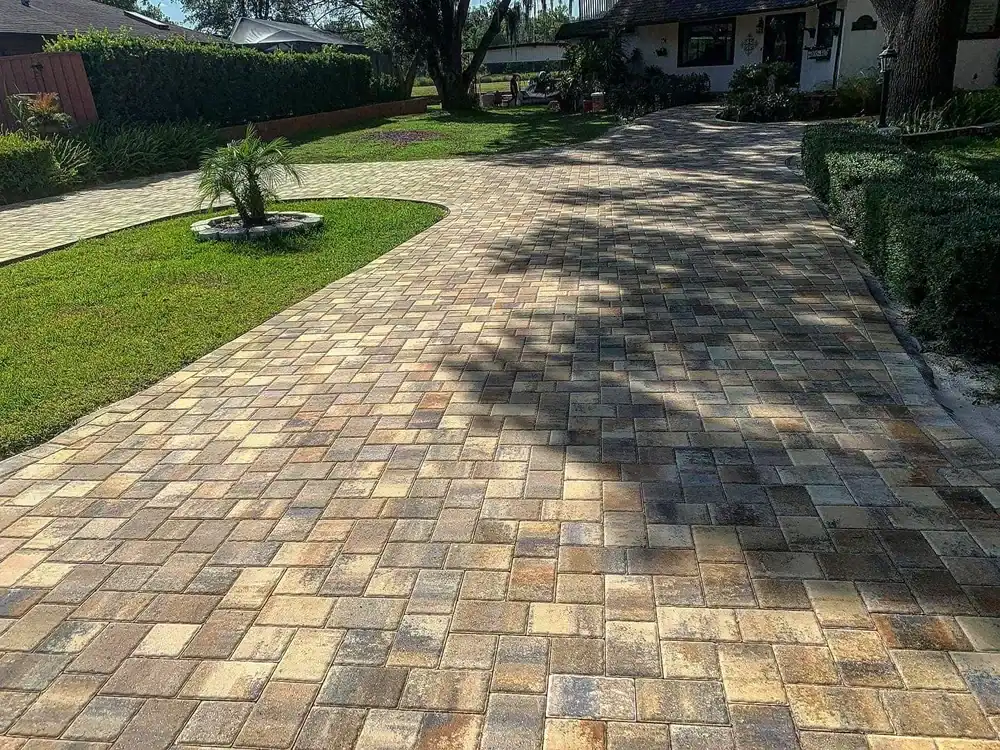
Driveways don’t usually start with drainage problems. They develop them over time as the surface settles unevenly. This happens when the base material underneath isn’t properly compacted, when water erodes sections of the base, or when soil conditions change and certain areas sink more than others.
You’ll notice this as low spots where water collects. Maybe it’s a section near the garage where puddles form. Maybe it’s along one edge where the driveway has separated slightly from the concrete apron. These low spots might seem minor, but they indicate that the driveway is no longer level and the original drainage slope has changed.
When a concrete driveway settles, your options are limited. You can try mudjacking or slabjacking—processes where material is injected under the slab to lift it back to level. This works sometimes, especially if the settling is isolated to one small area. But if multiple sections have settled, if the settling is ongoing because of soil conditions, or if the concrete has already cracked from the settling, lifting the slab is often a temporary fix that doesn’t address why the settling happened in the first place.
The other option with traditional driveway resurfacing alternatives is to tear out the sunken section and repour it. This is expensive, rarely matches the existing concrete perfectly, and still doesn’t guarantee that the new section won’t settle again if the underlying soil issues haven’t been addressed.
Paver driveways handle settling differently because they’re not one continuous slab. If a section settles, you can remove those pavers, add base material to bring the area back to level, and reinstall the same pavers. The repair is localized, relatively quick, and doesn’t require you to replace the entire driveway or live with mismatched concrete patches.
More importantly, proper paver driveway installation includes drainage planning from the start. The base is graded to direct water away from structures. The joints between pavers allow water to drain through the surface instead of sitting on top of it. And in areas where drainage is a known issue, permeable paver systems can be installed that allow water to filter directly into the ground, eliminating surface runoff entirely.
If you’re dealing with standing water, if your driveway is directing water toward your house, or if you’re seeing erosion around the edges where water is washing away soil—those are signs that your current driveway isn’t managing water properly. Resurfacing won’t fix that. You need a solution that addresses drainage at the foundation level, and that means rebuilding with proper grading and materials designed to handle Florida’s rainfall.
Citrus County gets more rain than most people realize. We’re not just talking about hurricane season. We get regular afternoon thunderstorms from May through October that can drop several inches of rain in a short period. Our coastal areas deal with storm surge and flooding. And even in drier months, morning dew and humidity keep surfaces wet longer than in other climates.
All this moisture means drainage isn’t just a nice feature—it’s essential to how long your driveway lasts. Concrete driveways that don’t drain properly fail faster here than they would in drier climates. Water sits on the surface, seeps into cracks, saturates the base, and accelerates every form of deterioration.
The sandy soil we have here makes drainage even more critical. Sand doesn’t absorb water as quickly as you might think, especially when it’s been compacted under a driveway. Water can pool on the surface or flow along the top of the base layer, looking for the path of least resistance. If that path is toward your foundation or into your garage, you’ve got a problem that will only get worse.
Traditional concrete driveways rely entirely on surface grading to manage water. If that grade changes—and it will as the driveway settles and shifts—the drainage changes too. You can’t adjust the drainage on a concrete slab without tearing it out and starting over.
Paver systems build drainage into the design. The joints between pavers provide thousands of small channels for water to drain through instead of running across the surface. The base underneath can be engineered with drainage layers that direct water away from structures. And because pavers can be removed and reset, you can adjust grading if drainage patterns change over time.
If your current driveway is holding water, if you’re seeing erosion around the edges, or if water is flowing toward your house after heavy rain, that’s not something you can fix with sealant or resurfacing. You need a driveway system that’s designed to handle the amount of water Citrus County gets. That means proper grading, adequate base preparation, and a surface that allows water to drain instead of pooling.
Widespread cracking, drainage problems, settling sections, aging surfaces that keep deteriorating despite maintenance—these aren’t minor inconveniences. They’re your driveway telling you it’s reached the end of its functional life.
You can keep patching. You can keep sealing. But if you’re dealing with multiple issues, if the same problems keep coming back, or if you’re now seeing damage that affects your home’s foundation or safety, repairs are just delaying a decision you’ll eventually have to make anyway.
Replacing a driveway is a significant investment. But so is spending money every year on repairs that don’t last. At some point, the smarter financial decision is to invest in a driveway renovation with materials built to handle Florida’s conditions—sandy soil, heavy rainfall, intense sun, and constant humidity.
We’ve been installing paver driveways in Citrus County since 1995. We’ve seen what works and what fails. If you’re dealing with any of the signs we’ve covered here, we can assess your situation honestly and help you understand your options. Sometimes repair makes sense. Sometimes it doesn’t. Either way, you’ll know what you’re dealing with and what it will take to fix it right.
Article details:
Share:
Continue learning: