Upgrading from concrete to pavers isn't just about looks. It's about choosing a driveway that actually lasts in Florida's climate while adding serious value to your home.
Share:
Summary:
Your driveway cracks. Water pools after every storm. The surface looks faded and worn, and you’re tired of patching the same spots year after year. You’ve thought about replacing it, but you’re not sure if pavers are worth the investment or just another expensive trend.
Here’s what you need to know: a paver driveway isn’t decoration. It’s a structural upgrade that handles Florida’s climate better than concrete, lasts 30 to 50 years with minimal maintenance, and can increase your home’s value by thousands. The difference comes down to how it’s built and who installs it.
Concrete driveways look fine when they’re new. Then Florida’s sandy soil shifts. Rain pools on the surface. The sun beats down relentlessly. Within a few years, cracks appear. Within ten, you’re looking at replacement.
Pavers work differently. Each unit sits independently, interlocking with the others but able to flex when the ground moves. Water drains through the joints instead of sitting on top. The system adjusts to soil movement instead of fighting it.
That’s why pavers last 30 to 50 years in Florida while concrete struggles to make it past 10 without major repairs. It’s not about the material being harder—it’s about the design working with the environment instead of against it.
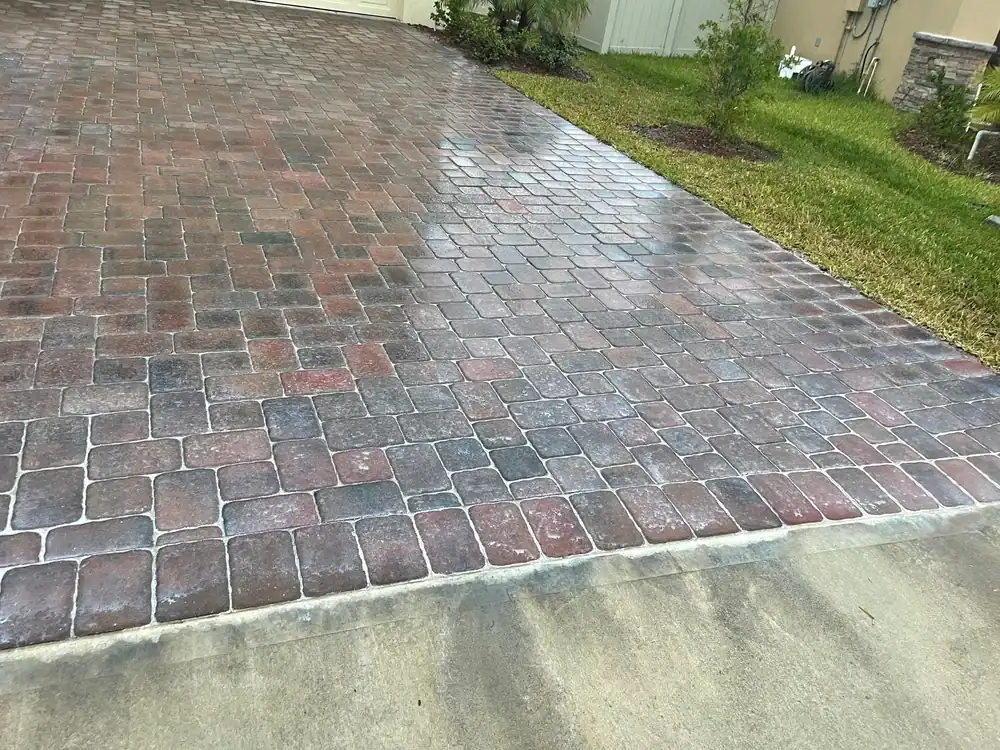
Citrus County sits on sandy soil. That’s not a flaw—it’s geology. But it creates problems for anything you build on top of it because sand shifts. Concrete can’t shift with it. Pour a rigid slab and you’re asking it to stay perfectly level while everything underneath moves.
It can’t. So it cracks.
Pavers solve this by design. The interlocking system lets individual units adjust when the ground shifts. One paver might settle slightly, but the others compensate. You don’t get the catastrophic cracking you see with concrete because there’s no single rigid surface trying to hold together.
Drainage matters just as much. Florida gets intense afternoon storms that dump inches of rain in minutes. Concrete pushes all that water across the surface, creating pooling and runoff issues. Pavers let water drain straight through the joints into the ground below.
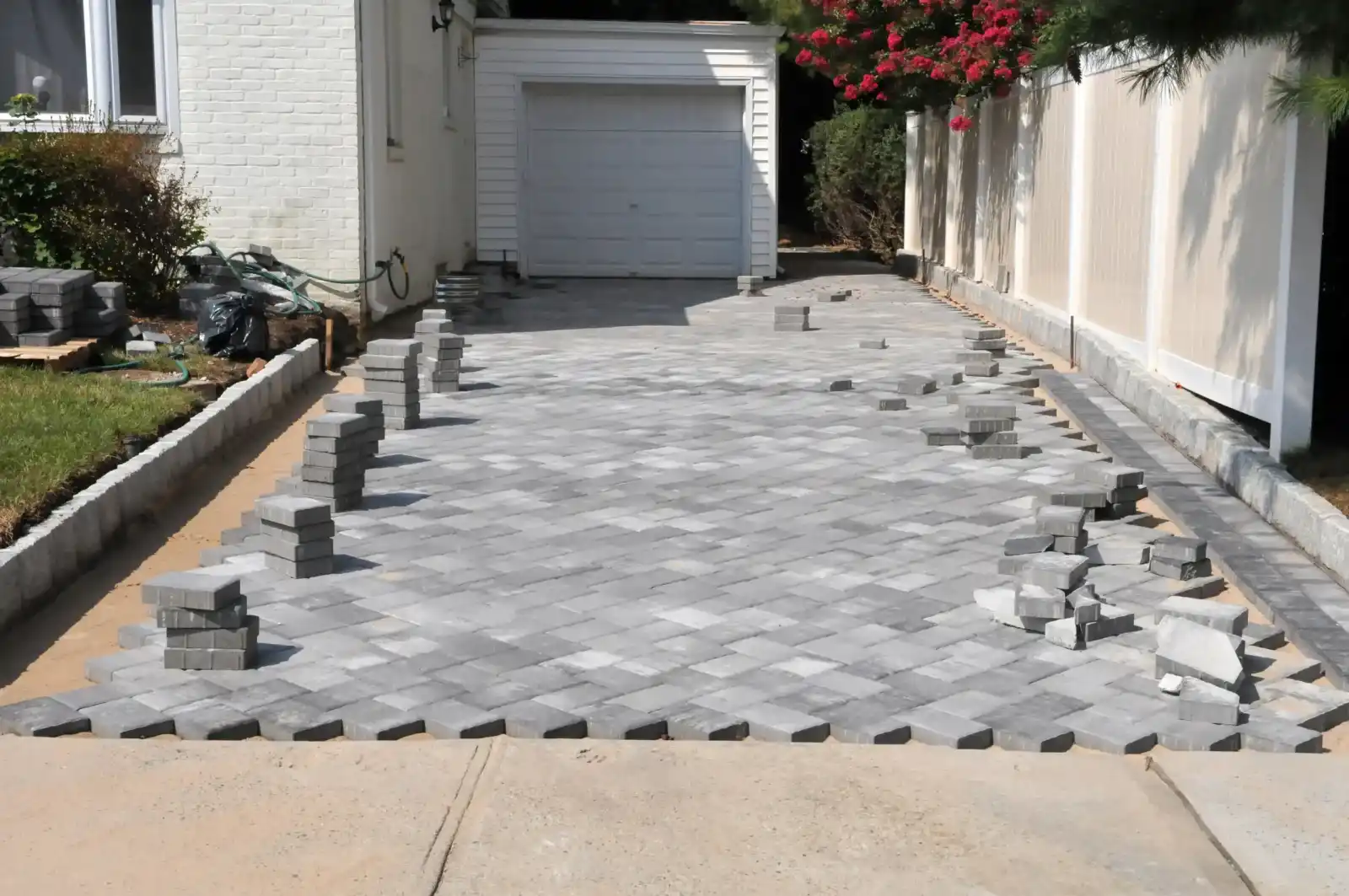
Proper installation makes the difference here in Citrus County. You need deep excavation to remove unstable soil—usually 6 to 12 inches depending on your specific lot. Then a compacted base that won’t settle. Then edge restraints to lock everything in place. Skip any of these steps and your driveway will fail regardless of whether you use pavers or concrete.
We’ve been doing this locally since 1995, and we know what works. We’ve seen what fails. We excavate deeper than most because we know what happens when you don’t. We build drainage into the system from the start because we’ve repaired enough jobs where it was added as an afterthought.
When you’re comparing estimates from Citrus County contractors, ask about base depth. Ask about drainage. Ask how they handle edge restraint. The answers tell you whether they’re building a driveway that lasts or one that looks good for a few years before the problems start.
Concrete cracks are permanent. Once that slab fractures, your options are patching—which rarely matches and often looks worse than the crack—or full replacement. There’s no middle ground. The entire surface is connected, so damage in one area affects the structural integrity of the whole driveway.
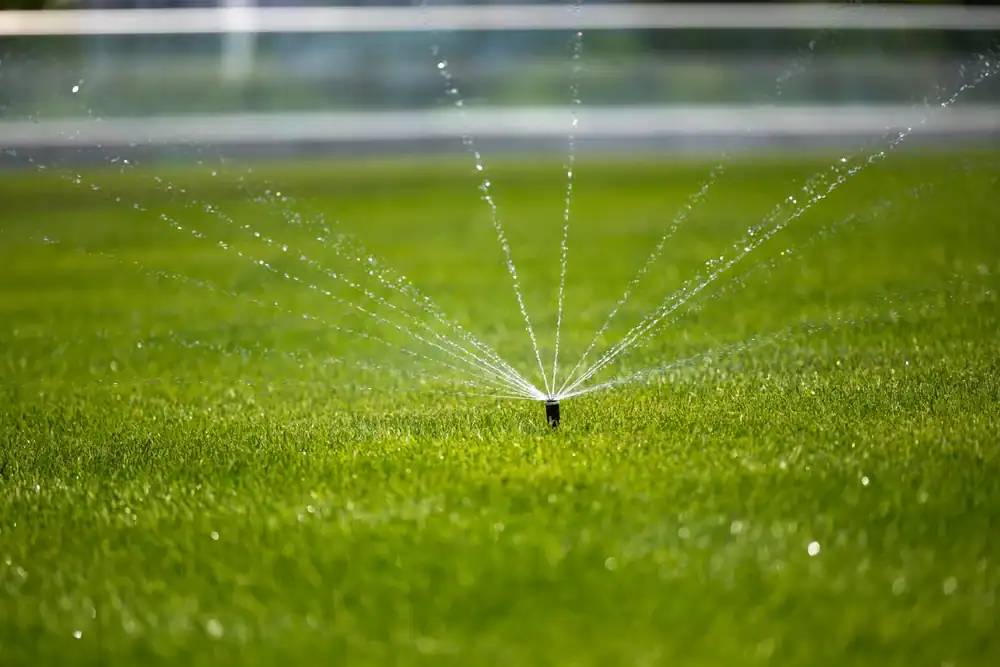
Paver systems work differently. If one paver cracks, you replace that one paver. If a section settles because a sprinkler line leaked underneath, you lift those specific pavers, fix the issue, compact the base again, and reset them. The repair is invisible when it’s done right.
This matters more than most people realize until they’re facing a repair bill. Concrete replacement means tearing out the entire driveway, hauling away tons of debris, and starting from scratch. Paver repairs mean addressing the specific problem area without touching the rest of the installation.
The cost difference is dramatic. Replacing a few pavers might run a few hundred dollars. Replacing a concrete driveway runs thousands. Over the 30 to 50-year lifespan of a quality driveway paver installation, that difference compounds.
Florida’s climate accelerates these issues. The heat expands materials. The rain creates hydrostatic pressure under solid surfaces. The sandy soil shifts constantly. Concrete fights all of this and loses. Pavers accommodate it.
You’ll also see the difference in how the surfaces age. Concrete fades unevenly, with some areas turning gray faster than others. Stains from oil, tire marks, and organic matter penetrate the porous surface and become permanent. Pavers can be cleaned, sealed, or individually replaced if staining becomes an issue.
The interlocking design distributes weight differently too. When heavy vehicles drive over concrete, the entire slab bears the load. With pavers, the load distributes across multiple units and into the compacted base below. That’s why properly installed pavers can handle the same vehicle weight as concrete without the surface damage.
Temperature matters as well. Concrete absorbs and holds heat, making it uncomfortable to walk on barefoot during summer months. Quality pavers in lighter colors reflect more heat and stay cooler underfoot—a small detail that makes a difference when you’re walking from your car to your front door on a 95-degree afternoon.
Want live answers?
Connect with a MainStreet Landscaping expert for fast, friendly support.
Real estate data shows that driveway improvements can boost home value by $5,000 to $20,000, representing a 5 to 10 percent increase in property value. That’s not subjective—it’s what appraisers and buyers factor into their decisions when evaluating homes in the $280,000 median price range common in Citrus County.
Curb appeal drives this. Your driveway is one of the first things potential buyers see. A cracked, stained concrete slab sets low expectations before they even walk through the front door. A well-maintained paver driveway signals that the home has been cared for.
Properties with paved surfaces also sell 7 to 10 days faster than those with gravel or dirt alternatives. In a market where Citrus County homes sit for 76 days on average, that matters. Buyers want move-in ready. A driveway that clearly needs replacement within a few years isn’t move-in ready.
Paver driveways offer the highest return on investment among driveway materials, ranging from 70 to 80 percent. That means if you invest $15,000 in a quality paver driveway installation, you can expect to recoup $10,500 to $12,000 of that cost when you sell.
Compare that to concrete, which offers a 60 to 75 percent ROI, or asphalt at 50 to 65 percent. The difference comes down to longevity and buyer perception. Pavers are viewed as a premium upgrade, not just a functional necessity.
The math changes when you factor in maintenance costs over time. Concrete might cost less upfront—typically $5 to $15 per square foot versus $12 to $25 for pavers in Citrus County—but it requires sealing every few years, crack repairs, and eventual replacement within 10 to 20 years. Pavers last 30 to 50 years with basic maintenance like occasional cleaning and joint sand refills.
Over a 30-year period, you might replace a concrete driveway twice. That’s two installation costs, two rounds of demolition and disposal fees, and all the maintenance in between. A paver driveway installed correctly needs none of that.
For a typical two-car driveway of about 600 square feet, you’re looking at $7,200 to $15,000 for a quality paver installation. That includes excavation, proper base preparation, premium pavers from manufacturers like Tremron or Belgard, and professional installation. The same driveway in concrete might cost $3,000 to $9,000 upfront, but you’ll pay that difference back in repairs and replacement over the years.
The timing matters too. If you’re planning to sell within a year or two, a paver driveway installation can be a strategic move that helps your home stand out and sell faster in Citrus County’s competitive market. If you’re staying long-term, you get to enjoy the benefits while knowing you’re building equity.
Real estate agents consistently rank curb appeal as the number one factor in attracting potential buyers. Seventy-six percent say it’s the most important thing a seller can do. Your driveway accounts for a significant portion of that curb appeal because it’s large, visible, and one of the first features people notice.
Buyers notice cracks first. Even small ones signal deferred maintenance and raise questions about what else hasn’t been taken care of. A driveway with visible damage becomes a negotiating point. Buyers will either ask for a price reduction to cover replacement or walk away entirely if they’re not interested in dealing with it.
Stains matter too. Oil spots, tire marks, and discoloration tell a story about age and use. Concrete shows every stain because the material is porous. Pavers hide them better, and individual stained pavers can be replaced if needed.
Drainage issues are another red flag. If buyers see standing water after a rain—common in Citrus County after those intense afternoon storms—they start worrying about foundation problems, poor grading, and water intrusion. A driveway that drains properly signals that the property was designed and built with attention to detail.
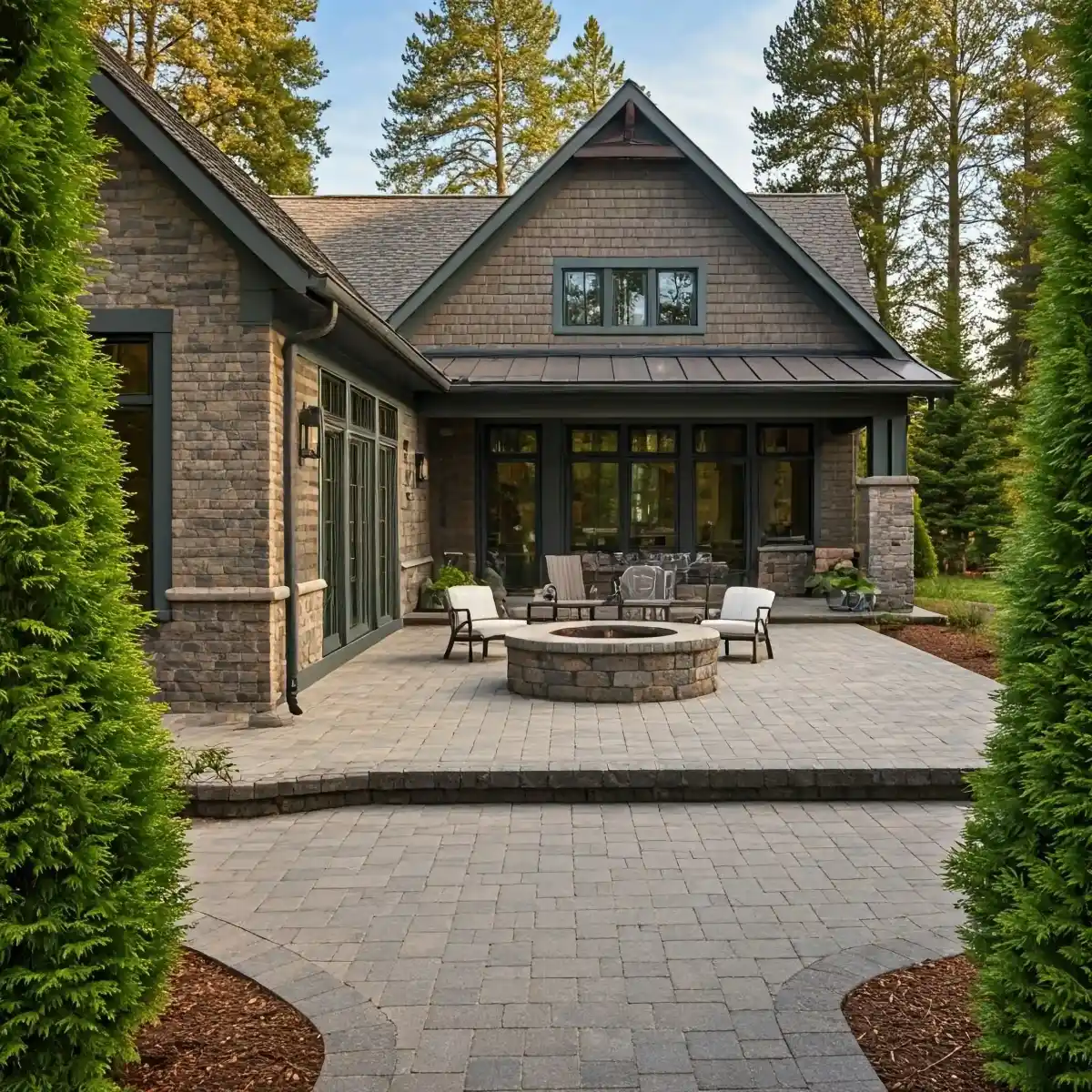
The overall aesthetic plays a role as well. Pavers offer design flexibility that concrete can’t match. Different colors, patterns, and textures let you create a driveway that complements your home’s architecture. That cohesive look registers subconsciously with buyers even if they can’t articulate why one home feels more put-together than another.
Buyers also notice the transition from driveway to walkway to front entry. When these elements use complementary materials and flow naturally into each other, the property feels intentional. When they clash or look like afterthoughts, it creates visual friction.
In Citrus County, where many buyers are retirees or families looking for low-maintenance properties, a paver driveway checks multiple boxes. It’s attractive, durable, and doesn’t require constant attention. That’s exactly what people moving to Florida want—outdoor spaces they can enjoy without spending every weekend on upkeep.
The manufacturer matters too, even if buyers don’t know the specific brands. Premium pavers from Tremron, Belgard, or Flagstone come with manufacturer-backed warranties and proven performance in Florida’s climate. When installed by authorized contractors who know these products inside and out, that quality shows. Buyers can see the difference between a budget installation and one that was done right.
Driveway paver installation isn’t about following trends. It’s about choosing a solution that works with Florida’s climate, lasts decades with minimal maintenance, and adds real value to your property. The difference between installations that perform and ones that fail comes down to base preparation, drainage design, material selection, and contractor experience.
Citrus County’s sandy soil demands deeper excavation and proper compaction. Intense rain requires drainage built into the system from the start. The right pavers—whether Tremron, Belgard, or Flagstone—need to handle heat, resist fading, and maintain their structural integrity under vehicle loads for 30 to 50 years.
When you’re ready to upgrade your driveway, work with contractors who’ve been doing this long enough to know what actually works in this area. We’ve been serving Citrus County since 1995, installing paver driveways that last because we build them right the first time with authorized manufacturer partnerships and beyond meticulous attention to detail.
Article details:
Share:
Continue learning: