Thinking about upgrading your driveway? Learn how paver installations deliver superior durability, boost property value, and outperform concrete in Spring Hill's climate.
Share:
Summary:
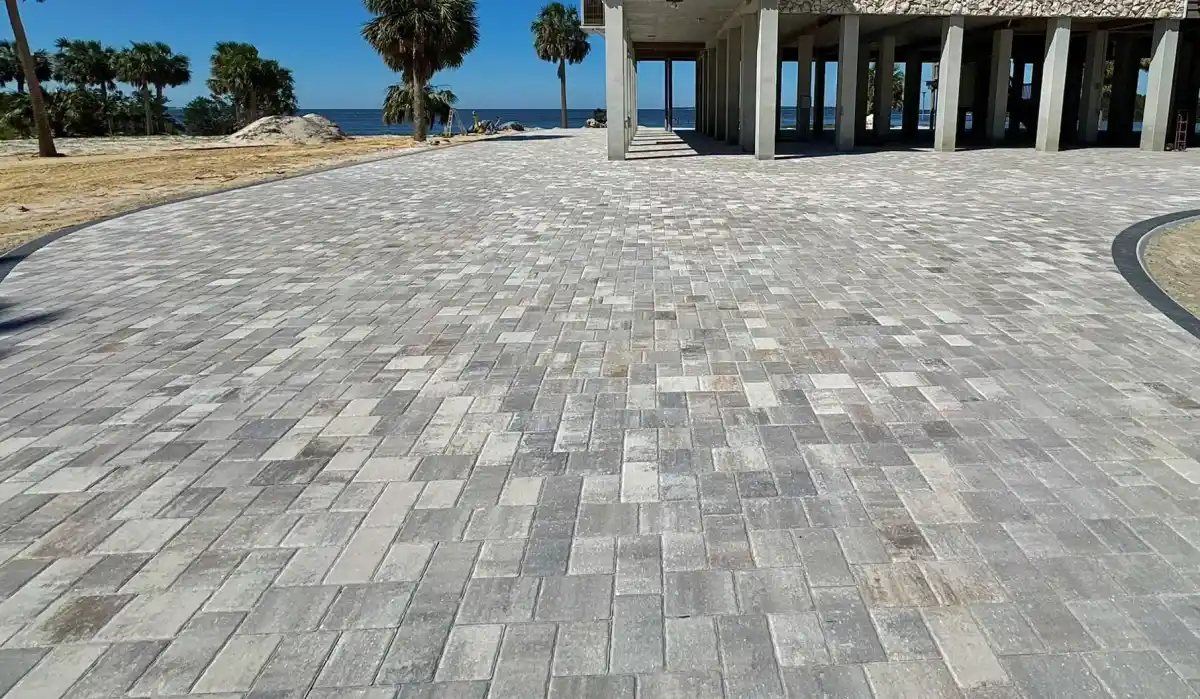
The difference between pavers and poured surfaces comes down to how they handle stress. Concrete and asphalt are rigid. When the ground shifts—and in Spring Hill’s sandy soil, it will—those materials crack. Once they crack, you’re looking at repairs that never quite match, or a full replacement down the road.
Pavers work differently. Each stone is individual, and they interlock to create a flexible surface. When the ground moves, pavers move with it instead of fighting it. That’s why they resist cracking and last significantly longer. You’re looking at 25 to 50 years or more with proper care, compared to 15 to 20 years for a concrete slab.
If one paver does get damaged, you replace that one piece. With concrete, you’re resurfacing or replacing the whole thing. That difference alone saves you time, money, and frustration over the life of your driveway.
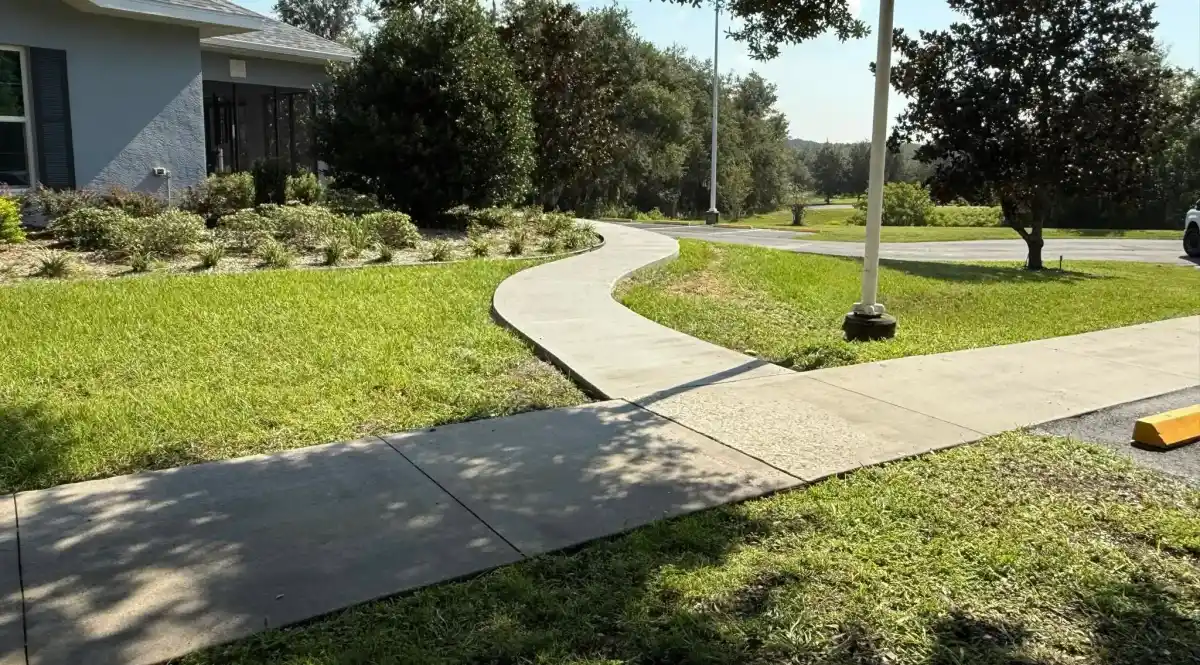
Spring Hill’s subtropical climate isn’t easy on outdoor surfaces. You’ve got intense UV exposure that fades and weakens materials. Heavy rain that tests drainage. Humidity that invites mold and mildew. And heat that causes expansion and contraction throughout the year.
Brick driveway pavers handle UV exposure better than most materials because their color runs all the way through. Concrete pavers, when sealed properly, resist staining and weathering. Both options are designed to handle the kind of moisture Florida gets without deteriorating the way asphalt does.
The key is in the installation. A properly prepared base with compacted gravel and sand allows water to drain instead of pooling. That’s critical here, where afternoon storms can dump inches of rain in minutes. Permeable paver options take it a step further, letting water pass through the joints and into the ground naturally. This reduces runoff, prevents flooding, and helps recharge groundwater—something that matters in an area where sinkholes are a real concern.
Sealing your pavers every two to three years protects them from the elements and keeps them looking fresh. It’s a straightforward process that extends the life of your driveway and maintains that just-installed appearance. Regular sweeping and occasional pressure washing handle the rest. Compared to the constant patching and resurfacing concrete demands, it’s a much simpler maintenance routine.
When you’re choosing paver materials, the two main options are brick and concrete. Both outperform poured concrete or asphalt, but they have different characteristics worth understanding.
Brick pavers are made from natural clay fired in a kiln. They offer a classic, timeless look with warm earth tones—reds, browns, tans. The color is baked in, so they resist fading even after decades of sun exposure. Brick pavers can last anywhere from 25 to 100 years depending on quality and care. They’re slip-resistant even when wet, which matters during Florida’s rainy season. The downside is they typically cost 15 to 20 percent more than concrete pavers and require slightly more labor to install because of size variations.
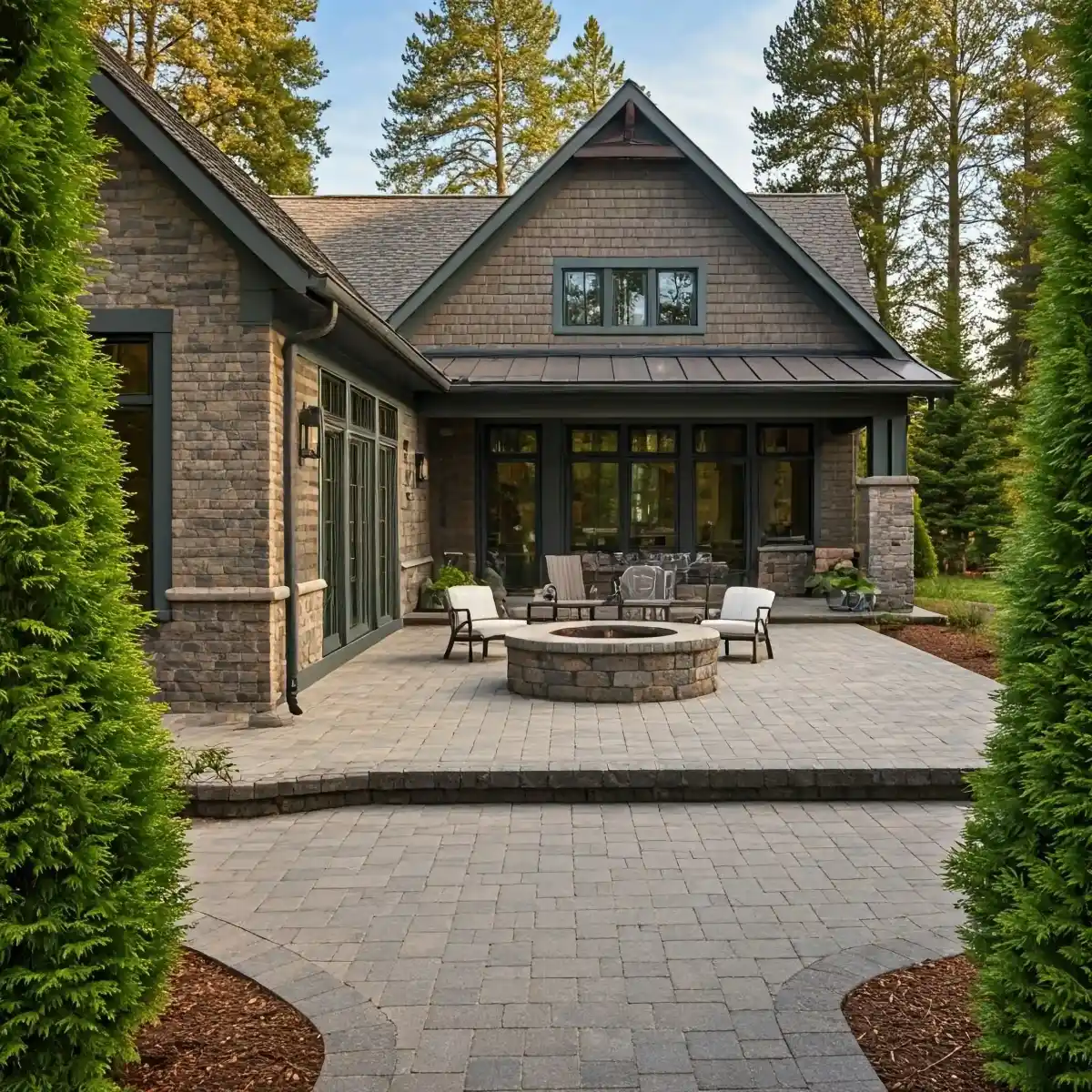
Concrete driveway pavers are made from a cement and aggregate mixture molded into precise shapes. They come in a much wider range of colors, textures, and sizes. You can get pavers that mimic natural stone, create modern geometric patterns, or stick with traditional styles. Concrete pavers are more affordable, easier to install, and offer more design flexibility. They typically last 25 to 50 years with proper maintenance. The tradeoff is they may fade over time without sealing and don’t have quite the same timeless character as brick.
For driveways specifically, concrete pavers are often the better choice because of their strength and uniformity. They’re engineered to handle vehicle weight and high traffic. Brick pavers work beautifully too, especially if you’re going for a historic or traditional aesthetic. Both beat poured concrete hands down when it comes to longevity and repair ease.
The best choice depends on your budget, your home’s style, and how you want your driveway to look in 20 years. Either way, you’re getting a surface that flexes instead of cracks, looks better longer, and costs less to maintain over time.
Want live answers?
Connect with a MainStreet Landscaping expert for fast, friendly support.
Curb appeal isn’t just about looking nice. It’s about what potential buyers see when they pull up, and it directly affects your home’s value. Real estate data shows that driveway improvements can boost home value by $5,000 to $20,000, representing a 5 to 10 percent increase depending on your market and home type.
Pavers specifically deliver strong returns because they’re seen as a premium upgrade. Buyers recognize the durability and low maintenance. They see a well-designed paver driveway and know it won’t need replacement anytime soon. That perception translates to higher offers and faster sales.
Studies show outdoor space ranks as the third-most-prioritized feature for homebuyers. A paver patio can return 109 percent ROI, and driveway upgrades follow similar patterns. Even if you’re not selling, you benefit from that increased value and the satisfaction of coming home to a property that looks well-maintained.
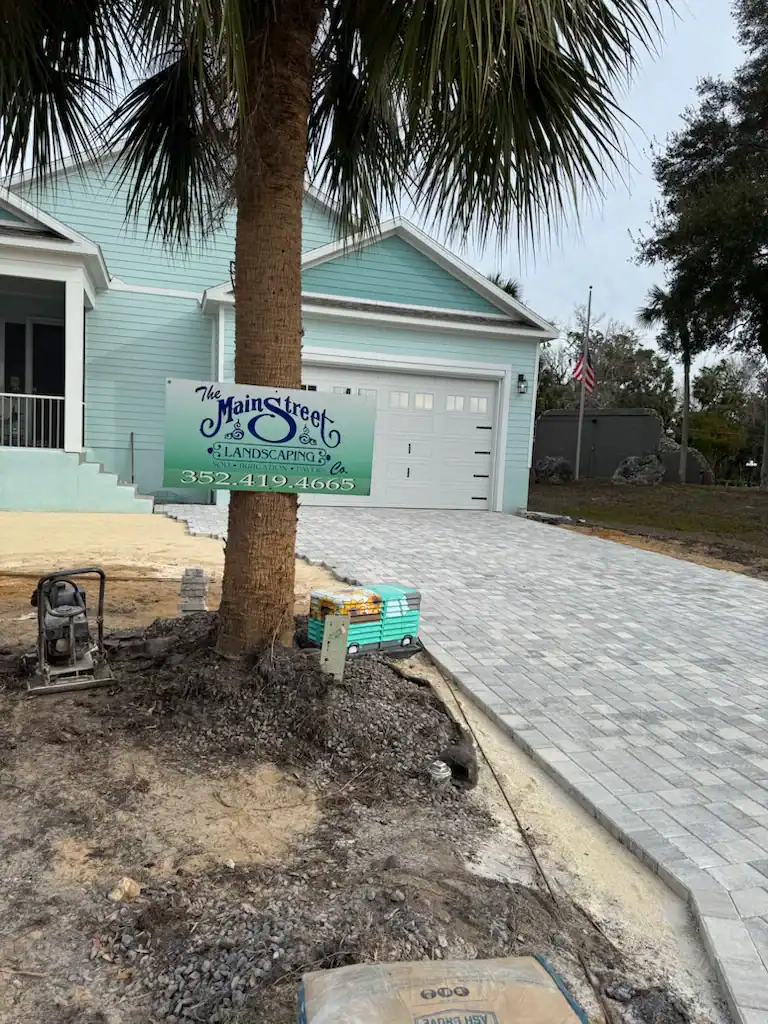
One of the biggest advantages of paver driveway installation is design flexibility. You’re not stuck with plain gray. You can create patterns, mix colors, add borders, and match your home’s architectural style in ways concrete or asphalt never could.
Herringbone is one of the most popular patterns for driveways because it provides maximum interlock and strength. The V-shaped design distributes weight efficiently, making it ideal for areas with heavy vehicle traffic. It costs about 15 to 25 percent more in labor than simpler patterns, but the structural benefit is worth it.
Running bond uses pavers laid in staggered rows, similar to a brick wall. It’s simple, clean, and economical to install. This pattern works well for modern homes or when you want a streamlined look without extra complexity.
Basketweave creates a woven appearance using pairs of rectangular pavers. It’s visually interesting and complements traditional or colonial-style homes. Installation is straightforward, adding only about 5 to 10 percent to labor costs.
Random modular patterns combine different paver sizes for an organic, natural stone appearance. They create visual interest and work beautifully with homes that have rustic or old-world character. These patterns require more skill to install and typically add 20 to 35 percent to labor costs.
You can also incorporate borders, inlays, and accent bands to frame your driveway or create focal points at the entrance or garage apron. Mixing colors—like charcoal borders with lighter field pavers—adds definition and elevates the overall design.
The right pattern depends on your home’s style, your budget, and the look you’re going for. We can show you samples and help you visualize how different options will look with your home’s exterior. The key is choosing something that enhances your property without looking out of place in the neighborhood.
Cost is usually the first question, and it’s a fair one. Paver driveway installation runs between $10 and $30 per square foot installed, depending on the material and complexity. For a standard two-car driveway around 600 square feet, you’re looking at $6,000 to $18,000 on average.
Concrete pavers fall on the lower end at $10 to $20 per square foot. Brick pavers run $15 to $30. Natural stone like travertine or granite can reach $30 to $60 per square foot if you want that high-end look. Pattern complexity, site preparation, and any existing driveway removal add to the total.
That’s higher than poured concrete, which typically costs $5 to $15 per square foot. But here’s what the upfront number doesn’t show: concrete requires sealing, crack repair, and often full replacement within 15 to 20 years. Pavers need minimal maintenance and last 25 to 50 years or longer. When you factor in long-term costs, pavers often come out ahead.
Over a 20-year period, a concrete driveway might cost $11,600 total when you include maintenance and repairs. The same size paver driveway might cost $9,600 total despite the higher installation price. You’re paying more upfront but less overall, and you’re getting a better-looking, longer-lasting surface.
Professional installation matters more than the material you choose. Poor base preparation, inadequate drainage, or shortcuts during installation can cut your driveway’s lifespan in half. That’s not an exaggeration. A properly installed paver driveway on a well-compacted base with correct sand bedding and edge restraints will outlast a cheap installation every time.
Spring Hill’s sandy soil and high water table make proper installation even more critical. You need contractors who understand local soil conditions, drainage challenges, and how to build a base that won’t settle or shift. Skipping that expertise to save a few hundred dollars upfront can cost you thousands in premature repairs.
Your driveway is more than a place to park. It’s part of your home’s first impression, a factor in resale value, and something you see every single day. Choosing pavers means choosing durability, flexibility, and a surface that actually gets better with age instead of worse.
You get a driveway that lasts decades, handles Florida’s climate without cracking, and costs less to maintain over time. You get design options that let you match your home’s style instead of settling for plain gray. And you get the peace of mind that comes with knowing you made a smart long-term investment.
If you’re ready to explore what a paver driveway installation could do for your Spring Hill home, we bring nearly 30 years of experience to every project. We understand local soil, climate, and what it takes to build driveways that last.
Article details:
Share:
Continue learning: