Small backyard? Smart paver design can double how big it feels. Learn patterns, colors, and layout tricks that transform cramped spaces into impressive outdoor rooms.
Share:
Summary:
Walk into any professionally designed small patio and you’ll notice something immediately: it doesn’t feel small. That’s not luck. It’s pattern choice doing exactly what it’s supposed to do—directing your eye in ways that expand perceived space.
The pattern you choose determines whether your patio feels cramped or surprisingly roomy. Busy, random patterns make small areas feel cluttered and chaotic. Clean, directional patterns create visual flow that pulls the eye through the space, making it feel larger than its actual square footage.
In Marion County, FL’s climate, your pattern choice also affects long-term durability. Some patio paver patterns interlock better than others, which matters when Florida’s heavy rains and sandy soil try to shift things around. The right pattern doesn’t just look good on installation day—it stays stable for decades.
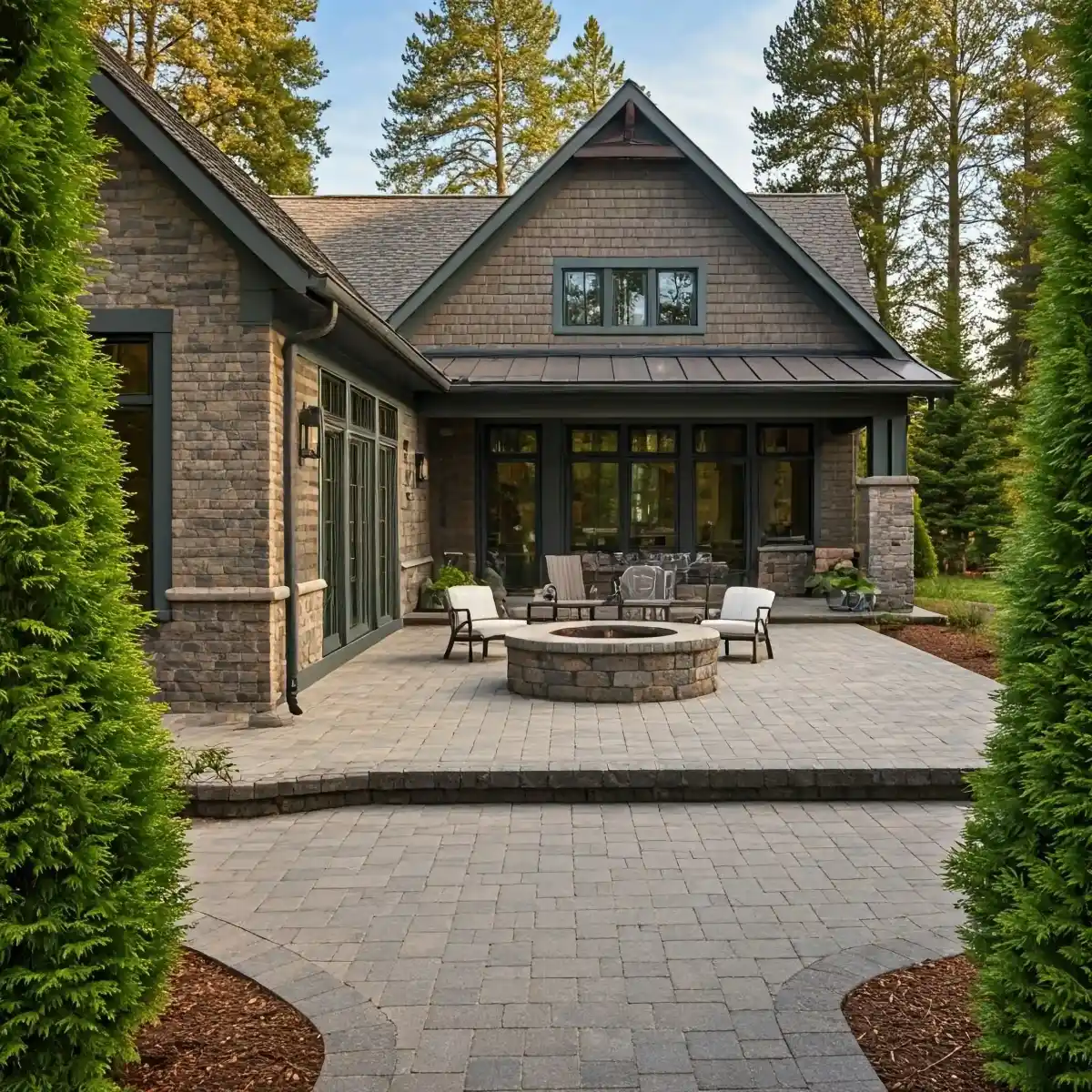
Diagonal layouts are the workhorse of small patio design ideas for one simple reason: they force your eye to travel the longest possible distance across the space. When pavers run corner to corner instead of straight across, you’re seeing the diagonal measurement—which is always longer than the width or length.
That extra visual distance translates to perceived space. A 12-foot-wide patio running pavers straight across gives you 12 feet of visual travel. Run those same pavers diagonally and your eye follows a 17-foot line. Same physical space, completely different feel.
Herringbone patterns take this principle further. The zigzag layout creates multiple diagonal lines simultaneously, giving your eye several long paths to follow. It’s visually interesting without being busy, and the interlocking V-shape provides serious structural stability—important when you’re building on Florida’s sandy soil base.
Linear patterns work differently but achieve similar results. Running bond layouts (think classic brick pattern) create strong horizontal or vertical lines that stretch space in one direction. If your patio is narrow, run the pattern horizontally to emphasize width. If it’s short and stubby, run it vertically to add perceived length.
The key is directionality. Random or circular patterns might look interesting in a magazine, but they don’t give your eye anywhere to go. In a small space, that lack of direction makes everything feel contained and static. You want movement, and pattern creates that.
One practical note for patio paver installation in Marion County, FL: herringbone and diagonal patterns require more cutting at the edges, which means slightly higher installation costs. But the visual payoff is substantial. You’re not just getting a patio—you’re getting a space that consistently surprises people with how open it feels.
The conventional wisdom says small spaces need small pavers. That logic seems sound until you actually see it in practice. Small pavers in small spaces create visual clutter—hundreds of grout lines breaking up the surface, making your eye work overtime to process all that segmentation.
Large format pavers do the opposite. Fewer pieces mean fewer grout lines, which means cleaner visual flow. Your brain reads the surface as one cohesive plane instead of a puzzle of tiny pieces. That simplicity makes the space feel more expansive and less busy.
Think about it like tile in a small bathroom. Designers almost always recommend larger tiles for compact bathrooms because they make the room feel bigger. The same principle applies to modern patio pavers. A 12×24 inch paver covers four times the area of a 6×6 inch paver, which means a quarter of the grout lines for the same coverage.
There’s a practical benefit too, especially in Florida’s climate. Fewer grout lines mean fewer places for weeds to sprout, less sand to wash out during heavy rains, and easier long-term maintenance. When you’re sealing pavers every few years, you’re dealing with significantly less joint area.
The tradeoff is flexibility. Smaller pavers adapt more easily to curves, irregular shapes, and tight corners. If your small patio has a lot of angles or curves, you might need a mix—larger pavers in the main field with smaller units handling the detail work around edges.
One consideration specific to Marion County, FL: large format pavers require exceptionally precise base preparation. Any unevenness shows up immediately because there’s more surface area to rock or tilt. That means your installation crew needs to be meticulous with compaction and leveling. Done right, though, large format pavers in a small space create that high-end, contemporary look that makes the patio feel intentionally designed rather than squeezed in.
Cost-wise, large format pavers typically run slightly higher per square foot than standard sizes, but the labor savings from fewer pieces can offset some of that difference. More importantly, the visual impact is worth the investment when you’re trying to maximize how a small space feels.
Want live answers?
Connect with a MainStreet Landscaping expert for fast, friendly support.
Color might be the single most underestimated factor in small patio design. Choose wrong and your 250-square-foot patio feels like a dark, cramped cave. Choose right and that same space feels bright, open, and welcoming.
The physics are straightforward: light colors reflect sunlight while dark colors absorb it. In a small patio, that reflection bounces light around the space, making it feel airier and more expansive. Dark pavers do the opposite—they create visual weight that makes the space feel heavier and more confined.
Florida’s intense sun amplifies this effect. Dark pavers in direct Marion County, FL sunlight can reach surface temperatures exceeding 150°F in summer, making the space literally unusable during peak hours. Light-colored pavers stay significantly cooler, which means your backyard patio stays comfortable even on brutal July afternoons.
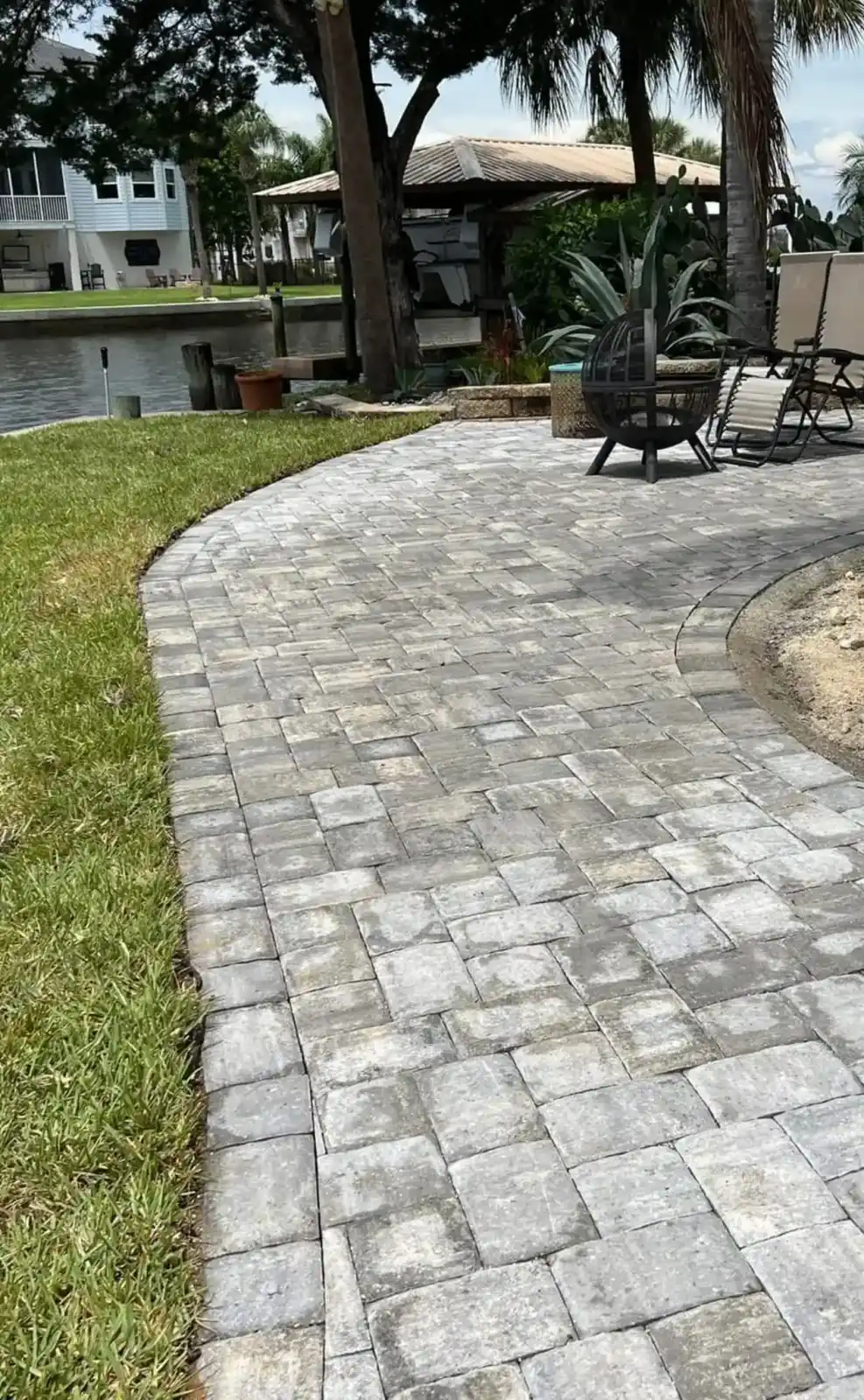
Light grays, soft taupes, and warm beiges dominate modern small patio design for good reason—they work. These neutral tones reflect enough light to brighten the space without creating harsh glare, and they pair easily with virtually any home exterior color.
Cool grays have become especially popular in 2026 for their contemporary feel and heat-reflective properties. A light gray paver in a small space creates a clean, modern backdrop that makes the patio feel like an intentional extension of your indoor living area rather than an outdoor afterthought.
Warm earth tones—think sandy beige, light tan, and soft terracotta—bring a different energy. They create a more natural, relaxed feel while still providing the light-reflective benefits that open up small spaces. These colors also hide Florida’s inevitable dirt and pollen better than pure whites or very light grays, which means less visible maintenance between cleanings.
The mistake to avoid: going too light. Pure white or very pale pavers show every speck of dirt, every leaf stain, and every bit of mildew that Florida’s humidity encourages. You want light enough to brighten the space, but not so light that you’re pressure washing every other week.
Variegated colors—pavers with subtle color variation within each piece—add visual interest without creating the busy feeling that comes from mixing multiple distinct colors. A paver that blends light gray with touches of tan or cream gives you depth and character while maintaining that space-expanding lightness.
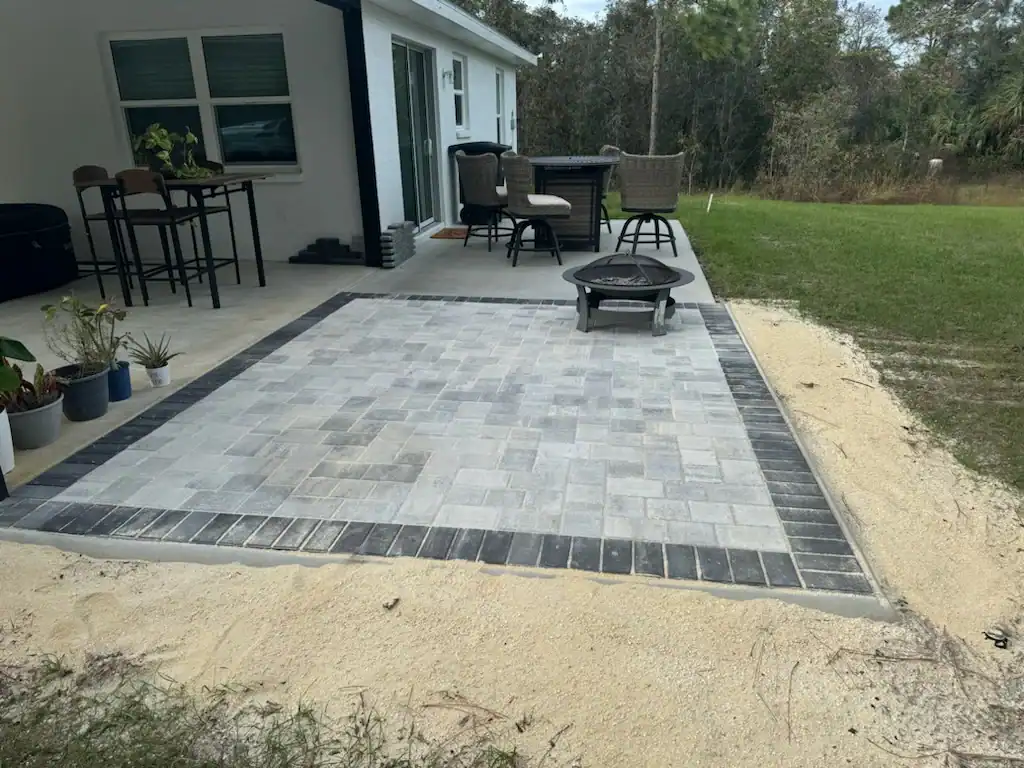
One color strategy that works particularly well in small Marion County, FL patios: use your lightest color in the main field and add a slightly darker border. The contrast defines the space and adds perceived depth without shrinking the feel of the main area. It’s like adding a frame to a painting—it makes everything feel more intentional and finished.
For pool decks and areas where you’re walking barefoot, travertine and lighter natural stones stay notably cooler than concrete pavers in the same color range. That comfort factor matters when you’re trying to actually use your small patio during Florida’s long hot season.
Borders get tricky in small patios because they can either enhance the space or make it feel even more cramped. The difference comes down to proportion and contrast level.
A border that’s too wide eats up precious square footage in the main field, making your usable space feel smaller. As a general rule, borders in small patios should stay under 12 inches wide—just enough to define the edge without dominating the design. In many cases, a single row of border pavers (typically 4-6 inches) provides plenty of visual definition.
Contrast level matters just as much as width. A very dark border around a light field creates a strong frame that can make the space feel more contained. That’s not always bad—sometimes you want that defined, room-like feeling. But if your goal is maximum openness, keep the contrast subtle. A border that’s one or two shades darker than your main field color defines the space without boxing it in.
Soldier course borders—where pavers run perpendicular to the main field—add a finished, professional look without requiring a different color. The change in direction provides visual definition through pattern rather than color, which can be more sophisticated and less visually heavy in a small space.
Accents require even more restraint in compact patios. A decorative medallion or inlay pattern might look stunning in a 600-square-foot patio, but in a 200-square-foot space it can overwhelm everything else. If you want an accent, keep it small and place it strategically—maybe a simple geometric pattern near the entry point or a subtle color change in one corner.
The Florida-specific consideration: borders and accents mean more cuts and more intricate installation work, which increases labor costs. In a small patio where you’re already maximizing every dollar, sometimes the cleanest, simplest design delivers the best value. A well-executed single-pattern layout in the right color often looks more expensive and intentional than a busy design with multiple elements competing for attention.
One effective compromise: use your border to solve a functional problem. If your patio abuts the house, run a border along that edge in a slightly darker, more textured paver. It defines the transition between house and patio while providing a practical zone where water runoff and foot traffic naturally concentrate. You get visual definition and functional benefit without adding unnecessary complexity.
Small backyards don’t have to feel limiting. The right paver choices—diagonal patterns that stretch visual space, light colors that reflect Florida’s intense sun, large format pavers that reduce visual clutter—transform cramped areas into surprisingly spacious outdoor rooms.
What matters most isn’t how many square feet you’re working with. It’s how intentionally you use them. Strategic design makes a 200-square-foot patio feel more usable and more impressive than a poorly planned 400-square-foot space.
The installation quality matters just as much as the design choices. In Marion County, FL’s sandy soil and wet climate, proper base preparation and precise patio paver installation separate patios that last decades from ones that start settling and shifting within a few years. If you’re ready to transform your small backyard into a space that actually works for how you want to live, we bring nearly 30 years of experience making that happen throughout Marion County, FL and surrounding areas.
Article details:
Share:
Continue learning: