
Your driveway takes a beating. Florida’s heavy rains pool up because the ground can’t absorb more water. The sandy soil shifts, and concrete cracks. Heat makes asphalt soft, and UV rays fade everything.
Pavers handle all of it better. They flex with soil movement instead of cracking. Water drains through the joints instead of pooling. Individual pavers can be replaced if one gets damaged—no need to tear out the whole driveway.
You get a surface that stays cooler underfoot, drains properly during storms, and actually adds value to your property. Most driveway upgrades add $5,000 to $20,000 in home value. That’s not marketing talk—that’s what appraisers and realtors see when they evaluate properties with quality hardscaping.
We’ve been family-owned and operating in Citrus County since 1995. We’re not a franchise or a crew that shows up from three counties over. We’re local, licensed, and we’ve installed pavers through enough hurricane seasons to know what holds up and what doesn’t.
We’re Authorized Contractors for Tremron, Flagstone, and Belgard—the brands that back their products with real warranties. We’re also the only Seal ‘n Lock distributor in the county, which means you’re getting protection systems that most contractors can’t even access.
You’ll talk to the same people from estimate to completion. We’re not handing your job off to subcontractors we’ve never met. And if you’re Military or a First Responder, we discount our work—it’s how we say thanks to the people who serve this community.
First, we assess your existing driveway and drainage situation. Florida soil and water flow aren’t the same across every property, so we look at slope, runoff, and how your driveway connects to the street and your home’s foundation.
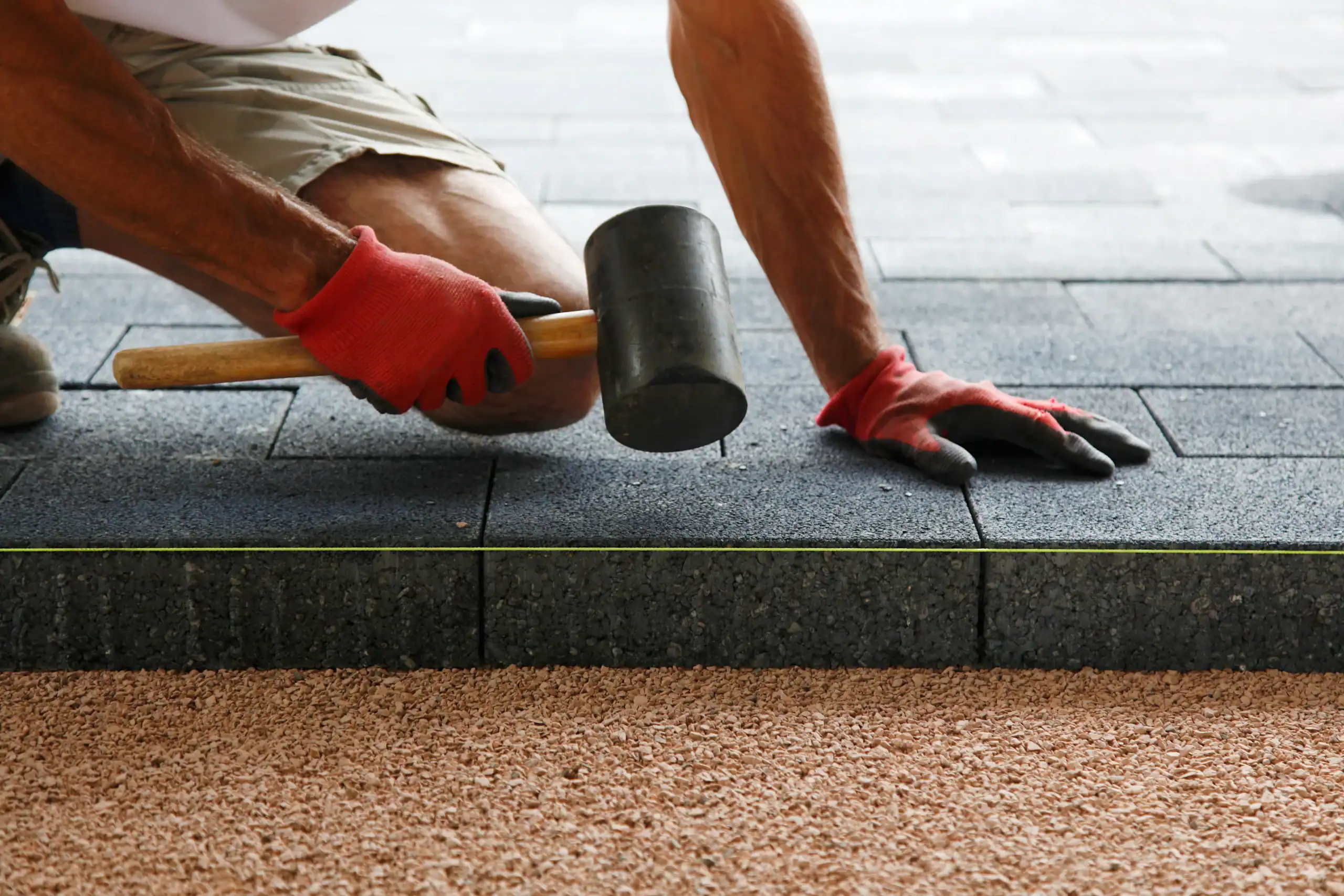
Next, we excavate and prepare the base. This is the part most contractors rush, and it’s why driveways fail. We compact the base in layers, ensure proper slope for drainage, and install edge restraints that keep pavers from shifting over time.
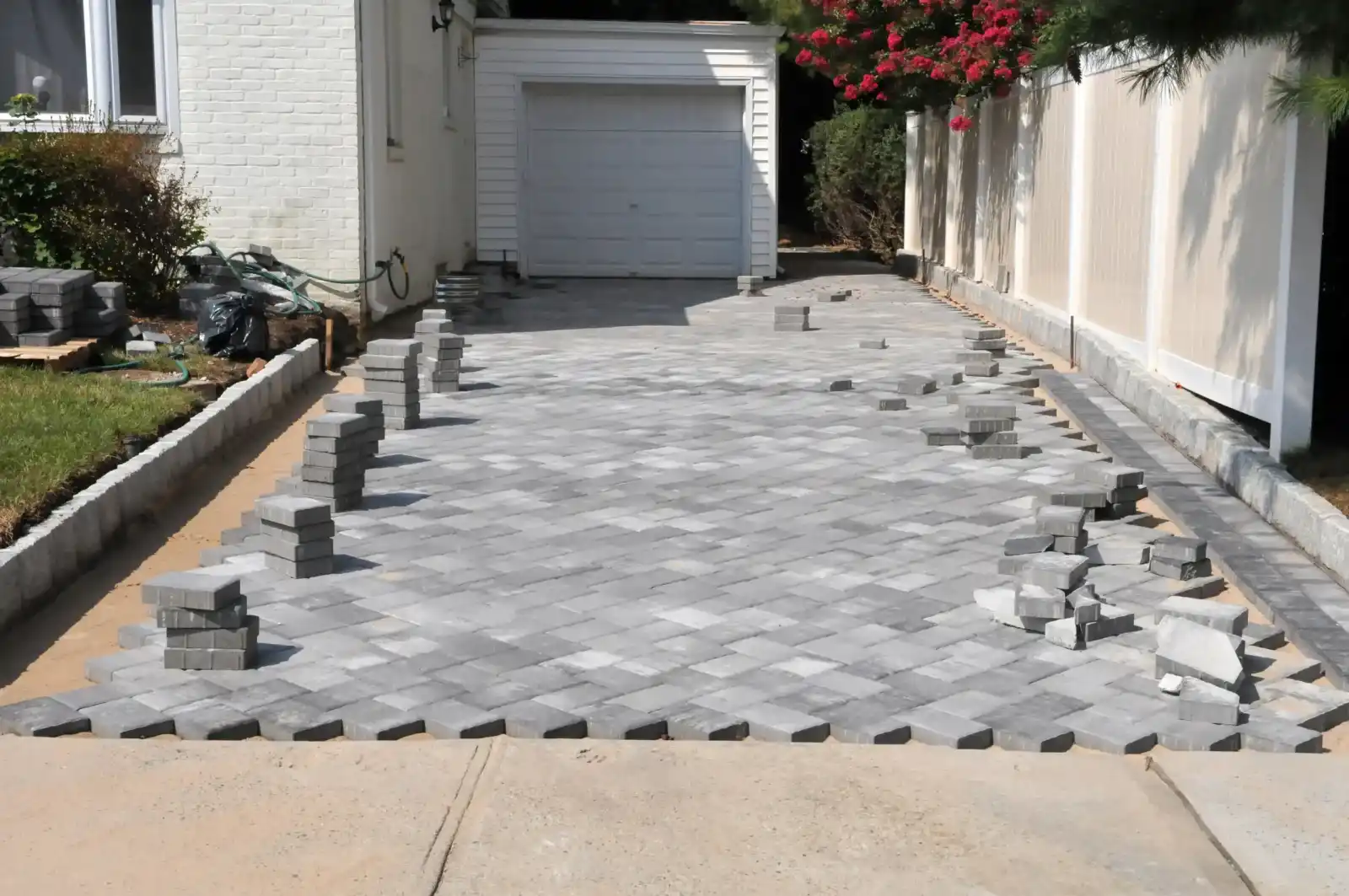
Then we lay the pavers in your chosen pattern, cut and fit them precisely around curves or obstacles, and fill the joints with sand or polymeric sand depending on your drainage needs. Finally, we compact everything again and apply sealant if you want added protection and color enhancement. The whole process typically takes three to five days depending on size and complexity, and you can drive on it as soon as we’re done compacting.
Ready to get started?
You’re not just getting pavers dropped on dirt. You’re getting a properly engineered base that accounts for Florida’s soil conditions, a drainage system that moves water away from your foundation, and materials that are rated for our climate.
In Inverness Highlands North, drainage isn’t optional—it’s survival. Most neighborhoods here were built between 1970 and 1999, and many have ongoing drainage issues because the ground is already saturated. Permeable pavers let water drain through the joints instead of running off into your yard or your neighbor’s property. Some HOAs and county codes actually require permeable surfaces now, and for good reason.
You also get access to materials that aren’t available at big box stores. Tremron and Belgard pavers are manufactured in Florida for Florida conditions. They’re rated for our freeze-thaw cycles (yes, we have them), our intense UV exposure, and our heavy rain events. The colors won’t fade like cheaper pavers, and the shapes lock together to prevent shifting. We’ll walk you through the options during your estimate—there are dozens of colors and patterns, and we’ll show you what works with your home’s style and your budget.
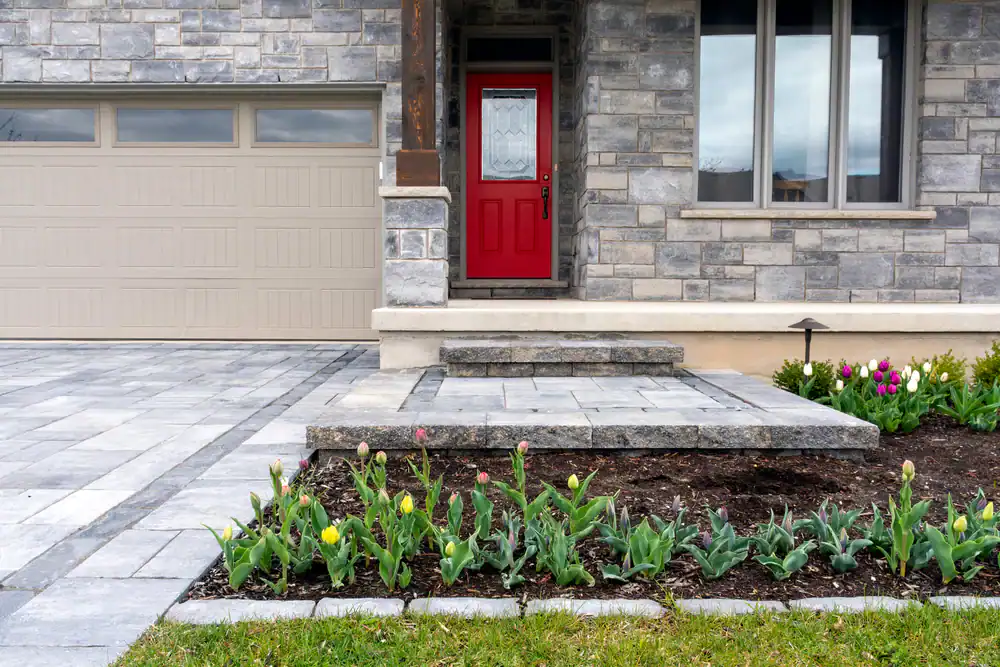
Pavers typically outlast concrete in Florida by a significant margin. Concrete driveways crack within 5 to 10 years here because of soil movement and moisture. Once concrete cracks, water gets underneath, the problem accelerates, and you’re looking at replacement.
Pavers flex with soil movement instead of cracking. If the ground shifts, the pavers shift with it—they don’t break. Individual pavers can be lifted and reset if settling occurs, which costs a fraction of what concrete repair or replacement runs.
Most paver driveways last 25 to 50 years with basic maintenance. That maintenance is straightforward: occasional re-sanding of joints, cleaning to prevent algae buildup, and optional resealing every few years if you want to maintain color vibrancy. Compare that to the cost and disruption of replacing an entire concrete driveway, and the math isn’t even close.
Pavers cost more upfront—usually $10 to $25 per square foot installed, compared to $5 to $10 for concrete. For a standard 600-square-foot driveway, you’re looking at $6,000 to $15,000 for pavers versus $3,000 to $6,000 for concrete.
But that’s not the full picture. Concrete requires replacement when it cracks, which happens faster in Florida than almost anywhere else. Pavers can be repaired by replacing individual units. If a tree root pushes up one section, we lift those pavers, address the root, and relay them. With concrete, you’re jackhammering and re-pouring.
Pavers also add more to your property value. Appraisers and realtors consistently rank paver driveways higher than concrete because buyers see them as an upgrade. The ROI on paver installation typically ranges from 5% to 10% of your home’s value, which can mean $8,000 to $16,000 on a $166,000 home—the median property value in Inverness Highlands North.
Yes, especially permeable pavers. Standard pavers allow water to drain through the joints between each unit. Permeable pavers take it further—they’re designed with wider joints and a base layer that captures and slowly releases water into the ground.
Central Florida has ongoing drainage problems because the ground is often saturated and can’t absorb extra water. When rain hits concrete or asphalt, it runs off into your yard, your foundation, or the street. That runoff causes erosion, flooding, and water damage.
Pavers reduce runoff by letting water drain where it falls. This protects your foundation, reduces puddling, and helps prevent the erosion issues that are common in neighborhoods like Inverness Highlands North. Some South Florida counties now offer incentives for permeable surfaces because they reduce strain on stormwater systems. Even if your county doesn’t require it, the drainage benefit alone makes pavers worth considering if you’ve dealt with standing water or soggy landscaping after storms.
The base is everything. If it’s not compacted properly or doesn’t have the right depth, your driveway will settle, shift, or develop low spots that collect water. Most paver failures come from base problems, not the pavers themselves.
A proper base in Florida starts with excavation to the right depth—usually 8 to 12 inches depending on soil conditions and vehicle weight. Then we install landscape fabric to prevent base material from mixing with the soil underneath. Next comes the base material itself: crushed limestone or granite, installed in layers and compacted with a plate compactor after each layer.
You should see multiple passes with the compactor, not just one quick pass at the end. We also install edge restraints—plastic or aluminum strips that keep pavers from spreading outward over time. If a contractor skips edge restraints or doesn’t compact in layers, that’s a red flag. Ask to see the process before work starts, and don’t hire anyone who rushes this part or tells you it doesn’t matter.
Pavers stay cooler than both asphalt and concrete, especially if you choose lighter colors. Asphalt absorbs heat and stays hot well into the evening—you’ve felt it if you’ve ever walked barefoot across a parking lot in summer. Concrete is better, but it still retains significant heat.
Pavers, especially lighter-colored ones, reflect more sunlight and release heat faster once the sun goes down. The joints between pavers also allow for some air circulation, which helps with cooling. This makes a real difference if you’re walking to your car in the afternoon or if your driveway is close to your home and radiates heat toward your windows.
Florida’s UV exposure is intense, and it fades cheaper materials quickly. Tremron and Belgard pavers are manufactured with UV-stable pigments that hold their color for decades. Concrete fades and stains. Asphalt turns gray and brittle. Quality pavers maintain their appearance with minimal maintenance, which matters if you care about curb appeal or plan to sell your home in the next 10 years.
Less than most people expect, but it’s not zero. You’ll need to sweep or blow off debris regularly to prevent organic material from breaking down in the joints. Algae and mold grow fast in Florida’s humidity, so occasional cleaning with a pressure washer or a mild cleaner keeps the surface looking good.
Joint sand will settle over time, especially after heavy rain. You’ll need to add more sand every year or two and compact it into the joints. If you use polymeric sand—which hardens when wet—you’ll do this less often. Sealing is optional but recommended every three to five years if you want to enhance color and add a layer of protection against stains and UV damage.
Weeds can grow in the joints if you don’t maintain the sand, but that’s easy to prevent with proper joint filling and occasional spot treatment. If a paver cracks or stains beyond cleaning, you replace that one paver—not the whole driveway. Total maintenance time is a few hours per year, and it’s straightforward enough that most homeowners handle it themselves. If you’d rather not, we offer maintenance services and can put you on a schedule.
Useful Links
Other Services we provide in Inverness Highlands North