
Your driveway stops being a problem. No more worrying about cracks spreading after heavy rain or sections sinking because the base wasn’t done right.
Pavers drain water instead of pooling it. That matters here, where afternoon storms dump inches in minutes and hurricane season isn’t a maybe.
You also get a driveway that doesn’t trap heat the way asphalt does. Lighter pavers cool down faster, which makes a difference when you’re walking barefoot to grab the mail or your dog needs to cross to the grass. And if one paver cracks or stains? You replace that one piece. Not the whole slab.
We’re a family-owned business that’s been installing pavers for driveway installation in North Weeki Wachee and across Citrus County for nearly 30 years. We’re authorized contractors for Tremron, Belgard, and Flagstone, which means we install to manufacturer standards and back it up with real warranties.
We’re also the exclusive Seal ‘n Lock distributor in the county. That’s the protective treatment that keeps your pavers from fading under Florida sun and helps prevent mold in the humidity.
You’re not hiring a crew that showed up last year. You’re hiring people who know how soil moves here, how water drains, and what actually lasts.
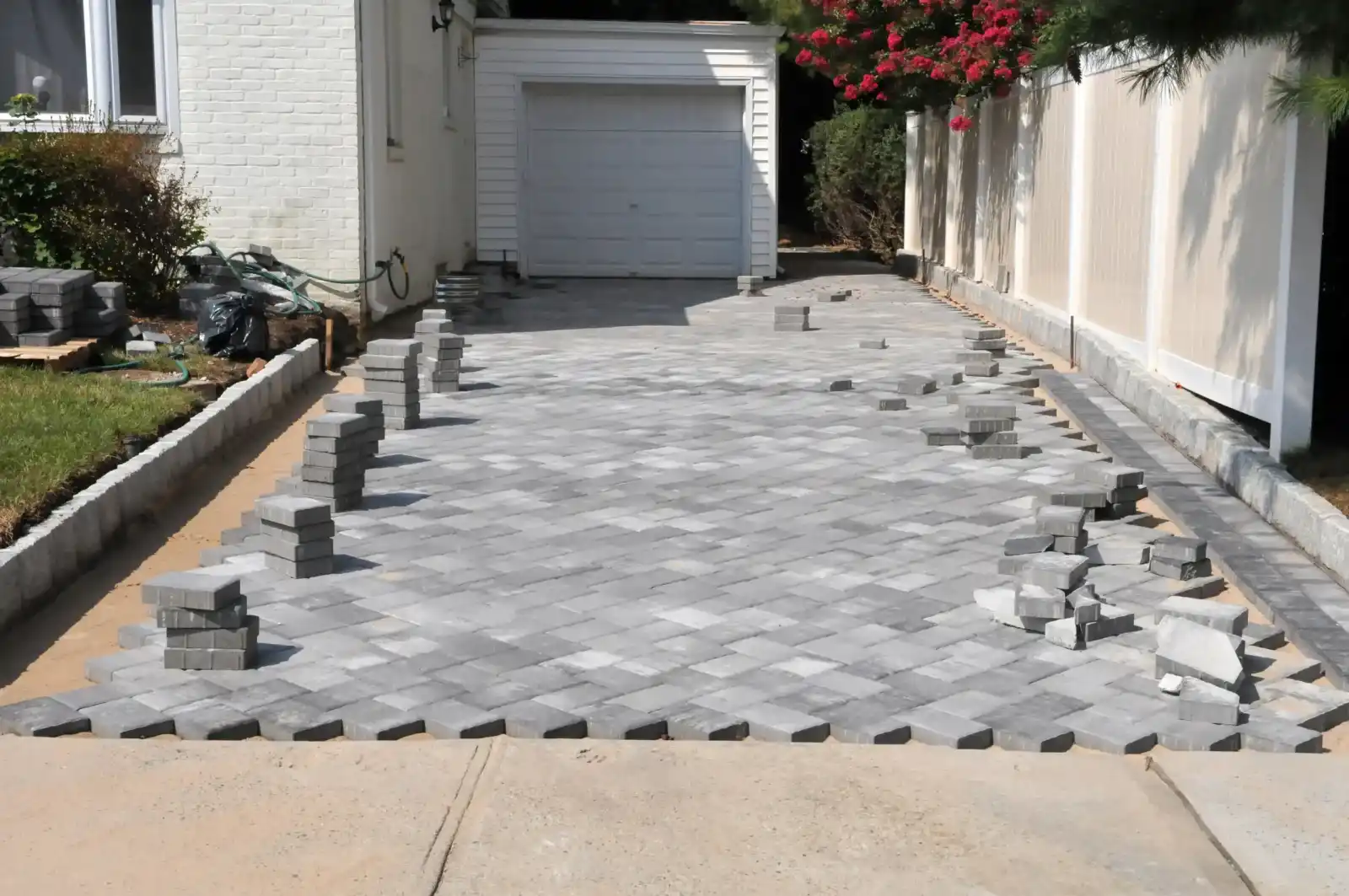
We start with the base. That’s where most problems happen, so we excavate deep enough, grade for drainage, and compact in layers. If the base isn’t right, nothing else matters.
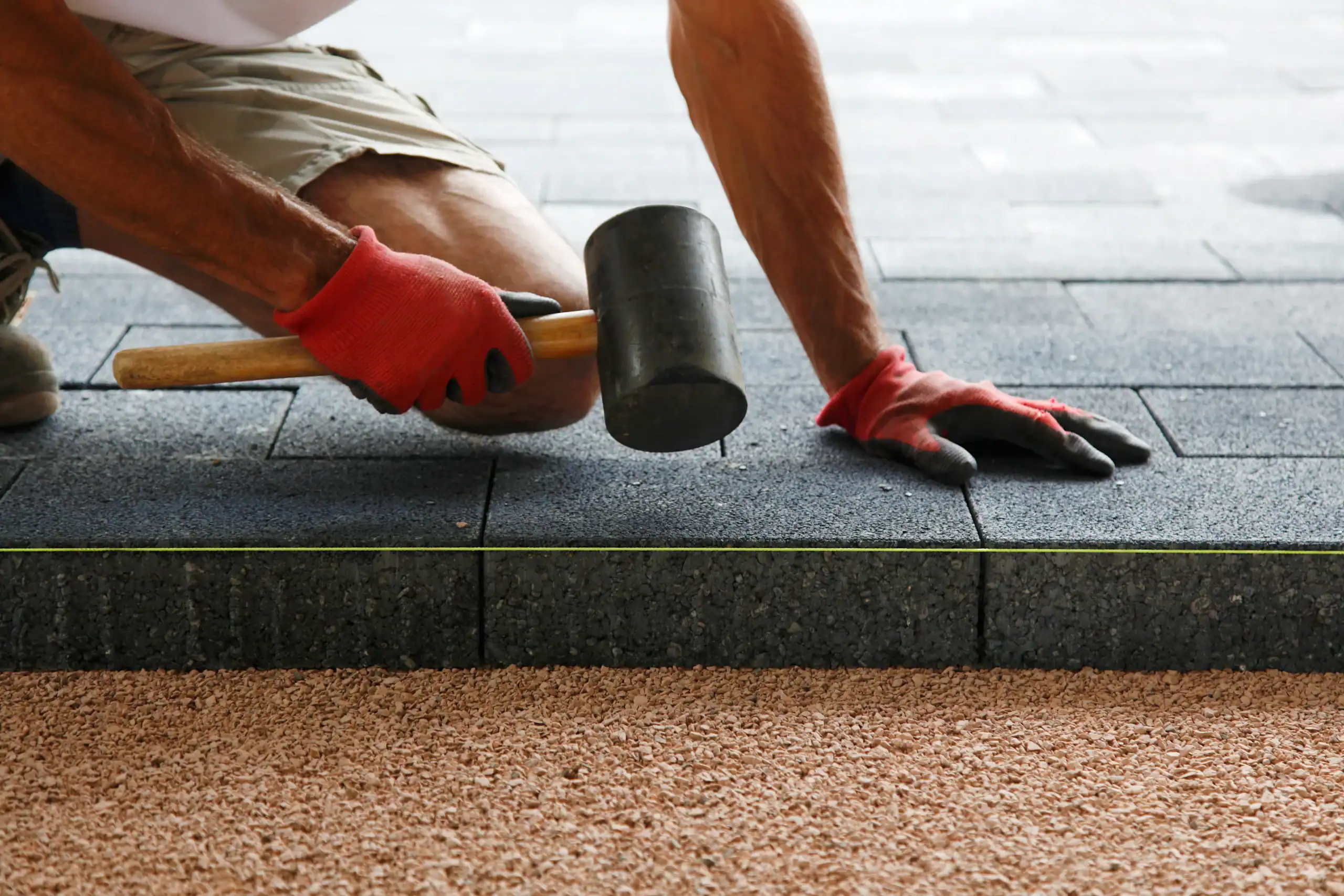
Next comes edge restraint and bedding sand. The restraints keep pavers from shifting over time. The sand creates a level surface that lets each paver settle evenly under weight.
Then we lay the pavers in your chosen pattern—herringbone, running bond, circular, whatever fits your space and style. We cut edges tight, sweep polymeric sand into the joints, and compact everything so it locks together. Finally, we seal it with Seal ‘n Lock if you want that extra protection against stains and fading.
The whole process takes a few days depending on size, and you can drive on it as soon as we’re done.
Ready to get started?
You get a full consultation where we measure your space, talk through paver options, and show you what different colors and patterns look like. We’re authorized for Tremron, Belgard, and Flagstone, so you’re choosing from premium materials that come with manufacturer backing.
Installation includes excavation, proper base prep with compaction, grading for drainage, edge restraints, and professional paver laying. We handle the polymeric sand, compaction, and cleanup. If you want sealing, we apply Seal ‘n Lock as the exclusive distributor in Citrus County.
In North Weeki Wachee, drainage is critical. We see properties where water runs toward the house or pools near the garage. We grade your driveway so water moves away from structures and drains properly—that’s not optional here, it’s necessary. With the area’s mature homes and established landscaping, we also work carefully around existing trees, irrigation lines, and property features you want to keep.
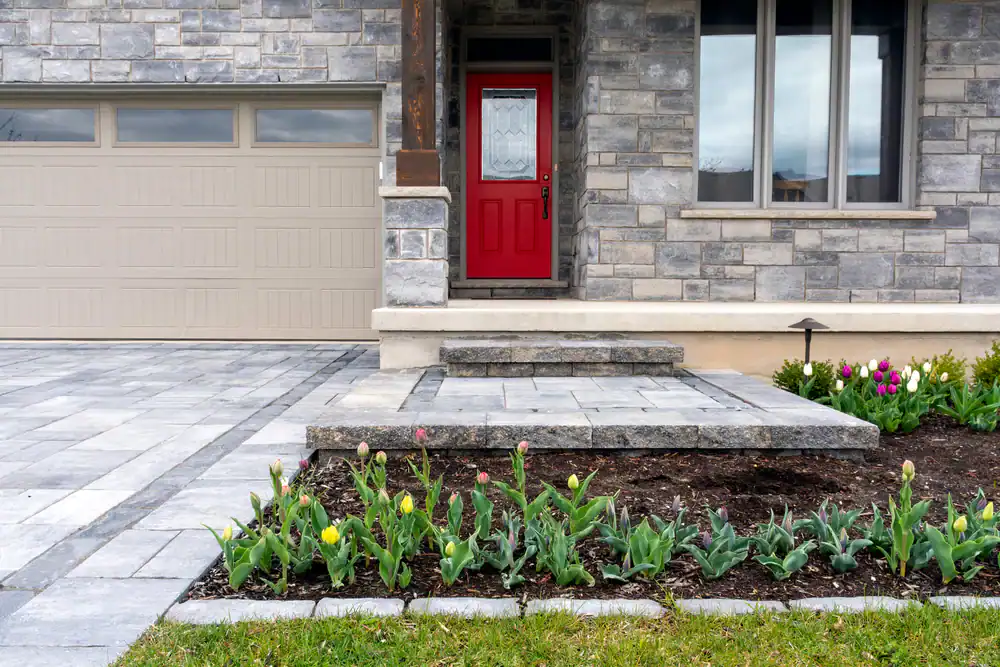
A properly installed paver driveway lasts 25 to 50 years in Florida, even with the heat, rain, and hurricanes. The key word is “properly installed.”
Pavers themselves are incredibly durable. They’re made to handle freeze-thaw cycles up north, so Florida’s heat doesn’t crack them the way it does concrete. The real test is the base underneath. If the base is compacted correctly and graded for drainage, your pavers won’t sink, shift, or develop low spots where water pools.
Sealing helps too. UV rays will fade any outdoor surface over time, but a quality sealant like Seal ‘n Lock slows that process and makes cleaning easier. You’ll want to reseal every few years depending on traffic and sun exposure. But the pavers themselves? They outlast concrete and asphalt by a long shot when installed right.
Pavers cost more upfront—usually between $12 and $25 per square foot installed in Florida, depending on the paver type and site conditions. Concrete runs cheaper initially, often under $10 per square foot.
But concrete cracks. It stains. And when it fails, you’re tearing out the whole thing and starting over. Pavers let you replace individual pieces if one breaks. They don’t crack from ground movement the way solid concrete does, and they handle Florida’s soil shifts better because each piece moves independently.
Homebuyers also prefer paver driveways. They look more finished, they last longer, and they signal that the home was maintained well. So while you’re paying more now, you’re getting better performance, easier repairs, and higher resale value. That math works out over time, especially if you’re planning to stay in your home.
Yes, and it’s noticeable after a heavy rain. Pavers have joints between each piece, and water drains through those joints into the ground below instead of sitting on the surface.
You can also install permeable pavers, which are designed specifically to let water pass through. That’s useful in North Weeki Wachee where afternoon storms are routine and drainage matters. Concrete, on the other hand, is a solid surface. Water has to run off to the edges, and if the grading isn’t perfect, you get puddles or runoff that erodes landscaping.
Proper installation still matters. If the base isn’t graded correctly, even pavers can have drainage issues. But when done right, pavers move water away from your home and into the ground, which is exactly what you want in Florida’s wet season.
You’ll know within the first few months, especially after a few storms. If water pools in spots, if pavers start sinking unevenly, or if edges start spreading apart, the base wasn’t done right.
A correct installation starts with deep excavation—usually 8 to 12 inches depending on soil and traffic. The base gets compacted in layers, not all at once. You should see edge restraints along the perimeter to keep pavers from shifting outward over time. And the surface should be graded so water runs away from your house and garage, not toward them.
Ask your contractor what their base prep process looks like. If they’re vague or rush that part, that’s a red flag. The base is everything. The pavers on top are just the finish. We’ve repaired plenty of driveways where someone skipped steps to save time, and the homeowner paid for it later with sinking sections and standing water.
Yes, you can drive on it as soon as we finish compacting and sweeping the polymeric sand into the joints. There’s no curing time like there is with concrete.
That’s one of the practical advantages of pavers. Concrete needs days to cure, and you have to stay off it or risk damaging the surface. Pavers are ready immediately because they’re individual pieces locked together with sand and edge restraints.
If we apply Seal ‘n Lock, you’ll need to wait 24 to 48 hours before driving on it so the sealant can dry. But that’s optional, and we’ll tell you exactly when it’s safe to use. Most people are back to normal the same day we finish if they skip sealing, or within two days if they don’t.
Less than you’d think, but it’s not zero. You’ll want to sweep it regularly to keep dirt and debris from staining the surface. A pressure washer works well for deeper cleaning a few times a year, especially if you get mold or algae in shady spots.
The polymeric sand in the joints will settle over time, so you may need to add more every few years. That’s a simple fix—you sweep new sand into the joints and mist it down. If you sealed your driveway, plan to reseal every three to five years depending on sun exposure and traffic.
Watch for weeds in the joints and pull them when they’re small. And if a paver cracks or stains badly, you can pop it out and replace just that one piece. That’s the beauty of pavers—repairs are small and manageable, not full replacements like you’d need with cracked concrete.
Useful Links
Other Services we provide in North Weeki Wachee