
Concrete cracks. It’s not a question of if, but when—especially in Silver Springs Shores East where sandy soil shifts, summer heat expands everything, and hurricane season brings wind and water that tears up traditional driveways every few years.
Paver driveways work differently. Each paver interlocks with the ones around it, creating a flexible surface that moves with the ground instead of fighting it. When pressure hits—from a storm, from Florida’s heat cycles, from tree roots—the pavers absorb and distribute that force across the entire driveway instead of concentrating it in one weak spot that cracks wide open.
You get better drainage too. Water flows through the joints between pavers instead of pooling on top, which means less flooding during those intense afternoon thunderstorms we get here. And when a paver does get damaged? You replace that one piece. Not the whole driveway.
That’s the difference between a repair bill of a couple hundred dollars versus several thousand. Between a driveway that lasts 15 years and one that lasts 50-plus with basic maintenance.
We’ve installed pavers for driveway projects across Citrus County since 1995. We’re authorized contractors for Tremron, Flagstone, and Belgard—which means we have direct access to their premium materials and installation standards, plus the backing of their warranties.
We’re also the exclusive Seal ‘n Lock distributor in the county. That matters because Florida’s heat, humidity, and UV exposure will break down unprotected pavers faster than almost anywhere else in the country. Proper sealing isn’t optional here—it’s the difference between pavers that fade and stain in five years versus ones that still look sharp decades later.
You’re working with a family-owned business that’s been in Silver Springs Shores East long enough to know what holds up and what doesn’t. We’ve seen what hurricanes do to driveways. We’ve repaired the ones that failed. And we install the ones that don’t.
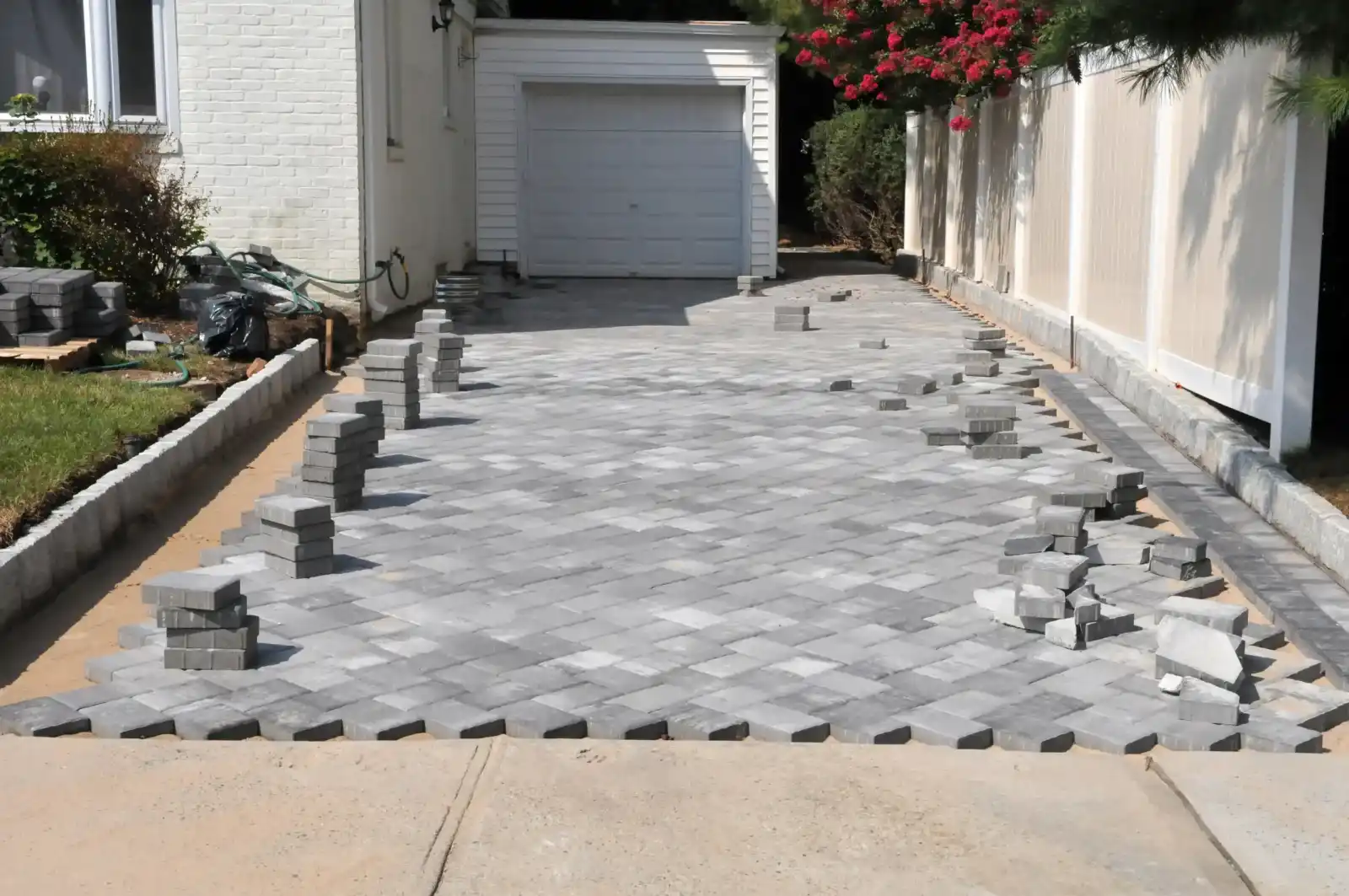
First, we excavate your existing driveway down to stable soil—usually 8 to 12 inches depending on your property and what kind of traffic the driveway will see. This step matters more in Silver Springs Shores East than in a lot of other places because our sandy soil doesn’t compact the same way clay or rock does. Skip the proper base prep and your pavers will shift within a year or two.
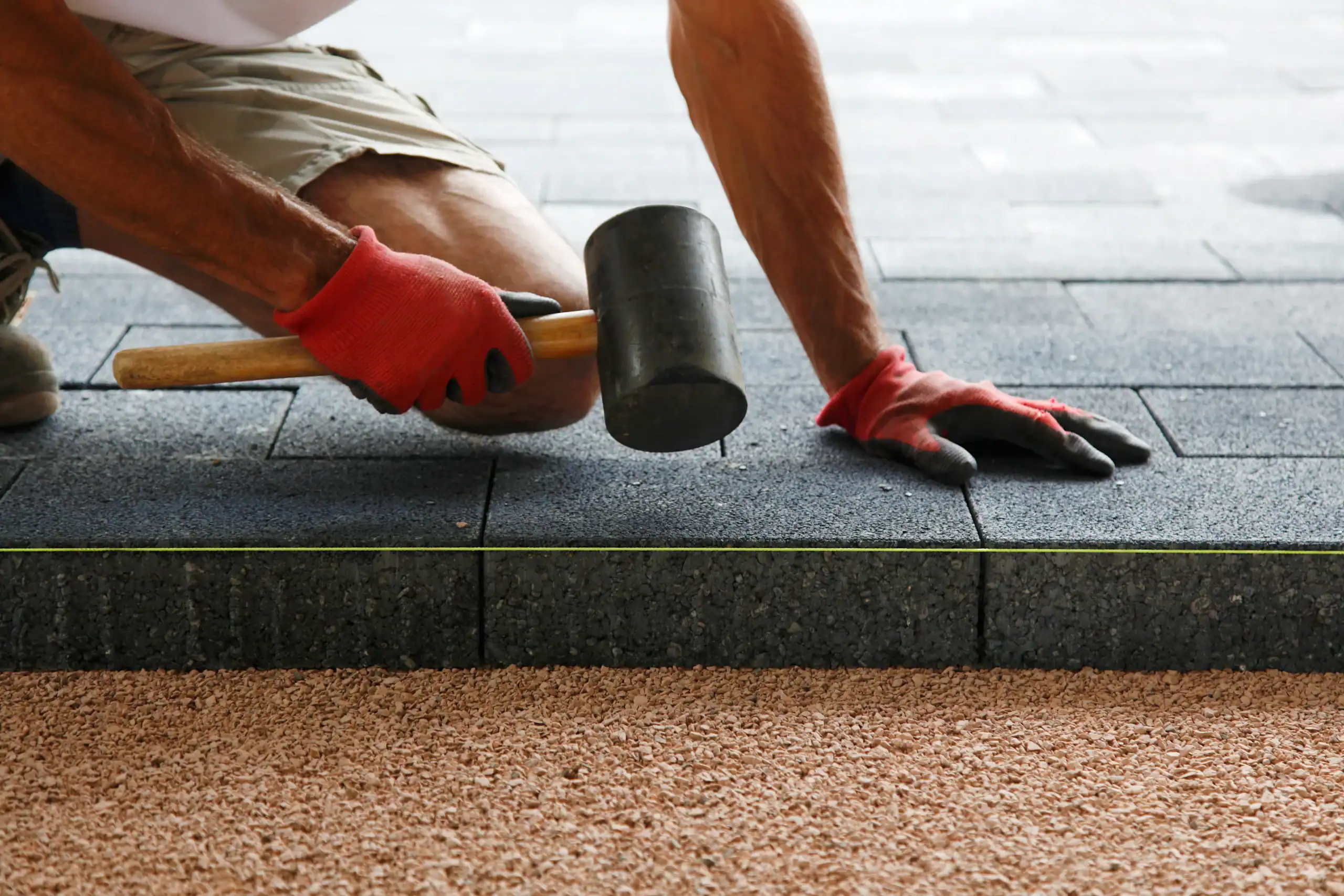
Next comes the base layer: crushed stone that gets compacted in lifts to create a stable foundation. Then a layer of sand, screeded flat, which is where the pavers actually sit. We install each paver by hand, following the pattern you chose, making sure the joints are tight and consistent.
Once the field is set, we cut pavers to fit around edges, curves, and obstacles. Then we sweep polymeric sand into the joints, which hardens when wet and locks everything together. Finally, we compact the whole surface with a plate compactor to seat the pavers firmly into the sand bed.
If you’re sealing—and in Florida, you should be—that happens after the polymeric sand cures, usually a few days later. The sealer protects against UV damage, staining, and moisture intrusion, and it keeps the sand in the joints from washing out during heavy rain.
Ready to get started?
You’re getting a full tear-out and rebuild if you have an existing driveway—we don’t install pavers over old concrete or asphalt because it doesn’t hold up. The base has to be right from the start.
Material selection comes next. We’ll walk you through options from Tremron, Flagstone, and Belgard based on what you’re looking for aesthetically and what your budget allows. Some pavers handle heavy vehicles better. Some resist fading longer. Some cost more upfront but require less maintenance. We’ll tell you the difference so you can make the call.
Installation includes proper drainage grading so water moves away from your house and doesn’t pool anywhere on the driveway. In Silver Springs Shores East, where we get several inches of rain in a single afternoon during summer, drainage isn’t cosmetic—it’s structural. Poor drainage leads to erosion under the pavers, which leads to settling, which leads to an uneven surface and expensive repairs.
You also get edge restraints to keep the pavers from shifting outward over time, polymeric sand in the joints for stability, and compaction to lock everything in place. Sealing is separate but strongly recommended, especially if you want the color to stay vibrant and the surface to resist oil stains, mold, and efflorescence.
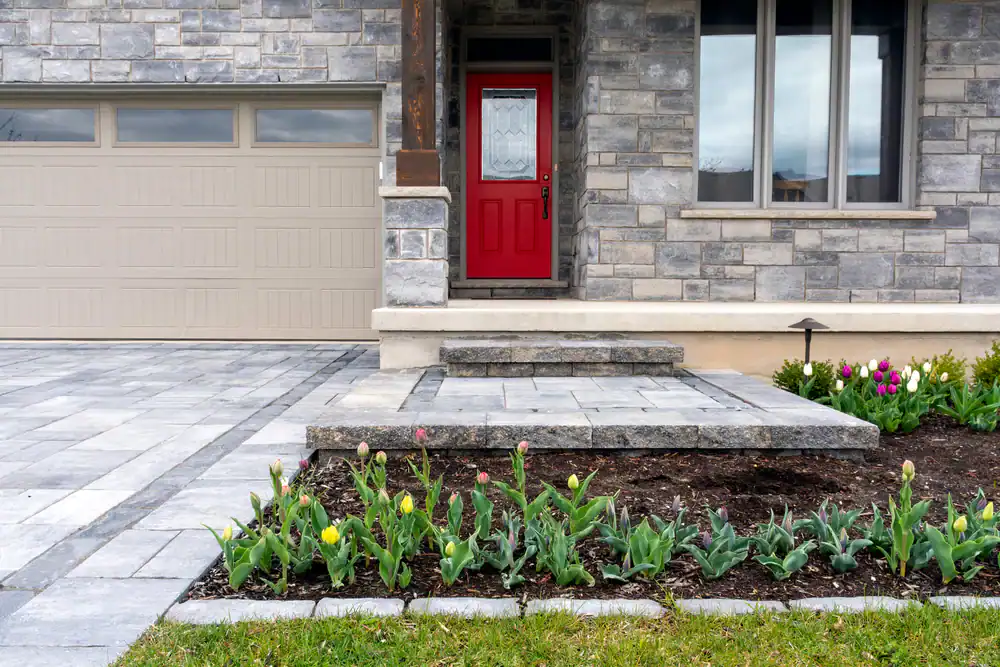
Most driveway paver installations in this area run between $10 and $25 per square foot, depending on the paver type, the size of the job, and site conditions. A standard two-car driveway—around 400 to 600 square feet—typically falls in the $4,000 to $15,000 range.
Tremron and Belgard pavers sit on the higher end because of their durability and warranty coverage, but they also hold up better in Florida’s climate. Cheaper pavers fade faster, crack easier, and often need replacement or repair within 10 years. You’ll spend less upfront and more long-term.
Site prep affects cost too. If we’re tearing out old concrete, dealing with drainage issues, or working around mature trees with root systems, that adds labor and material. But those aren’t optional steps—they’re what keeps your driveway from failing two years after install.
Yes, and it’s not close. Concrete driveways crack in Florida because the ground shifts, the heat causes expansion and contraction, and hurricanes bring wind and water that exploit every weak point. Once concrete cracks, the only real fix is replacement—patching looks bad and doesn’t last.
Pavers flex with ground movement instead of resisting it. Each paver can shift slightly without affecting the ones around it, so you don’t get the spiderweb cracks that ruin concrete driveways. When a paver does crack or stain, you pull that one piece and drop in a new one. Ten-minute fix.
Drainage is better too. Water flows through the joints between pavers, so you don’t get the pooling and flooding that happens with solid concrete slabs during heavy rain. And pavers last longer—50-plus years with proper maintenance versus 10 to 20 for concrete in Florida’s climate.
Most residential driveway paver installations take three to five days from start to finish, depending on size and complexity. Day one is usually excavation and base prep. Days two and three are base compaction, sand leveling, and paver installation. Day four is edge work, cutting, and joint sand. Day five, if needed, is cleanup and any final adjustments.
Weather can push that timeline out. If it rains hard during base prep, we have to wait for things to dry out before compacting—otherwise the base won’t stabilize properly and your driveway will settle unevenly within a year.
Sealing happens separately, usually a few days after installation once the polymeric sand has cured. You can drive on the pavers as soon as we’re done compacting, but we recommend waiting 24 hours just to let everything settle in fully.
Concrete pavers from Tremron or Belgard are the most common choice here because they’re engineered specifically for Florida’s climate—high compressive strength to handle vehicle weight, UV-resistant pigments that don’t fade as fast, and interlocking shapes that stay stable even when the ground shifts.
Travertine looks great and stays cooler underfoot, but it’s more porous, which means it stains easier and requires more frequent sealing. It also costs more upfront. Some people use it for the main driveway area and switch to concrete pavers for high-traffic zones near the garage.
Brick pavers are an option if you want a traditional look, but they fade faster in direct sun and don’t hold up as well under heavy vehicles. They work better for walkways and patios than driveways in most cases.
The real key isn’t just the paver type—it’s the installation. A premium paver installed on a weak base will fail just as fast as a cheap paver. The base prep, compaction, and drainage work matter more than the paver brand in most cases.
In Florida, yes. Sealing isn’t required for the pavers to function, but it’s the difference between a driveway that looks good for 5 years versus one that looks good for 20-plus.
Sealers protect against UV damage, which is what causes pavers to fade and lose color over time. They also create a barrier against oil stains, mold, mildew, and efflorescence—that white hazy residue that shows up on unsealed pavers after it rains. And they lock the polymeric sand in the joints so it doesn’t wash out during heavy storms.
You’ll need to reseal every three to five years depending on traffic and sun exposure. It’s not a complicated process, but it has to be done right—clean the surface, let it dry completely, apply the sealer evenly, and let it cure before driving on it.
We’re the exclusive Seal ‘n Lock distributor in Citrus County, so we handle sealing as part of the install or as a standalone service if your pavers are already down but starting to show wear.
Yes, and that’s one of the biggest advantages pavers have over concrete. If a section gets damaged—from a tree root, a vehicle impact, or settling—you pull up the affected pavers, fix whatever caused the problem, and reinstall new pavers in that spot.
The repair is invisible if the pavers are still available in the same color and style. If they’ve been discontinued, we can sometimes source close matches or create a deliberate pattern change that looks intentional instead of like a patch job.
This also works if you want to expand your driveway later or add a walkway that ties into the existing design. We pull up the edge pavers, extend the base, and install new pavers that interlock with the old ones. You can’t do that with concrete without saw cuts and visible seams.
Partial replacements usually take a few hours to a day depending on the size of the area. It’s a fraction of the cost of replacing an entire concrete driveway, which is what you’d be looking at if a slab cracked badly enough to need repair.
Useful Links
Other Services we provide in Silver Springs Shores East