
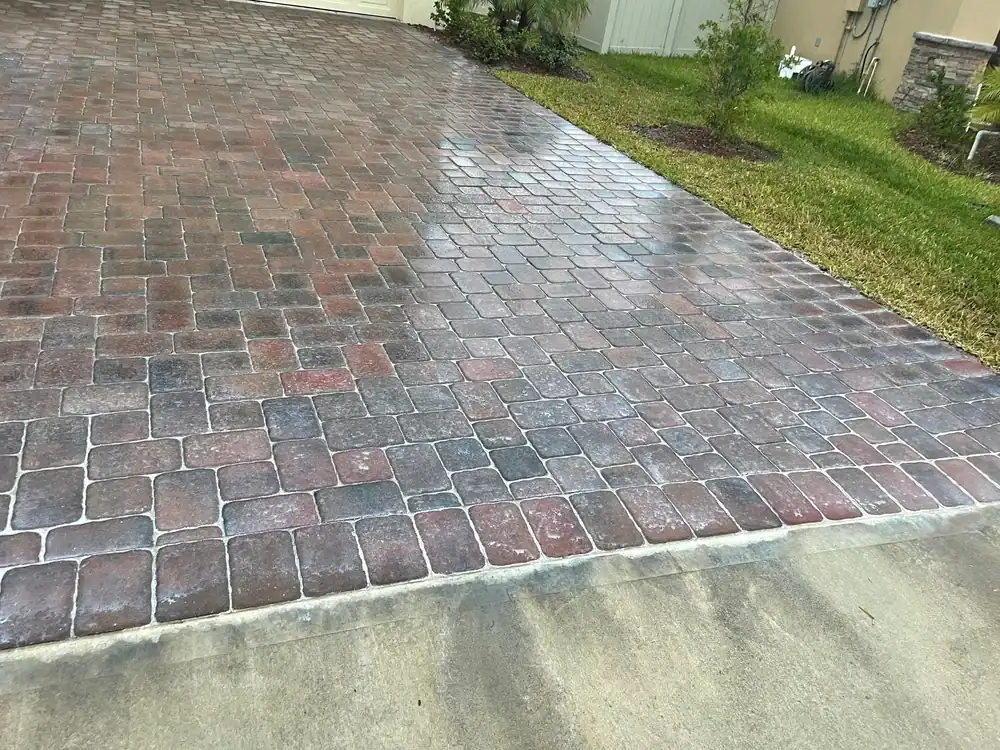
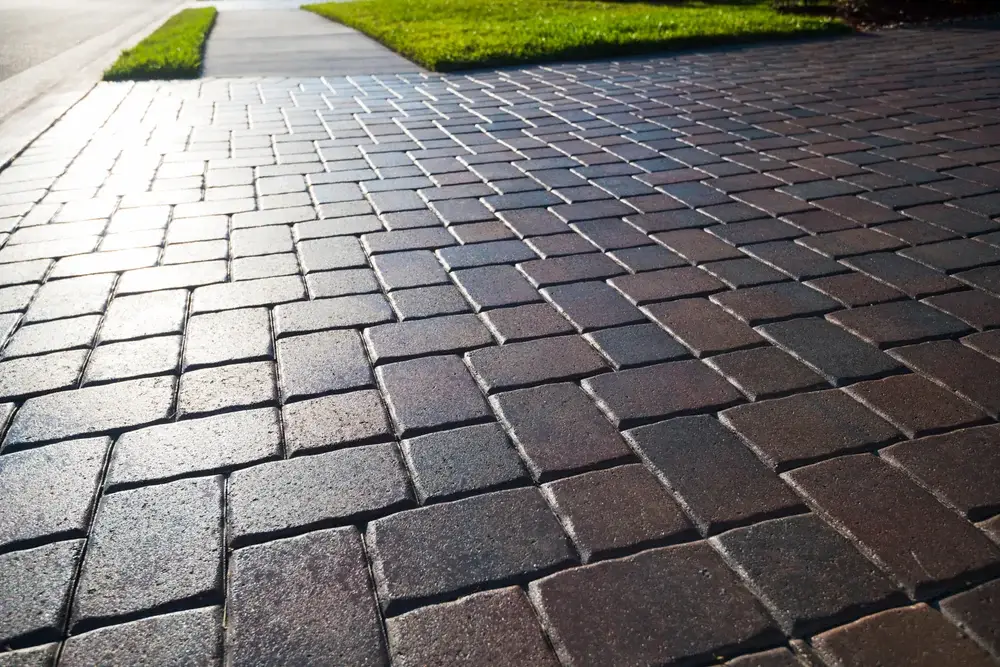
Sealed pavers don’t fade into that washed-out gray you see everywhere. The color stays vibrant because commercial-grade sealer blocks UV damage that Florida sun dishes out daily.
You’ll spend less time scrubbing stains and pulling weeds from the joints. Sealer creates a barrier that keeps dirt, algae, and organic debris on the surface where it rinses off easily instead of soaking into the pores.
Your sand stays put during Lake Panasoffkee’s heavy summer storms. When joint sand washes out, pavers shift and settle unevenly. Sealing locks that sand in place so your driveway, patio, or pool deck stays level and stable for years instead of needing constant repairs.
The surface dries faster after rain, which means less slipping and fewer puddles. It also means mildew doesn’t get a chance to take hold in those damp spots that never seem to dry.
We’ve been sealing pavers across Lake Panasoffkee and Citrus County since 1995. We’re the exclusive Seal ‘n Lock distributor in the county and Authorized Contractors for Tremron, Flagstone, and Belgard.
That means we use professional-grade sealers manufactured in Florida specifically for this climate. Not the stuff you pick up at a big box store that peels off in six months.
We’ve seen what happens to unsealed pavers in Lake Panasoffkee. The combination of intense sun, afternoon thunderstorms, and year-round humidity destroys pavers faster here than almost anywhere else. We know exactly how to prep the surface, which sealer works for your specific paver type, and how to apply it so it actually lasts.
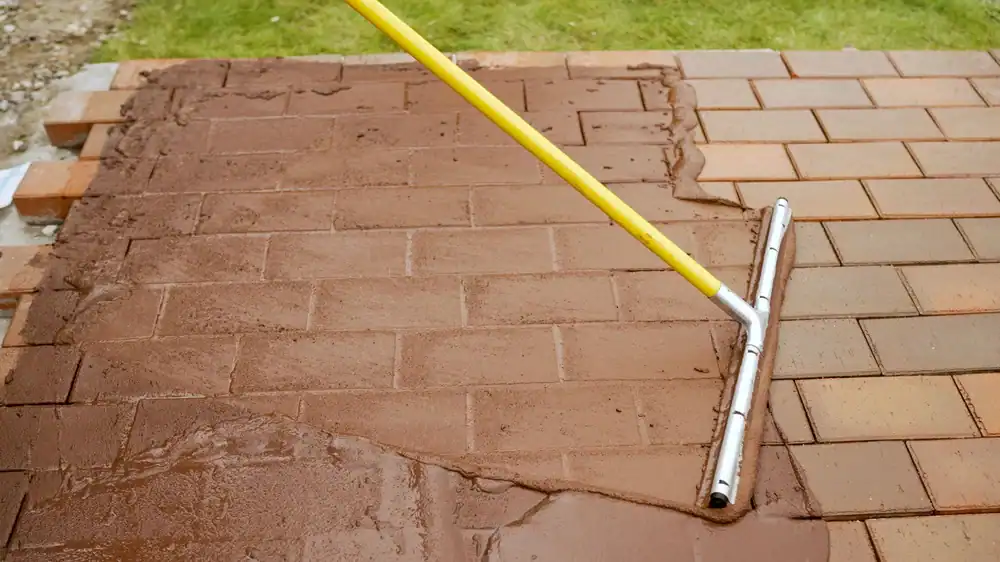
We start with a thorough cleaning using commercial equipment. Any dirt, algae, mildew, or old sealer has to come off completely or the new sealer won’t bond properly.
Next, we inspect the joints and re-sand anywhere the sand has washed out or settled. This step matters more than most people realize because unstable joints lead to shifting pavers no matter how good the sealer is.
We let everything dry completely. Applying sealer to damp pavers traps moisture underneath, which causes clouding and premature failure. In Florida’s humidity, proper drying time is critical.
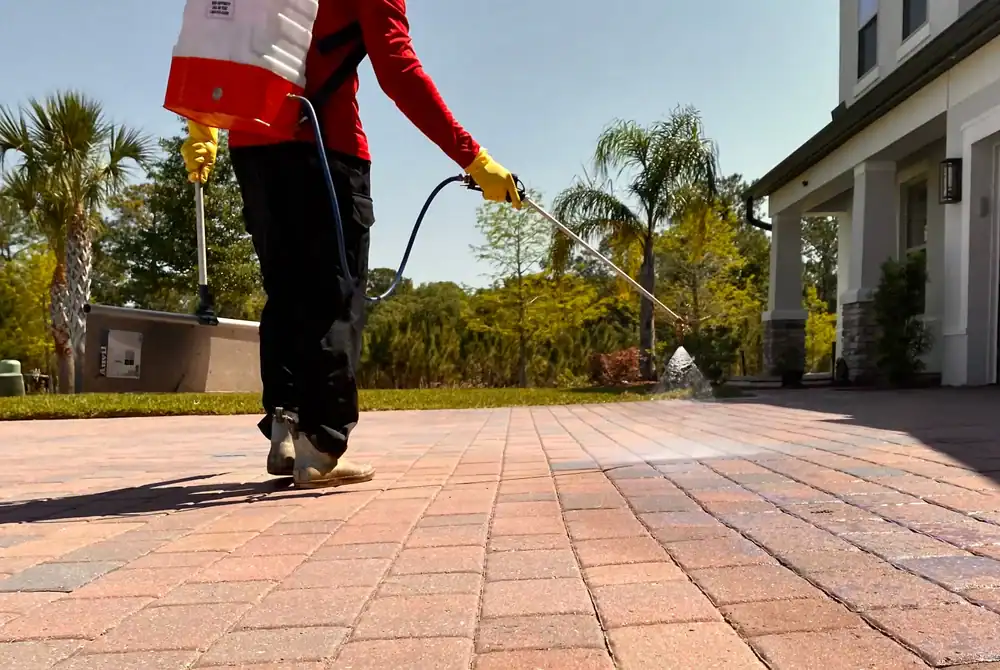
Then we apply the sealer in even coats using professional equipment. We’re not rolling it on with a paint roller. The application method affects coverage, penetration, and how long the sealer lasts.
You’ll need to stay off the pavers for 24-48 hours depending on temperature and humidity. After that, your pavers are protected and you can use them normally.
Ready to get started?
This isn’t a quick spray-and-go job. Professional paver sealing in Lake Panasoffkee means cleaning, repairing, prepping, and sealing with materials designed for Florida’s climate.
We clean every square inch with commercial-grade equipment that removes embedded stains, organic growth, and any previous sealer that’s failing. If there are specific stains—rust, oil, organic—we treat those separately before the main cleaning.
Joint stabilization is part of the service. We re-sand any areas where sand has washed away and make sure the joints are properly filled before sealing. This keeps your pavers from shifting when the next storm rolls through.
The sealer we use is a commercial-grade product made in Florida. It’s designed to handle UV exposure, sudden temperature swings, and the constant moisture that comes with living near Lake Panasoffkee. It penetrates deep into the paver surface and creates a protective barrier on top.
You’ll also get guidance on maintenance. Sealed pavers last longer when you know how to clean them properly and when to schedule resealing. In Lake Panasoffkee’s climate, most paver sealing needs refreshing every two to three years depending on sun exposure and traffic.
Cost depends on the square footage, the condition of your pavers, and how much prep work is needed. A typical driveway runs between $800 and $2,000. Larger patios or pool decks can run higher.
If your pavers haven’t been maintained and need heavy cleaning, stain removal, or significant re-sanding, that adds to the cost. But it’s still a fraction of what you’d pay to replace pavers that have deteriorated beyond repair.
The real question is what you’re comparing it to. Replacing pavers costs anywhere from $8,000 to $20,000 or more depending on the size and complexity. Sealing protects that investment for a few hundred dollars a year when you factor in resealing every few years.
We can give you an exact estimate after seeing your pavers and understanding what condition they’re in. Call us and we’ll come take a look.
Every two to three years is the standard recommendation for Lake Panasoffkee. Florida’s climate is tough on sealers because of the UV exposure and constant moisture.
If your pavers are in full sun all day, you might need to reseal closer to every two years. Shaded areas or pavers that don’t get heavy traffic can sometimes go three years.
You’ll know it’s time when water stops beading on the surface and starts soaking in. That means the sealer is wearing thin and your pavers are vulnerable again.
Don’t wait until the pavers look faded or stained. By that point, damage has already happened. Resealing on schedule prevents problems instead of fixing them after the fact.
The sealing process is similar, but interlocking pavers rely more heavily on joint stability. Those pavers lock together through the sand-filled joints, so keeping that sand in place is critical.
When you seal interlocking pavers in Lake Panasoffkee, joint stabilization becomes even more important. If the sand washes out during a storm, the pavers lose their interlock and start shifting. Sealer helps lock that sand in place.
Brick pavers are more porous than concrete interlocking pavers, so they absorb more moisture and stain more easily. They often need a sealer with stronger penetration to protect against Florida’s humidity and organic growth.
Both types benefit from sealing, but the specific product and application method might vary. We match the sealer to your paver type and the specific conditions they’re exposed to in your yard.
You can buy sealer and try it yourself, but the results usually don’t last. Most DIY jobs fail because of improper surface prep, wrong sealer choice, or application issues.
If the pavers aren’t completely clean and dry, the sealer won’t bond. If you use a sealer that’s not designed for Florida’s climate, it’ll break down fast. If you apply it too thick or too thin, you’ll get uneven coverage or premature wear.
We have commercial cleaning equipment that removes embedded stains and growth you can’t get out with a pressure washer from the hardware store. We also know which sealers actually hold up in this climate.
The bigger issue is what happens when a DIY sealing job fails. You’ll need to strip the old sealer off before resealing, which is harder and more expensive than doing it right the first time. If you’re going to invest the time and money, it makes sense to get results that last.
Some sealers do create a slick surface, especially the high-gloss ones. That’s why we don’t use those on driveways, walkways, or pool decks in Lake Panasoffkee.
We use sealers with slip-resistant additives or natural-finish sealers that enhance the color without creating a glossy coating. Your pavers will actually be safer after sealing because they dry faster and don’t hold water in the pores.
Unsealed pavers stay damp longer after rain, and that moisture encourages algae and mildew growth. Those are what make pavers truly slippery. Sealing prevents that organic growth from taking hold.
If you’re concerned about slip resistance around a pool deck or on a sloped walkway, tell us during the estimate. We’ll recommend a sealer that prioritizes traction while still protecting the pavers from Florida’s weather.
They’ll fade, stain, and deteriorate faster than sealed pavers. Florida’s sun bleaches out the color within a couple of years. Rain washes the sand out of the joints, which leads to settling and uneven surfaces.
Unsealed pavers absorb moisture, which creates the perfect environment for mold, mildew, and algae. You’ll see green or black staining in shaded areas and constant weed growth in the joints.
Stains from leaves, dirt, pollen, and organic debris soak into the pores instead of sitting on the surface. Once those stains penetrate deep into unsealed pavers, they’re nearly impossible to remove.
Eventually, you’re looking at replacement instead of restoration. Pavers that have been neglected for years often can’t be brought back to acceptable condition. Sealing from the start—or as soon as you notice fading—protects your investment and keeps your outdoor spaces looking the way they should.
Useful Links
Other Services we provide in Lake Panasoffkee