
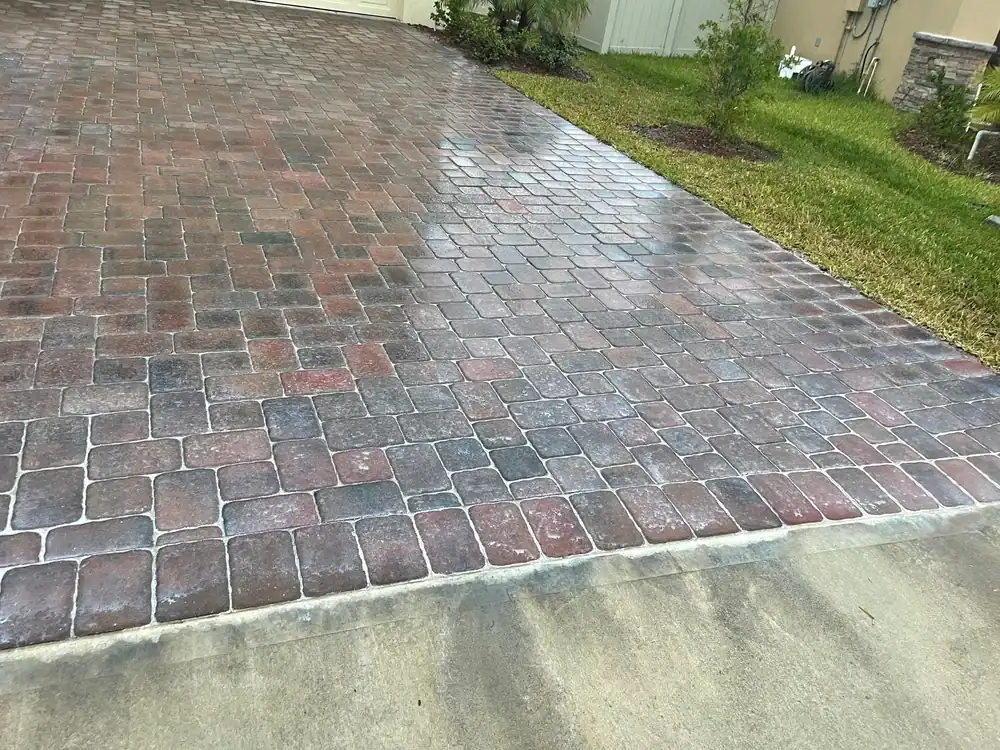
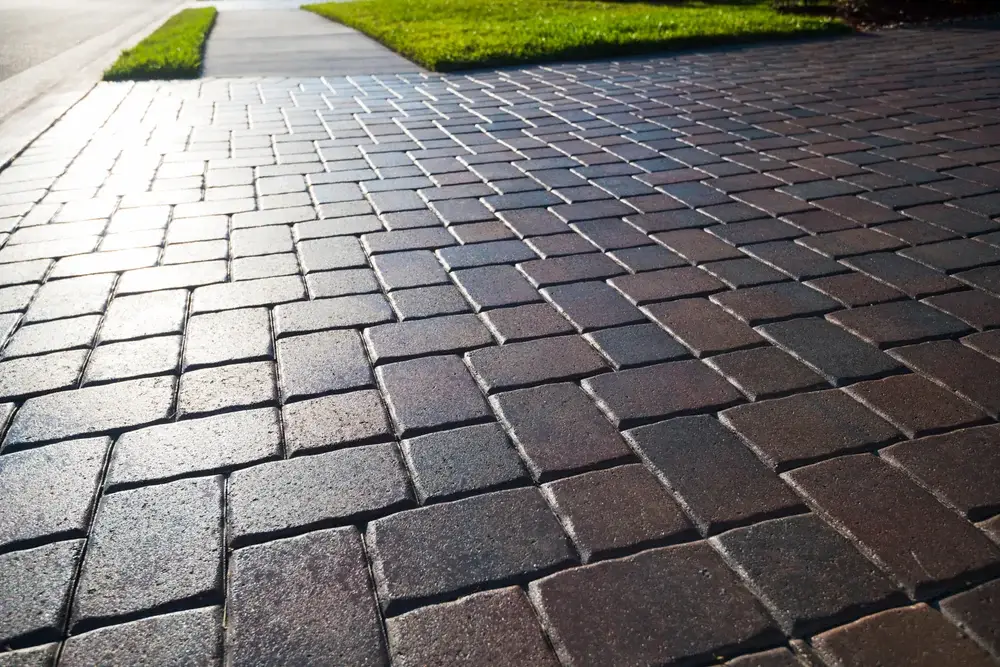
Your driveway or patio cost you anywhere from $8,000 to $20,000. That’s not pocket change. And in Lecanto’s climate, unsealed pavers don’t just age—they deteriorate fast.
UV rays bleach out the color you paid for. Heavy rains wash away joint sand, leaving pavers loose and uneven. Mold creeps in. Weeds push through. Stains set deep into the surface because there’s nothing blocking them.
Sealing your pavers stops all of that. The color stays vibrant. The sand stays locked in place. Water beads off instead of soaking in. You’re not dealing with constant repairs or watching your investment fade in front of you.
You get a surface that looks clean, stays stable, and requires way less maintenance. That’s what protection actually does—it keeps what you built from falling apart.
We’ve been operating in Citrus County since 1995. That’s 29 years of driveways, patios, pool decks, and walkways across Lecanto and the surrounding area.
You’re working with Authorized Contractors for Tremron, Flagstone, and Belgard—the top paver manufacturers in the region. You’re also working with the exclusive Seal ‘n Lock distributor in the county, which means access to commercial-grade sealers that actually hold up in Florida weather.
This isn’t a side service for us. Sealing interlocking pavers is part of what keeps hardscapes functional long-term, and it’s something we’ve been doing since the late ’90s. If your pavers were installed in Lecanto, there’s a good chance we’ve seen and handled the conditions they’re facing right now.
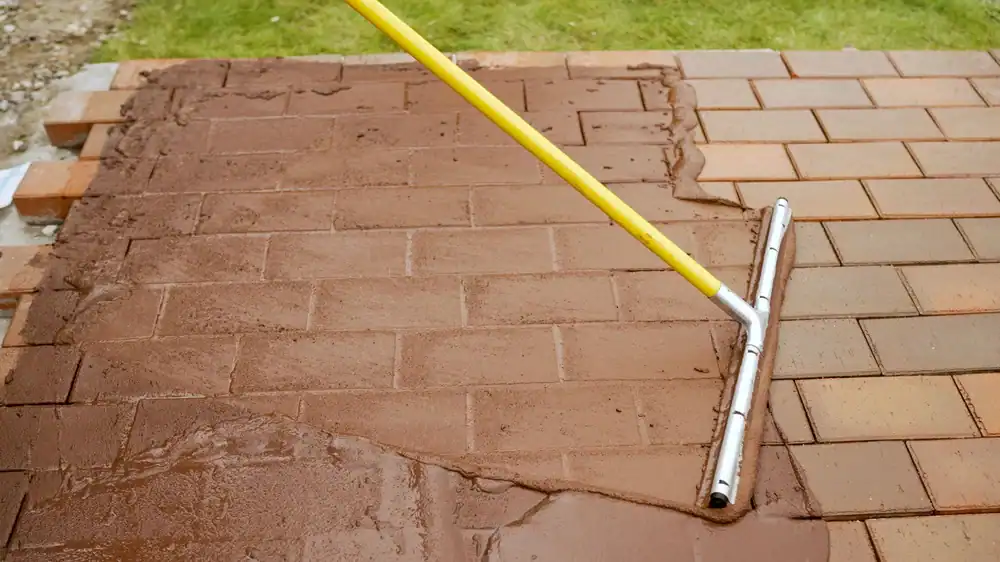
First, your pavers get cleaned. That means pressure washing to remove dirt, algae, mold, and any old sealer that’s breaking down. If there are stains, we treat them. If there’s sand missing from the joints, we replace it and compact it so everything sits level.
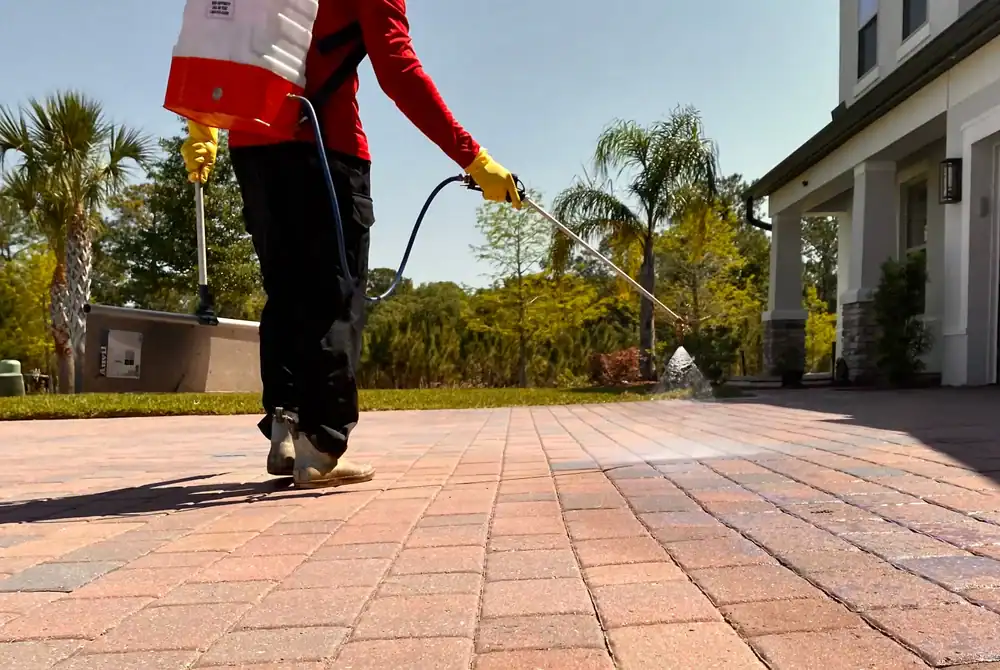
Once the surface is prepped and fully dry, the sealer goes on. A commercial-grade product gets applied evenly across the entire area—driveway, patio, pool deck, whatever you’re protecting. It soaks into the paver surface and locks in the joint sand.
After it cures, you’ve got a sealed surface that resists UV fading, repels water, blocks stains, and keeps weeds and ants from moving in. The whole process typically takes one to two days depending on the size of the area and weather conditions. You’ll need to stay off the surface during the curing period, but after that, it’s ready to handle Florida’s worst.
Ready to get started?
You’re getting a multi-step process that starts with a full cleaning and ends with a protective barrier that lasts. That includes pressure washing, stain treatment, joint sand replacement if needed, and application of a sealer designed to handle high UV exposure and heavy rain.
In Lecanto, the weather doesn’t take it easy on outdoor surfaces. Intense sun during summer months, unpredictable storms during hurricane season, and year-round humidity all work against unsealed pavers. A quality sealer provides UV resistance to prevent fading, water repellency to stop erosion, and a binding effect that keeps joint sand from washing out.
The sealer also makes future maintenance easier. Dirt doesn’t stick as easily to a sealed surface, so regular cleaning takes less effort. Mold and algae have a harder time taking hold. And when something does spill—oil, rust, organic debris—it wipes away instead of soaking in.
For patio paver sealing in Lecanto, FL, you’re also protecting the areas where you spend time outside. Pool decks stay cleaner and safer. Patios hold up to furniture, foot traffic, and weather without looking worn down after a single season.
Every two to three years is the standard recommendation for this area. Florida’s climate is harder on pavers than most other regions—more sun exposure, more rain, higher humidity. That accelerates wear on the sealer.
If your pavers are in full sun most of the day, you might be closer to the two-year mark. Shaded areas or surfaces that don’t get heavy traffic can sometimes stretch to three years. But waiting longer than that usually means you’re already dealing with fading, sand loss, or surface staining.
You’ll know it’s time when water stops beading on the surface and starts soaking in, or when the color starts looking dull. Those are signs the sealer is breaking down and no longer doing its job.
They fade, shift, and break down faster. UV rays from the sun will bleach out the color within a year or two. You’ll notice the vibrant tones you picked out turning washed out and dull.
Rain will wash away the joint sand, especially during heavy storms. Once that sand is gone, pavers start shifting. You get uneven surfaces, tripping hazards, and gaps where weeds push through. Ants move in and make it worse by tunneling under the pavers.
Stains become permanent because there’s no barrier stopping them from soaking into the porous surface. Oil, rust, organic material—it all sets in deep. And mold or algae will grow freely in Florida’s humidity, turning your patio or driveway into a slippery, discolored mess. Sealing prevents all of that from happening in the first place.
You can try, but the results usually aren’t the same. The biggest issue is surface prep. If the pavers aren’t completely clean and dry, the sealer won’t bond properly. You’ll get streaks, bubbles, or areas where it peels off after a few months.
Application matters too. Too much sealer and you get a cloudy, uneven finish. Too little and you’re not actually protecting anything. Commercial-grade sealers also require specific equipment and techniques to apply evenly across large areas.
We have the pressure washing equipment to clean properly, the experience to spot issues like sand loss or surface damage before sealing, and access to higher-quality products that last longer. You’re paying for the job to be done right the first time, which saves you from having to redo it or fix mistakes a year later.
Only if the wrong sealer is used or it’s applied incorrectly. A high-gloss sealer on a pool deck or walkway can absolutely create a slick surface when wet, which is why that’s not what gets used in those areas.
For surfaces where slip resistance matters, a matte or low-sheen sealer is the right choice. It still provides full protection against UV damage, water, and staining, but it doesn’t create a glossy film that turns slippery.
The texture of the paver itself also plays a role. Textured pavers naturally have more grip than smooth ones. A properly applied sealer won’t eliminate that texture—it enhances it by filling in minor imperfections and creating a more uniform surface. If you’re concerned about slip resistance, that’s something to bring up before the sealer goes on so the right product gets selected for your specific situation.
Most sealers are dry to the touch within a few hours, but that doesn’t mean they’re fully cured. You’re looking at 24 to 48 hours before you can walk on the surface, and 72 hours before it’s ready for vehicle traffic or heavy use.
Weather affects curing time. High humidity or cooler temperatures can slow things down. If it rains before the sealer is fully cured, it can cause cloudiness or wash away areas that haven’t bonded yet. That’s why timing matters—sealing needs to happen when the forecast is clear for at least a few days.
Once it’s cured, the sealer is fully bonded to the paver surface and ready to handle whatever you throw at it. But rushing that curing period by using the surface too early can compromise the entire application, which means you’re back to square one sooner than you should be.
It doesn’t add square footage, but it absolutely protects the value already there. A well-maintained hardscape—driveway, patio, pool deck—signals that the property has been cared for. Buyers notice that.
Faded, stained, or uneven pavers do the opposite. They make the property look neglected, and they raise questions about what else hasn’t been maintained. Sealing keeps your pavers looking clean and new, which contributes to curb appeal and overall first impressions.
In Lecanto, where homeownership rates are high and many properties feature outdoor living spaces, a sealed paver surface is an expectation more than a luxury. It shows the outdoor areas are functional and ready to use, not something the next owner will need to repair or replace right away. That peace of mind has value, even if it’s not a line item on an appraisal.
Useful Links
Other Services we provide in Lecanto