
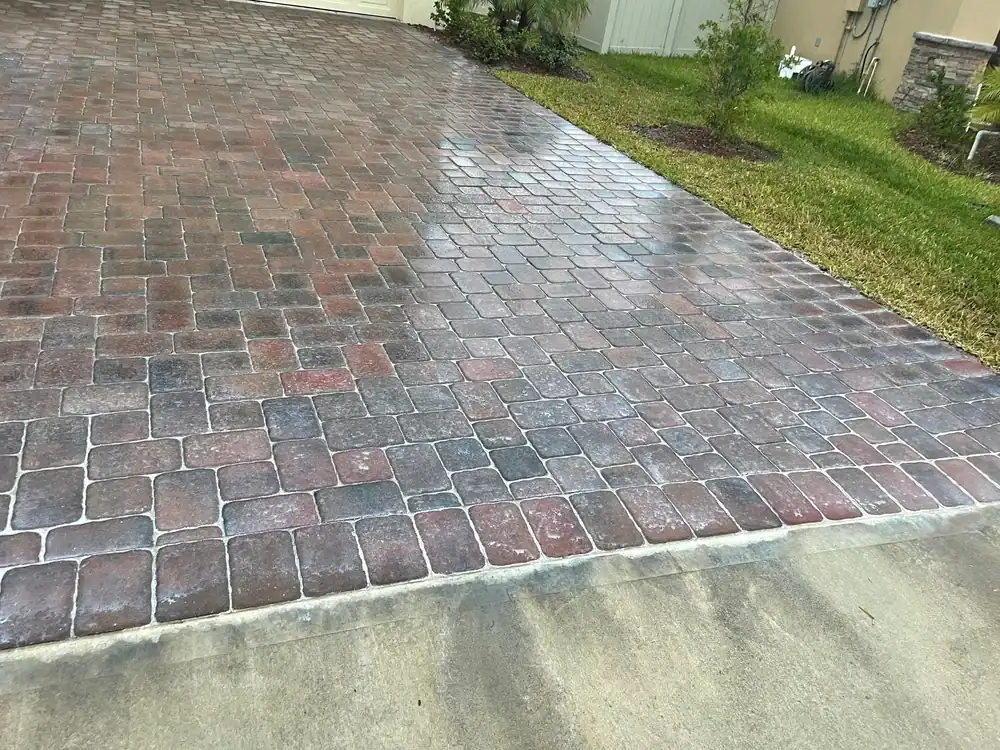
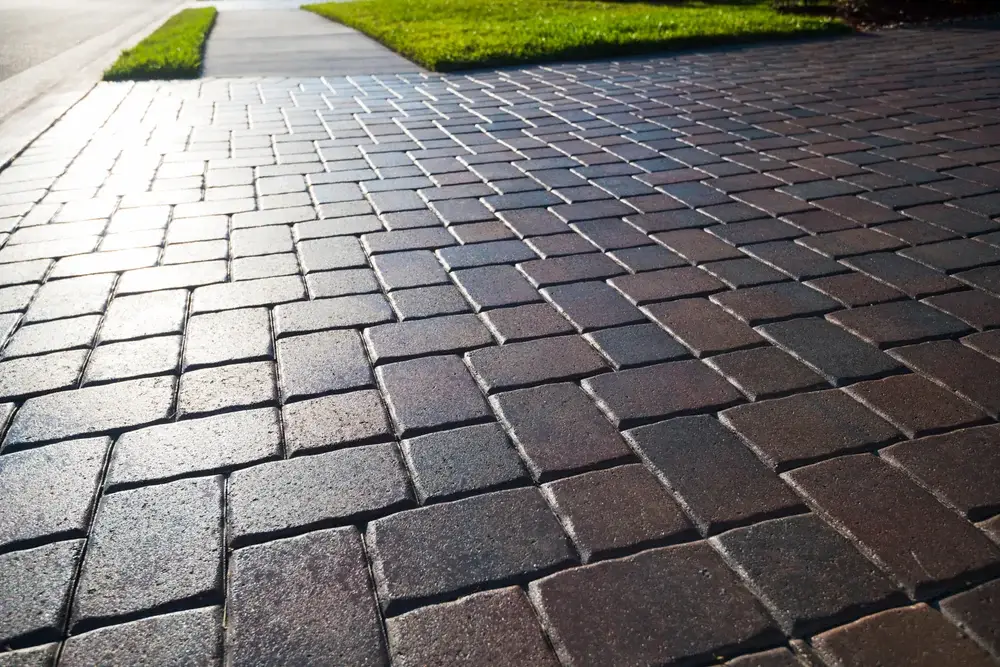
Sealed pavers don’t fade as fast. They don’t absorb oil stains from your car or rust marks from patio furniture. Water doesn’t seep between the joints and wash out the sand that keeps everything stable.
You’re not dealing with weeds pushing up through the cracks every few weeks. Mold and mildew don’t take over after a rainy stretch. The color stays closer to what it looked like when it was first installed.
And when you decide to sell, buyers notice. Clean, well-maintained pavers signal that the rest of the property has been cared for too. Sealing doesn’t just protect the surface—it protects what you paid to have installed in the first place.
We’ve been sealing pavers across Citrus County and surrounding areas like Marion Oaks for nearly 30 years. We’re a family-owned business, and we’re the exclusive Seal ‘n Lock distributor in our county—which means we use products built specifically for Florida’s climate, not generic big-box sealers.
We’re also authorized contractors for Tremron, Flagstone, and Belgard. That matters because we know how these pavers are made, how they wear, and what they need to last. We’re not guessing.
If you’re in Marion Oaks, you know how fast things can go south with outdoor surfaces. We’ve seen it all—faded driveways, sunken pool decks, paver patios covered in algae. We clean it, prep it, seal it, and make sure it holds up.
First, we clean the surface. That means pressure washing to remove dirt, algae, mold, oil—anything that would interfere with the sealer bonding properly. If there are stains, we treat them. If there’s old sealer that’s peeling or uneven, we strip it.
Next, we check the joint sand. If it’s washed out or low, we refill and compact it. That sand is what keeps your pavers from shifting, so it has to be right before we seal.
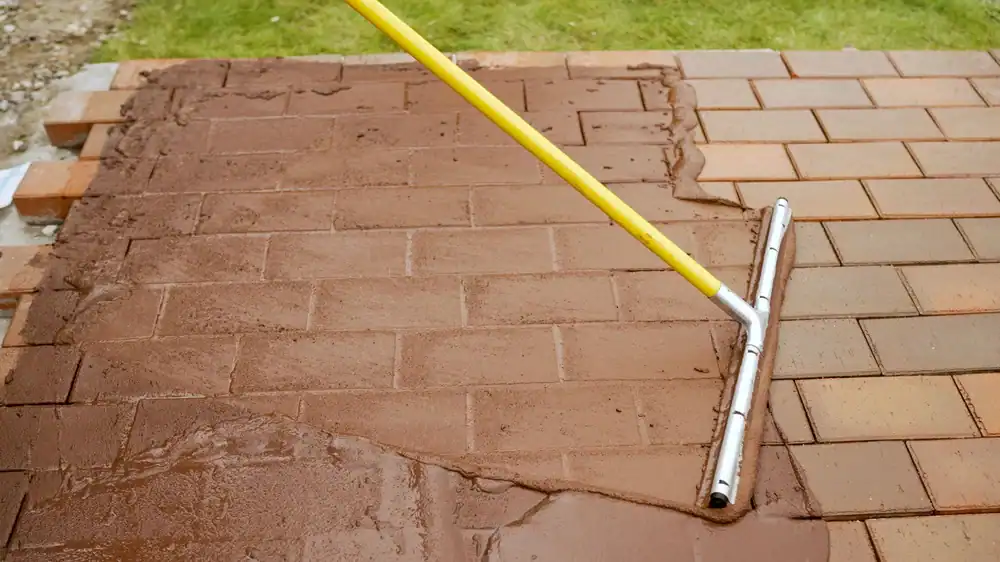
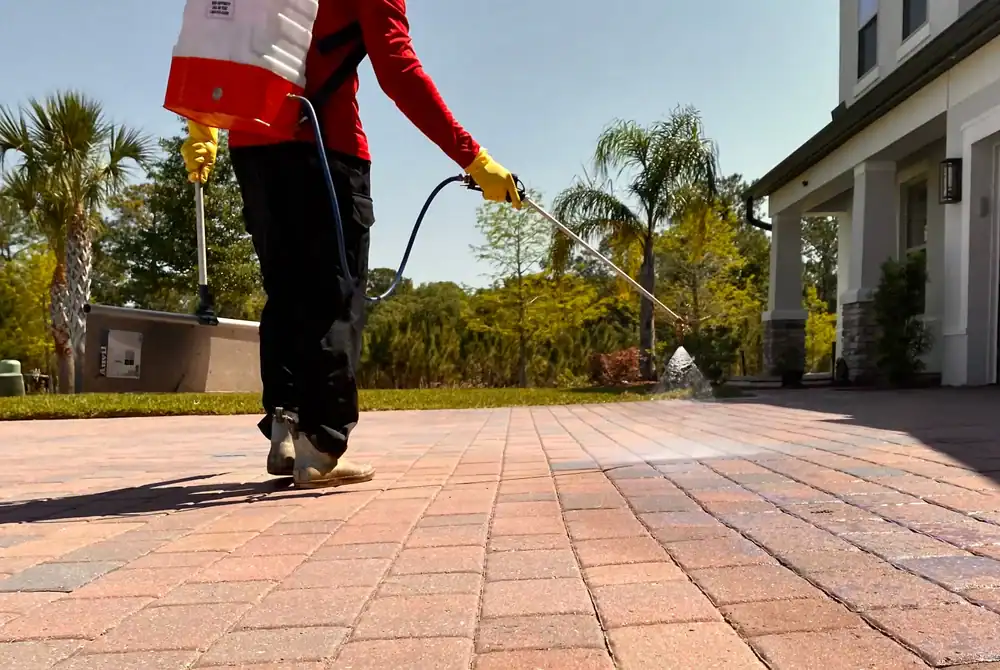
Then we apply the sealer. We use professional-grade products designed for Florida pavers—UV-resistant, water-repellent, and built to handle heat. It goes on evenly, and depending on the product and your preference, it can give a natural matte look or a wet, enhanced finish.
After that, it cures. You’ll need to stay off it for 24 to 48 hours depending on weather. Once it’s fully cured, your pavers are protected. Water beads up instead of soaking in. Stains wipe off easier. The color holds. And you’re looking at two to three years before you need to think about resealing.
Ready to get started?
When we seal your pavers in Marion Oaks, you’re getting a full prep and application process—not just someone spraying sealer over dirt. We pressure wash the entire surface, treat any stains or buildup, and make sure the pavers are completely dry before we start sealing.
We also re-sand the joints if needed. A lot of homeowners don’t realize how much sand gets washed away during Florida’s heavy rains. Without it, pavers shift, settle unevenly, and create trip hazards. We make sure that’s handled before sealing locks everything in place.
The sealer itself is chosen based on your pavers and what you’re trying to protect against. Some clients want maximum stain resistance for a driveway. Others want a color-enhancing finish for a pool deck or patio. We match the product to the job.
And because we’re local to the area and familiar with Marion Oaks properties, we know what holds up here. Homes in this area deal with a mix of sun exposure, seasonal rain, and sandy soil that shifts. We account for that in how we prep and seal. You’re not getting a one-size-fits-all treatment.
Most paver sealing projects in Marion Oaks run between $0.50 and $1.50 per square foot, depending on the condition of the pavers, the type of sealer you choose, and how much prep work is needed. If your pavers haven’t been cleaned in years or there’s old sealer that needs stripping, that adds time and cost.
A typical driveway might be 400 to 600 square feet. A pool deck or patio could be anywhere from 300 to 800 square feet. So you’re usually looking at a few hundred to over a thousand dollars for a complete sealing job.
That might sound like a lot until you compare it to replacement. New pavers cost $10 to $25 per square foot installed. Sealing every two to three years is a fraction of that, and it keeps you from having to replace anything prematurely. It’s maintenance, not an expense.
In Florida, you should reseal your pavers every two to three years. Some sealers last longer depending on traffic, sun exposure, and how well the pavers were prepped the first time, but two to three years is the standard range.
If your pavers are in full sun all day—like a driveway or front walkway—you’ll probably be closer to the two-year mark. UV breaks down sealer faster than anything else. If they’re partially shaded or don’t get heavy use, you might stretch it to three years.
You’ll know it’s time when water stops beading up on the surface and starts soaking in. That’s the sealer wearing off. If you wait too long after that, you’re back to dealing with stains, fading, and sand erosion. Staying on a regular schedule makes each resealing easier and cheaper because the pavers stay in better shape.
It can, depending on the sealer. High-gloss sealers that create a wet look tend to be more slippery when wet, which is why we don’t recommend them for pool decks or areas that get a lot of water exposure.
For sealing interlocking pavers around pools in Marion Oaks, we use a non-slip or matte-finish sealer. It still protects against stains, UV damage, and water penetration, but it doesn’t create that slick surface. Some products even include additives that increase traction.
If you already have pavers around your pool and you’re worried about slip resistance, let us know during the estimate. We’ll recommend a sealer that keeps the area safe without sacrificing protection. There’s no reason you have to choose between safety and durability.
Yes. Sealing won’t remove stains or bring back color on its own, but we can treat the pavers before sealing to get them as close to original condition as possible. That usually means deep cleaning, stain treatment, and sometimes light restoration work depending on how bad the damage is.
For faded pavers, a color-enhancing sealer can make a big difference. It won’t restore them to brand-new, but it darkens the tone and brings out the original pigment that’s still in the material. The result is a richer, more vibrant look that hides a lot of the sun damage.
Oil stains, rust, and organic stains like mold or algae can often be removed or significantly lightened with the right treatment. Once the surface is clean, the sealer locks in the improvement and prevents new stains from setting in as easily. If your pavers look rough right now, don’t assume they’re too far gone. Most of the time, they just need proper attention.
The best time to seal pavers in Marion Oaks is during the dry season, typically between November and April. You need at least 24 to 48 hours of dry weather after application for the sealer to cure properly, and Florida’s summer storms make that hard to guarantee.
Sealing in the spring—before the rainy season kicks in—gives you maximum protection heading into the wettest months. Sealing in the fall works too, especially if your pavers took a beating over the summer and you want them protected before winter guests arrive.
Avoid sealing right before a storm or during stretches of high humidity. If the sealer doesn’t cure correctly, it can turn cloudy, peel, or fail to bond. We keep an eye on the forecast and won’t schedule your job unless conditions are right. Timing matters as much as the product itself.
Yes. We seal driveways, patios, pool decks, walkways—any paver surface that needs protection. Each one has different demands, so we adjust our approach depending on what you’re sealing and how it’s used.
Driveways take more abuse from vehicles, oil, tire marks, and weight. We use a sealer that’s built for high traffic and stain resistance. Patios and walkways get more foot traffic and UV exposure, so we focus on color retention and surface durability.
Pool decks need a sealer that handles constant moisture and chlorine without breaking down or becoming slippery. We’ve sealed all of these surfaces across Marion Oaks and the surrounding area, so we know what works and what doesn’t. If you’ve got pavers that need sealing, we’ve handled it before.
Useful Links
Other Services we provide in Marion Oaks