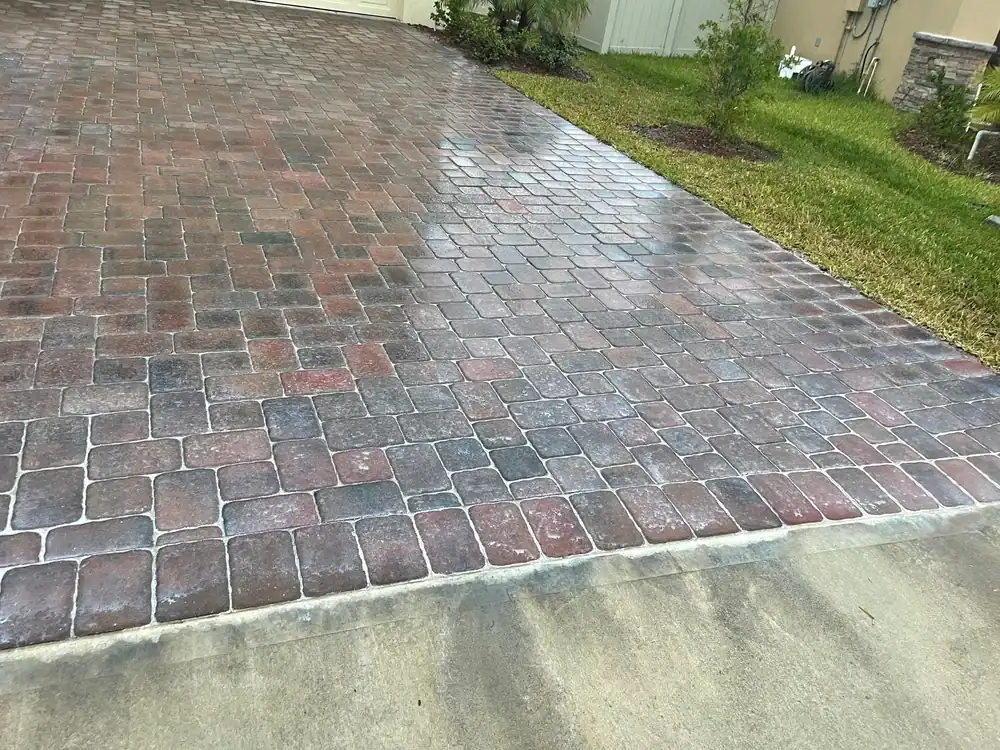
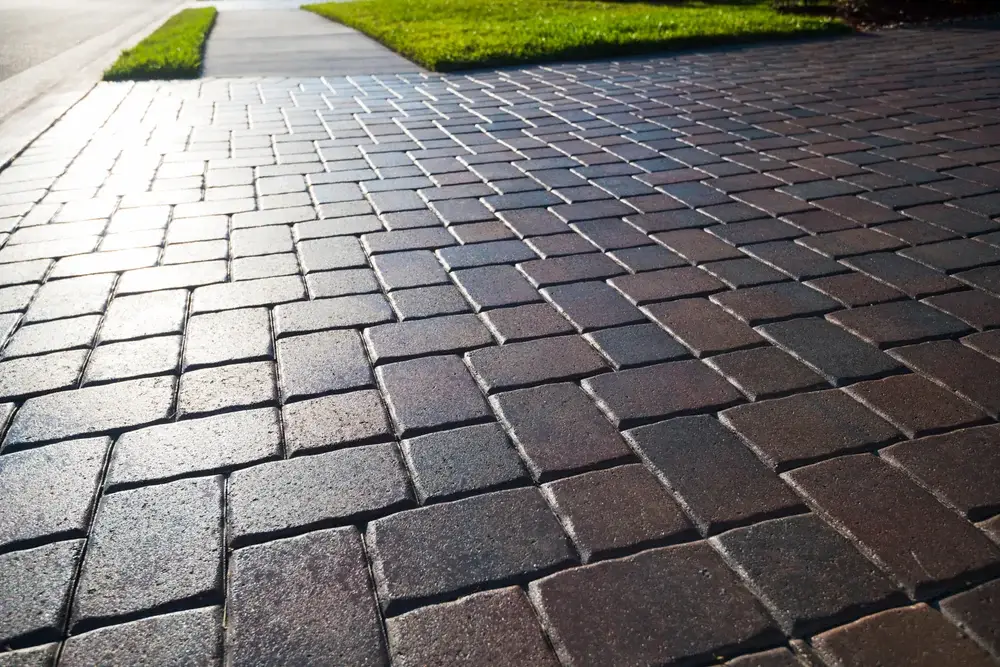
Your pavers aren’t just fading because they’re old. Florida’s UV index hits extreme levels year-round, and unsealed pavers absorb that radiation like a sponge. Add in the humidity that breeds algae on every shaded surface, plus the afternoon downpours that wash away joint sand, and you’re looking at a surface that degrades faster here than almost anywhere else in the country.
Sealing changes that. A quality sealant creates a protective barrier that blocks UV rays from breaking down color pigments. It includes antimicrobial properties that prevent the green slime from taking hold. And it stabilizes the sand between pavers so your surface stays level and locked together, even during storm season.
You’re not just maintaining appearance. You’re preventing the kind of structural issues that lead to uneven surfaces, trip hazards, and expensive repairs. Most paver installations in Wildwood run between $8,000 and $20,000. Sealing protects that investment for a fraction of the replacement cost.
We’ve been family-owned and operated since 1995. We’re not a franchise or a crew that showed up last year. We’re the company your neighbors in The Villages call when they want the job done right the first time.
We’re authorized installers for Tremron, Flagstone, and Belgard pavers, which means we understand how these surfaces are built and what they need to last in Florida’s climate. We’re also the exclusive Seal ‘n Lock distributor in Citrus County, so you’re getting products that aren’t available from every contractor down the street.
Our crews are state-licensed, and we back our work with the kind of attention to detail that comes from knowing we’ll see you at the Chamber of Commerce meeting or the grocery store. That’s the difference when you work with a local business that’s building a legacy, not just filling a schedule.
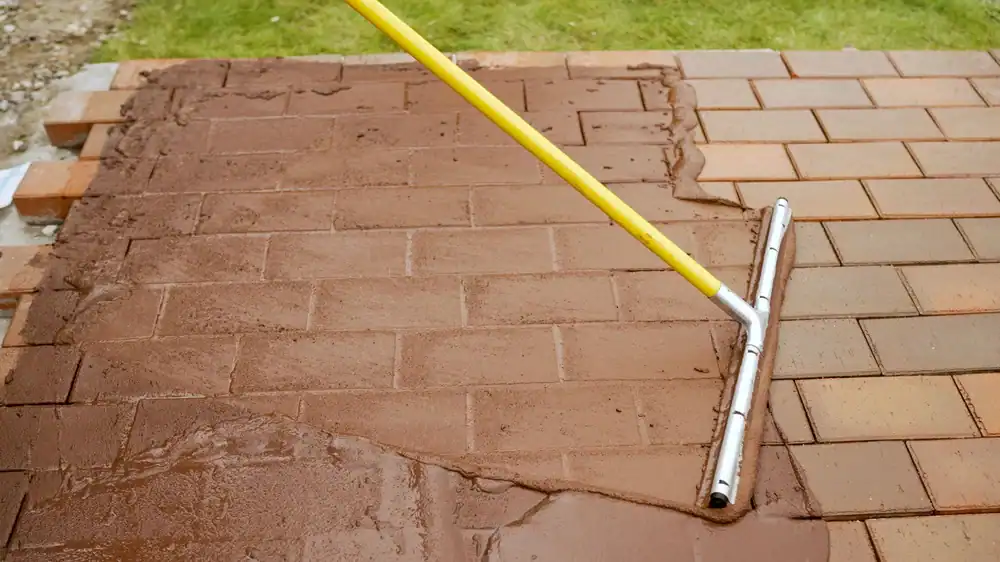
First, we clean the surface completely. That means pressure washing to remove dirt, algae, mildew, and any old sealer that’s breaking down. If your pavers have stains or organic buildup, we treat those before moving forward. The surface has to be completely clean and dry before sealing, or you’re just trapping problems underneath.
Next, we address the joint sand. If it’s washed out or loose, we remove what’s compromised and replace it with fresh polymeric sand. This step is critical because your pavers rely on that sand for stability. We make sure every joint is filled properly and compacted so the surface stays level.
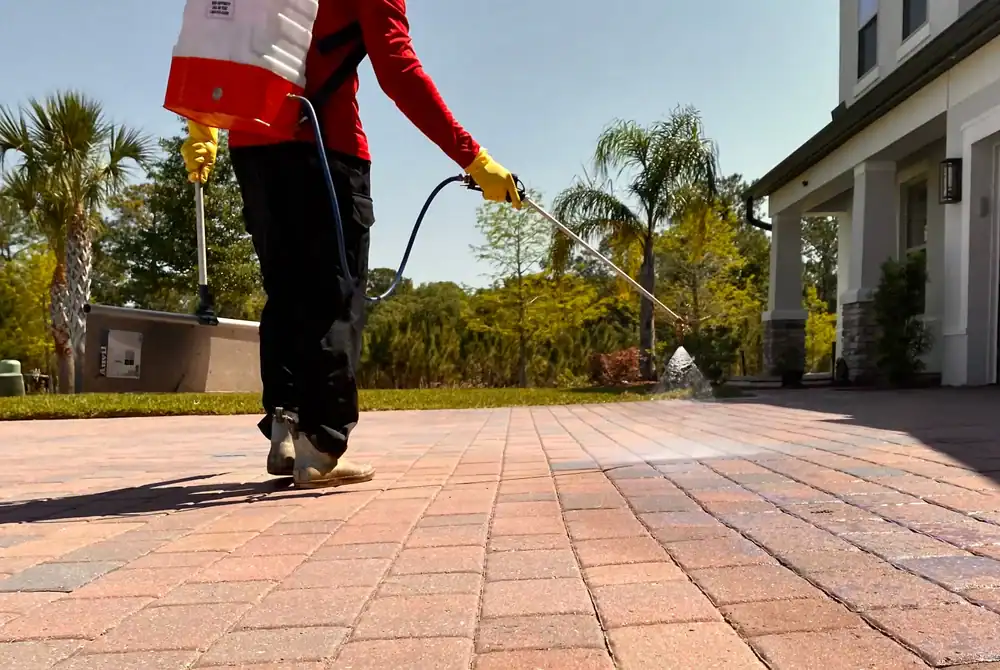
Then we apply the sealer. We use Seal ‘n Lock products designed specifically for Florida’s climate, with UV inhibitors and antimicrobial properties built in. The application process matters just as much as the product. We apply evenly, avoid pooling, and make sure coverage is consistent across the entire surface.
After application, the sealer needs time to cure. Depending on weather conditions, that’s usually 24 to 48 hours before you can walk on it, and a bit longer before you should drive on it. We’ll give you specific timing based on your project and the forecast.
Ready to get started?
You’re getting a complete surface restoration, not just a coat of sealer thrown on top of whatever’s there now. That starts with thorough cleaning and treatment of any problem areas. Algae, mildew, and stains get addressed before sealing so you’re starting with a clean slate.
Sand stabilization is part of the process. In Wildwood, where afternoon storms are a regular occurrence from June through September, loose joint sand is one of the most common issues we see. We re-sand where needed and use polymeric sand that hardens when activated, so it stays in place instead of washing into your lawn.
The sealer itself is a water-based urethane formula with UV protection rated for Florida’s sun exposure. It enhances the natural color of your pavers without looking artificial or glossy. And because we’re the Seal ‘n Lock distributor for this area, you’re getting a product that’s specifically engineered for the challenges your pavers face here.
Most driveways, patios, and pool decks in Wildwood range from 500 to 2,000 square feet. Professional paver sealing typically runs between $1.25 and $2.50 per square foot for standard service, or $2.50 to $4.00 per square foot if your surface needs significant restoration work first. That’s a straightforward investment compared to the $8,000 to $20,000 you’d spend replacing the entire installation.
You’re looking at two to three years on average for a quality sealing job in Wildwood, FL. That timeline assumes normal wear and tear, regular cleaning, and typical Florida weather exposure.
The main factor that shortens sealer life here is UV exposure. Wildwood sits in a zone where the UV index regularly hits 10 or 11 during summer months. That’s classified as extreme, and it breaks down sealers faster than in northern climates. High-quality sealers with UV inhibitors hold up better, which is why the product matters as much as the application.
Traffic patterns also affect longevity. A driveway that sees daily vehicle use will show wear sooner than a patio that’s mostly foot traffic. Pool decks take a beating from chlorine, sunscreen, and constant moisture, so they often need resealing on the shorter end of that range.
You’ll know it’s time when water stops beading on the surface, colors start looking faded, or you notice sand washing out of the joints again. Those are signs the protective barrier is breaking down and it’s time to reseal before damage accelerates.
Sealing brings back a lot of the original color depth, but it’s not magic. If your pavers have faded from years of UV exposure, sealing will enhance and darken the existing color, making them look significantly better than they do now. Think of it like conditioning leather—it revives the richness that’s dulled over time.
Stains are a different situation. Organic stains from leaves, algae, or mildew usually come out during the cleaning process before we seal. Oil stains, rust, or other penetrating stains might not come out completely, but sealing will prevent new stains from setting in and make future cleaning much easier.
If your pavers are severely faded or damaged, there are restoration options beyond basic sealing. We can apply tinted sealers that add color back to the surface, or in extreme cases, recommend color enhancement treatments before sealing. But for most Wildwood properties where pavers are just showing normal Florida wear, a thorough cleaning and quality sealing brings them back to looking nearly new.
The key is addressing it before the damage goes too deep. Once pavers are badly eroded or pitted from years without protection, sealing can only do so much. That’s why regular maintenance every few years makes more sense than waiting until the surface is severely compromised.
Water-based sealers are what we use for most residential paver sealing in Wildwood, FL, and there are good reasons for that. They provide excellent UV protection, they’re safer for plants and landscaping around your pavers, and they don’t produce the harsh fumes that solvent-based products do. They also allow moisture vapor to escape from the pavers, which matters in Florida’s humid climate where trapped moisture can cause problems.
Solvent-based sealers create a thicker, glossier finish and they’re extremely durable. They’re often used in commercial applications where heavy traffic and chemical exposure are concerns. But that high-gloss look isn’t what most homeowners want, and the application process is more involved. You’re also dealing with strong odors and longer cure times.
For patio paver sealing or sealing interlocking pavers on driveways and pool decks, water-based urethane sealers hit the sweet spot. They enhance color without looking artificial, they hold up to Florida’s weather, and they’re easier to maintain and reapply when the time comes.
The Seal ‘n Lock products we use are water-based formulas specifically designed for Florida conditions. They include UV inhibitors and antimicrobial properties that target the exact issues Wildwood homeowners deal with—sun damage, algae growth, and moisture-related problems.
Wait at least 60 to 90 days after installation before sealing new pavers. That waiting period isn’t arbitrary—it’s about letting the pavers cure properly and allowing any efflorescence to surface and get cleaned off before you seal.
Efflorescence is that white, powdery residue you sometimes see on new pavers. It’s salt deposits from the concrete curing process that migrate to the surface. If you seal before that process is complete, you trap those salts underneath, and they’ll continue trying to push through the sealer. That leads to a hazy appearance and premature sealer failure.
During those first few months, your new pavers are also settling into place. The base material is compacting, joint sand is finding its level, and the surface is stabilizing. Sealing too early can lock in issues that would have resolved naturally with a bit more time.
Once you hit that 90-day mark, sealing becomes important protection rather than premature maintenance. New pavers in Wildwood start absorbing UV damage and moisture from day one. The sooner you seal after that initial curing period, the better you protect your investment before any degradation starts.
If you’re working with a paver sealing company in Wildwood, FL for a new installation, we build this timeline into the project plan. Installation and sealing are separate phases, and rushing the second one undermines the quality of both.
Yes, but it’s dramatically easier than maintaining unsealed pavers. Sealing creates a protective barrier that keeps dirt, algae, and stains on the surface instead of letting them penetrate into the paver material. That means regular cleaning is usually just a rinse with a garden hose or a light pressure wash, not the aggressive scrubbing unsealed pavers require.
In Wildwood’s climate, you’ll want to rinse your sealed pavers every few months, especially if they’re in shaded areas where algae likes to grow. A quick spray-down prevents buildup and keeps the surface looking clean. If you notice any algae starting to form, a mild detergent solution and a soft brush handle it easily before it becomes a problem.
Avoid harsh chemicals or acidic cleaners on sealed pavers. They can break down the sealer prematurely and force you into resealing sooner than necessary. Stick with pH-neutral cleaners designed for sealed surfaces, or just use water for routine maintenance.
The other maintenance item is watching for areas where the sealer might be wearing thin. High-traffic spots, areas under vehicle tires, or sections that get intense sun exposure all day might show wear before the rest of the surface. Catching those early and doing spot treatments extends the overall life of your sealing job.
Think of sealed pavers like a car with a good wax job. The protection is there, but you still need to wash it occasionally to maintain the appearance and performance. The difference is that washing takes minutes instead of hours, and you’re not fighting stains that have soaked in deep.
Your pavers will degrade faster than they would in almost any other climate. Florida’s combination of extreme UV exposure, high humidity, and heavy rainfall creates the perfect conditions for accelerated wear. You’ll see color fading within the first year or two, algae and mildew growth in any shaded areas, and joint sand washing out after every major storm.
The structural issues are what really cost you. When joint sand washes away, pavers lose the friction that keeps them locked together. They start shifting, settling unevenly, and creating trip hazards. Weeds find their way into the gaps and widen them further. What started as a cosmetic issue becomes a safety problem and eventually a full replacement project.
Unsealed pavers also absorb moisture, and in Florida’s freeze-thaw cycles—yes, we do get them occasionally in Wildwood—that moisture expands and contracts inside the paver material. Over time, that causes cracking, spalling, and surface deterioration that can’t be reversed.
The financial reality is straightforward. Professional paver sealing costs a fraction of what you paid for the original installation. Skipping it might save you $1,000 to $2,000 in the short term, but you’re looking at $8,000 to $20,000 to replace a deteriorated paver surface. And that replacement will need sealing too, so you’re just delaying the inevitable while your current pavers get worse.
Most homeowners who call us for sealing wish they’d done it sooner. The ones who wait until pavers are badly damaged end up spending more on restoration work before we can even seal, or they’re facing partial replacement of sections that have failed completely.
Useful Links
Other Services we provide in Wildwood