
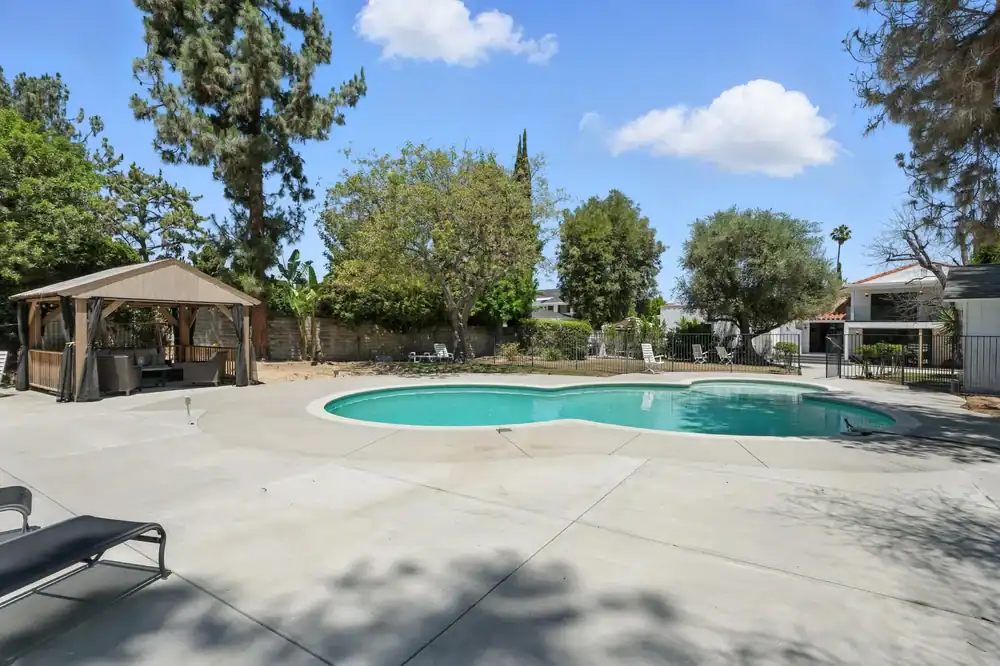
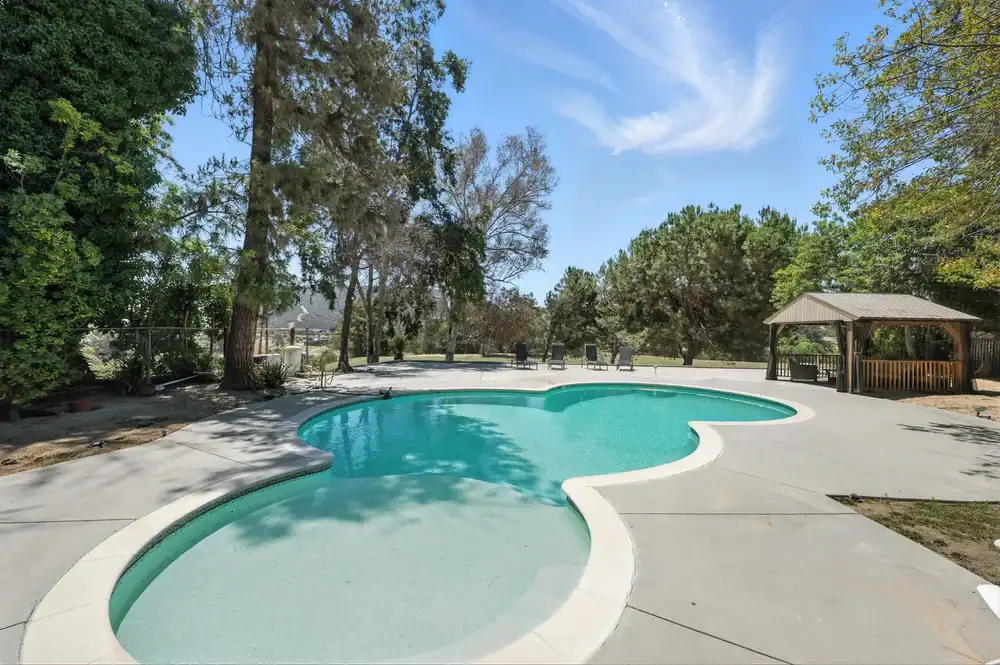
You walk barefoot around your pool in July without wincing. That’s the first thing you notice with travertine or natural stone pool pavers in Crystal River, FL—they don’t absorb heat like concrete does.
The second thing? You’re not slipping when you step out of the water. Textured surfaces grip your feet even when soaked, which matters when kids are running around or you’re carrying drinks from the house.
And when Florida throws everything it has at your property—storms, humidity, pool chemicals, that relentless sun—your pool deck pavers hold up. No spiderweb cracks spreading across the surface. No sections sinking because the sandy soil shifted again. Just individual pavers that can be lifted and replaced if something does go wrong, which costs a fraction of what you’d spend tearing out and repouring concrete.
This is what proper pool paver installation in Crystal River looks like: a surface that works with Florida’s climate instead of fighting it, giving you decades of use without the maintenance nightmares.
We’ve been installing swimming pool deck pavers in Crystal River since 1995. That’s 29 years of working with Citrus County’s sandy soil, understanding how water drains through different neighborhoods, and knowing which materials actually last in this climate.
We’re authorized contractors for Tremron, Flagstone, and Belgard—which means you get access to premium materials with manufacturer backing. It also means we’ve proven we know how to install them correctly.
We live here, we helped neighbors clean up after hurricanes, and we understand HOA requirements across Citrus, Marion, Hernando, and Sumter Counties. When you call, you talk to us directly. When we quote a project, we’re the ones who show up to do it.
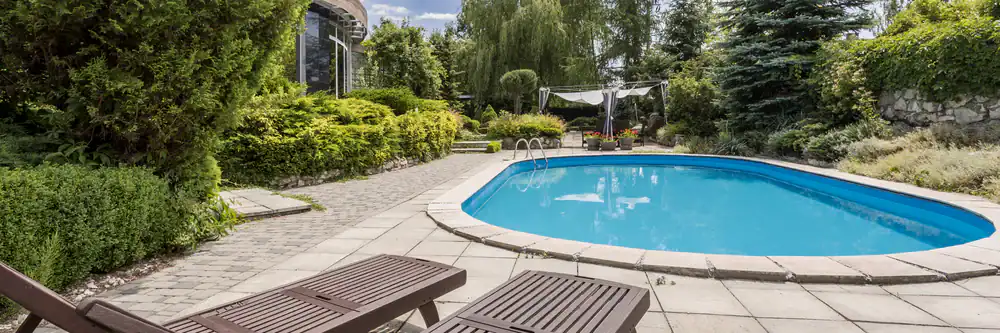
First, we excavate 6-8 inches around your pool—sometimes deeper depending on your property’s soil conditions. Crystal River’s sandy base requires proper depth to prevent settling over time.
Then comes the foundation: crushed gravel compacted in layers, creating a stable base that handles Florida’s heavy rains and allows water to drain away from your pool. This step determines whether your pavers stay level for 30 years or start shifting in five.
We install edge restraints to lock everything in place, then lay your chosen pavers with precise spacing. Polymeric sand fills the joints, preventing weed growth and ant hills while allowing the surface to flex slightly during temperature changes. Finally, we seal the pavers to protect against pool chemicals, UV damage, and staining.
The entire process typically takes 3-7 days depending on your pool deck size and design complexity. You get a surface that’s ready to use and built to handle whatever Florida throws at it.
Ready to get started?
You’re choosing from travertine, Tremron, Flagstone, or Belgard pavers—materials specifically rated for pool deck use in Florida. Each option offers different textures, colors, and heat-resistance levels. We’ll walk you through which works best for your specific situation, not just what’s in stock.
Your project includes complete site preparation with proper excavation depth for Citrus County soil conditions, professional-grade base materials, and drainage design that accounts for Crystal River’s rainfall patterns. We handle permits and work with your HOA if needed—we’ve done this enough times to know what they’re looking for.
You also get our Seal ‘n Lock application, which we’re the exclusive distributor for in this county. This sealer protects your investment from the specific threats Florida pool decks face: chlorine, salt, UV exposure, and constant moisture.
The work comes with manufacturer warranties on materials and our commitment to installation quality. If a paver needs replacement five years from now, we can pull that individual piece and swap it—you’re not stuck with an unmatchable patch like you would be with concrete.
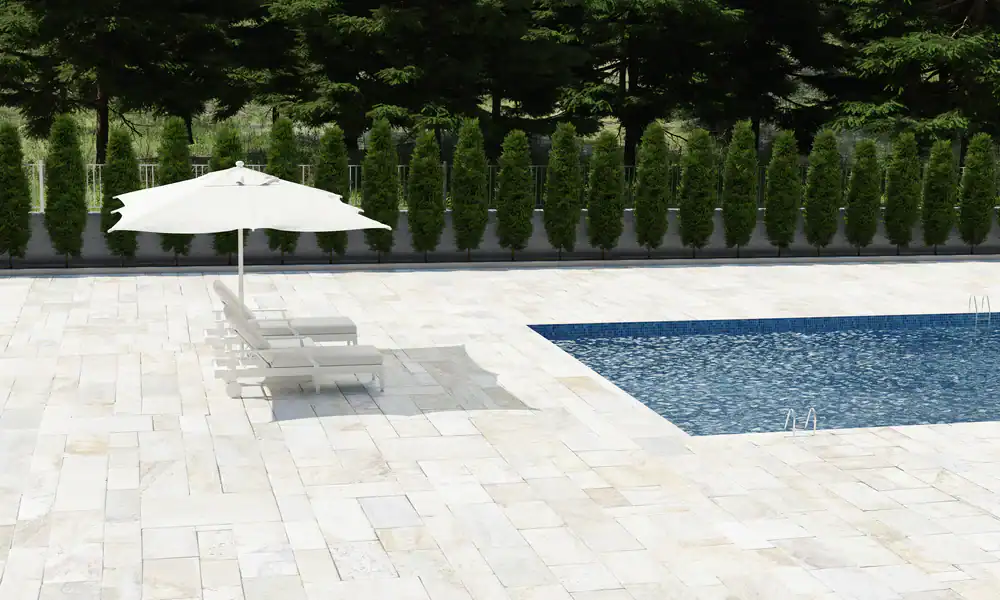
Travertine stays coolest underfoot, sometimes 20-30 degrees cooler than concrete on the same summer day. The stone’s natural porosity and light color reflect heat instead of absorbing it.
Lighter-colored Tremron and Belgard pavers also perform well if you prefer that look. Darker pavers will absorb more heat—they’re still cooler than concrete, but you’ll feel the difference.
If you’re walking barefoot around your pool regularly during Florida summers, material choice matters more than most people realize. We can show you samples and explain the actual temperature differences you’ll experience with each option.
Most pool deck projects take 3-7 days from excavation to final sealing. Smaller decks around standard pools might finish in three days. Larger areas with custom patterns, multiple levels, or complex drainage needs can take a full week.
Weather affects the timeline—we can’t compact base materials properly in heavy rain, and sealing requires dry conditions. Crystal River’s afternoon thunderstorms sometimes mean we work mornings and resume the next day.
We’ll give you a specific timeline during your consultation based on your pool’s size and your design choices. Then we actually stick to it, which apparently makes us unusual in this industry.
Individual pavers can crack if something extremely heavy impacts them, but the installation itself doesn’t crack the way concrete does. That’s the main reason people choose pavers for pool decks in Crystal River.
Concrete cracks because it’s one solid surface trying to handle soil movement, temperature changes, and settling—Florida’s sandy soil guarantees this will happen. Pavers are individual pieces with sand joints that allow tiny movements without visible damage.
When a paver does get damaged, you replace that one piece for maybe $50-150 depending on the material. When concrete cracks, you’re looking at either living with it or tearing out and replacing entire sections for thousands of dollars.
You’re typically looking at $15-25 per square foot for complete installation in Citrus County, which includes excavation, base prep, materials, labor, and sealing. A standard pool deck runs $8,000-18,000 depending on size and material choice.
Travertine costs more upfront than concrete pavers but lasts longer and stays cooler. Tremron and Belgard options fall in the middle. We’ll break down exactly what you’re paying for with each material—not just the paver cost, but long-term value.
The real cost comparison isn’t pavers versus concrete today. It’s pavers that last 30-50 years with minimal maintenance versus concrete that needs major repairs or replacement in 10-15 years. We’re not the cheapest option, and that’s actually protecting your investment.
Quality pool deck pavers are significantly less slippery than concrete when wet, which is why they’re the standard for resort pools across Florida. The textured surface provides grip even when water’s running across it.
Travertine has natural texture variations that work well around pools. Tremron and Belgard both make pavers specifically rated for pool deck use with slip-resistant finishes. We don’t install smooth pavers around pools—the safety issue isn’t worth the aesthetic.
You still use common sense—running on any wet surface carries risk—but properly chosen and installed pool pavers in Crystal River give you much better traction than the alternatives. This matters when you’re stepping out of the water or walking around with wet feet all summer.
You’ll want to reseal your pavers every 2-3 years to maintain protection against pool chemicals, UV damage, and staining. We handle that service, and it’s straightforward—clean the surface, apply new sealer, done.
Between sealings, you’re just hosing off debris and occasionally sweeping sand back into joints if it washes out during heavy storms. Some people pressure wash annually, though it’s not required if you’re keeping up with basic cleaning.
That’s genuinely the maintenance list. No crack filling, no resurfacing, no dealing with sections that have sunk or separated. The pavers either work or they don’t—and when installed correctly in Crystal River with proper base prep and drainage, they work for decades without demanding much from you.
Useful Links
Other Services we provide in Crystal River