
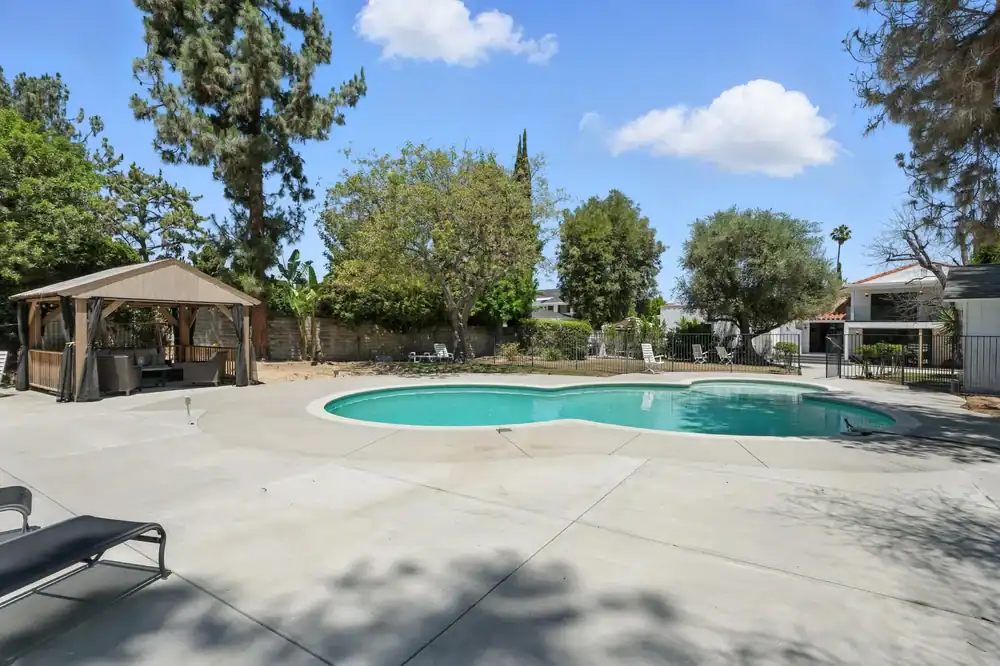
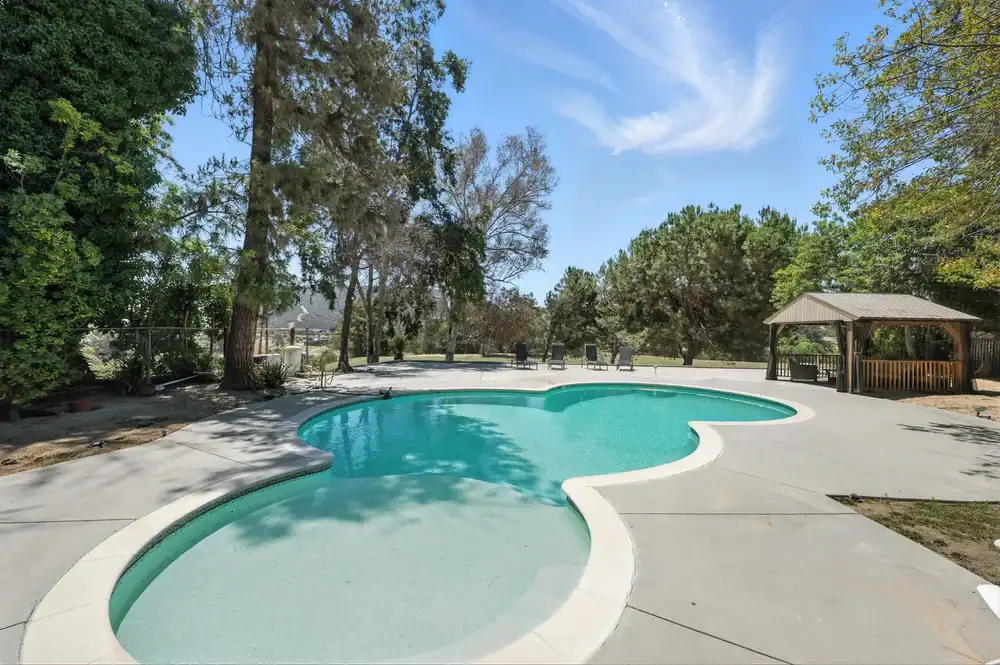
You get a pool deck that doesn’t turn into a hot plate every summer afternoon. Travertine and coral stone pavers stay cool naturally—even when the Florida sun is beating down at full strength. Your kids can run from the house to the pool without hopping across scorching concrete.
The right pool pavers in Masaryktown give you real slip resistance where it matters most. Textured surfaces grip wet feet, reducing those heart-stopping moments when someone’s running too fast. Water drains through the porous material instead of pooling up and creating hazards.
You’re also looking at a deck that lasts 20 to 30 years without the cracking nightmare that comes with poured concrete. Citrus County’s sandy soil shifts constantly—concrete fights it and loses. Pool deck pavers flex with the movement, so your investment stays intact while your neighbor’s concrete develops those spiderweb cracks within a few years.
If a paver does get damaged, you replace that one piece. Not the whole deck. That’s the difference between a $50 fix and a $5,000 redo.
We’ve been installing swimming pool deck pavers in Masaryktown and throughout Citrus County since 1995. We’re not a franchise or a crew that showed up last year—we’re a family business that’s been here through hurricanes, housing booms, and everything in between.
We’re Authorized Contractors for Tremron, Flagstone, and Belgard, which means we install the best pavers for pool decks using manufacturer-approved methods. We’re also the exclusive Seal ‘n Lock distributor in Citrus County. That matters because the sealing process is what protects your investment from pool chemicals, UV damage, and Florida’s relentless weather.
You’ll talk directly to people who’ve been doing this work in North Central Florida for decades. We know how Masaryktown’s soil behaves, how deep the base needs to be, and which materials hold up best in our specific climate. That’s not something you get from a company working off a national playbook.
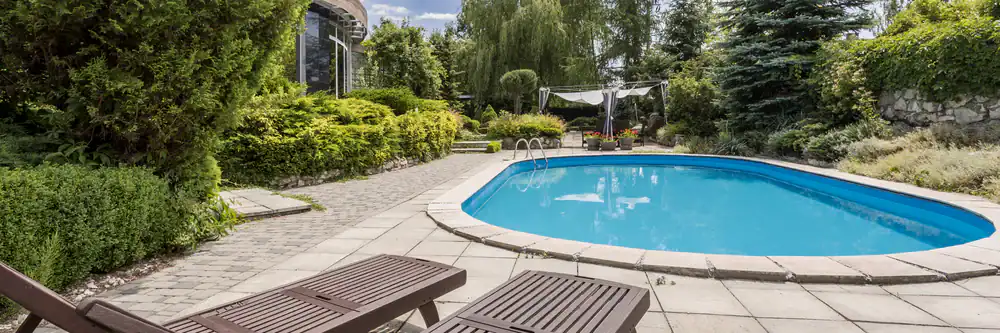
First, we dig down to create a stable base—depth depends on your soil conditions and the traffic your deck will see. In Masaryktown’s sandy soil, this step determines whether your pavers stay level for decades or start shifting within two years. We’re talking proper excavation, not just scraping the surface.
Next comes the base layer: crushed stone that gets compacted in lifts. This isn’t optional. This is what prevents settling and keeps water from pooling under your deck. We grade it so water moves away from your pool and your house—critical in an area that can get several inches of rain in an afternoon.
Then we add a sand bed, screed it level, and start laying your pool pavers in whatever pattern you’ve chosen. Every paver gets checked for level as we go. Once they’re all down, we sweep polymeric sand into the joints, compact everything one final time, and apply sealant if you’re going that route.
The whole process takes longer than you’d think if you’ve never done it. But doing it right means you’re not calling someone back in 18 months to fix sunken pavers or drainage problems. You’re done, and it’s going to stay that way.
Ready to get started?
You get a full site assessment before we start—soil analysis, drainage evaluation, measurements, and a realistic timeline. We’re looking at how water currently moves across your property and where it needs to go once your new deck is in place.
Material selection matters more in Florida than most places. We’ll walk you through options that actually make sense for pool decks in Masaryktown—travertine for staying cool, textured pavers for slip resistance, lighter colors that reflect heat instead of absorbing it. You’ll see samples, get real cost breakdowns, and understand what you’re paying for.
The installation includes proper base preparation, professional-grade compaction equipment, and polymeric sand that locks pavers in place while still allowing water to drain. We’re also handling edge restraints so your deck doesn’t creep outward over time.
If you’re working with an existing pool, we’re coordinating around your equipment, coping, and any landscaping you want to keep. If it’s new construction, we’re timing our work to fit the builder’s schedule without holding up other trades.
You also get our warranty backing the installation—not just the materials, but the actual work. That covers base failure, settling, and drainage issues that come from improper installation. Most problems with pool pavers in Masaryktown trace back to shortcuts during install, and we don’t take those.
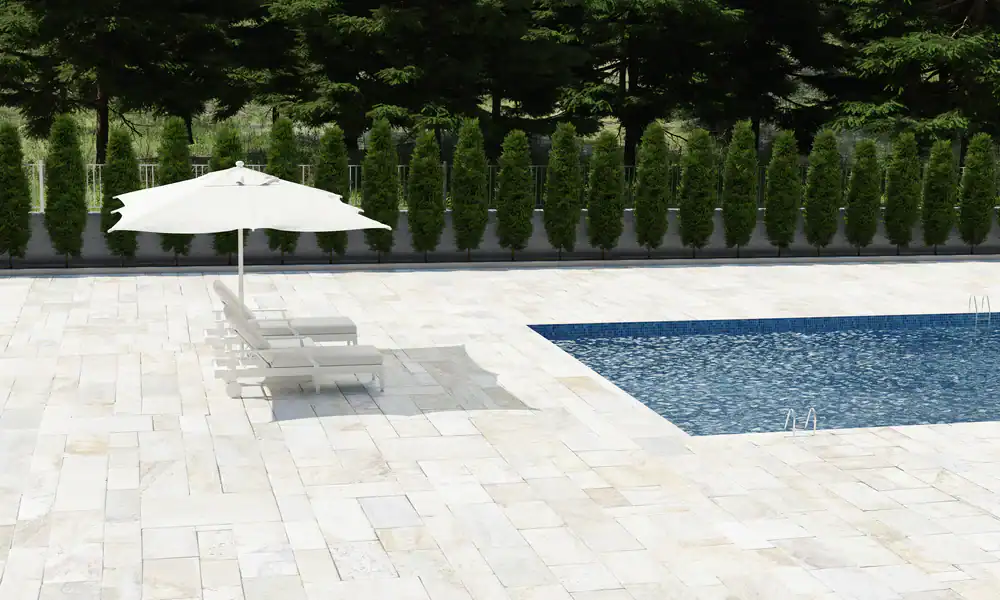
Pool paver installation in Masaryktown typically runs $12 to $25 per square foot installed, which puts most pool decks between $5,000 and $20,000 depending on size and complexity. That’s for the complete job—excavation, base prep, materials, labor, and finishing.
Curved layouts cost more than straight edges because they require more cutting and fitting. Intricate patterns add labor time. Travertine runs higher than concrete pavers, but it stays cooler and lasts longer in Florida’s climate.
Here’s what matters: Florida pricing runs about 2 to 3 times cheaper than national averages, and local experience shows the real average closer to $7 per square foot for straightforward installs. If someone’s quoting you $4 per square foot, they’re either cutting corners on the base or using bottom-tier materials that won’t hold up. If they’re at $30, you’re paying for something beyond standard installation—probably premium materials or extensive site prep.
Get the scope in writing. Make sure the quote includes base depth, compaction method, edge restraints, and polymeric sand. Those details tell you whether you’re comparing apples to apples.
Travertine and coral stone stay coolest underfoot—they’re naturally porous and don’t absorb heat like concrete or dark-colored pavers. Even in direct Florida sun, you can walk across travertine barefoot without doing that hot-foot dance.
Light colors make a measurable difference. Ivory, cream, and soft gray pavers reflect sunlight instead of trapping it. Dark pavers look sharp, but they’ll absolutely scorch bare feet on a 95-degree afternoon in Masaryktown.
Some manufacturers now make pavers specifically engineered for Florida pool decks with heat-reflective technology built into the material. They cost more upfront but deliver on the promise of staying cool.
Texture matters too—you want slip resistance, but heavily textured surfaces can feel rough on bare feet. There’s a sweet spot between smooth (slippery when wet) and so textured it’s uncomfortable to walk on. Travertine hits that balance naturally, which is why it’s the top choice for pool deck pavers in North Central Florida.
Properly installed pool pavers last 20 to 30 years in Citrus County, and travertine can push beyond that with basic maintenance. The pavers themselves are incredibly durable—it’s the installation quality that determines lifespan.
Citrus County’s sandy soil is the real test. Concrete cracks because it can’t flex when the ground shifts. Pavers move independently, so ground movement doesn’t destroy your whole deck. That’s why you see 25-year-old paver installations still looking solid while concrete from the same era is a cracked mess.
Pool chemicals and UV exposure break down lesser materials over time, but quality pavers resist both. Sealing adds another layer of protection and can extend the life even further by preventing staining and reducing wear.
The base is everything. Shortcuts during installation—thin base layer, inadequate compaction, poor drainage—will cut that 25-year lifespan down to 5 or 10 years. You’ll see settling, shifting, and pavers that rock when you step on them. That’s not a paver problem, that’s an installation problem.
Sealing isn’t required, but it protects your investment and makes maintenance easier. Sealed pavers resist staining from pool chemicals, sunscreen, and organic matter. They’re also easier to clean—dirt and algae don’t penetrate the surface.
In Masaryktown’s humid climate, unsealed pavers can develop algae growth in shaded areas around the pool. A good sealant reduces that significantly. It also enhances color and can give pavers a wet look or a matte finish depending on the product.
You’re looking at resealing every 2 to 4 years depending on traffic and sun exposure. It’s not complicated—clean the surface, let it dry, apply the sealant. Or hire it out if you’d rather not deal with it.
Some homeowners skip sealing and accept that their pavers will weather naturally and require more frequent cleaning. That’s a legitimate choice, especially with travertine that looks good with a weathered patina. But if you want maximum protection and the easiest maintenance, sealing is worth the investment. We’re the exclusive Seal ‘n Lock distributor in Citrus County, so we can handle that as part of the installation or as a standalone service down the road.
Yes, and that’s one of the biggest advantages pool pavers have over concrete. If a paver cracks or stains beyond cleaning, you pull that one piece and drop in a replacement. Takes about 20 minutes and costs almost nothing.
You’re not tearing out sections or trying to patch and blend like you would with concrete. You’re not living with an eyesore because fixing it would mean redoing the whole deck. One paver comes out, a new one goes in, and you’re done.
The replacement will match your existing deck as long as you’re working with standard sizes and colors that manufacturers still produce. That’s another reason to go with established brands like Tremron, Flagstone, or Belgard—they keep product lines consistent for decades.
If you had a proper installation with polymeric sand in the joints, you’ll need to remove the sand around the damaged paver, pull the piece, set the new one, and resand the joints. It’s straightforward work that doesn’t require special tools or skills. Or call us and we’ll handle it. Either way, you’re looking at a minor fix instead of a major headache.
Pool pavers cost more upfront because you’re paying for individual pieces, more complex installation, and materials that outperform concrete in Florida’s climate. Concrete might run $4 to $8 per square foot. Quality pavers run $12 to $25. That gap is real.
But here’s what you’re getting for that difference: a deck that doesn’t crack in sandy soil, stays cooler underfoot, provides better slip resistance, and lasts decades longer. You’re also getting a deck that adds $5,000 to $15,000 to your home’s value according to Orlando realtors—often more than the installation cost.
Concrete requires replacement when it fails. Pavers require individual piece replacement if anything goes wrong. Over a 20-year period, pavers typically cost less when you factor in repairs, replacement, and property value impact.
In Masaryktown specifically, the sandy soil makes concrete a risky choice for pool decks. You’re almost guaranteed to see cracking within a few years. Pavers eliminate that risk entirely. So yes, you’re paying more now—but you’re avoiding the concrete replacement cost down the road and getting a better product that actually works with local soil conditions instead of fighting them.
Useful Links
Other Services we provide in Masaryktown