
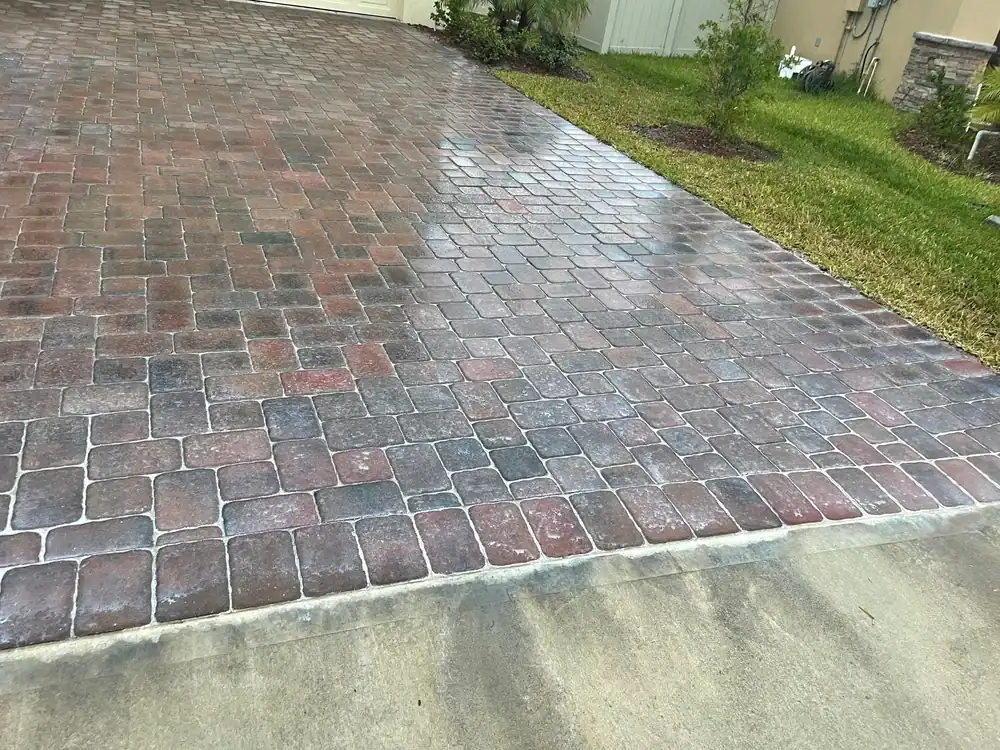
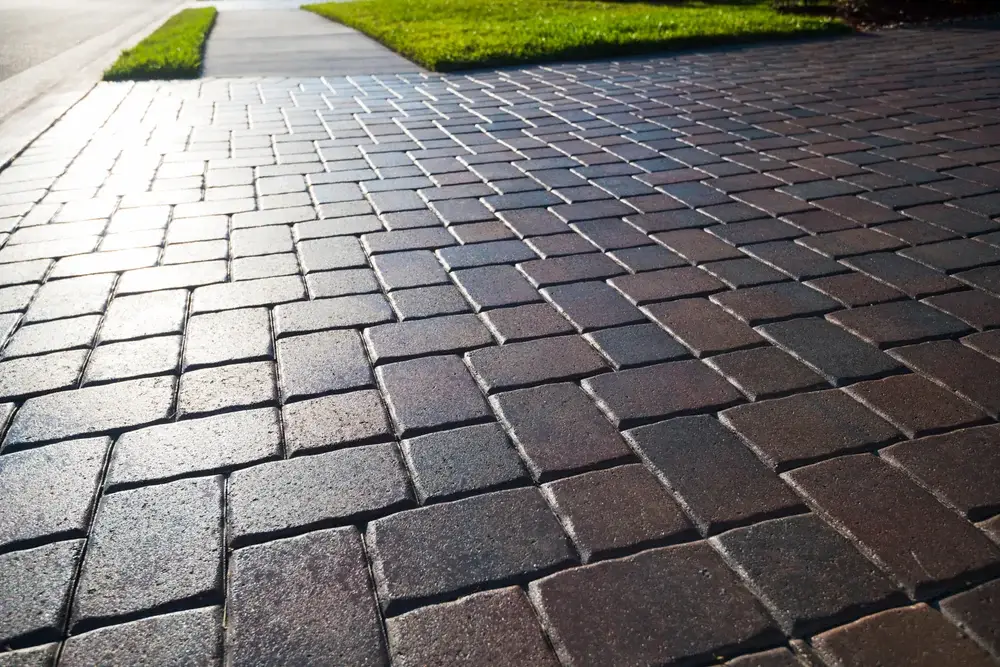
Your pavers looked incredible when they were first installed. Now they’re faded, covered in weeds, maybe even shifting in spots. That’s not because you chose bad pavers—it’s because Florida’s climate is relentless.
Between the UV exposure that bleaches color out of concrete and brick, the humidity that creates perfect conditions for algae and mildew, and the sudden downpours that wash away joint sand, your pavers are dealing with conditions that most of the country never sees. Sealing doesn’t just make them look better. It creates a protective barrier that locks in color, stabilizes the sand between pavers, and prevents moisture from breaking down the surface.
When done right, paver sealing in Inverness, FL extends the life of your hardscape by years. You’re not covering up damage—you’re preventing it from getting worse and protecting against future wear. Your driveway, patio, or pool deck gets a refresh that actually lasts, not just until the next rainstorm.
We’re not a pressure washing company that added sealing as a side service. We’re a family-owned landscaping business that’s been serving Citrus County for nearly three decades. We install pavers, maintain them, and seal them—so we understand the full lifecycle of your hardscape.
We’re Authorized Contractors for Tremron, Flagstone, and Belgard, which means we work directly with the manufacturers whose pavers are likely in your driveway or backyard. We’re also the exclusive Seal ‘n Lock distributor in Citrus County, giving us access to premium products that other contractors can’t offer. That’s not just a credential—it’s a real advantage when it comes to quality and longevity.
You’re working with people who live here, who’ve cleaned up after hurricanes here, and who’ve built a reputation by doing the job right the first time. We’re not the cheapest option in Inverness, and we’re not trying to be.
First, we clean the surface. Not with a garden hose—with professional-grade equipment that removes dirt, algae, efflorescence, and any stains that have built up over time. If there’s old sealer that’s peeling or uneven, we strip it. This step matters because sealer only works if it’s applied to a clean, prepped surface.
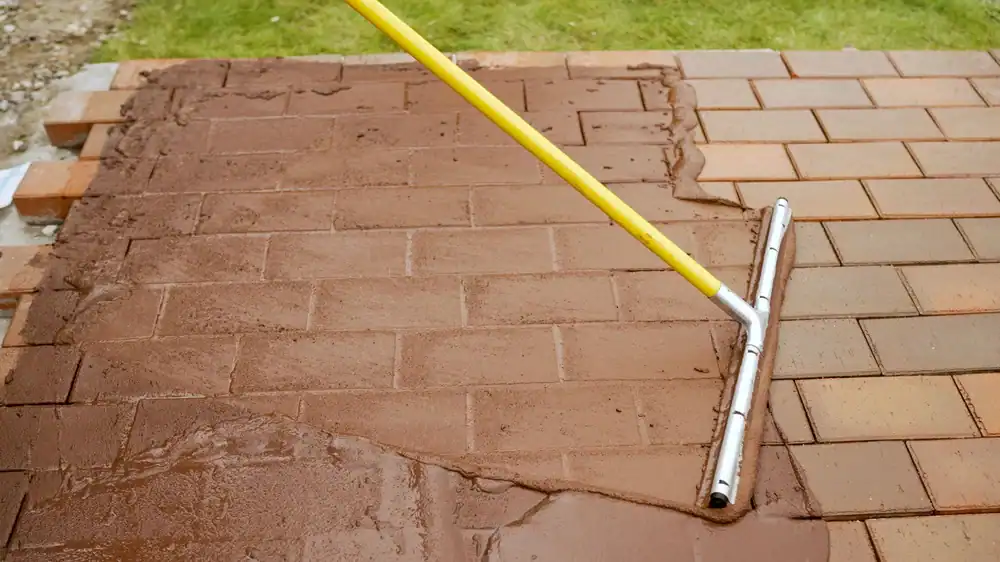
Next, we re-sand the joints if needed. This is where a lot of DIY jobs and cheap contractors cut corners. The sand between your pavers isn’t just filler—it stabilizes the entire surface and prevents shifting. We use polymeric sand that hardens when activated, locking pavers in place and keeping weeds from growing through.
Then we apply the sealer. We use products designed specifically for Florida’s climate—high UV resistance, moisture barriers, and formulas that won’t trap water or create a slippery surface. The sealer goes on evenly, penetrates the paver surface, and cures over 24 to 48 hours depending on conditions. Once it’s cured, your pavers are protected, enhanced, and ready to handle whatever Florida throws at them.
Ready to get started?
When you hire us for paver sealing in Inverness, FL, you’re getting a full restoration process—not just a coat of sealer slapped on top of dirty pavers. We handle the cleaning, the prep, the joint stabilization, and the sealing itself. You’re also getting products that are built for this climate, applied by people who’ve done this thousands of times.
Inverness homeowners deal with specific challenges. The humidity here creates algae growth faster than in drier parts of the state. The soil composition in Citrus County can cause shifting if your base wasn’t installed correctly. And the combination of heat and afternoon storms means your pavers expand, contract, and get hit with water almost daily.
Our process accounts for all of that. We’re not just sealing—we’re addressing the underlying issues that cause pavers to fail in the first place. If your pavers are shifting, we’ll let you know. If the base needs work, we’ll tell you before we seal. You’re getting an honest assessment from people who know what lasts and what doesn’t in this area.
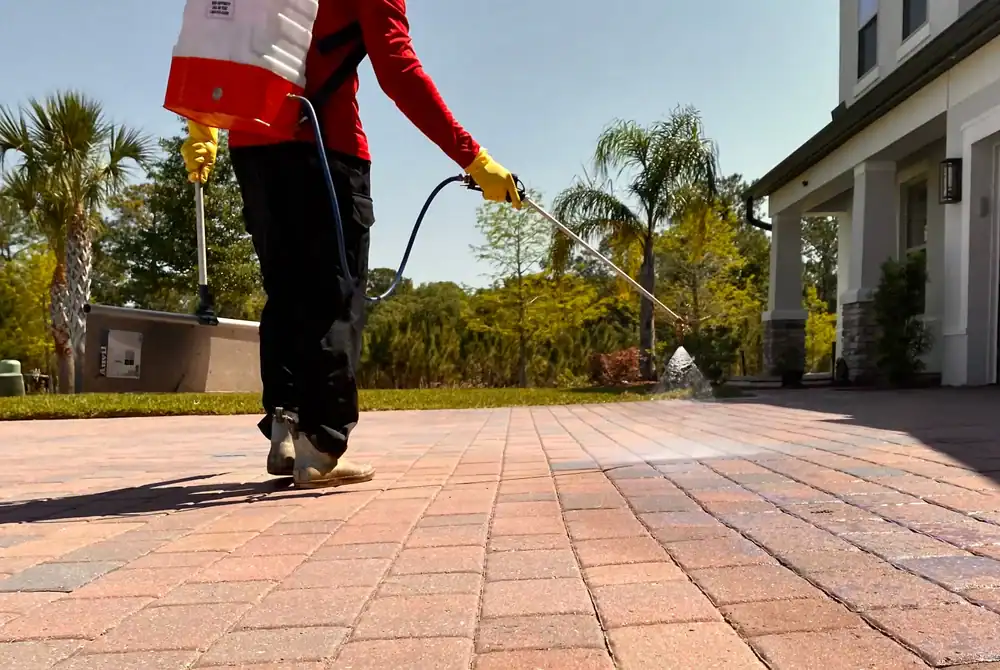
Most paver sealing projects in Inverness run between $2 and $3 per square foot, depending on the condition of your pavers, the type of sealer used, and whether any repairs are needed before sealing. A typical 200-square-foot patio might cost between $400 and $600, while larger driveways or pool decks will scale up from there.
If your pavers haven’t been sealed in years—or ever—you’re likely looking at the higher end of that range because more prep work is involved. We need to deep clean, possibly strip old sealer, re-sand joints, and address any staining or efflorescence. If your pavers are in good shape and you’re just maintaining an existing seal, the cost is lower.
We don’t give quotes over the phone because every job is different. But we will come out, assess the condition of your hardscape, and give you a clear price based on what actually needs to be done—not a ballpark number that changes later.
In Florida, pavers should be resealed every two to three years. That’s more frequent than in cooler, less sunny climates, but it’s necessary because of the UV exposure, humidity, and constant rain we deal with here in Inverness.
If your pavers are in high-traffic areas—like a driveway or a pool deck that gets used daily—you might need to reseal closer to the two-year mark. Pavers in shaded areas or low-traffic spots can sometimes stretch to three or four years, but that’s the exception.
You’ll know it’s time when the color starts looking dull again, when weeds begin popping up in the joints, or when water stops beading on the surface. Those are signs that the sealer is breaking down and your pavers are vulnerable again. Waiting too long means you’re back to square one—fading, staining, and potential structural issues that cost more to fix than maintaining a seal would have.
Water-based sealers are more breathable, which means they allow moisture to escape from the pavers instead of trapping it underneath. They’re better for areas that see a lot of rain or humidity—which is basically all of Inverness. They also tend to have a more natural, matte finish and are easier to reapply down the road.
Solvent-based sealers create a thicker, glossier finish and tend to last a bit longer before needing reapplication. They’re more resistant to oil stains and heavy wear, which makes them a good choice for driveways. The tradeoff is that they can trap moisture if your pavers weren’t completely dry during application, and they’re harder to strip if you ever want to change sealers.
We typically recommend water-based sealers for patios and pool decks, and solvent-based for driveways—but it depends on your specific situation, the type of pavers you have, and what kind of finish you want. We’ll walk you through the options when we assess your property.
You can seal your own pavers, but the results are rarely the same as a professional job—and the mistakes can be expensive to fix. Most DIY sealing failures come from improper cleaning, applying sealer to damp pavers, or using the wrong product for Florida’s climate.
If the surface isn’t completely clean, the sealer won’t bond correctly. If there’s moisture trapped in the pavers, the sealer can turn white or peel within weeks. If you use a big-box store sealer that wasn’t designed for high UV exposure, it’ll break down faster than it should. And if you apply it unevenly, you’ll end up with blotchy spots that are almost impossible to fix without stripping everything and starting over.
Professional paver sealing in Inverness, FL costs more upfront, but it lasts longer and looks better because the prep work is done right. We have the equipment to clean properly, the experience to know when pavers are ready to seal, and access to commercial-grade products that aren’t available at retail stores. If you’re protecting a $10,000+ hardscape investment, it’s worth doing it right.
It depends on the sealer. Glossy, film-forming sealers can create a slick surface when wet, which is why we don’t recommend them for pool decks or high-traffic wet areas. Water-based penetrating sealers, on the other hand, soak into the paver rather than sitting on top, so they don’t create that slippery film.
For pool deck sealing in Inverness, we use sealers specifically formulated for wet environments. They protect the pavers and enhance the color without turning the surface into a slip hazard. We also make sure the sealer is applied at the right thickness—too much product can create buildup that gets slick, even with a non-slip formula.
If your pool deck is already sealed and feels slippery, that’s a sign that the wrong product was used or that it was applied too heavily. We can strip it, prep the surface, and reseal it with a safer option. Your pool area should be protected and functional—not a liability every time someone gets out of the water.
Unsealed pavers will fade, stain, and break down faster than sealed ones. In Inverness, that process happens even quicker because of the UV exposure and humidity. You’ll start seeing weeds and grass growing through the joints within months. Algae and mildew will show up on shaded pavers, especially around pool areas.
Over time, the sand between your pavers will wash away, which causes them to shift and become uneven. That’s not just an aesthetic problem—it’s a tripping hazard and a sign that your hardscape is losing structural integrity. Once pavers start shifting, you’re looking at a much more expensive repair than sealing would have cost in the first place.
Sealing doesn’t make your pavers indestructible, but it does slow down the wear significantly. You’re protecting your investment and avoiding the kind of damage that turns a $500 sealing job into a $5,000 reinstall. If you’ve already invested in quality pavers, sealing them is the most cost-effective way to make sure they last.
Useful Links
Other Services we provide in Inverness