
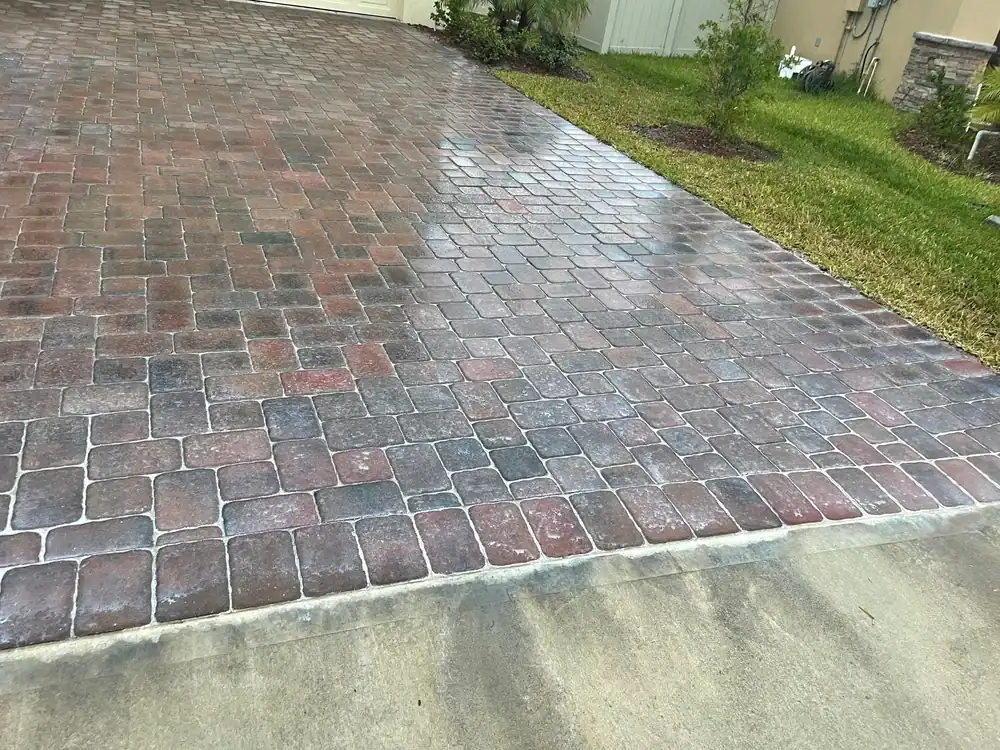
You spent somewhere between eight and twenty thousand dollars on those pavers. Now Florida’s doing what it does—bleaching the color, growing weeds in the joints, turning shaded spots into slippery green algae farms.
Sealing them isn’t about making them shiny. It’s about blocking moisture before it loosens the sand, stopping UV rays before they wash out the color, and keeping algae from turning your patio into a safety hazard. When it’s done right, you’re looking at years before you need to think about it again.
The difference shows up fast. Sealed pavers hold their color through summer. Rain runs off instead of soaking in. Weeds don’t find a home. And when you do need to clean them, it’s a quick rinse—not an afternoon with a pressure washer trying to undo months of damage.
We’ve been sealing pavers in Silver Springs Shores since 1995. We’re not new to Florida weather, and we’re not learning on your driveway. We’re the exclusive Seal ‘n Lock distributor in the county, and we’re authorized contractors for Tremron, Flagstone, and Belgard—which means we know how these pavers were made and what they need to last.
We’re a family business. We’ve cleaned up after hurricanes here, donated to Toys for Tots, and worked with local kids learning trades. When you call, you’re talking to people who live in this community and plan to stay. We offer discounts to military and first responders because that matters to us.
First, we clean everything. That means removing old sealers if they’re there, pulling out stains, killing mold and mildew, and making sure the surface is completely ready. If the sealer goes on dirty pavers, it won’t bond right—and you’ll be calling someone back in six months.
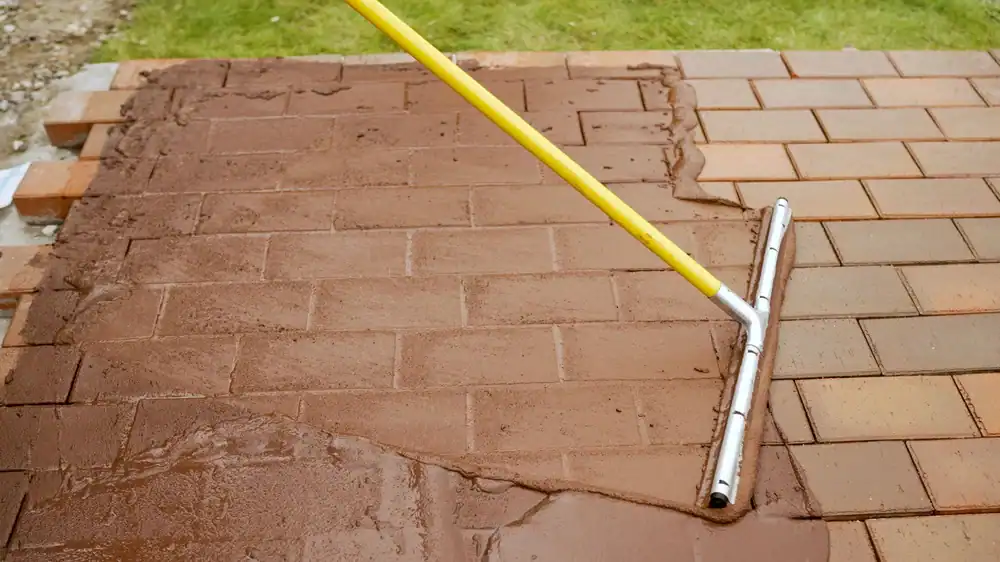
Next, we re-sand the joints with polymeric sand. This isn’t regular sand. It hardens when it gets wet, which locks your pavers in place and keeps weeds from growing up through the cracks. It’s a small step that makes a massive difference in how stable everything feels underfoot.
Then we apply the sealer. You can choose a wet-look finish if you want that deep, rich color, or a matte finish if you prefer something more subtle. Either way, the sealer creates a barrier that blocks moisture, resists UV damage, and makes future cleaning easier. We use professional equipment to make sure coverage is even and complete. Once it cures, you’re done for the next few years.
Ready to get started?
This isn’t a spray-and-go situation. Paver sealing in Silver Springs Shores means dealing with heat, humidity, and sudden storms that other parts of the country don’t see. We use sealers designed specifically for Florida’s climate—formulas that hold up under intense sun and heavy rain without peeling or clouding.
You’re getting full restoration before we ever open a sealer can. That includes stain removal, mold treatment, and joint stabilization. If your pavers have shifted or the sand has washed out, we fix that first. Sealing over problems just hides them temporarily.
We also handle patio paver sealing, pool decks, driveways, and walkways. Each surface gets treated based on how it’s used. A pool deck sees more water and foot traffic than a front walkway, so the prep and application adjust accordingly. You’re not getting a one-size-fits-all treatment—you’re getting what actually works for your specific setup.
And because we’re local, we know what Silver Springs Shores properties deal with. We’ve seen how the shade from oak trees creates algae problems. We know which neighborhoods have sandy soil that shifts more. We’ve sealed pavers two blocks from your house. That kind of experience doesn’t come from a manual.
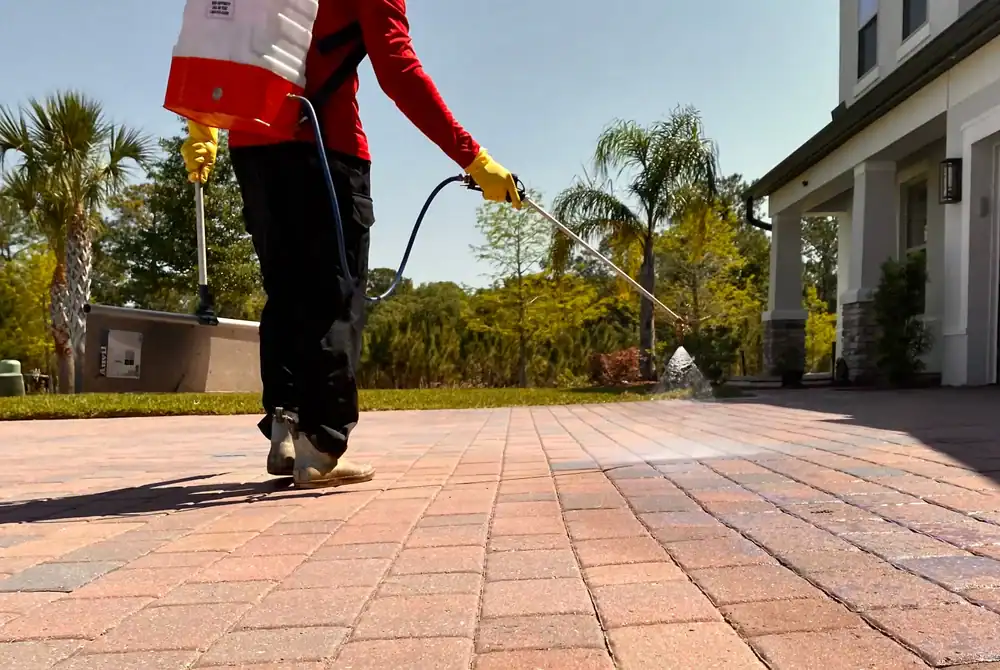
In Florida’s climate, professional paver sealing typically lasts two to three years before you’ll want to reseal. That timeline shifts based on a few things—how much sun the pavers get, whether they’re under a lanai or fully exposed, and how much foot or vehicle traffic they see.
High-traffic areas like driveways wear faster than a back patio you use occasionally. Pool decks take more of a beating from water and chemicals. If your pavers are in full sun all day, UV exposure will break down the sealer faster than shaded areas.
You’ll know it’s time when water stops beading up on the surface or when you start seeing color fade again. The sealer doesn’t fail all at once—it gradually wears down. Resealing before it’s completely gone makes the job easier and keeps your pavers protected without gaps in coverage.
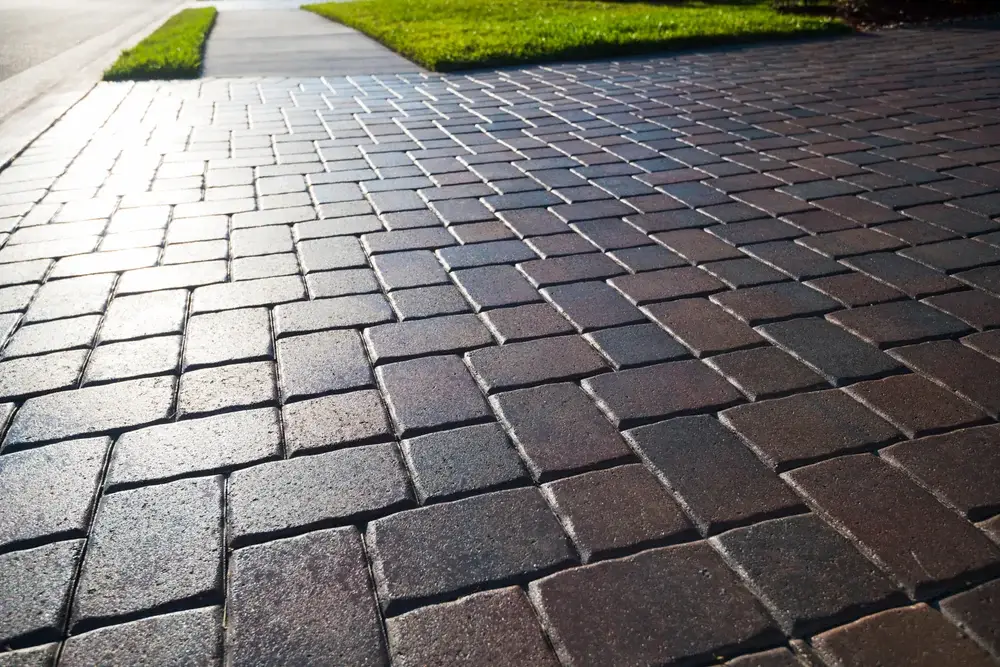
Wet-look sealers give your pavers that deep, glossy appearance—like they just got rained on. The color looks richer and more vibrant. It’s a popular choice for pool decks and patios where you want that visual pop. The downside is it can show wear patterns more obviously in high-traffic areas, and some people find it too shiny for their taste.
Natural or matte finish sealers protect just as well but don’t change the appearance as dramatically. Your pavers look like pavers—just cleaner and more consistent in color. This finish hides wear better and works well for driveways or front walkways where you want protection without the shine.
Both options block moisture, prevent fading, and make cleaning easier. The protection level is the same. It’s purely about the look you’re going for. Some customers choose wet-look for their patio and matte for their driveway. There’s no wrong answer—just preference.
Yes, and honestly, those are often the easiest to work with. There’s no old sealer to strip off, which saves time and means we’re starting with a clean slate. If your pavers have been down for a while without sealer, they’ve probably faded some and might have stains or algae growth. That’s all fixable before we seal.
The key is making sure they’re ready. New pavers need at least 30 days to cure before sealing—longer in Florida’s humidity. If they were just installed, sealing too early can trap moisture inside and cause problems down the road. For older pavers that have never been sealed, we clean them thoroughly, treat any stains or growth, re-sand the joints if needed, and then apply the sealer.
You’ll see a dramatic difference. Pavers that have been sitting unsealed for years will look almost new again once they’re cleaned and sealed properly. The color comes back, the surface evens out, and suddenly maintenance becomes manageable instead of constant.
It can, depending on the sealer and finish. Wet-look sealers tend to be more slippery when wet, which is something to consider for pool decks. That doesn’t mean you can’t use them—it just means you need to be aware and possibly choose a sealer with slip-resistant additives.
We can add texture to the sealer or use formulas specifically designed for pool decks that maintain traction even when wet. There are also matte finish sealers that provide better grip naturally. The goal is protection without creating a safety issue, especially if you have kids or elderly family members using the space.
Honestly, unsealed pavers around pools often become more dangerous over time because algae grows in the pores and creates a slick biofilm—especially in shaded areas. A properly sealed surface with the right product actually improves safety by preventing that growth. We talk through these options before starting so you know exactly what you’re getting.
Professional paver sealing typically runs between $1.50 and $3.00 per square foot in this area, depending on the condition of your pavers and what needs to happen before we seal. If they’re relatively clean and just need a standard seal, you’re on the lower end. If we’re removing old sealer, treating heavy stains, or dealing with significant algae growth, the price goes up because the work increases.
A 500-square-foot patio usually falls somewhere between $750 and $1,500. A driveway might be $1,200 to $2,500 depending on size and condition. That includes cleaning, re-sanding joints, and applying the sealer—not just a quick spray-over.
If someone quotes you significantly less, ask what’s included. Cheap sealing jobs often skip the prep work, use inferior products, or apply the sealer too thin. You’ll end up resealing in a year instead of three, which costs more in the long run. We give you an honest quote based on what your pavers actually need, not what sounds good on the phone.
You still should, even though they’re not taking direct sun and rain. Covered pavers still deal with humidity, foot traffic, and moisture that gets tracked in. They’ll fade slower than pavers in full sun, but they’ll still fade. And because they’re often in shaded, humid conditions, they’re actually more prone to algae and mildew growth.
Sealing them protects against that biological growth and makes cleaning easier when dirt and debris accumulate. It also stabilizes the joints so sand doesn’t work its way out over time from foot traffic. You might be able to go longer between resealing—maybe three to four years instead of two to three—but skipping it entirely means you’re still dealing with maintenance issues you don’t need to.
The cost is the same whether pavers are covered or not. The process is the same. The only difference is how often you’ll need to do it again. Most customers who seal their covered areas tell us they wish they’d done it sooner because of how much easier upkeep becomes.
Useful Links
Other Services we provide in Silver Springs Shores