
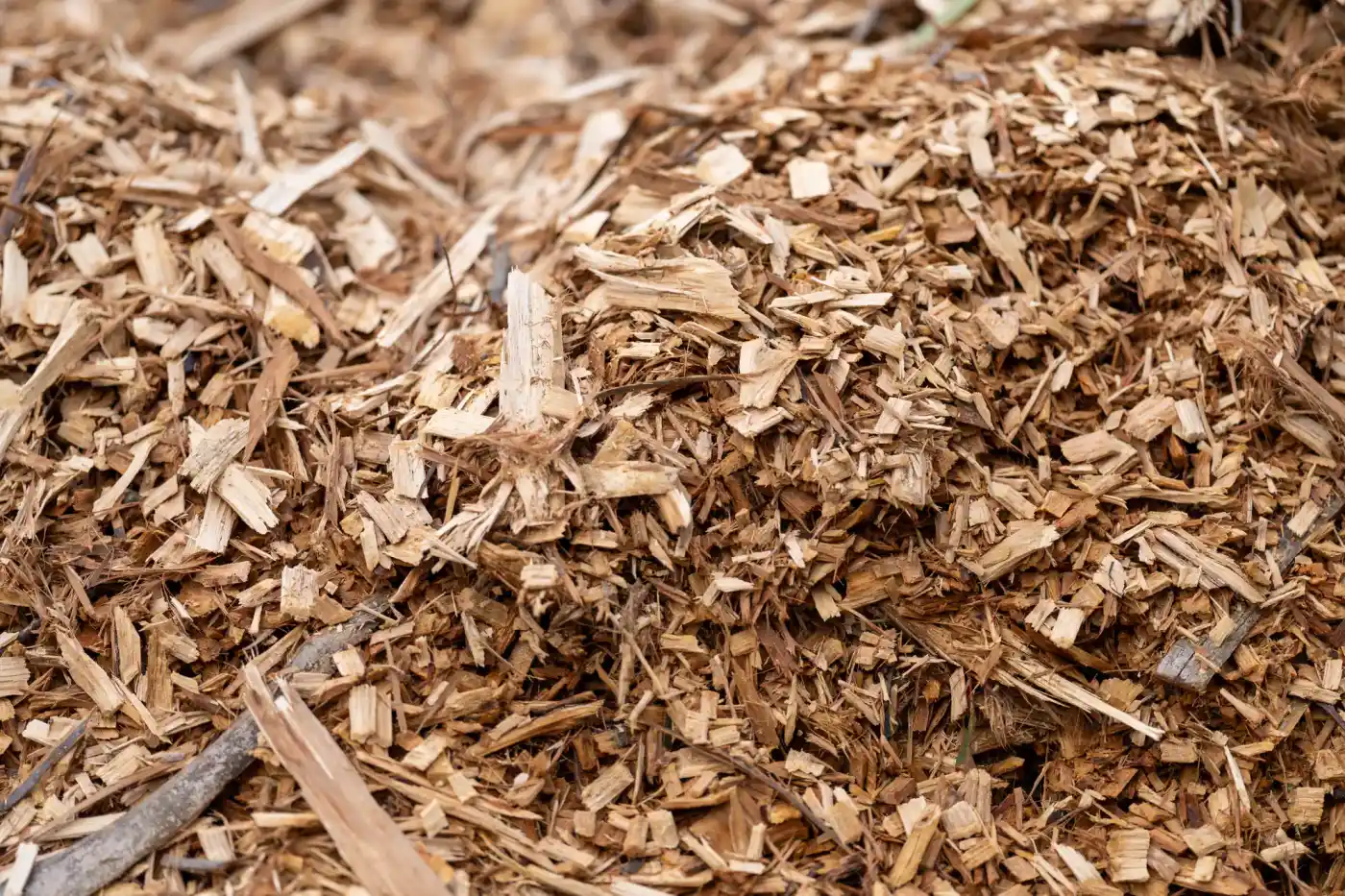
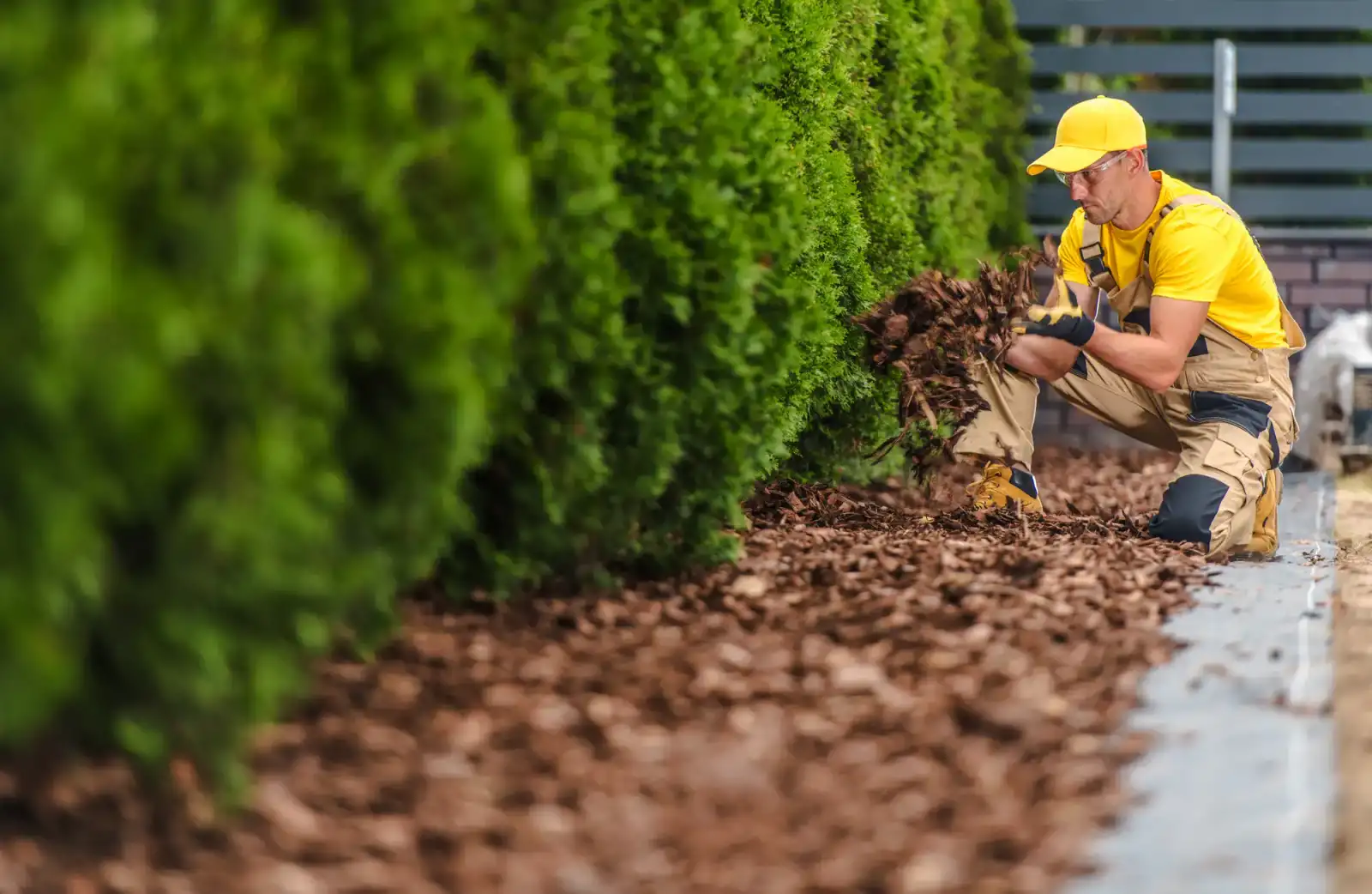
Garden Grove sits on sandy Hernando County soil — the kind that drains fast and dries out faster. Without a proper mulch layer, your plant beds are losing moisture within hours of watering, and your roots are under constant stress trying to keep up. A professionally applied mulch layer of 2–4 inches slows that evaporation dramatically, keeping the root zone hydrated far longer between your one allowed watering day per week. That matters when you’re working within SWFWMD’s current Modified Phase II Severe Water Shortage restrictions.
Beyond moisture, mulch suppresses weed growth year-round — and in Florida’s climate, weeds don’t take a season off. It also regulates soil temperature, which matters more than most people realize. Summer heat can push soil temps to levels that actively stress root systems, and the occasional Hernando County cold snap can damage plants that aren’t insulated at the base. A clean, even mulch layer handles both.
For the large share of Garden Grove homeowners managing newer landscaping — over 69% of homes here were built after 2000 — young plants are especially vulnerable. Getting mulch right early in a plant’s life dramatically improves its survival rate and reduces the cost of replacing what didn’t make it.
We’ve been working in Hernando and Citrus County since 1995. That’s three decades of learning what Florida’s wet-dry climate cycle actually does to landscape beds in Garden Grove and the surrounding communities, what sandy soil needs to hold moisture, and what it takes to keep a yard looking right through hurricane season and dry season alike. This isn’t regional experience claimed from a distance — it’s hands-on, ground-level familiarity with the exact conditions you’re dealing with along the US 41 corridor and throughout Garden Grove.
We serve homeowners in communities like Hernando Oaks, Sterling Hill, and The Trails of Rivard — places where landscaping standards matter and where sloppy work gets noticed. We bring the same level of attention to a mulch installation as we do to a paver driveway or a full irrigation system. We’re also active in the community through hurricane cleanup efforts, Toys for Tots, and youth programs — because a business that shows up after a storm is one you can count on before it, too. Military and first responder discounts are available and applied without a hassle.
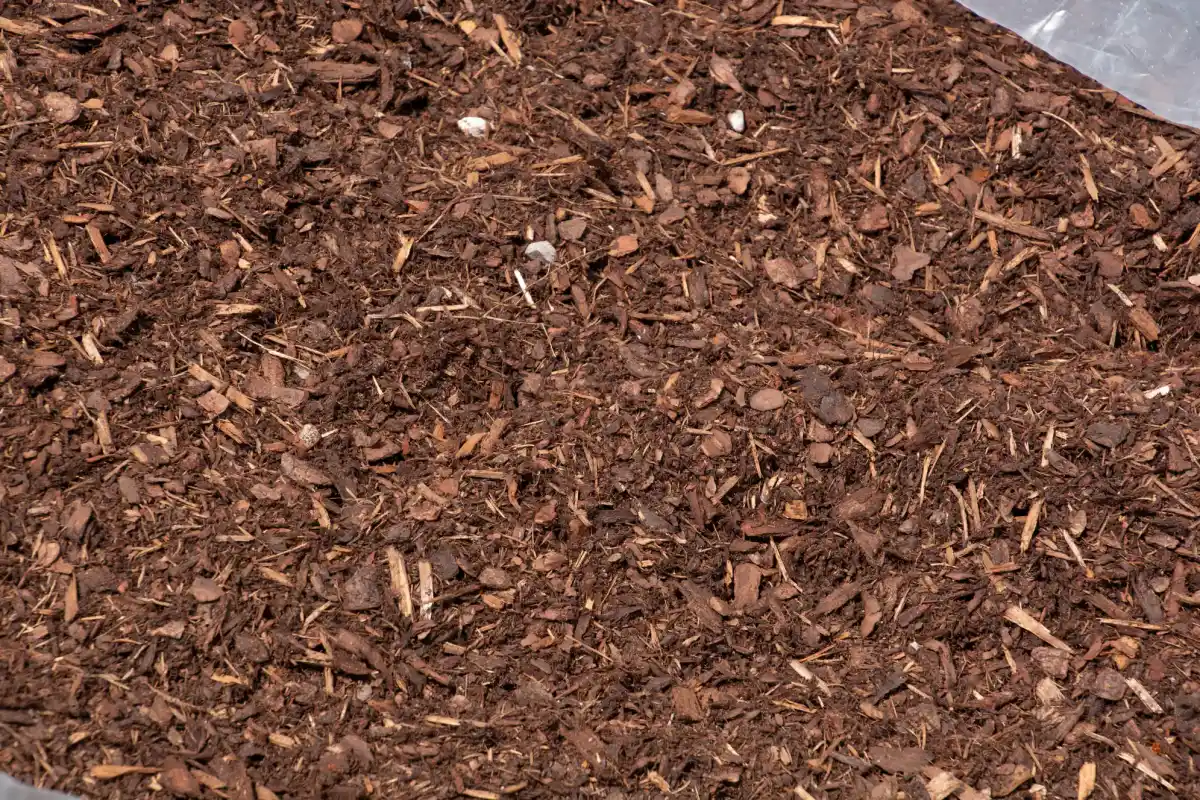
It starts with a straightforward assessment of your beds — their size, condition, existing mulch depth, plant types, and any drainage or erosion issues that might affect the approach. In Garden Grove, that often means accounting for sandy soil that compacts unevenly and beds that may have been disturbed by storm runoff or heavy seasonal rain. Our goal at this stage is to understand what your yard actually needs, not just show up and start spreading material.
From there, our crew preps the beds properly before any mulch goes down. That means clearing out weeds, pulling old decomposed mulch that’s gone anaerobic, and edging the beds so the finished product looks clean and holds its shape. Skipping prep is how you end up with mulch that looks good for two weeks and then becomes a weed bed itself. If you’re in an HOA community like Hernando Oaks or Pristine Place, proper prep and clean edging is also what keeps you on the right side of your landscaping standards.
Mulch is then applied at the correct depth — typically 2–3 inches for established beds, kept clear of plant crowns and tree trunks to prevent rot and pest issues. Once the job is done, the site is cleaned up and you’re left with beds that are protected, weed-suppressed, and ready to hold moisture through Hernando County’s dry season.
Ready to get started?
Mulching in Garden Grove isn’t the same as mulching in a cooler, wetter climate. The material choice matters. Organic mulch — pine bark, eucalyptus, or cypress — breaks down over time and actually improves the sandy Hernando County soil beneath it, adding organic matter that helps it retain water more effectively with each passing season. Rubber or rock mulch might look low-maintenance, but it doesn’t do anything for soil health, and in Florida’s heat it can raise ground temperatures rather than regulate them.
Hernando County’s Florida-Friendly Landscaping guidelines and the county’s own landscape ordinance both identify mulching as a recommended best practice for residential properties — and for good reason. It reduces irrigation demand, limits fertilizer runoff into local waterways, and supports plant health without chemical inputs. If you’re in a community with HOA oversight, proper mulch type, depth, and maintenance is often part of your landscaping agreement. We handle all of that correctly the first time so you’re not getting a violation notice two weeks after the job is done.
The service covers ornamental beds, tree rings, garden areas, and larger acreage properties in and around Garden Grove. Whether you’re maintaining an established yard or trying to get new plantings off to a strong start, the approach is the same: the right material, the right depth, done cleanly.
For most Garden Grove properties, once a year is the practical minimum — but twice a year is better if you want consistent weed suppression and moisture retention. Organic mulch breaks down over time, which is actually a good thing for Hernando County’s sandy soil since it adds organic matter and improves water retention as it decomposes. The problem is that once it breaks down past a certain point, it stops doing its job as a moisture barrier and weed suppressant.
The timing that works best for most homeowners here is a refresh in late fall before the dry season sets in, and again in late spring heading into the wet season. The dry season in Hernando County runs roughly October through May — that’s a long stretch with limited rainfall and, right now, strict one-day-per-week irrigation limits from SWFWMD. Getting fresh mulch down before that period starts gives your Garden Grove beds the best possible protection through the months when water is hardest to come by.
Organic mulch is almost always the right call for Florida landscapes, and specifically for the sandy, fast-draining soil you’re dealing with in Hernando County. Pine bark, eucalyptus, and cypress are the most common options, and each has its strengths. Pine bark tends to hold its color longer and resists washing in heavy rain. Eucalyptus is dense and breaks down slowly. Cypress is naturally resistant to pests and fungal growth, which matters in Florida’s humidity.
What you want to avoid is anything that doesn’t contribute to soil health over time. Rubber mulch and rock mulch are often marketed as low-maintenance, but in Florida’s heat they can actually increase soil temperature rather than moderate it — the opposite of what you want for plant roots during summer. They also do nothing to improve the organic content of sandy soil, which is one of the most important long-term benefits of mulching correctly. If your beds have been getting rock or rubber for years, a conversation about transitioning to organic material is worth having.
Yes — and right now, that’s one of the most practical reasons to get it done. The Southwest Florida Water Management District, which is headquartered in Brooksville and serves Garden Grove and the surrounding region, has issued a Modified Phase II Severe Water Shortage order limiting Hernando County irrigation to one day per week. That’s a significant constraint, and mulch is one of the most effective non-irrigation tools available to compensate for it.
A properly applied 2–3 inch layer of organic mulch can reduce soil moisture evaporation by 25–50% compared to bare soil. In practical terms, that means the water your plants receive on their one allowed watering day goes significantly further — staying in the root zone longer instead of evaporating within hours. For homeowners with newer landscaping that’s still establishing its root system, that difference can be the line between plants that make it through the dry season and plants that don’t. Mulching won’t replace water entirely, but it makes every drop count more.
Many HOA communities in the 34604 area do have landscaping standards that cover mulch — including approved materials, required depths, and how beds should be maintained and edged. Hernando Oaks, Pristine Place, Southern Hills Plantation, and similar communities in the Garden Grove area typically have community standards that are actively reviewed, and landscaping violations are one of the more common notices homeowners receive.
The most important thing is making sure the mulch is applied at a consistent depth, kept cleanly edged at bed borders, and kept away from plant stems and tree trunks — “volcano mulching,” where mulch is piled high against a tree base, is both harmful to the tree and a common HOA flag. We apply mulch correctly by default, which means you’re not going to end up with a violation notice because someone rushed the job or didn’t know the standards. If you have specific HOA documentation about approved mulch types or colors, sharing that before the job starts ensures everything lines up from the beginning.
The standard recommendation for Florida landscapes is 2–3 inches of mulch depth for established beds, and no more than 4 inches in any situation. That range is enough to suppress weeds effectively, retain moisture, and regulate soil temperature without creating problems. Going deeper than that — which happens more often than people realize when mulch is reapplied year after year without removing the old layer — creates its own set of issues.
Too much mulch holds excess moisture against plant stems and tree trunks, which leads to rot, fungal disease, and pest activity. It can also prevent rainfall from penetrating down to the root zone at all, leaving roots dry even after a storm. In Hernando County’s humid climate, thick mulch that stays wet for extended periods is also a breeding environment for mold and fungal growth that can spread to nearby plants. The fix is straightforward: assess what’s already there before adding more, and remove or thin out decomposed material before applying a fresh layer. That’s part of the process we follow on every job.
Yes, and it’s a straightforward discount — no hoops, no fine print. We offer reduced pricing for military veterans and first responders, and Garden Grove and the surrounding Hernando County area have a meaningful population of both. Whether you’re a retired servicemember who settled in the area, an active first responder commuting the US 41 corridor, or a veteran who moved here for the same reasons a lot of people do — the cost of living, the space, the community feel — the discount applies to your service.
It’s worth mentioning when you call or reach out for a quote. We’ve been serving this region since 1995, and the discount reflects a straightforward appreciation for people who’ve put in service of a different kind. If you’re unsure whether you qualify, just ask — the conversation is easy and the answer is usually yes.
Useful Links
Other Services we provide in Garden Grove