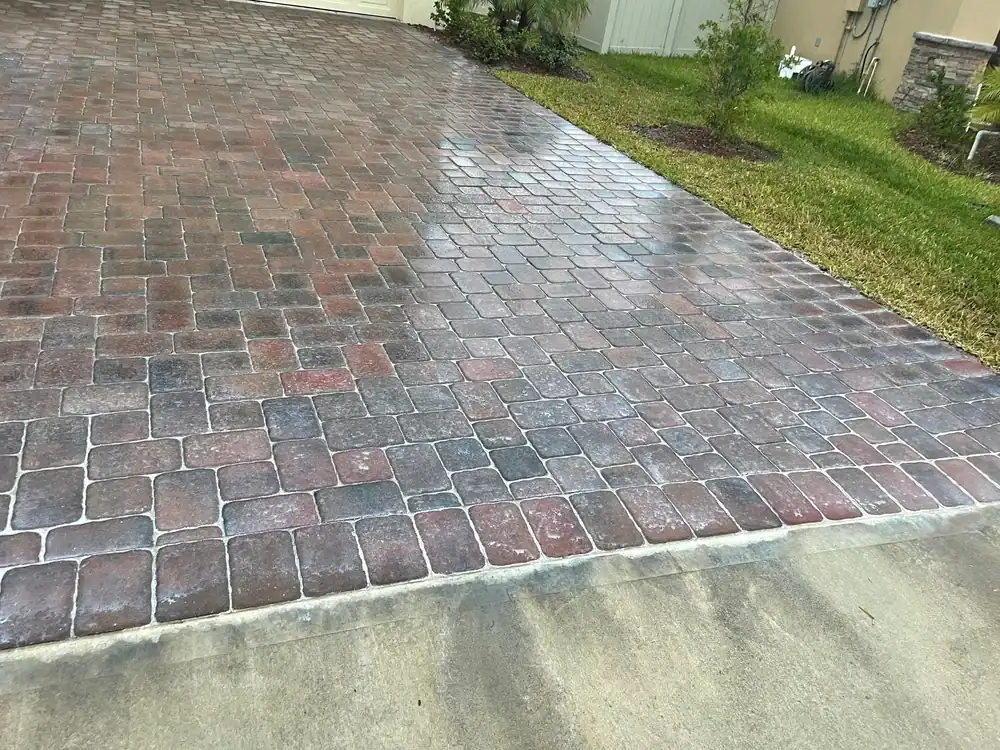
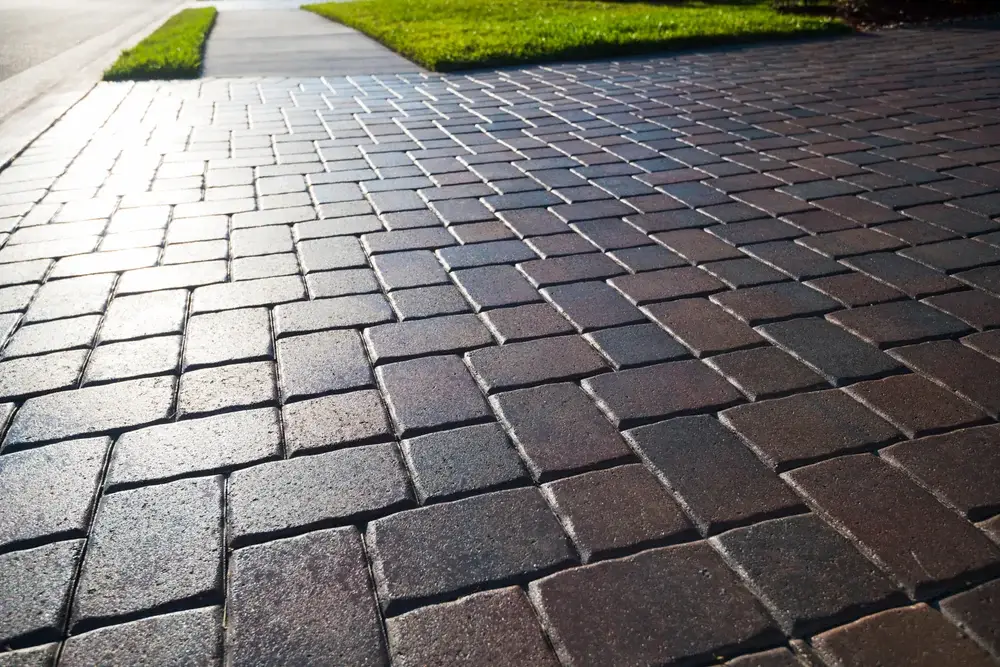
Your pavers weren’t cheap. Whether you spent $10,000 on a driveway or $20,000 on a pool deck, that’s a real investment sitting in your yard right now.
Without sealing, Florida’s UV rays bleach the color out permanently. Once it’s gone, you can’t pressure wash it back. Rain floods underneath, washing away base material and creating those uneven spots that make you cringe every time you walk outside.
Sealing locks everything in place. The jointing sand stays put. Weeds can’t take root. Oil stains from the car wipe off instead of soaking in. Your pavers keep their color and that clean, polished look that made you choose them in the first place. And when you reseal every few years, you’re adding decades to the lifespan of something you’ve already paid for.
We’re a family-owned paver sealing company serving Liberty Triangle and Citrus County since 1995. We’re authorized contractors for Tremron, Flagstone, and Belgard pavers, and the only Seal ‘n Lock distributor in the county.
That matters because we’re not some fly-by-night crew with a pressure washer. We know which sealers hold up in Florida’s climate. We know how to prep the surface so the sealer actually bonds instead of peeling off in six months.
Liberty Triangle has a median home value of $358,456, and most of those homes are owner-occupied. You’re not flipping properties here. You’re maintaining something you plan to keep, which means the work needs to be done right the first time.
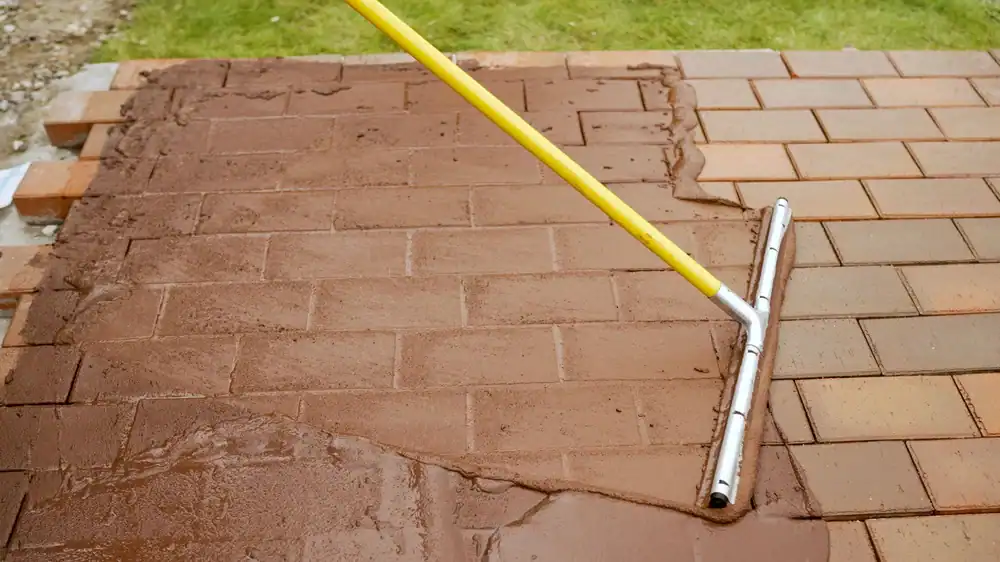
First, we clean the pavers. Not just a quick spray—we’re removing dirt, algae, old sealer residue, and anything else that would prevent the new sealer from bonding properly. This step matters more than most people realize.
Next, we check the jointing sand. If it’s washed out or low, we refill and compact it. The sand provides structural support, so skipping this creates problems down the road.
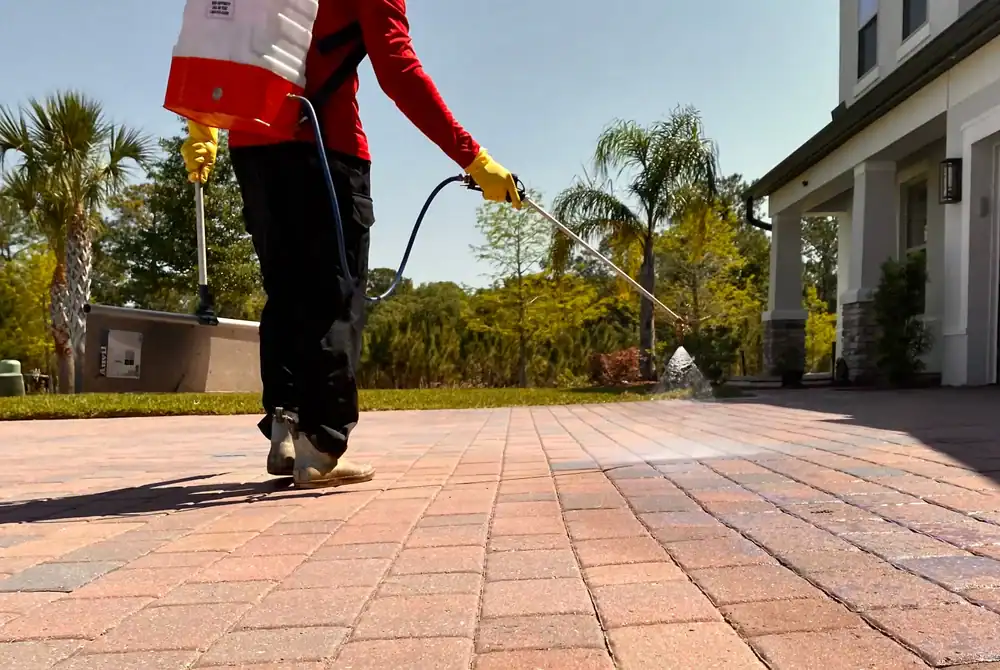
Then we apply the sealer. We use commercial-grade products designed for Florida’s humidity and UV exposure. Most jobs get multiple coats because one coat doesn’t provide enough protection. We let each coat cure properly before applying the next.
The whole process takes one to three days depending on the size of your project and weather conditions. You’ll need to stay off the pavers for 24-48 hours after the final coat. After that, you’re good to go.
Ready to get started?
Our paver sealing service in Liberty Triangle covers everything from driveways and walkways to pool decks and patio pavers. We handle residential and commercial properties.
Here’s what’s included: thorough cleaning and prep work, joint sand replacement and stabilization, application of premium water-based or solvent-based sealer depending on your specific needs, and multiple coats for maximum protection. We’re not cutting corners to finish faster.
Florida’s climate is tough on outdoor surfaces. Liberty Triangle gets the same intense sun and frequent storms as the rest of Citrus County. That’s why we use sealers specifically formulated for this environment—products that resist UV damage, handle moisture properly, and don’t turn cloudy when humidity spikes.
Sealing interlocking pavers requires attention to detail. The joints need to be filled correctly, the surface needs to be completely dry before sealing, and the sealer needs to penetrate properly without pooling. When it’s done right, you get years of protection. When it’s rushed, you get peeling, cloudiness, and wasted money.
Every two to three years is the standard recommendation for Florida pavers. Some sealers break down faster depending on sun exposure and foot traffic.
If your pavers are in full sun all day—like a driveway or front walkway—you’re probably looking at the shorter end of that range. Pool decks with constant water exposure might need attention sooner too. Shaded areas or low-traffic spots can sometimes stretch to three years.
You’ll know it’s time when water stops beading on the surface and starts soaking in instead. That’s the sealer wearing off. Don’t wait until weeds are growing or the color has faded. By then, you’re dealing with bigger problems than just resealing.
Water-based sealers are easier to apply and better at handling Florida’s moisture. They don’t trap water underneath, which matters when you’re dealing with afternoon thunderstorms and high humidity. They also don’t have the strong chemical smell that solvent-based products do.
Solvent-based sealers give you that high-gloss wet look and tend to darken the pavers more. They’re more durable in some applications, but they’re also trickier to work with. If the surface isn’t bone-dry or the humidity is too high, you’ll get cloudiness or adhesion problems.
Most residential jobs in Liberty Triangle do well with water-based sealers. They perform reliably in our climate and don’t require perfect weather conditions during application. We’ll recommend the right product based on your specific pavers and what you’re trying to achieve.
You can buy sealer at the hardware store, sure. But getting it right is harder than it looks, and the mistakes are expensive to fix.
The biggest issue is surface prep. If the pavers aren’t completely clean and dry, the sealer won’t bond. It’ll peel, turn white, or create a cloudy film that looks worse than no sealer at all. Stripping failed sealer and starting over costs more than hiring professionals in the first place.
Then there’s application technique. Too much sealer pools in low spots and creates sticky patches. Too little leaves gaps in coverage. The temperature and humidity need to be right, or the sealer won’t cure properly. And if you don’t refill the joint sand correctly, your pavers can shift even after sealing.
Professional paver sealing service in Liberty Triangle costs a fraction of what you paid for the original installation. It’s worth doing once and doing right.
It can, depending on the sealer and how it’s applied. High-gloss sealers tend to be more slippery when wet, which is a real concern for pool decks.
That’s why we use specific products for pool areas—sealers that provide protection without creating a skating rink. Some have slip-resistant additives mixed in. Others cure to a matte or satin finish instead of high gloss, which gives better traction.
If you’re sealing a pool deck, mention that upfront. The product selection changes. We’re not going to use the same sealer on your pool pavers that we’d use on your driveway. Safety matters, especially in Liberty Triangle where families with kids are common. The goal is protection and good looks without anyone slipping and cracking their head open.
Plan on 24 to 48 hours before you can walk on the pavers, and longer before you should drive on them. Florida’s humidity slows down the curing process compared to drier climates.
Water-based sealers typically dry faster than solvent-based options, but “dry to the touch” and “fully cured” are two different things. The surface might feel dry after a few hours, but the sealer is still curing underneath. If you put weight on it too soon, you’ll leave marks or damage the finish.
Weather plays a huge role. If we seal your pavers and then it rains six hours later, that’s a problem. We check the forecast carefully and plan around Liberty Triangle’s typical afternoon storms. Spring and fall are usually the best times for sealing because the humidity is lower and the weather is more predictable. Summer can work, but you’re gambling with thunderstorms.
They’ll deteriorate faster. Florida’s sun bleaches the color permanently. Rain washes out the joint sand, which leads to shifting and uneven surfaces. Weeds grow in the gaps. Stains soak in and become permanent.
You’ll spend more time maintaining them—pulling weeds, treating algae, scrubbing stains that won’t come out. And when the base material washes away and pavers start sinking or shifting, you’re looking at repair costs that dwarf what sealing would have cost.
Unsealed pavers don’t fail overnight. It’s gradual. But in Liberty Triangle’s climate, that deterioration happens faster than in other parts of the country. The UV exposure here is intense, and the rain is relentless during storm season. Sealing is cheap insurance against expensive problems later.
Useful Links
Other Services we provide in Liberty Triangle