
Your concrete pool deck is cracking. Again. That’s what happens when you pour rigid slabs over Florida’s sandy, shifting soil. Every time the ground moves with moisture or settles unevenly, those cracks get worse.
Pool pavers in Hernando Beach solve that problem because they flex. The joints between pavers allow natural ground movement without fracturing your entire deck. You’re not calling someone back in five years to jackhammer and re-pour.
They stay cooler underfoot than concrete, drain water faster so you’re not standing in puddles, and when one paver does need replacing, you swap it out without tearing up the whole area. That’s the difference between a surface that fights Florida’s climate and one that works with it.
We’ve handled pool deck pavers in Hernando Beach and throughout Citrus County for nearly 30 years. We’re authorized contractors for Tremron, Belgard, and Flagstone, which means you’re getting manufacturer-backed warranties and access to premium materials most contractors can’t offer.
We’re also the exclusive Seal ‘n Lock distributor in Citrus County. That protective sealing step is what keeps your pavers looking clean and prevents sand washout between joints.
This is a family-owned business. We’re not flipping jobs and disappearing. When hurricane season hits, we’re the ones helping with cleanup. When something needs attention years later, we’re still here.
We start by pulling permits. Citrus County requires them for pool deck work, and skipping that step leads to fines and stop-work orders. You don’t want that headache.
Next, we excavate and prep the base. This is where most DIY projects and cheap contractors fail. Florida’s sandy soil needs proper compaction and drainage layers, or your pavers will sink and shift within a year. We use crushed stone and bedding sand, compacted in lifts to create a stable foundation.
Then we lay the pavers. Pattern, spacing, edge restraints—it all matters for long-term performance. We’re setting each one level and ensuring proper slope for water runoff away from your pool.
Finally, we sweep polymeric sand into the joints and apply Seal ‘n Lock. That sand hardens to lock pavers in place and resist washout. The sealant protects against stains, UV damage, and makes future cleaning easier. You’re left with a pool deck that looks sharp and performs for decades.
Ready to get started?
You’re getting materials selected specifically for Florida’s climate. We use pavers with slip-resistant textures and heat-reflective surfaces that stay cooler than standard concrete. Travertine and textured concrete pavers are popular here because they handle pool chemicals, resist mold growth, and don’t become skating rinks when wet.
Hernando Beach sits right on the Gulf, which means salt air and hurricane-force winds are part of the deal. The pavers we install are rated for coastal environments and our installation methods account for storm drainage. When your neighbors are calling cleanup crews after heavy rain, your pool deck recovers quickly because water moves through it instead of pooling on top.
You’re also getting proper permits, state-licensed installation crews, and manufacturer warranties. We handle the entire process—design consultation, material selection, installation, and sealing. One contractor from start to finish means no coordination headaches and no finger-pointing if something needs attention later.
This is the Gulf Coast. Your outdoor spaces take a beating. The best pavers for pool decks in Hernando Beach are the ones installed correctly the first time by people who understand what “Florida-proof” actually means.
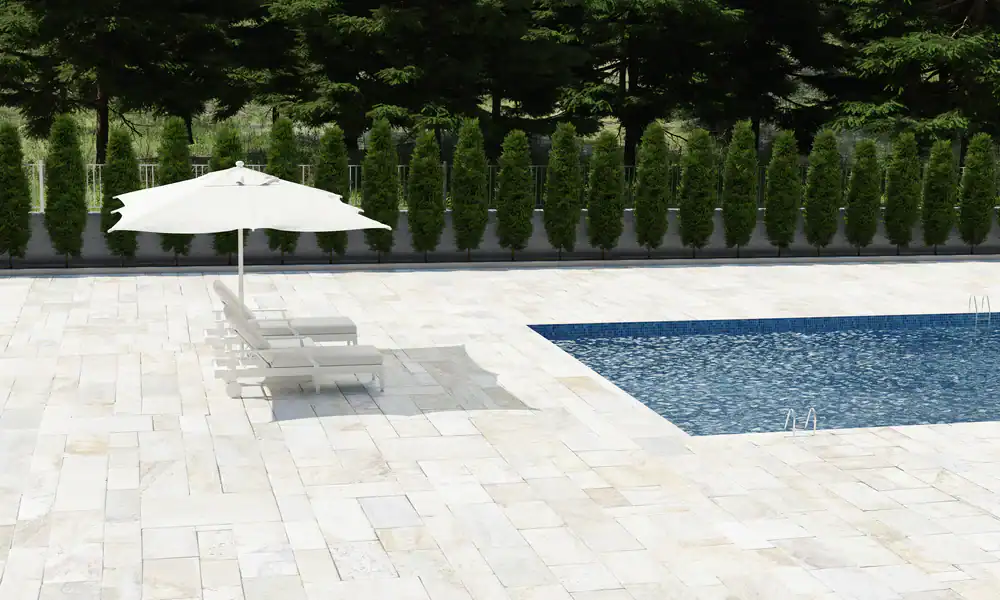
Most pool deck paver installations take between three to seven days depending on the size of your deck and design complexity. A standard rectangular pool deck around 500-800 square feet usually wraps up in four to five days.
Day one is excavation and base prep. We’re removing old concrete or digging down to create proper depth for base layers. Days two and three involve laying and compacting the crushed stone base, adding bedding sand, and beginning paver installation. Day four is finishing the paver layout, cutting edge pieces, and installing restraints. Day five is joint sanding and sealing.
Weather delays happen. Summer afternoon storms in Florida are predictable, and we won’t lay pavers on saturated base material. That compromises the entire installation. We’d rather pause a day than rush a job that needs to last 30 years. Permit processing adds time on the front end, usually one to two weeks in Citrus County, but that’s not active work time on your property.
Pool pavers in Hernando Beach typically run $15-$30 per square foot installed, depending on material choice. Poured concrete costs $8-$15 per square foot. So yes, pavers cost more upfront.
Here’s what that extra cost gets you. Concrete lasts 10-15 years in Florida before cracking becomes a real problem. Pavers last 30-50+ years with basic maintenance. When concrete fails, you’re jackhammering the entire deck and starting over. When a paver cracks, you replace that one piece.
Pavers also add more resale value. Buyers in Florida know concrete pool decks crack. They see pavers as an upgrade that means less future maintenance. That matters when you’re competing with other listings.
The real cost difference shows up over time. Cheaper upfront usually means more expensive long-term, especially in Florida’s climate. Sandy soil and temperature swings destroy rigid surfaces. Flexible paver systems handle that movement without falling apart.
Yes, but it depends on the material. Light-colored travertine and textured concrete pavers stay significantly cooler than standard poured concrete. Dark pavers still get hot, just like any dark surface in direct sun.
Travertine is naturally porous and reflects heat rather than absorbing it. On a 95-degree day, travertine might reach 110 degrees while standard concrete hits 130-140 degrees. That’s the difference between uncomfortable and genuinely painful on bare feet.
Textured pavers also stay cooler than smooth surfaces because the texture creates tiny shadows and air pockets that reduce heat absorption. We recommend lighter colors and textured finishes for pool decks in Hernando Beach specifically because of our summer heat.
If you’re set on darker pavers for aesthetic reasons, consider adding shade structures or using them in areas that get afternoon shade. Pool decks get full sun most of the day here on the Gulf Coast, so material choice matters more than in other climates.
Not if they’re installed correctly. Florida’s sandy soil is exactly why pavers outperform concrete for pool decks. The flexible joint system allows movement without cracking, but that only works when the base is properly prepared.
We excavate 8-10 inches deep and install compacted crushed stone in layers. Each layer gets mechanically compacted before adding the next. This creates a stable base that distributes weight and allows drainage. The bedding sand layer on top provides a level setting surface for pavers.
Edge restraints are critical. They lock the perimeter pavers in place so the entire system stays tight. Without proper restraints, pavers along the edges creep outward over time and the whole deck loosens up.
Polymeric sand in the joints is the final piece. It hardens after installation and prevents regular sand from washing out during heavy rain. That keeps pavers locked together and prevents individual pieces from shifting.
Shortcuts in base prep are where most installations fail. You can’t just scrape the ground flat and drop pavers on top. That works for a year, maybe two, then everything starts sinking and shifting. Proper base work costs more upfront but it’s the difference between a pool deck that lasts five years and one that lasts fifty.
Yes. Citrus County requires building permits for pool deck work, including paver installations. This isn’t optional, and skipping it creates serious problems.
Permits ensure the work meets local building codes for drainage, setbacks, and structural requirements. Inspectors verify proper base preparation and installation methods. That protects you if something goes wrong and protects future buyers when you sell.
Working without permits can result in stop-work orders, fines, and forced removal of completed work. You’ll also have issues when selling your home because unpermitted work shows up in title searches and home inspections. Buyers either walk away or demand you fix it, which means tearing out the deck and starting over with permits.
We handle all permit applications and inspections as part of our service. It adds a week or two to the timeline but removes liability from you. The permit cost is minor compared to the risk of doing it wrong.
Some contractors skip permits to save time or avoid inspection requirements. That’s a red flag. If they’re cutting corners on permits, they’re cutting corners on installation too.
Maintenance is straightforward. Sweep or blow off debris weekly to prevent buildup in joints. Rinse with a garden hose monthly to remove salt, chlorine, and dirt. That’s it for regular upkeep.
Reseal every 2-3 years. The sealant protects against stains, UV damage, and keeps sand from washing out of joints. We use Seal ‘n Lock, which we distribute exclusively in Citrus County. You can reseal yourself or hire us to handle it. The process takes a few hours—clean the surface, let it dry, apply sealant, let it cure.
If a paver cracks or stains badly, you replace just that piece. Pop it out, drop in a new one, resand the joints. This is why pavers beat concrete for long-term maintenance. You’re fixing individual pieces instead of replacing entire sections.
Watch for sand washout after heavy storms. If you notice joints getting low, add more polymeric sand and wet it to reactivate the binding agents. This prevents pavers from shifting.
Avoid pressure washing at high PSI. It blasts sand out of joints and can damage sealant. Low-pressure rinsing works fine for cleaning. If you need deeper cleaning, use appropriate cleaners for your paver material and reseal afterward.
Useful Links
Other Services we provide in Hernando Beach