
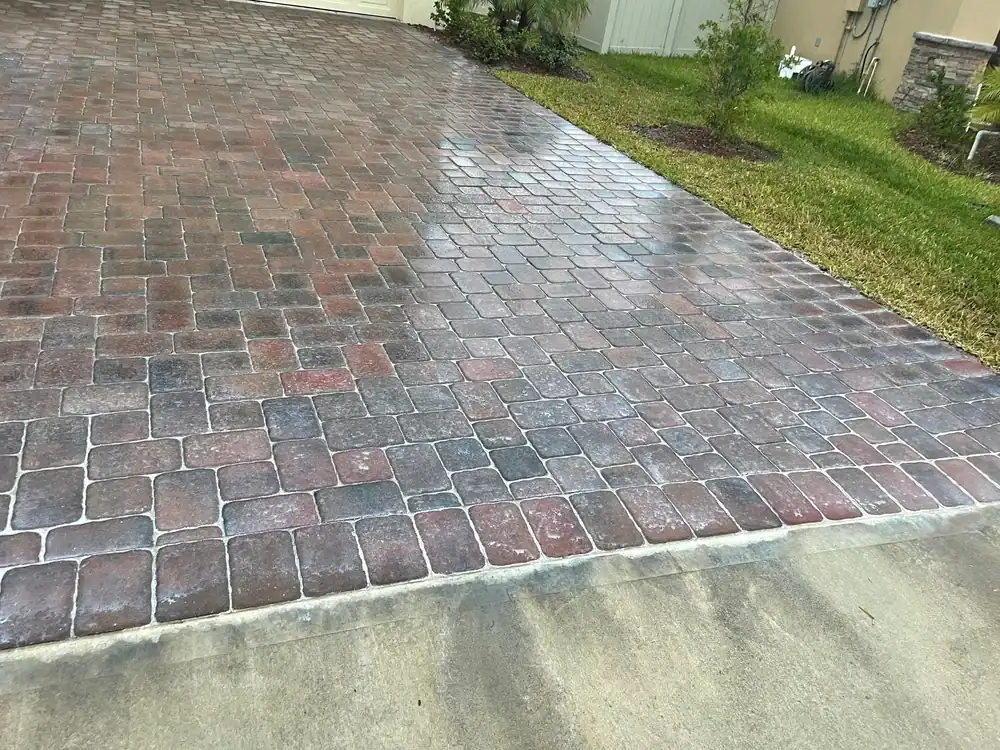
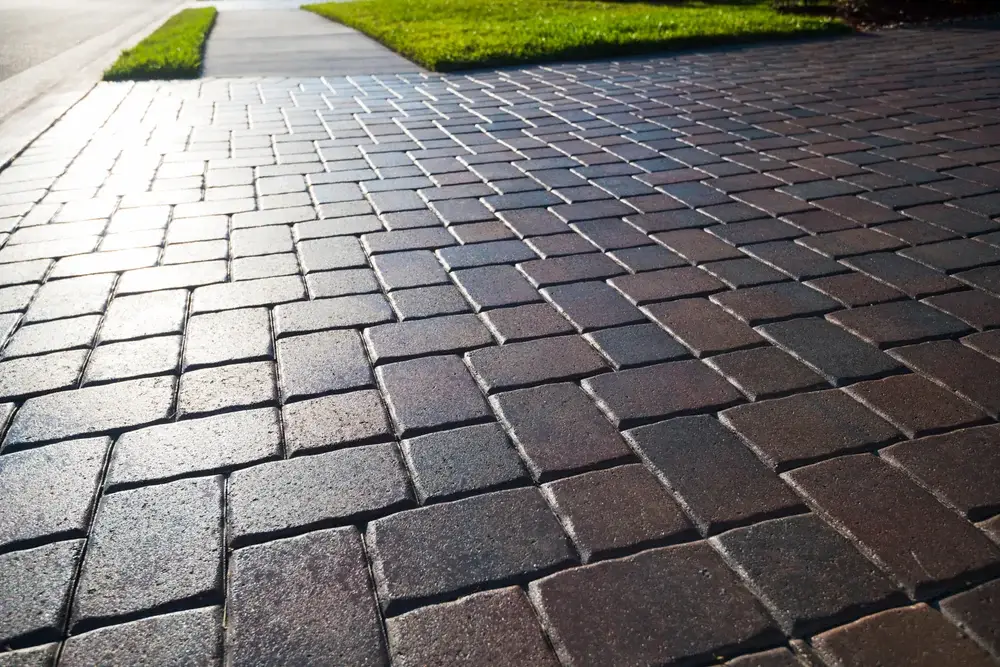
You’ve already invested in beautiful pavers for your driveway, patio, or pool deck. Watching them fade after one summer or seeing weeds pop through the joints isn’t what you signed up for.
Professional paver sealing in Spring Hill, FL does more than make your hardscape look good again. It locks in joint sand so your pavers stay level and stable, even after those afternoon downpours that wash everything away. The sealer creates a barrier against UV rays that break down color and against moisture that invites algae, mildew, and staining.
Your outdoor space stays cleaner with less effort. Spills wipe away instead of soaking in. Weeds don’t take root between pavers. And when you do need to clean, it takes minutes instead of hours on your hands and knees.
The right sealer applied correctly means your pavers maintain that rich color and clean appearance for years, not months. You get to enjoy your outdoor living area instead of constantly maintaining it.
We’ve served Spring Hill and the surrounding areas since 1995. We’re a family-owned business that handles everything from the pavers themselves to the sealing that protects them.
We’re authorized contractors for Tremron, Flagstone, and Belgard, which means we know exactly how each manufacturer’s pavers respond to sealers and Florida weather. We’re also the exclusive Seal ‘n Lock distributor in Citrus County, giving us access to professional-grade products you won’t find at a big box store.
Spring Hill’s 80% homeownership rate means most of our neighbors have a real stake in protecting their property values. We’ve worked on hundreds of driveways, patios, and pool decks throughout Hernando County, and we understand what holds up here and what fails after the first summer.
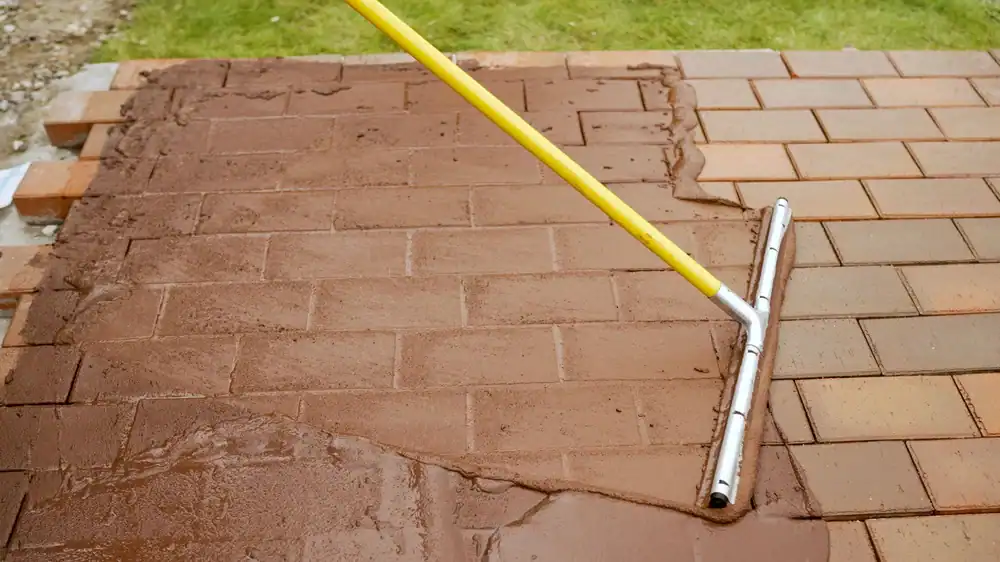
First, we clean your pavers thoroughly. Any dirt, algae, mildew, or old failing sealer has to come off completely, or the new sealer won’t bond properly. We use professional equipment and techniques that remove buildup without damaging the pavers themselves.
Next, we check and refill joint sand where needed. This step matters more than most people realize because the sand keeps pavers from shifting and provides the foundation for the sealer to lock everything in place. If the sand’s been washed out by rain or worn down, we replace it before sealing.
Then we apply a professional-grade sealer designed specifically for Florida’s climate. Not all sealers are the same. Some turn milky white in moisture. Others delaminate in heat. We use products that we’ve tested extensively in Spring Hill’s conditions, and we apply them at the right temperature and humidity levels for proper curing.
The sealer typically cures within 24-48 hours, depending on weather. After that, your pavers are protected and ready for normal use. You’ll notice the color looks richer and more vibrant, almost like the day they were installed.
Ready to get started?
When we seal your pavers in Spring Hill, you’re getting a complete restoration process, not just a coat of product thrown on top of dirty pavers.
We handle the deep cleaning that removes years of buildup, the joint sand replacement that restores structural stability, and the application of UV-resistant, moisture-blocking sealer that’s formulated for Florida’s intense sun and heavy rainfall. Spring Hill gets an average of 51 inches of rain per year, which is why proper sealing matters so much here.
You also get the benefit of working with Tremron, Flagstone, and Belgard authorized contractors who understand how different paver materials react to different sealers. Concrete pavers need different treatment than clay pavers. Tumbled finishes absorb sealer differently than smooth finishes. We adjust our approach based on what you actually have, not a one-size-fits-all method.
The sealing process protects against the specific problems Spring Hill homeowners face: fading from UV exposure, sand loss from afternoon storms, staining from Florida’s humidity and organic debris, and weed growth in joints. Most professionally sealed pavers need resealing every 3-5 years, depending on traffic and sun exposure.
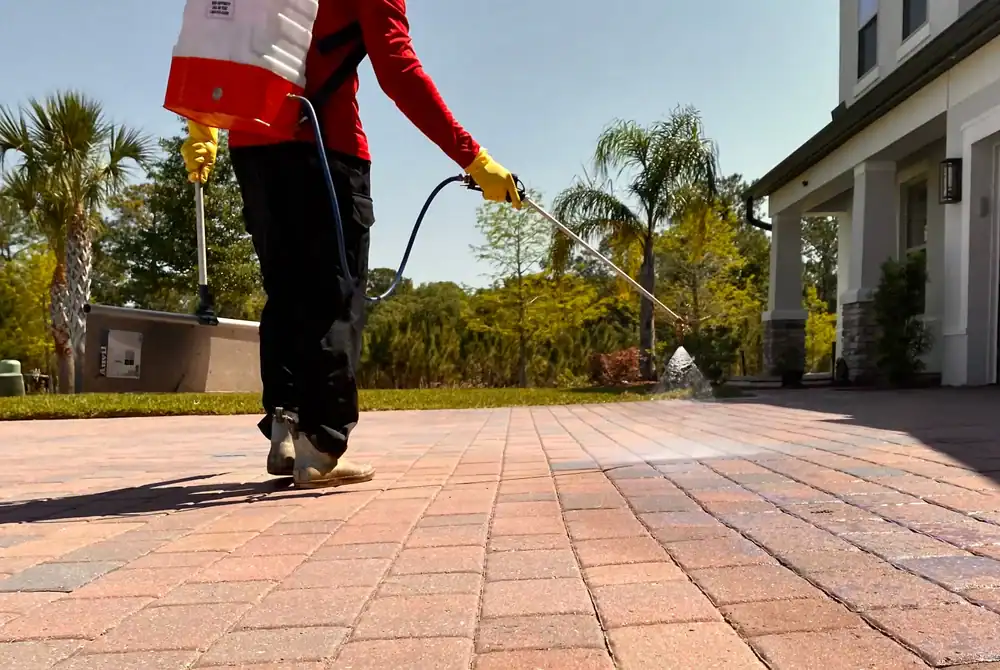
Professional paver sealing in Spring Hill typically lasts 3-5 years before you need to reseal. The timeline depends on a few factors: how much direct sun exposure your pavers get, how much foot or vehicle traffic they handle, and whether you’re sealing a pool deck that sees constant water exposure.
Spring Hill’s intense UV rays are the biggest factor in sealer breakdown. Pavers in full sun all day will need resealing sooner than pavers in partially shaded areas. Pool decks also wear faster because of chlorine, sunscreen, and constant moisture.
You’ll know it’s time to reseal when water stops beading on the surface and starts soaking in, when colors look faded again, or when you notice weeds starting to grow in the joints. Most homeowners find that sealing every 3-4 years keeps their pavers looking great and prevents the kind of deep staining and damage that’s expensive to fix later.
You can buy sealer at a hardware store and apply it yourself, but the results rarely match professional work, especially in Florida’s climate. The bigger risk isn’t just wasted money on product—it’s creating problems that cost more to fix than hiring professionals in the first place.
DIY sealers often turn milky white when moisture gets trapped underneath, which happens frequently in Spring Hill’s humid environment. If you apply sealer when it’s too hot, too humid, or on pavers that aren’t completely clean and dry, the sealer can delaminate or create a hazy film that requires chemical stripping to remove.
We have commercial-grade equipment for deep cleaning, access to better sealers that aren’t available retail, and the experience to know when conditions are right for application. We’ve fixed dozens of DIY sealing jobs that failed within months. The cost of stripping bad sealer and resealing correctly usually runs more than just hiring professionals from the start.
Water-based sealers and solvent-based sealers both protect pavers, but they look different and perform differently in Spring Hill’s conditions. Water-based sealers give a natural, matte finish that doesn’t change the color much. Solvent-based sealers create a wet look with enhanced color and more shine.
Solvent-based sealers generally last longer and provide better protection against staining and UV damage, which matters in Florida. They also do a better job locking in joint sand and creating that barrier against moisture. The tradeoff is they’re more expensive and require more careful application.
Water-based sealers are easier to apply and reapply, they don’t have strong fumes, and they’re better for the environment. They work well for homeowners who want protection without changing the appearance of their pavers much. For Spring Hill’s climate, we typically recommend solvent-based sealers for high-traffic areas like driveways and pool decks, and water-based for patios and walkways where the natural look matters more than maximum durability.
This is one of the most common concerns about sealing pool decks, and it’s a legitimate one. Some sealers do create a slippery surface when wet, which is obviously dangerous around a pool. The solution is using the right type of sealer with slip-resistant additives.
Professional-grade sealers designed for pool decks include texture additives that maintain traction even when the surface is wet. We can also add extra grit to the sealer if you want more slip resistance, though too much can make the surface rough on bare feet.
The key is testing the sealer on a small area first and adjusting the additive level based on how it feels when wet. A properly sealed pool deck in Spring Hill should actually be safer than an unsealed one because the sealer prevents algae and mildew growth that makes pavers genuinely slippery. We’ve sealed hundreds of pool decks throughout Hernando County, and slip resistance is always part of the conversation before we start the job.
New pavers need time to cure before sealing, but you don’t want to wait too long or they’ll start absorbing stains and losing color. The standard recommendation is 60-90 days after installation, though some manufacturers specify different timelines.
During those first few months, any efflorescence (white hazy deposits) needs to come to the surface and get cleaned off before sealing. If you seal too early, you trap that efflorescence underneath and it shows through as white spots or haziness that won’t go away without stripping the sealer.
In Spring Hill’s climate, waiting 90 days also lets the pavers go through a few heavy rainstorms so the joint sand settles properly. If you seal before the sand has compacted, you might end up with low spots in the joints that let water pool. Once the 90-day mark hits, get them sealed fairly quickly. Every month you wait after that is another month of UV damage, staining, and weed growth that could have been prevented.
Sealed pavers absolutely increase curb appeal, and in Spring Hill’s competitive real estate market, that translates to value. A driveway or patio with faded, stained, weed-filled pavers tells potential buyers they’re looking at deferred maintenance. Freshly sealed pavers that look nearly new suggest the home has been well cared for.
Spring Hill has a homeownership rate near 80%, which means most buyers here are looking for move-in ready properties where they won’t face immediate outdoor projects. Professional paver sealing signals that the hardscaping is protected and maintained, not something they’ll need to replace or repair soon.
The actual dollar value increase is hard to quantify because it’s part of overall curb appeal, but real estate agents consistently report that homes with well-maintained outdoor spaces sell faster and for closer to asking price. When you consider that paver sealing costs a fraction of what paver replacement would run, it’s one of the better ROI improvements you can make before selling. Even if you’re not selling, sealed pavers mean you’re protecting an investment that likely cost thousands of dollars to install.
Useful Links
Other Services we provide in Spring Hill