
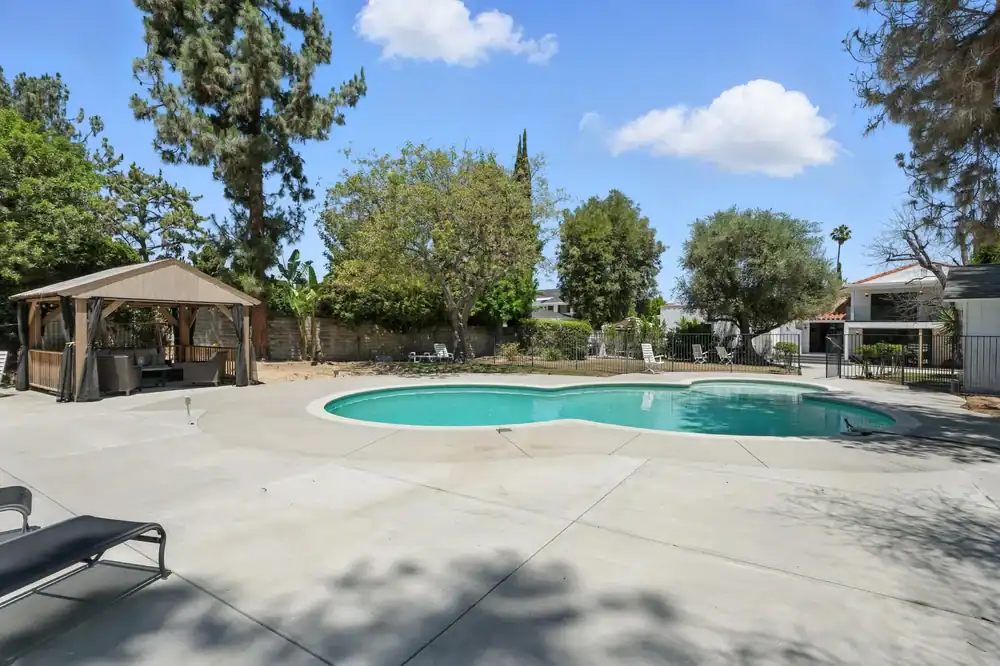
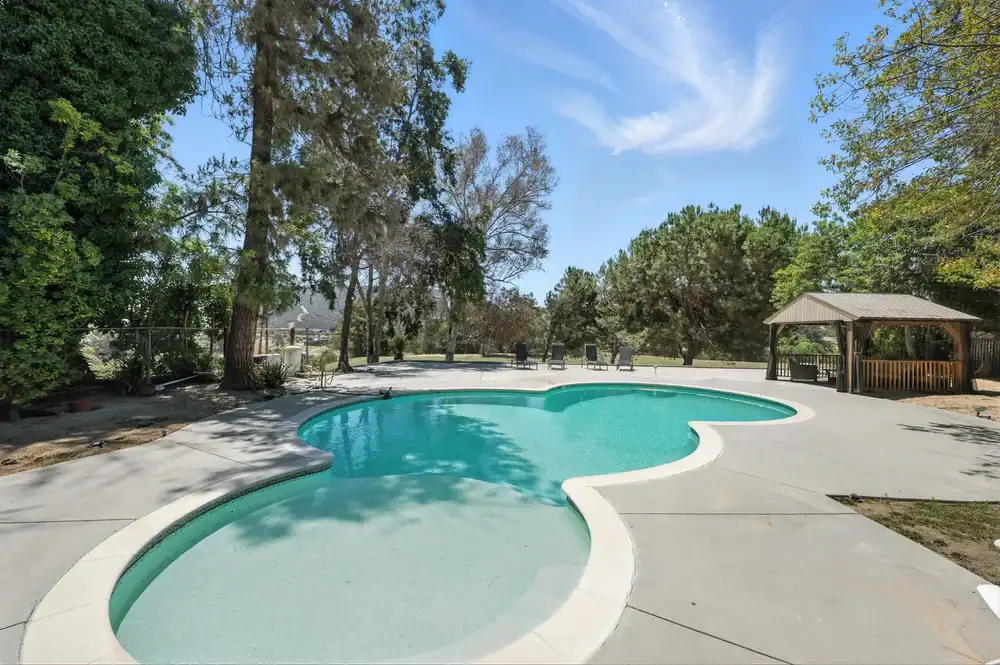
You get a pool deck that stays cooler underfoot when it’s 95 degrees outside. The right pavers don’t absorb heat like concrete or turn slick when wet.
Your deck won’t need replacing in five years because someone cut corners on the base or didn’t account for Florida’s drainage issues. Proper grading and compaction mean water flows away from your pool and your home’s foundation, not toward it.
You avoid the weeds, algae, and mildew that show up when pavers aren’t sealed correctly. And you’re not dealing with faded, stained surfaces that make your backyard look tired before it should. The materials matter, but so does knowing how to install them in Citrus County’s climate.
We’ve installed pool pavers across Citrus County for nearly three decades. We’re authorized contractors for Tremron, Flagstone, and Belgard, which means we’re trained on their systems and backed by their warranties.
We’re also the only Seal ‘n Lock distributor in the county. That’s the professional-grade sealant that keeps your pavers looking clean and protected from Florida’s weather and pool chemicals.
You’re working with a family-owned business that’s been here through hurricanes, housing booms, and everything in between. We’re licensed, insured, and active in the local Chamber of Commerce. If something goes wrong, you know where to find us.
We start with your existing pool deck or new construction. If it’s a renovation, we remove the old surface and check the base. Most problems with pavers come from what’s underneath, not the pavers themselves.
Next, we grade and compact the base properly. In Hill ‘N Dale, that means accounting for sandy soil conditions and making sure water drains away from your pool and foundation. We use the right depth of base material—no shortcuts.
Then we install your pavers with proper joint spacing and edge restraints. The pattern matters for both looks and structural integrity. Once the pavers are set, we apply polymeric sand to lock everything in place and prevent weed growth.
Finally, we seal the surface with Seal ‘n Lock. This step protects against stains, fading, and moisture damage. It’s what keeps your investment looking good year after year in Florida’s climate.
Ready to get started?
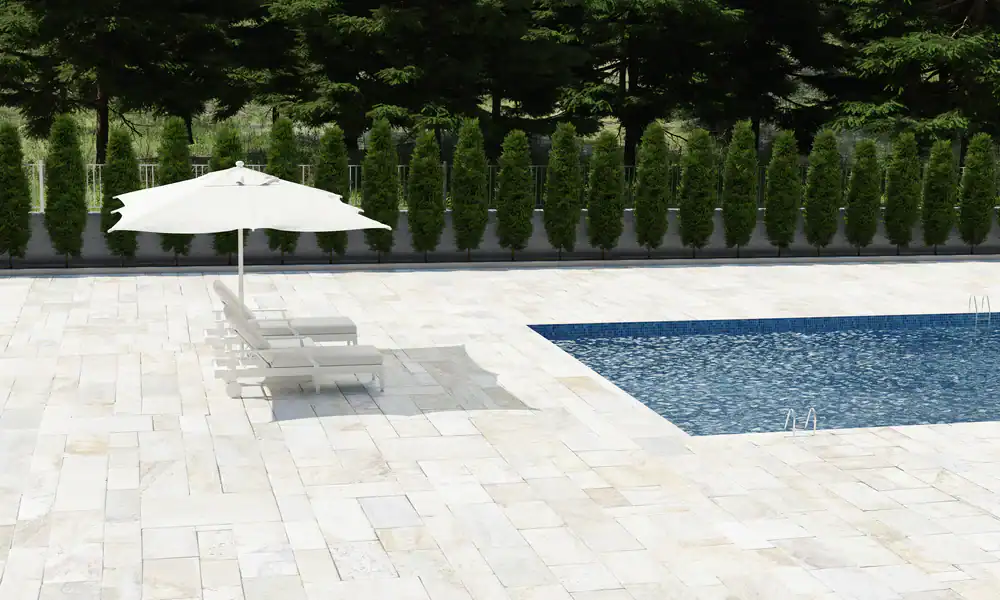
Travertine is popular here because it stays cool underfoot and has natural slip resistance. It handles chlorine and salt water well, which matters if you have a saltwater pool. The downside is cost—it’s more expensive than concrete pavers.
Concrete pavers give you more design options and lower upfront costs. When properly sealed, they hold up just fine in Florida’s climate. You’ll want thicker pavers for pool decks—at least 1.25 inches, preferably more in high-traffic areas.
Porcelain pavers are the newest option. They’re stain-resistant, strong, and sleek. They also cost more and require experienced installation. Not every contractor knows how to work with them properly.
What doesn’t work: thin pavers, unsealed surfaces, or anything installed without proper base preparation. Florida’s sun, rain, and humidity will find every weak point. You’ll end up with faded pavers, weed growth, and algae buildup within a year or two.
Most pool deck installations take between three to seven days, depending on the size of your deck and whether we’re working with an existing pool or new construction. Weather plays a role too—we can’t compact base material properly if the ground is saturated from heavy rain.
For a standard residential pool deck around 500-800 square feet, expect about four to five days. That includes removing old surfaces if needed, preparing and compacting the base, installing pavers, applying polymeric sand, and sealing.
Larger decks or complex designs with multiple levels, curves, or custom patterns take longer. We’d rather take an extra day to do it right than rush the base preparation or sealing process. Those steps determine how long your deck actually lasts.
Yes, most pool deck work requires a permit in Citrus County. Any changes to your pool deck can affect drainage, safety, and even your home’s foundation if not done correctly. Local building codes exist for good reasons.
The permit process covers things like proper setbacks, drainage requirements, and structural specifications. It also ensures the work gets inspected at key stages. That protects you as the homeowner.
We handle the permit application as part of our service. We know what the county requires and how to get approvals without delays. Skipping permits might seem like it saves time or money, but it creates problems when you sell your home or file an insurance claim after storm damage.
Unsealed pavers absorb water, stains, and organic material. In Florida’s climate, that means you’re dealing with algae, mildew, and weed growth within months. The pavers also fade faster from UV exposure and show every spill or leaf stain.
Sealed pavers have a protective barrier that repels water and prevents staining. The sealant we use (Seal ‘n Lock) also enhances the color and gives pavers a finished look. It makes cleaning easier—most spills wipe right off instead of soaking in.
Sealing isn’t a one-time thing. Depending on sun exposure and pool chemical use, you’ll want to reseal every two to four years. But that maintenance is a lot easier than replacing faded, stained pavers or constantly fighting algae and weeds in the joints.
Base preparation causes most paver failures. If the base isn’t deep enough, properly graded, or compacted correctly, pavers will shift and crack as the ground settles. This is especially common in areas with sandy soil like Hill ‘N Dale.
Water drainage is the other major factor. If water pools under your pavers or doesn’t drain away from the pool area, it undermines the base over time. You’ll see sunken spots, shifted pavers, and eventually cracks.
Edge restraints matter too. Without proper edging, pavers gradually spread apart and lose their interlock. That’s when you get the “spreading” effect where joints widen and pavers become uneven. These aren’t paver problems—they’re installation problems.
Start with your budget and priorities. Travertine costs more upfront but stays cooler underfoot—a real advantage in Florida summers. It’s naturally slip-resistant even when wet and has a premium look that many homeowners want.
Concrete pavers cost less and give you more design flexibility. You can get almost any color, pattern, or texture. When sealed properly, they perform well around pools and handle chlorine and salt water just fine.
Consider your pool type too. Saltwater pools are harder on materials, so travertine’s natural resistance is beneficial. If you have a standard chlorine pool and want more color options or a specific design, quality concrete pavers work great. Either way, proper installation and sealing matter more than the material itself.
Regular cleaning is the main requirement. Rinse your deck weekly to remove leaves, pollen, and pool chemicals. Use a mild detergent and soft brush for tougher stains—avoid pressure washers on high settings because they can damage the sand between pavers.
Reseal your pavers every two to four years depending on sun exposure and use. You’ll know it’s time when water stops beading on the surface or when colors start looking dull. Resealing takes a day and protects your investment.
Check for any sunken or shifted pavers after heavy rains or if you notice drainage issues. Catching small problems early prevents bigger repairs later. If weeds start growing in joints, that usually means the polymeric sand needs replacement or the pavers need resealing.
Useful Links
Other Services we provide in Hill 'N Dale