
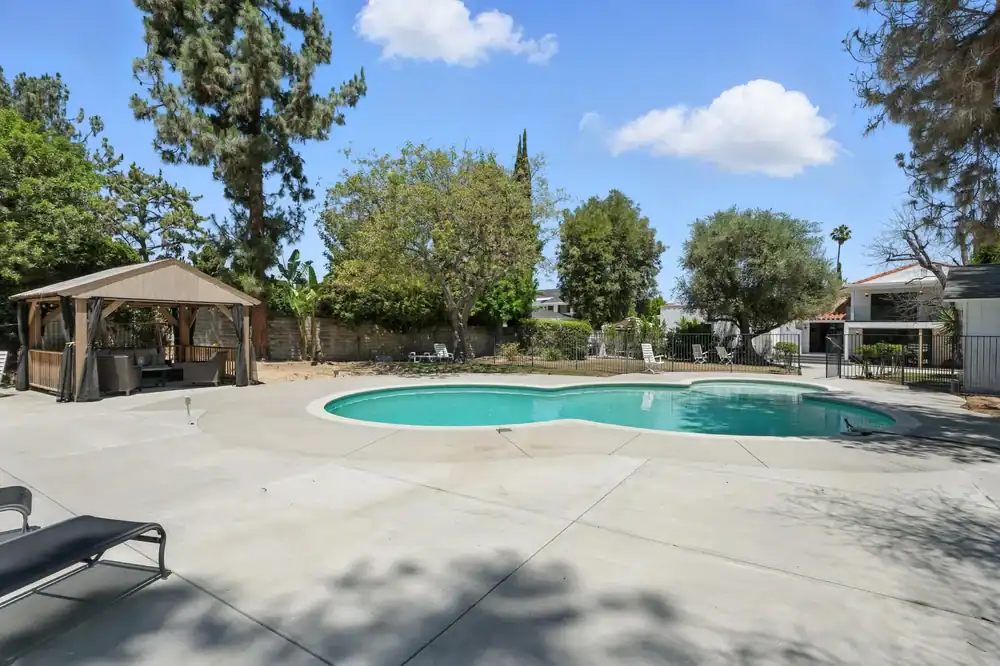
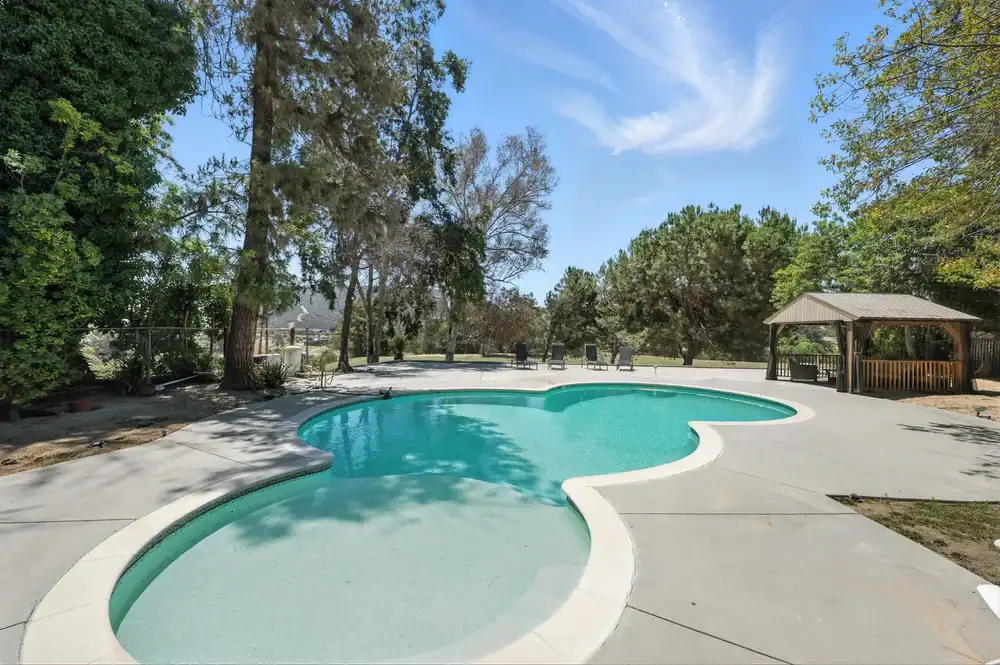
Your kids stop hopping across the deck like it’s lava. The surface stays cool enough to walk on barefoot, even in July, because the right pool pavers reflect heat instead of absorbing it.
No more widening cracks that collect dirt and algae. No more standing water in low spots after Florida’s afternoon storms. The deck drains properly, stays level, and doesn’t shift when you walk across it.
You stop worrying about someone slipping near the pool edge. Textured pavers give actual traction when wet, and they don’t get slick like sealed concrete does. The surface around your pool becomes the safest part of your yard instead of the part that makes you nervous.
Maintenance drops to hosing it off and occasionally sweeping sand back into the joints. That’s it. No resurfacing every few years, no patching cracks that come back worse, no constant repairs that eat into your weekend.
We’ve been installing pool deck pavers in Spring Hill, FL since 1995. We’re authorized contractors for Tremron, Belgard, and Flagstone, which means we install to manufacturer standards and our work is backed by their warranties.
Spring Hill’s housing stock is mature. Most pools here are 15 to 30 years old, and most concrete decks are showing it. We’ve replaced hundreds of them with paver systems that handle our specific climate: intense UV exposure, heavy seasonal rain, and humidity that never quits.
We’re not a crew that shows up, lays pavers, and disappears. We handle permitting, we grade for proper drainage, and we use the base materials that actually work in Florida soil. You’re hiring people who’ve done this in your neighborhood for three decades, not a contractor learning on your property.
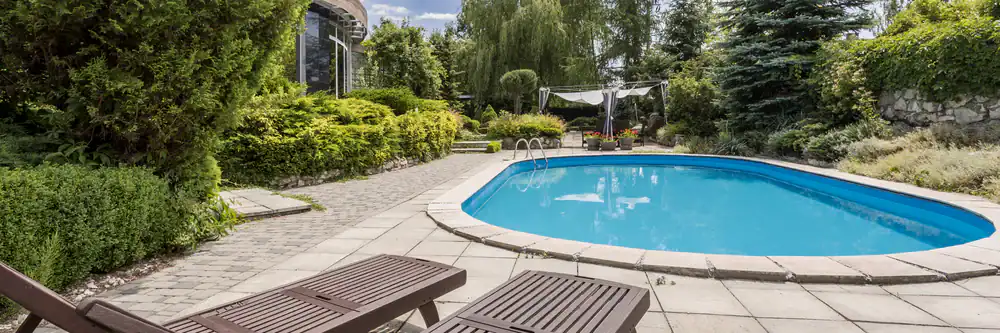
First, we remove your existing deck. Concrete gets broken up and hauled off. Old pavers get pulled, along with whatever base material is underneath. We’re starting from scratch because a proper installation requires a proper foundation.
Next, we grade and compact the base. This step determines whether your deck stays level or starts sinking in two years. We use crushed limestone, compacted in layers, with a slope built in for drainage. Florida gets 54 inches of rain a year. If water doesn’t move away from your pool, you’ll have problems.
Then we lay the pavers. Each one gets set level and tight to the next. Cuts around curves and pool edges are measured individually. We’re not forcing pavers into gaps or leaving joints that are too wide. The pattern should look intentional, not improvised.
Finally, we sweep polymeric sand into the joints and seal the surface. The sand locks pavers in place and keeps them from shifting. The sealer protects against stains, fading, and Florida’s weather. You get a finished deck that’s ready to use and built to last 20-plus years.
Ready to get started?
You get a full tear-out and haul-away of your existing deck. We pull permits, handle inspections, and make sure everything meets Florida Building Code before we start. The base gets built to proper depth and compaction specs, not shortcuts that save time but cost you money later.
Material selection matters in Spring Hill, FL. Light-colored pavers in cream, ivory, and soft gray stay cooler underfoot. Textured surfaces give you slip resistance when wet. We’ll walk you through options from Tremron, Belgard, and Flagstone that actually work around pools in Florida, not just look good in a catalog.
Drainage design is part of the install, not an afterthought. We slope the deck away from your pool and your house. We add channel drains if needed. Spring Hill gets sudden, heavy downpours, and your pool deck needs to handle that without creating standing water or erosion around the edges.
You also get our Seal ‘n Lock protection system. We’re the exclusive distributor in Citrus County. It guards against stains, fading, and weather damage better than standard sealers, and it’s only available through authorized contractors. Your deck stays looking new longer, with less maintenance on your end.
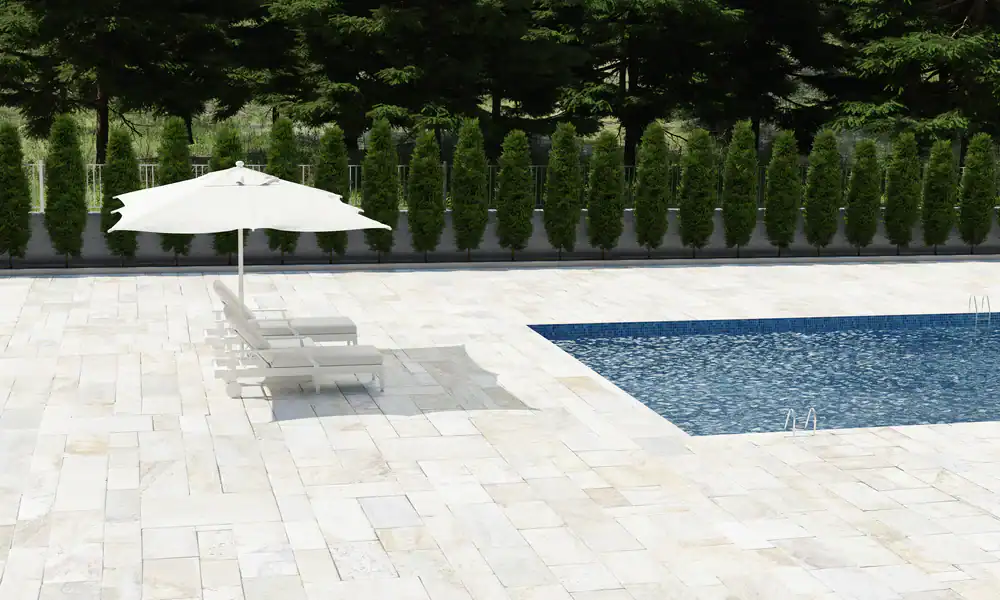
Pool deck paver installation in Spring Hill typically runs $22 to $35 per square foot. That includes tear-out, base prep, pavers, installation, and sealing. A standard pool deck of 400 to 600 square feet usually lands between $9,000 and $18,000, depending on the paver type and any custom cuts or curves.
The range exists because not all installations are equal. Travertine costs more than concrete pavers. Complex patterns cost more than straight layouts. Adding coping, upgrading drainage, or working around existing landscaping adds to the scope.
You’re not just paying for pavers. You’re paying for proper base preparation, correct grading, quality materials, and a crew that knows how to install them in Florida’s climate. Cheap installs skip steps. Those decks settle, shift, or drain poorly within a few years, and fixing them costs more than doing it right the first time.
Travertine and light-colored concrete pavers work best for pool decks in Florida. Travertine stays cool to the touch even in direct sun because of its natural porosity and light color. It’s slip-resistant when wet and handles our humidity without breaking down.
Concrete pavers in ivory, cream, or light gray also stay cooler than darker colors. They’re more affordable than travertine and just as durable when installed correctly. Textured finishes give you traction around the pool edge where slipping is a real concern.
Avoid dark pavers unless you like burning your feet. Charcoal and deep brown pavers absorb heat and can hit 120+ degrees in summer sun. Also avoid smooth finishes near water. They look clean, but they’re slick when wet, which defeats the point of upgrading your deck for safety.
A properly installed paver pool deck lasts 20 to 30 years in Spring Hill, FL. That’s with minimal maintenance—occasional cleaning, re-sanding joints every few years, and resealing when the finish starts to fade. Pavers themselves don’t crack or deteriorate the way concrete does.
The lifespan depends entirely on installation quality. If the base isn’t compacted correctly or drainage isn’t built in, pavers will start shifting or settling within five years. If joints aren’t filled with polymeric sand, pavers move when walked on and sand washes out after heavy rain.
Florida’s climate is hard on outdoor surfaces. UV exposure fades colors. Rain tests drainage. Humidity accelerates wear on poor-quality materials. But pavers are designed for this. They’re modular, so if one gets damaged, you replace that piece. You’re not tearing out and resurfacing an entire deck like you would with concrete.
Dark pavers get extremely hot. Light-colored pavers stay much cooler. A charcoal paver in direct Florida sun can reach 120 to 130 degrees, which is hot enough to burn skin. A cream or ivory paver in the same conditions might hit 85 to 95 degrees—warm, but walkable.
Travertine is the coolest option. Its natural composition reflects heat instead of absorbing it, and it stays comfortable to walk on even at midday in July. If your pool deck gets full sun and you have kids running around barefoot, travertine is worth the extra cost.
Concrete pavers in light shades are the next best option. They’re cooler than standard concrete and significantly cooler than dark pavers. If budget matters, go light-colored concrete with a textured finish. You’ll get a surface that’s cool enough to use and safe when wet.
Hose off your pool deck regularly to remove dirt, leaves, and chlorine splash. Use a soft brush and mild detergent if you need to scrub off sunscreen or algae buildup. That’s 90% of maintenance. Pavers don’t need much if they’re sealed properly.
Every two to three years, you’ll need to add polymeric sand to the joints. Rain and pool activity wash it out gradually. Sweeping fresh sand into the gaps and misting it down keeps pavers locked in place and prevents shifting.
Reseal the deck every three to five years, depending on traffic and sun exposure. Sealing protects against stains, fading, and moisture penetration. It’s a simple process—clean the surface, apply sealer, let it dry. Skipping it means your pavers fade faster and stains set in deeper, which makes cleaning harder down the line.
Sometimes, but it’s rarely the right move. If your concrete is level, stable, and drains properly, pavers can be laid on top as an overlay. But if the concrete is cracked, settling, or holding water, those problems transfer to the pavers. You’re just covering up issues that will get worse.
Most concrete pool decks in Spring Hill are cracked or uneven after 15 to 20 years. Overlaying pavers on a failing base means the pavers will settle, shift, or crack along the same lines as the concrete underneath. You’ve spent money on new pavers, but the deck still doesn’t work right.
Tearing out the old concrete and building a proper base costs more upfront, but it solves the actual problem. You get correct drainage, a stable foundation, and a deck that lasts decades. Overlays are cheaper in the short term and more expensive in the long term when you have to redo the work.
Useful Links
Other Services we provide in Spring Hill