Building an outdoor kitchen in North Central Florida starts with the foundation. Learn how proper patio paver installation supports heavy appliances, handles Florida storms, and complements the natural landscape with heat-reflective colors.
Share:
Summary:
You’ve been picturing it for months. The built-in grill. Stone countertops. Maybe a refrigerator and sink so you stop running inside every time you need something.
But here’s what catches most homeowners off guard: the foundation underneath all that equipment matters more than the appliances sitting on top. Your outdoor kitchen needs pavers that can support 900+ pounds without sinking into Florida’s sandy soil. It needs drainage that handles afternoon thunderstorms without pooling water around your grill base. And it needs to stay cool enough to walk on barefoot in July.
That’s where patio paver installation becomes the difference between an outdoor kitchen you use year-round and one that cracks, settles, or becomes too hot to stand on. Let’s talk about building it right from the ground up.
When you install an outdoor kitchen, you’re not adding patio furniture. You’re anchoring equipment that weighs hundreds of pounds to one spot. A typical outdoor kitchen island weighs 900 to 1,000 pounds before you add stone countertops and appliances. Those additions can easily add another 50 to 100 pounds per square foot.
Concrete seems like the obvious foundation choice until you see what happens underneath. Florida’s sandy soil shifts. Concrete doesn’t bend, so when the ground moves, concrete cracks. Those cracks spread fast when you’ve got concentrated weight from a grill island or refrigerator base pressing down.
Pavers work differently. They flex with ground movement instead of resisting it. Each paver adjusts independently, which means your outdoor kitchen stays level even when soil underneath settles. If one paver cracks or sinks, you replace that single piece instead of tearing out an entire concrete slab. That flexibility is what makes patio paver installation the smarter choice for outdoor kitchen foundations in North Central Florida.
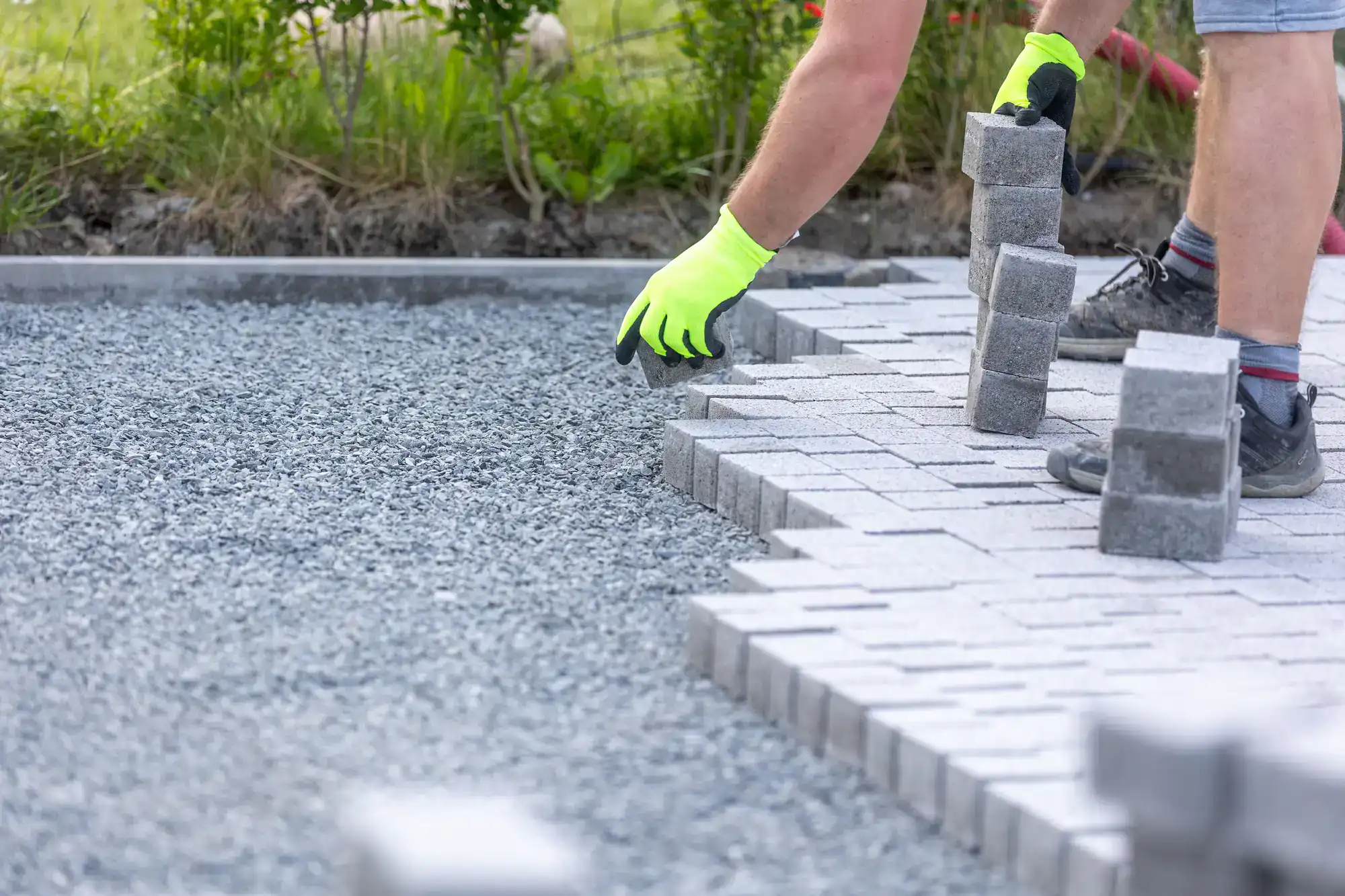
The pavers you see on the surface only perform if what’s underneath is built correctly. This is where patio paver installation services either prevent problems or create them.
Standard patio installation might use a 4-inch base. Outdoor kitchens need 6 to 8 inches of compacted crushed stone minimum. That extra depth isn’t padding. It’s what distributes weight from your appliances across a wider area so you don’t get pressure points that cause sinking.
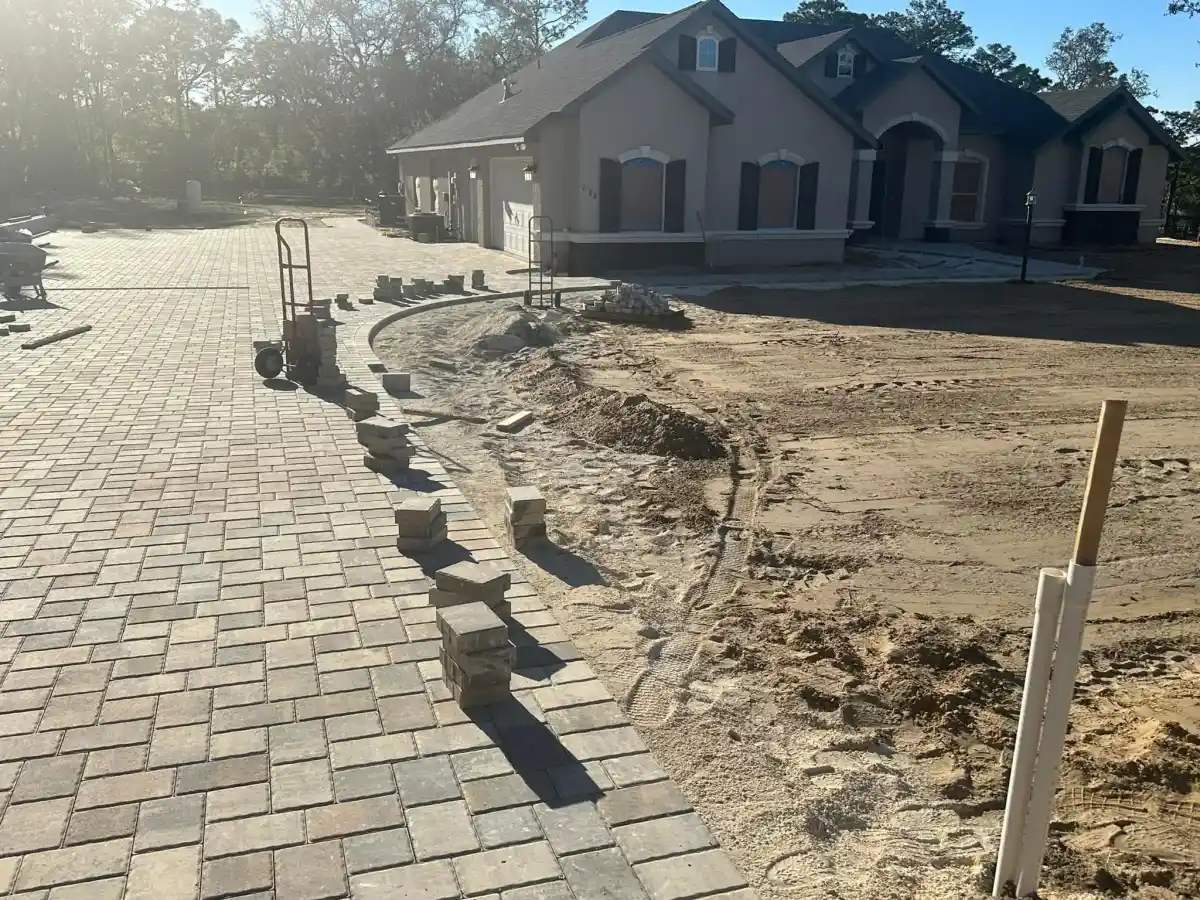
Here’s what happens below your pavers. Excavation goes deeper than most homeowners expect. The native soil gets compacted with a plate compactor until it’s rock solid. Loose soil will settle under heavy weight, which is how you end up with unlevel outdoor kitchens a year after installation. Next comes geotextile fabric. This tough material stops your crushed stone base from mixing into the soil while blocking weeds from pushing up through the bottom.
The crushed stone base goes in next, but not all at once. It gets added in layers called “lifts,” usually 2 to 3 inches thick. Each lift gets compacted before the next one goes down. This layering process creates an interlocking structure that spreads weight evenly instead of creating weak spots. Skipping this step is the number one reason paver patios fail under outdoor kitchen weight.
After the base is compacted, about an inch of coarse sand goes down. This bedding layer creates a perfectly level surface for pavers and allows for minor adjustments as each piece gets set. The sand gets screeded flat using a straight board pulled across guide rails. That’s why professional patio paver installation ends up level even when the ground started out sloped.
This multi-layer foundation system is what allows pavers to support outdoor kitchen appliances without the settling, cracking, and repair costs concrete creates. It takes longer upfront. But it’s the difference between a patio that lasts 30 to 50 years and one that needs replacement in 5.
North Central Florida gets the kind of rain that dumps inches in an afternoon and stops like nothing happened. When you’re building an outdoor kitchen, that water needs somewhere to go besides pooling around your grill base or refrigerator cabinet.
Pavers handle drainage better than concrete because water flows through the joints between each piece instead of sitting on the surface. But that only works if the base underneath moves water away from your home and appliances.
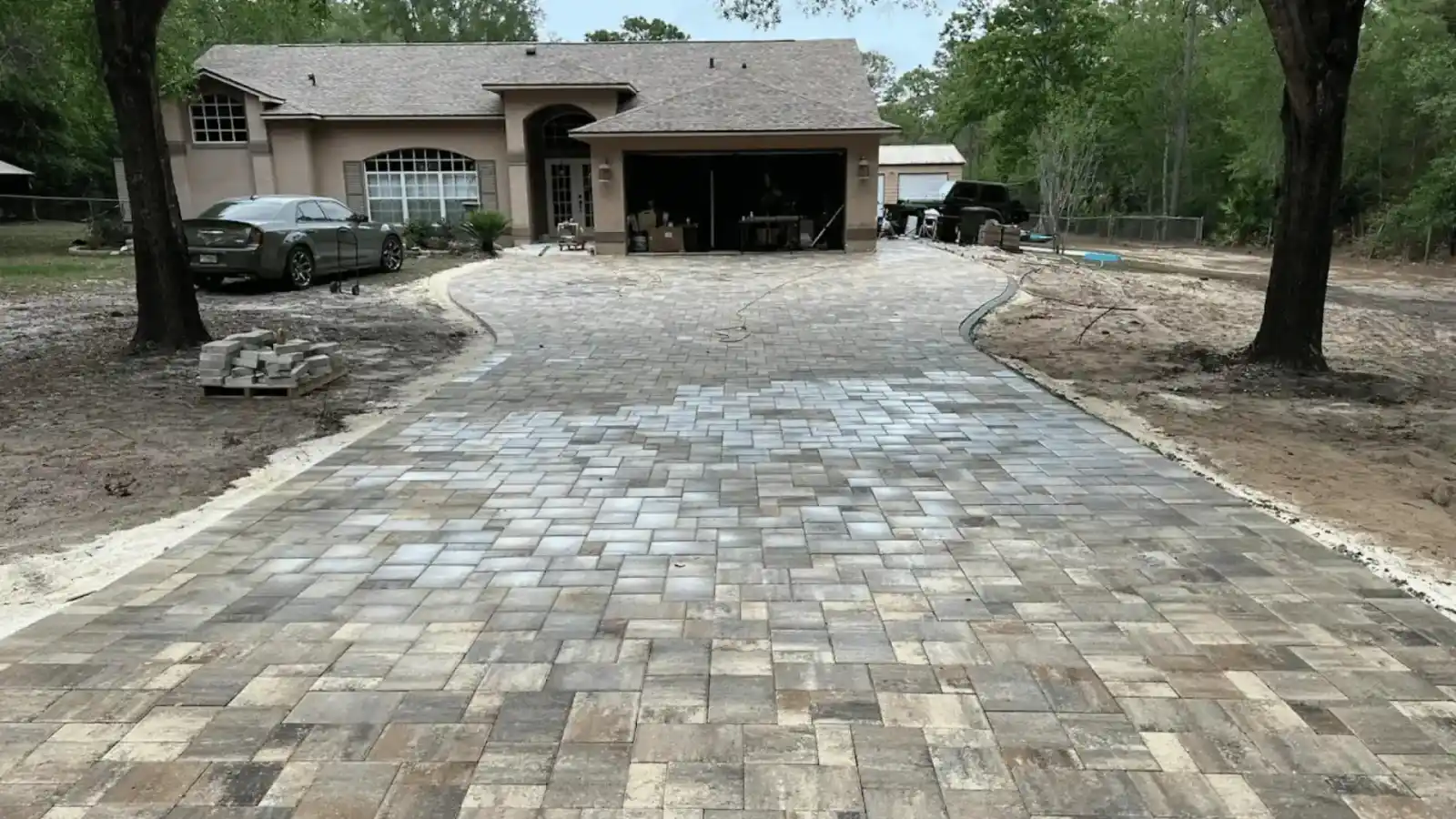
Professional patio paver installation builds a slight slope into the base layers. You won’t notice it standing on the finished patio, but it’s there, directing water away from your house foundation and preventing puddles around outdoor kitchen structures. The crushed stone base acts like a temporary reservoir. Water filters down through the paver joints, spreads out in the stone layer, and percolates into the soil instead of creating runoff that erodes your landscaping.
This drainage capability becomes critical with outdoor kitchen appliances. Water sitting around a grill base creates rust. Moisture around refrigerator cabinets causes corrosion and wood rot. The permeable nature of a properly installed paver system prevents these problems without requiring French drains or catch basins that add cost and complexity.
In Citrus County and throughout North Central Florida, afternoon storms are predictable and heavy. Your outdoor kitchen foundation needs to handle that reality. The alternative is concrete that pools water, creating slip hazards and slowly breaking down the surface until you’re replacing the whole thing at a cost that exceeds what proper installation would have run in the first place.
Paver sealing adds another layer of protection. Quality sealers like Seal ‘n Lock create a barrier that prevents water from penetrating the paver surface while still allowing the base to drain. That keeps your pavers from absorbing moisture that leads to mold, mildew, and that slippery film that makes outdoor kitchens unsafe to use after rain.
Want live answers?
Connect with a MainStreet Landscaping expert for fast, friendly support.
Color selection for your outdoor kitchen patio isn’t just aesthetics. It’s about creating a space that feels like it belongs in North Central Florida’s landscape while staying cool enough to use when the sun’s directly overhead.
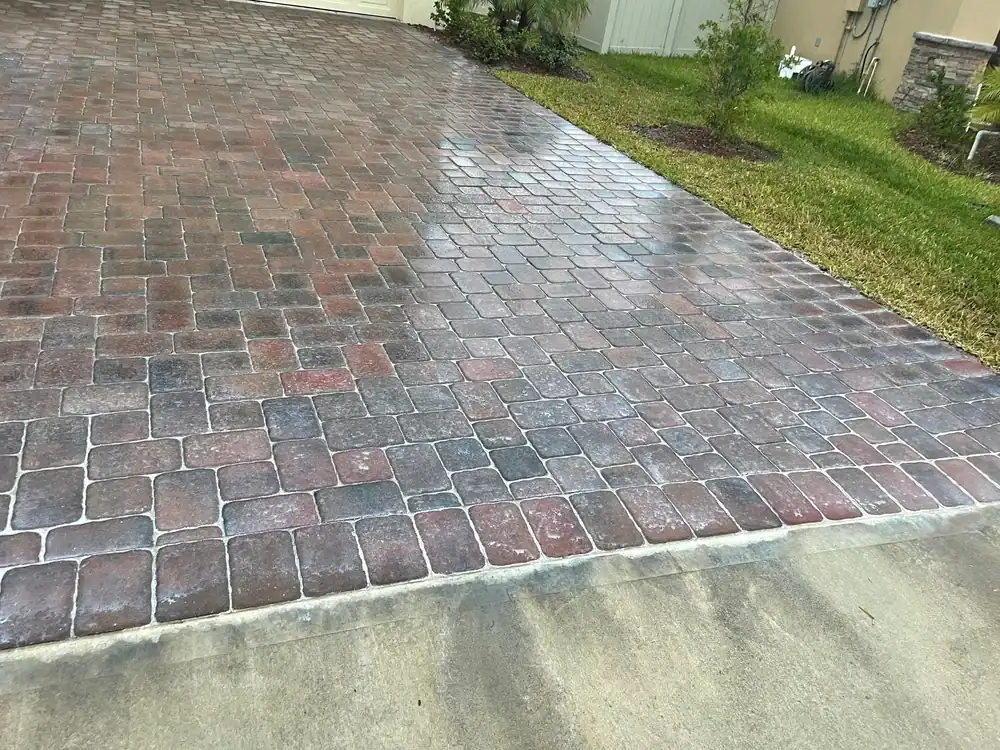
Florida’s natural color palette runs toward sandy beiges, warm terracottas, and earthy browns. These tones blend with the environment instead of fighting it. They also reflect more heat than darker colors, which matters when you’re standing barefoot on your patio in July while grilling.
Cool grays and soft blues create a more modern look while still providing heat reflectivity. They contrast nicely against Florida’s greenery without absorbing so much sun that your patio becomes too hot to stand on by noon. The key is understanding that dark pavers look dramatic in showroom photos but feel like walking on hot coals in direct Florida sunlight.
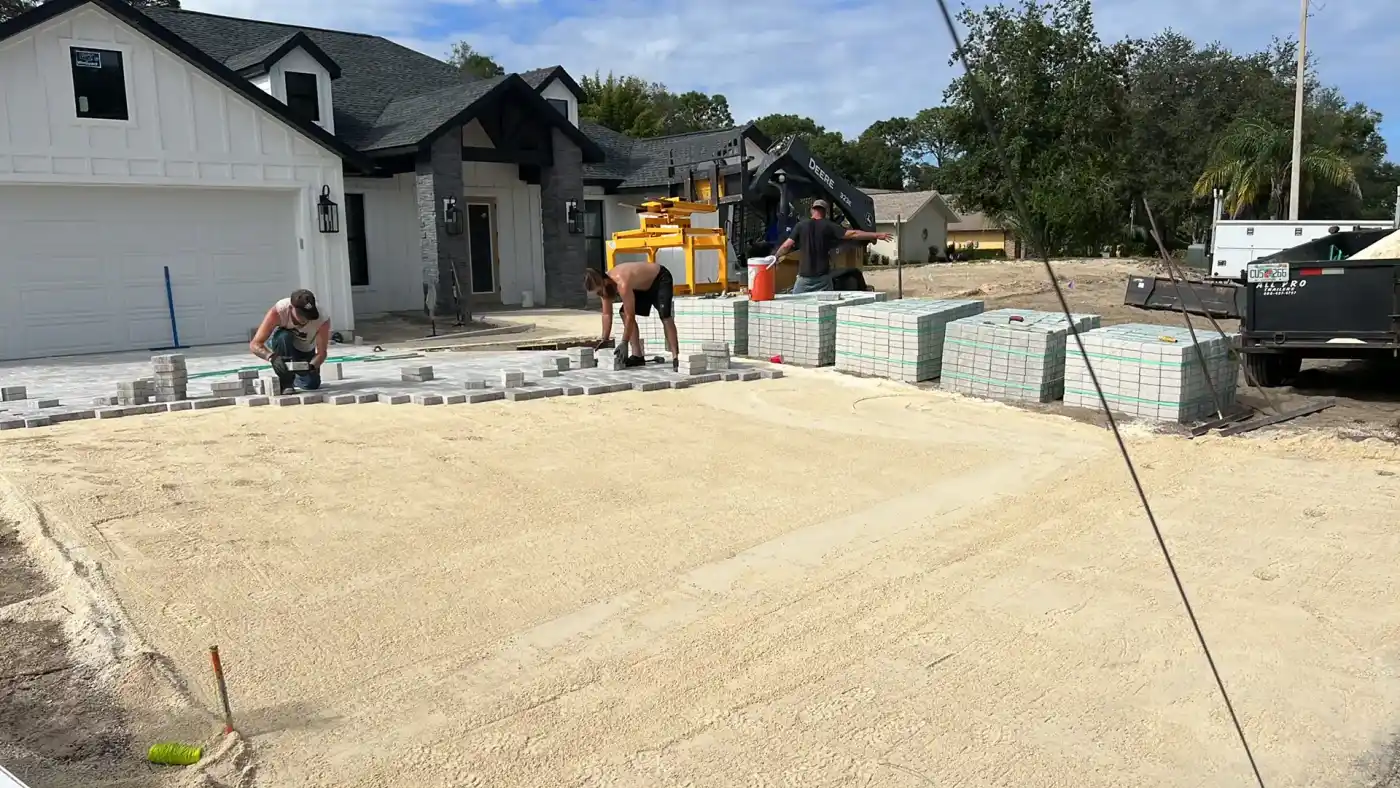
There’s science behind why some pavers stay cooler than others. It’s called albedo, which measures how much solar energy a surface reflects. Higher albedo means more sunlight bounces off instead of getting absorbed, which directly affects surface temperature.
Lighter-colored pavers have higher albedo. They reflect more of Florida’s intense sun, keeping surface temperature significantly lower than dark pavers that absorb heat. This isn’t a small difference. We’re talking about the gap between a surface you can walk on comfortably and one that sends you hopping back inside for shoes.
When you’re using an outdoor kitchen, you stand on those pavers for extended periods. Grilling. Prepping food. Entertaining guests who are also standing around your cooking area. If the surface is too hot to stand on, people avoid it. Your expensive outdoor kitchen becomes something you only use after sunset.
Sandy beiges, light grays, and soft terracottas offer heat reflectivity while providing enough visual interest to create an attractive space. They also hide spills and stains better than stark white pavers, which means your patio continues looking good between pressure washings.
Manufacturers that specialize in Florida paver installation understand this heat issue. Tremron, Belgard, and Flagstone all offer color ranges engineered to resist fading under constant UV exposure while providing the heat reflectivity North Central Florida homeowners need. These aren’t just pretty color chips in a showroom. They’re practical choices that determine whether your outdoor kitchen gets used year-round or sits empty half the year because it’s uncomfortable.
Paver sealing also plays a role in heat management. Quality sealers protect color from UV damage, which means your pavers maintain their reflectivity instead of fading to darker tones that absorb more heat over time. In Florida’s climate, paver sealing every 2 to 3 years isn’t optional if you want your outdoor kitchen to stay functional.
Your outdoor kitchen shouldn’t look like it was airlifted into your yard from somewhere else. It should feel like a natural extension of your home and the North Central Florida landscape. That cohesion starts with color selection that considers what’s already there.
Look at your home’s exterior first. What colors show up in your siding, roof, and trim? If your house features warm tones, earthy browns and terracottas create harmony. Neutral or modern exteriors often work better with cool grays and sandy beiges. You’re not trying to match exactly. You’re creating a color palette that feels intentional instead of random.
Your landscape matters too. Florida’s natural greenery provides a backdrop that works with most paver colors, but think about how your hardscaping interacts with existing plants, trees, and garden features. Pavers in natural stone tones tend to blend seamlessly, creating the impression that your outdoor kitchen has always been part of the yard.
Consider your specific location in Citrus County. Wooded areas with mature trees might call for darker earth tones that feel natural in shade. Open areas with full sun exposure benefit from lighter colors that not only stay cooler but also brighten the space and make it feel larger.
Tremron, Belgard, and Flagstone offer blended color options that combine multiple tones in a single pallet. These blends create visual depth and texture while making it easier to tie together different elements of your outdoor space. Instead of flat, uniform color, you get variation that mimics natural stone and adds character to your patio paver installation.
The practical side of color selection also factors in. Lighter colors show dirt and debris more readily, meaning more frequent sweeping. Darker colors hide stains better but absorb more heat. Medium tones in earthy ranges often provide the best balance, offering heat reflectivity and stain resistance while complementing Florida’s natural landscape without demanding constant maintenance.
When you’re working with a patio paver installation company that knows North Central Florida, you’ll get guidance through these choices based on your specific property conditions, sun exposure, and how you plan to use the space. The right color selection makes your outdoor kitchen feel like it belongs while performing well in Florida’s climate year after year.
Your outdoor kitchen is only as good as the foundation underneath it. Proper patio paver installation creates a base that supports heavy appliances, drains Florida’s afternoon storms, and stays cool enough to use during summer months without burning your feet.
The weight-bearing advantages of correctly installed pavers prevent the sinking and cracking problems concrete creates in North Central Florida’s sandy soil. Multi-layer base preparation with compacted crushed stone distributes load evenly while allowing water to drain instead of pool around your grill and refrigerator. Choosing paver colors that complement Florida’s natural landscape while reflecting heat makes your outdoor space functional year-round instead of just decorative.
We’ve been installing paver patios and outdoor kitchens in Citrus County since 1995. As authorized contractors for Tremron, Flagstone, and Belgard, and the exclusive Seal ‘n Lock distributor in our county, we handle everything from base preparation to paver sealing with the attention to detail Florida’s climate demands. When you’re ready to build an outdoor kitchen that lasts, we’re here to do it right the first time.
Article details:
Share:
Continue learning: