Discover how pool paver installation transforms standard Citrus County backyards into luxury resort-style retreats with slip-resistant, cool-touch surfaces designed for Florida's demanding climate.
Share:
Summary:
Your pool deck shouldn’t burn your feet or crack within three years. Yet that’s exactly what happens with most concrete installations in Citrus County. You’ve probably noticed it yourself—those spiderweb cracks spreading across your neighbor’s deck, or the way concrete becomes too hot to walk on barefoot by noon in July.
Pool paver installation solves both problems while giving you design options concrete can’t match. The right pavers stay cool enough for bare feet, provide traction when wet, and handle Florida’s ground movement without cracking. But the difference between a deck that lasts five years and one that lasts thirty comes down to what happens before the first paver gets laid. Here’s what you need to know about materials, installation methods, and why Citrus County’s climate demands a different approach than what works up north.
Florida’s climate isn’t kind to pool decks. You’re dealing with intense UV exposure that degrades unsealed surfaces, humidity that promotes mold growth, and sandy soil that shifts during heavy rains. Citrus County gets over 50 inches of rain annually, most of it concentrated in afternoon storms from June through September.
That combination creates specific challenges for any surface surrounding your pool. Water needs somewhere to go, and it needs to get there fast. Your deck also needs to handle temperature swings—from cold winter mornings to summer afternoons when surface temperatures can hit 145 degrees on dark concrete.
Pool paver installation addresses these issues through material selection and base preparation. Pavers are individual units that can expand and contract independently as temperatures change. When ground movement occurs—and it will in sandy Florida soil—pavers adjust without cracking. If one does get damaged, you replace that piece instead of jackhammering an entire slab.
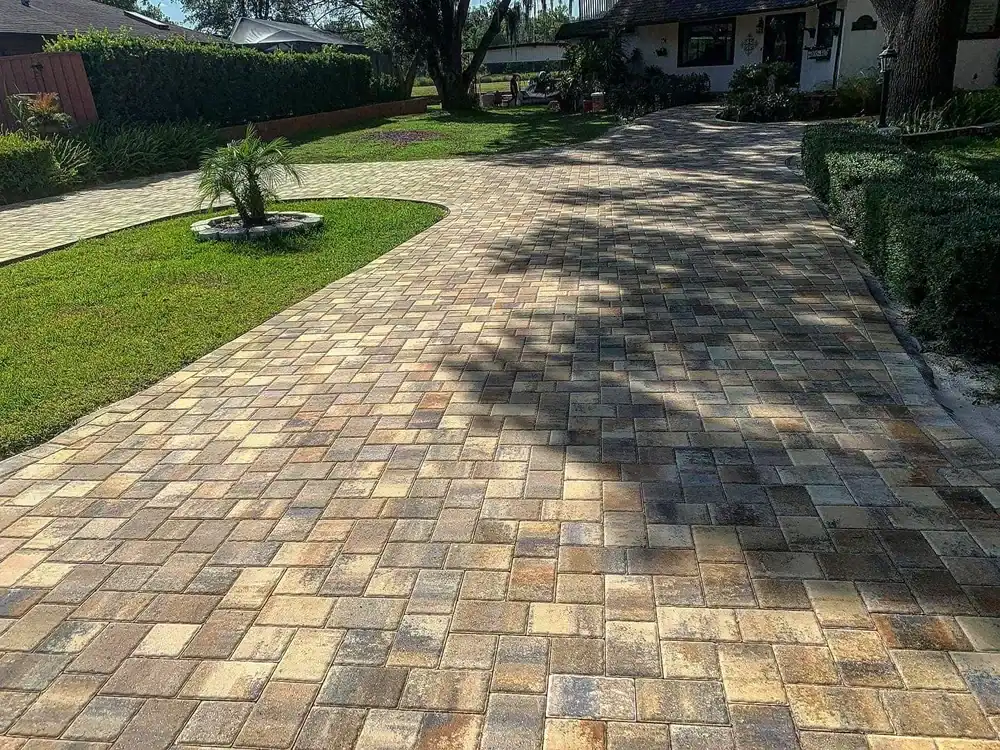
Not all pavers handle pool environments the same way. The three most common options in Citrus County are travertine, concrete pavers, and flagstone, and each performs differently in heat, moisture, and barefoot traffic.
Travertine stays the coolest. Its porous nature allows heat to dissipate instead of building up on the surface. You’ll see surface temperatures around 105 degrees in direct sunlight, which is warm but walkable. That same porosity also creates natural slip resistance—water absorbs into the stone rather than beading on top. The tradeoff is that travertine requires regular sealing to prevent staining from pool chemicals, sunscreen, and organic debris. Without proper sealing, acidic substances can etch the surface, creating dull spots that need professional restoration.
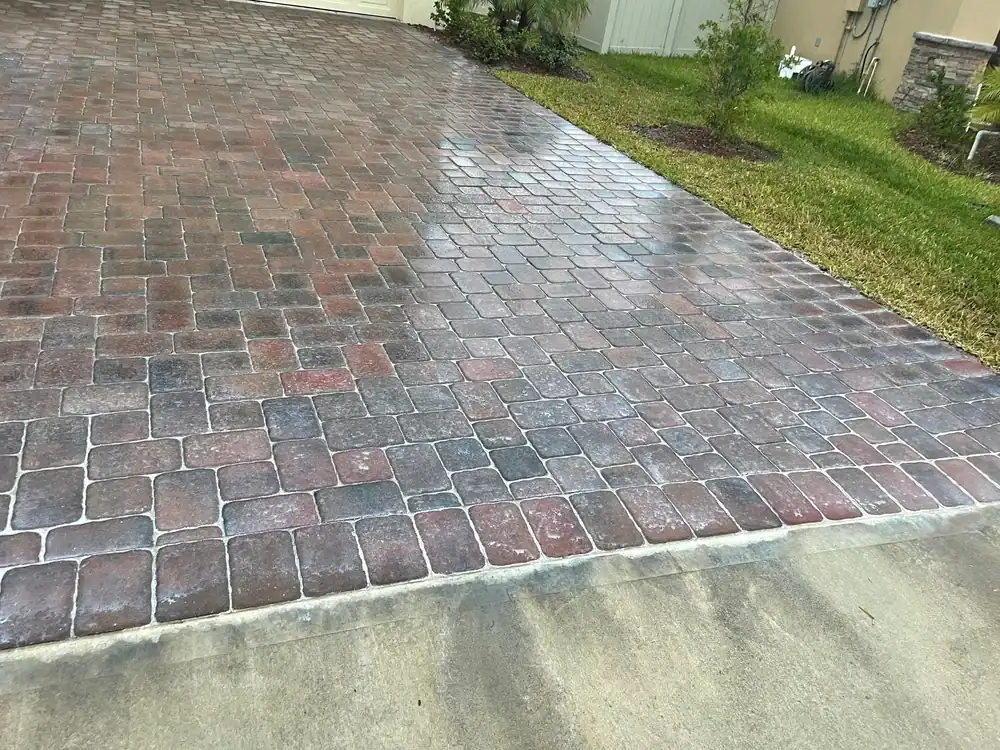
Concrete pavers offer the most design flexibility. They come in more colors, shapes, and finishes than natural stone, and manufacturers can replicate the look of travertine or flagstone at a lower cost. Quality concrete pavers from Tremron or Belgard typically last 15 to 25 years in Florida’s climate. They’re denser than travertine, which means less porosity and more resistance to staining, but that density also means they retain more heat. Lighter colors help—tans, creams, and light grays stay significantly cooler than darker tones. The key with concrete pavers is choosing products specifically rated for pool deck use, with textured finishes that provide grip when wet.
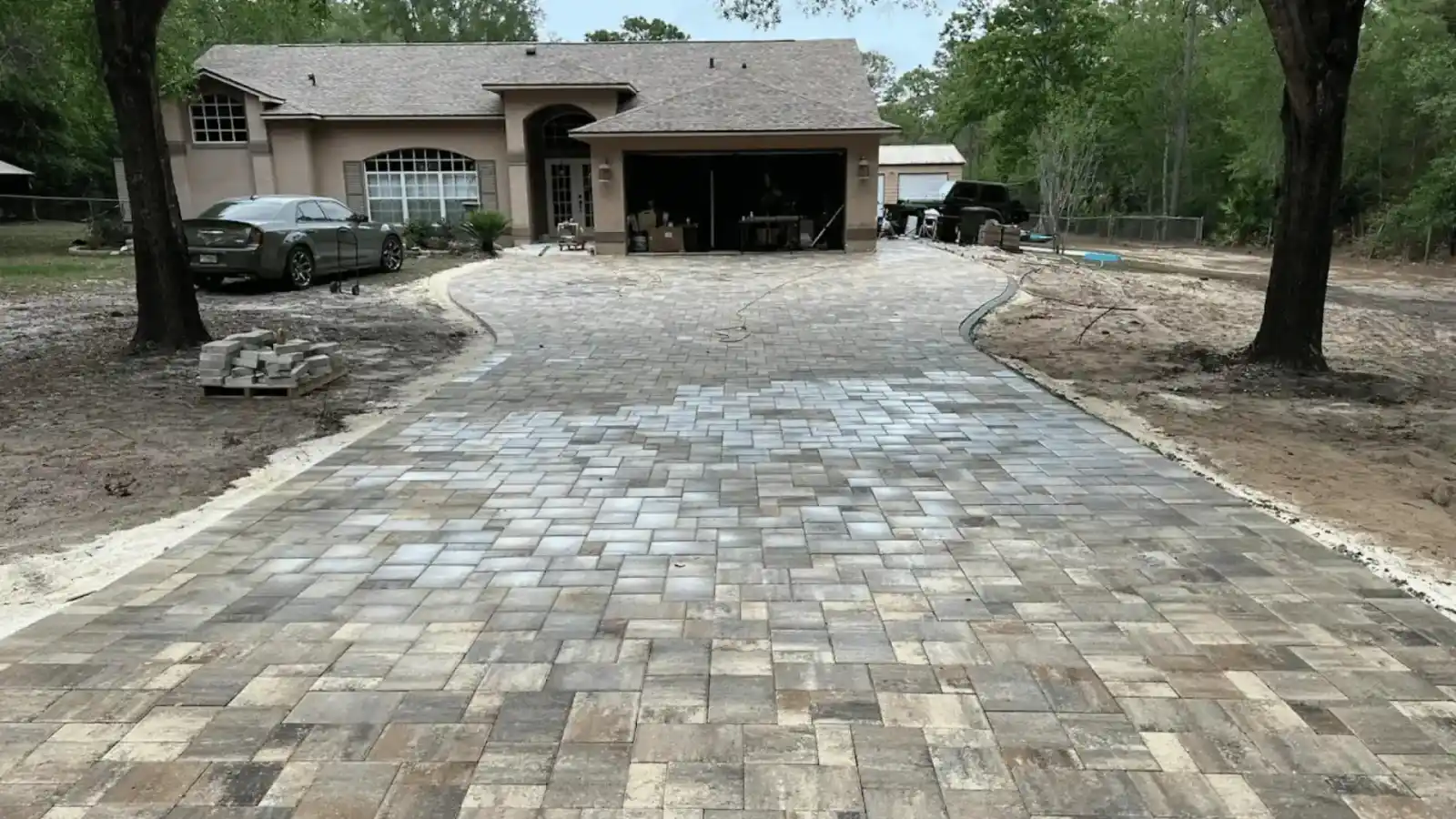
Flagstone represents the premium end of pool paver installation. It lasts 25 to 30 years with minimal maintenance, handles Florida’s heat and humidity without degrading, and offers a natural aesthetic that blends with landscaping. The irregular shapes and natural color variations create a high-end look that can’t be replicated with manufactured products. Installation costs run higher because each piece requires individual fitting, and the material itself costs more than concrete or travertine. But if longevity and aesthetics are priorities, flagstone delivers.
The wrong choice shows up fast in Florida. Dark pavers that looked great in the showroom become too hot to use by summer. Smooth finishes that seemed elegant turn slippery the first time someone steps out of the pool with wet feet. Porous materials that weren’t sealed properly start showing stains within months. These aren’t minor inconveniences—they’re safety issues and expensive fixes that proper material selection prevents from the start.
The pavers you see are only part of what makes pool paver installation work. What sits underneath—the base preparation—determines whether your deck lasts five years or thirty. This is where most DIY projects and cheap installations fail, and it’s the single biggest factor affecting long-term performance.
Citrus County’s sandy soil doesn’t provide stable support on its own. It shifts, settles, and washes away during heavy rains if you don’t build a proper foundation. A correctly installed pool deck starts with excavation deep enough to remove unstable material. For most pool deck applications, that means digging down 7 to 8 inches below the finished grade.
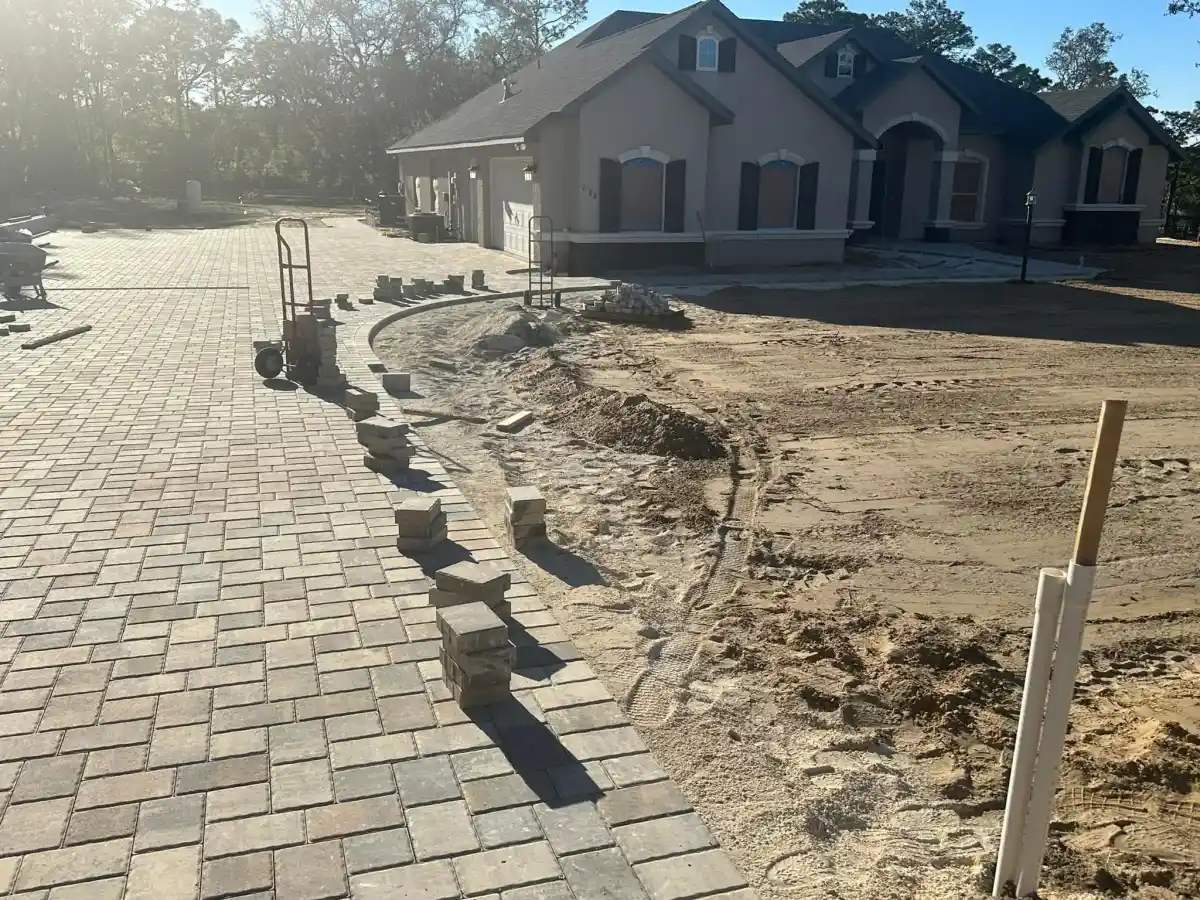
Once excavation is complete, the base gets built in compacted layers. Crushed aggregate goes down in 2 to 4-inch lifts, and each layer gets compacted with a vibratory plate compactor before the next layer goes on. This process creates a stable, load-bearing foundation that won’t settle or shift when Florida’s rains hit. Skipping this step—or doing it poorly—is why you see pavers sinking, creating low spots where water pools, or developing that uneven surface that makes furniture wobble.
Proper grading happens during base preparation, not after. Your deck needs to slope away from your pool and your home’s foundation at a minimum of one-quarter inch per foot. This ensures water moves where you want it to go instead of sitting in puddles or, worse, flowing toward your house. In Citrus County’s flat terrain, getting this slope right requires precision. Too little and water doesn’t drain. Too much and the deck feels noticeably tilted.
The sand layer that goes on top of the compacted base serves a specific purpose—it provides a level bedding surface for the pavers and allows for minor adjustments during installation. This should be about one inch of coarse sand, screeded flat and level. Some installers try to use sand to compensate for poor base preparation, laying down three or four inches to level an uneven foundation. That’s a shortcut that causes problems within a year or two as the excess sand settles unevenly.
After pavers are laid, polymeric sand gets swept into the joints. This isn’t regular sand—it contains polymers that bind when activated with water, creating a semi-flexible joint that resists washout and prevents weed growth. In Citrus County, where afternoon storms can dump inches of rain in an hour, regular sand washes out of joints within months. Polymeric sand, when properly installed and activated, stays in place for years.
Base preparation isn’t visible once the job is done, which is why some contractors cut corners here. But it’s also why you need to work with installers who understand Florida’s soil conditions and won’t skip steps that seem invisible but determine everything about how your deck performs long-term.
Want live answers?
Connect with a MainStreet Landscaping expert for fast, friendly support.
Professional pool paver installation in Citrus County typically takes five to ten days, depending on deck size and design complexity. Weather affects timelines more than anything—we can’t compact base materials or set pavers during heavy rain, and afternoon storms are common from June through September.
The process starts with permits. Citrus County requires building permits for pool deck work, especially when you’re changing the deck’s footprint, altering drainage patterns, or working within setback distances from property lines. This isn’t optional paperwork—it’s code enforcement ensuring your installation meets local requirements for drainage and structural integrity. We handle permit applications and required inspections, removing that burden from homeowners.
Site preparation follows permit approval. Existing surfaces get removed if you’re replacing old concrete or pavers. The area gets excavated to proper depth, and any irrigation lines or utilities in the work zone get relocated or protected. This phase also addresses drainage—if your property has standing water issues or poor runoff patterns, we correct those during excavation before base materials go down.
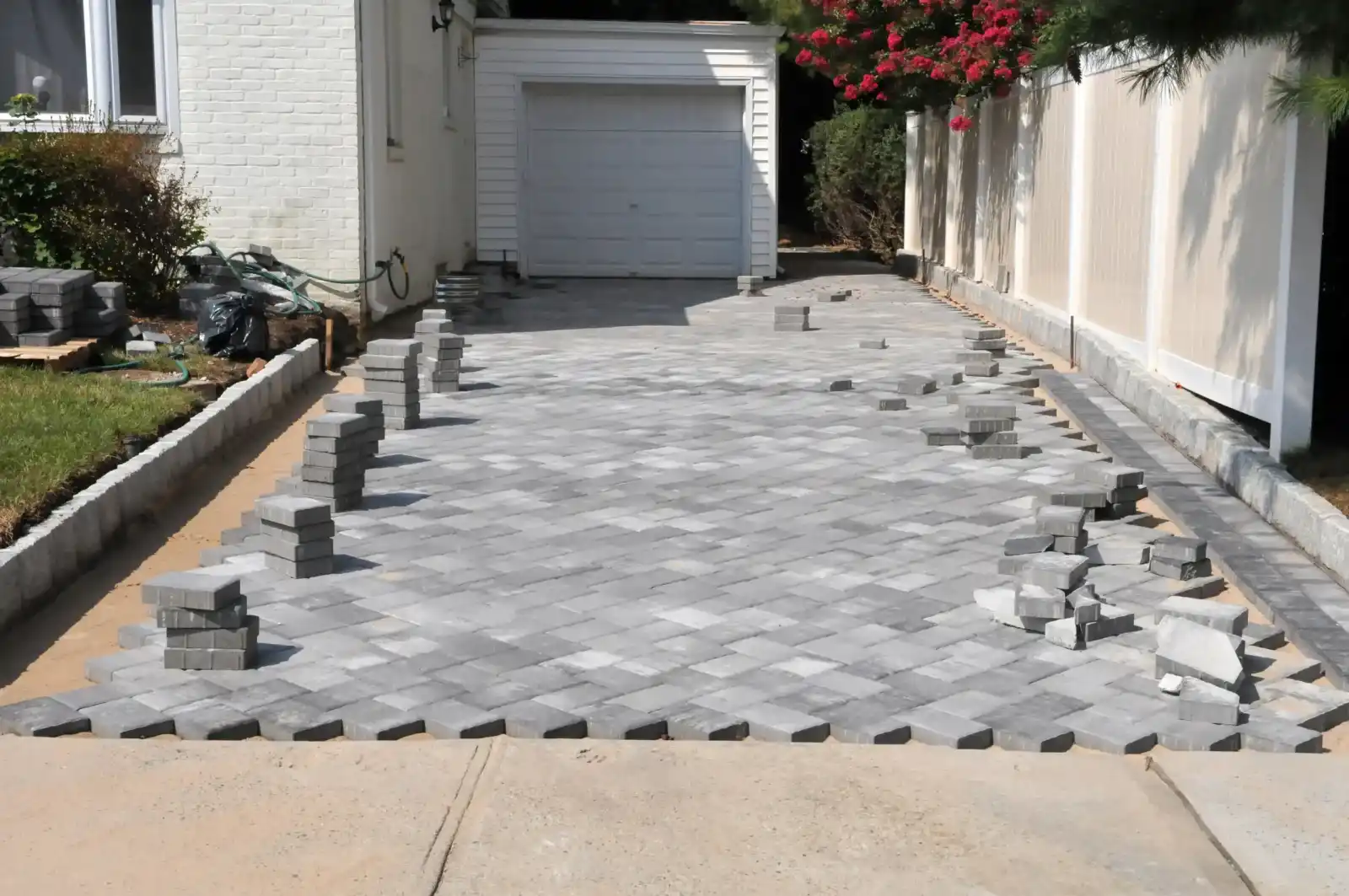
Once excavation is complete, base installation begins. Crushed aggregate gets delivered and spread in layers, with each lift compacted before the next goes down. This is the most time-consuming part of the process, but it’s also the most critical. Proper compaction at this stage prevents settling, shifting, and the uneven surfaces that develop when shortcuts get taken.
Edge restraints go in after the base is prepared. These are typically heavy-duty plastic or aluminum restraints that get spiked into the compacted base around the perimeter of your deck. They hold pavers in place and prevent spreading or shifting at the edges. Without proper edge restraint, pavers at the perimeter gradually creep outward, creating gaps and an unstable edge.
The bedding layer of sand gets screeded level across the compacted base. We use screed rails and a straight edge to create a perfectly flat surface at the correct height. This precision matters—variations in the sand layer translate directly to variations in the finished paver surface.
Paver installation starts from a straight edge, usually along the pool coping or a building wall. Each paver gets set into the sand bed, butted tight against adjacent pavers. String lines help maintain alignment, and we check frequently to ensure patterns stay consistent and lines stay straight. Curved areas around pools require more cutting and fitting, which is why circular or freeform pool shapes add time and cost to installation.
Cutting happens throughout the installation as pavers need to fit around pool edges, steps, or other features. We use wet saws with diamond blades to make clean, precise cuts. The quality of cutting work shows in the finished product—sloppy cuts create uneven joints and a less polished appearance.
After all pavers are laid, a vibratory plate compactor runs over the entire surface. This seats the pavers into the sand bed and ensures they’re level with each other. Then polymeric sand gets swept into all joints, filling them completely. The surface gets cleaned of excess sand, and the polymeric sand gets activated with a fine mist of water. This activation process is specific—too much water washes the polymers out of the joints; too little and they don’t activate properly. Getting this right requires experience and attention to detail.
Sealing typically happens two to four weeks after installation, allowing any residual moisture in the base to evaporate. The type of sealer depends on your paver material—penetrating sealers work best for natural stone like travertine or flagstone, while film-forming sealers suit concrete pavers. Quality sealers protect against staining, enhance color, and make maintenance easier. Cheap sealers fail after one season, requiring reapplication and adding to long-term costs.
Homeowners considering pool paver installation typically have similar questions about cost, timeline, and maintenance. Understanding these upfront helps set realistic expectations and avoid surprises during the project.
Cost varies based on material choice, deck size, and site conditions. In Citrus County, pool paver installation typically runs between $10 and $25 per square foot installed. Concrete pavers sit at the lower end of that range, travertine in the middle, and flagstone at the premium end. That price includes materials, base preparation, labor, and cleanup. Additional costs come from extensive concrete removal, complex drainage solutions, or custom design features like borders, inlays, or multi-level decks. These numbers are lower than national averages because Florida’s paver industry is competitive and material costs are lower in a state where outdoor living is standard.
Timeline depends on deck size and weather cooperation. A standard deck around a 15-by-30-foot pool usually takes three to five days if conditions are favorable. Larger decks or projects requiring extensive prep work take closer to a week. Weather delays are common—you can’t compact base materials in the rain, and afternoon storms can push timelines back. We’ve worked in Citrus County for years and plan around weather patterns, communicating when delays happen. If you’re working around HOA approval deadlines or have guests coming for season, mention that upfront so we can account for it in scheduling.
Maintenance requirements are minimal compared to concrete. Occasional pressure washing keeps pavers looking fresh. You might need to add polymeric sand every few years in high-traffic areas where it gets worn down. Sealing frequency depends on your paver type and the quality of sealer used—quality products last three to five years before needing reapplication. The beauty of pavers is that individual pieces can be lifted and reset if settling occurs, rather than replacing entire sections like you would with concrete. This repairability is one of the biggest long-term advantages.
Permits are typically required for pool deck work in Citrus County, especially if you’re changing the deck’s footprint, altering drainage patterns, or working within certain distances from your property line or home’s foundation. Simple paver-over-paver replacements where you’re matching existing size and slope sometimes don’t require permits, but most projects do. The permit process takes about two weeks and costs a few hundred dollars. It’s worth it because inspectors catch drainage problems before they become expensive foundation issues. We handle permit applications as part of our service, so you don’t have to deal with county offices or worry about missing required inspections.
Pavers can crack if something extremely heavy drops on them, but the installation method prevents the widespread cracking you see with poured concrete. Each paver can expand and contract independently as temperatures change. When ground movement occurs—and it will in Florida—individual pavers adjust without creating the stress fractures that crack concrete slabs. If a paver does crack or stain down the road, you replace that one piece instead of tearing up an entire section. This is why properly installed pavers last 25 to 30 years while concrete pool decks often need major repairs within 10 years.
Your pool deck is more than a surface around water. It’s where your family spends summer afternoons, where you entertain guests, and where bare feet need to walk safely without burning or slipping. Getting the installation right from the start means you’re not calling someone back in two years to fix settling, drainage issues, or cracked surfaces.
The difference between an installation that lasts and one that fails comes down to base preparation, material selection for Florida’s climate, and working with contractors who understand Citrus County’s soil conditions and building requirements. Pavers offer advantages concrete can’t match—cooler surfaces, slip resistance, individual repairability, and design flexibility. But those advantages only show up when the work gets done correctly.
If you’re ready to transform your pool area into a space that actually adds value to your home instead of becoming another repair project, we’ve been serving Citrus County since 1995 with the expertise and attention to detail that makes the difference between a job done and a job done right.
Article details:
Share:
Continue learning: