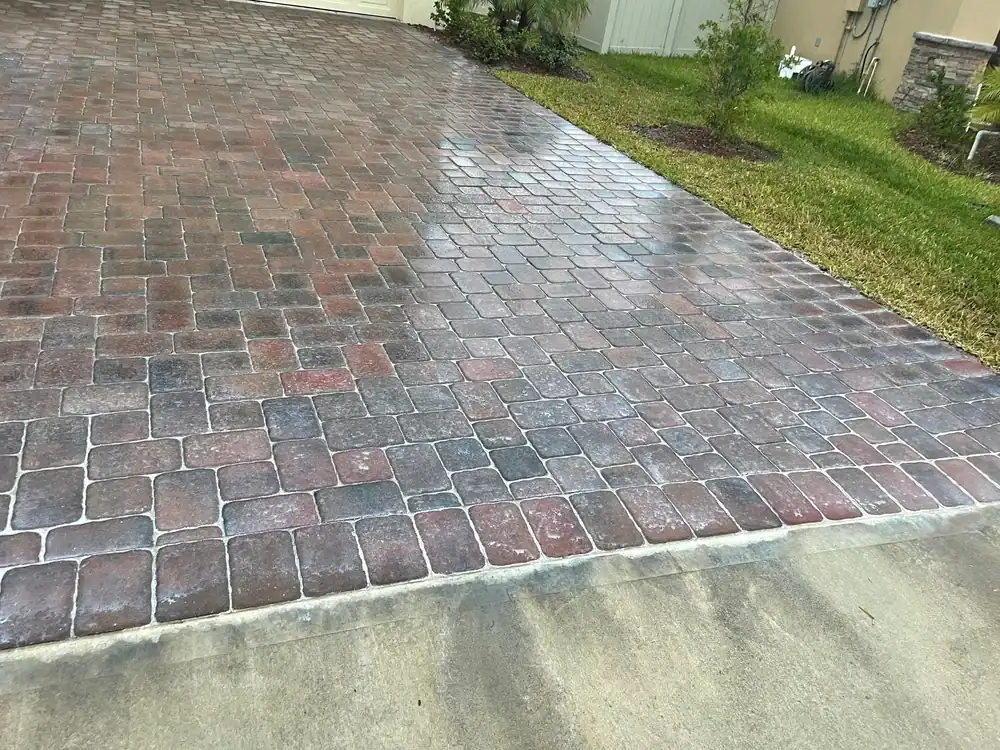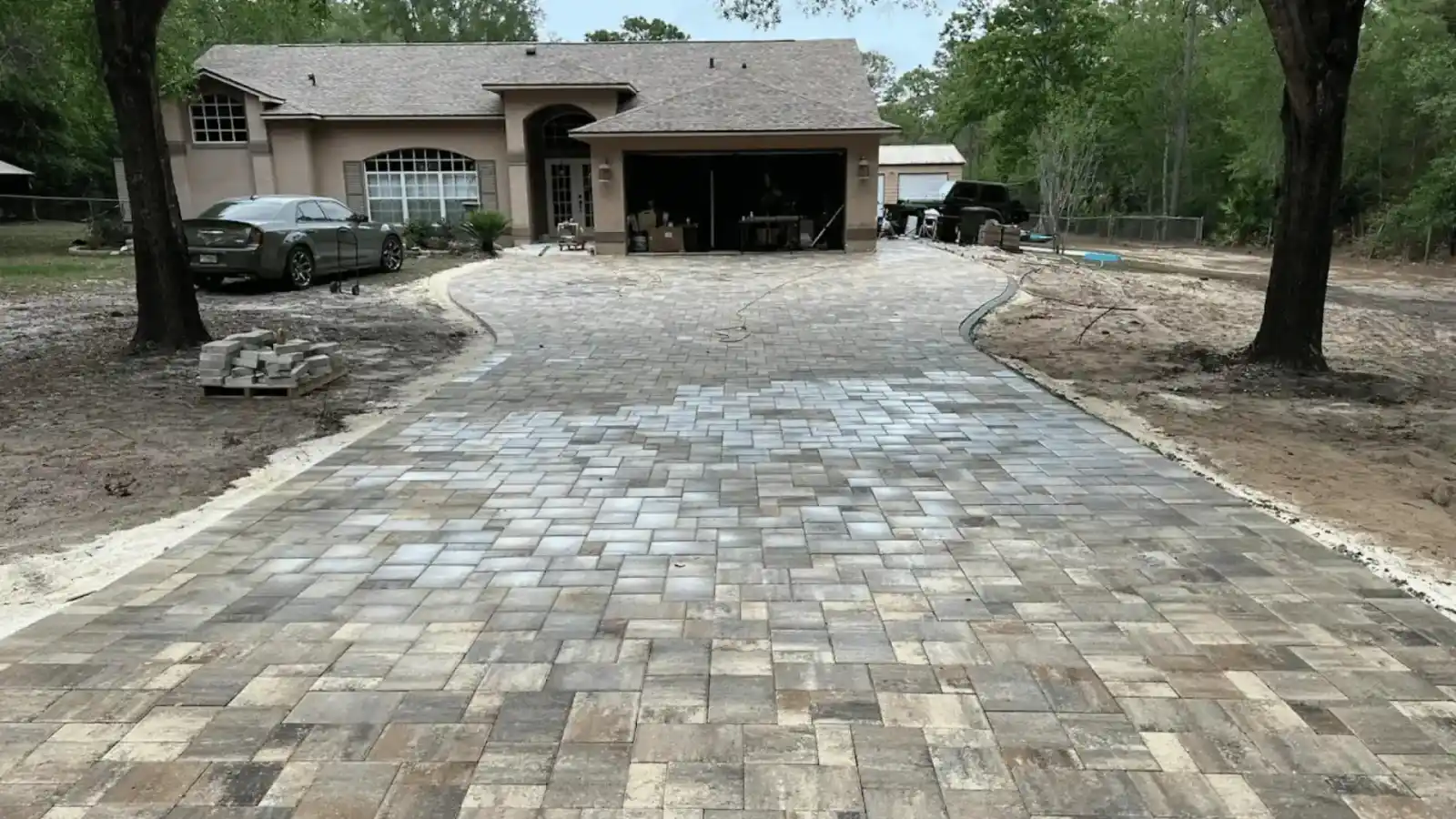
Your pavers face relentless humidity, heavy rain, and intense UV exposure every day. Here's how sealing protects your investment from North Central Florida's demanding climate.
Share:
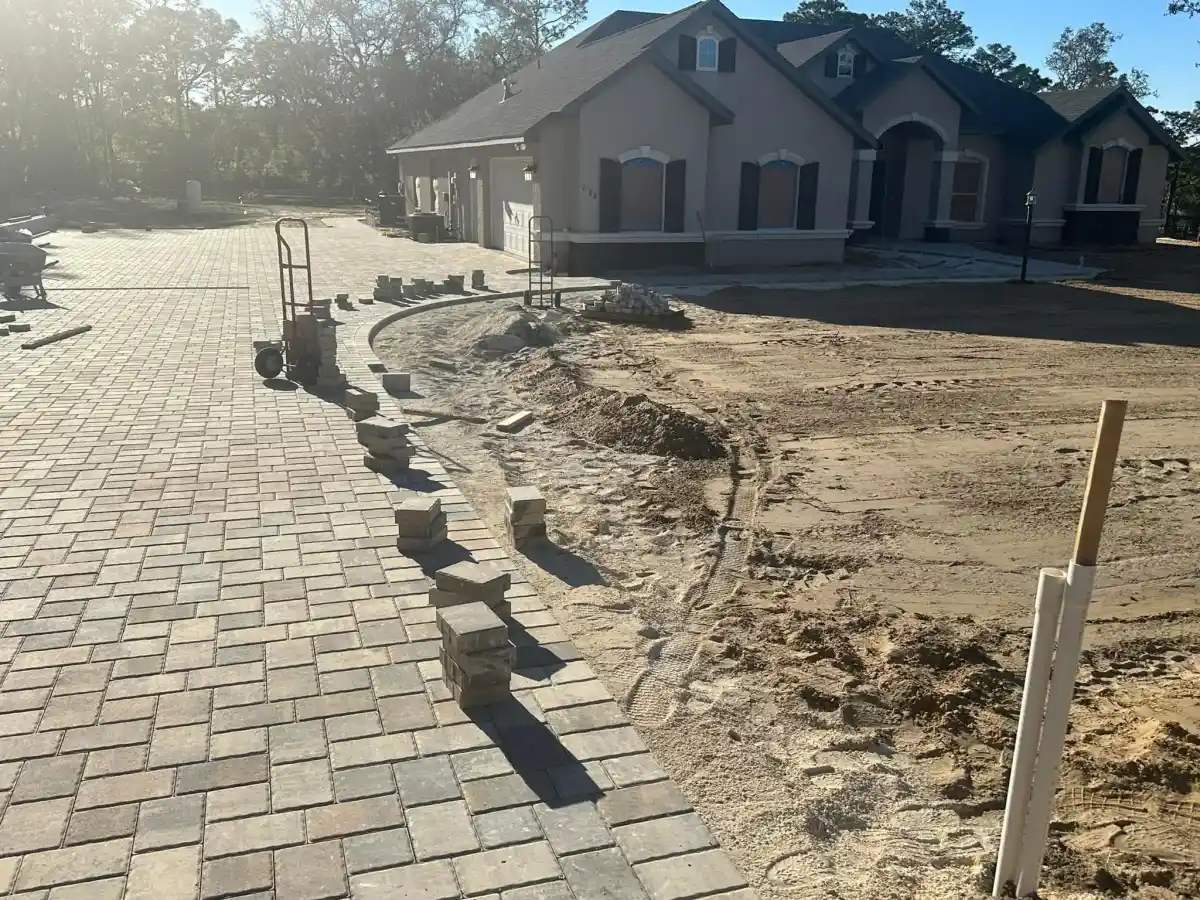
Summary:
You invested in quality patio paver installation because you wanted an outdoor space that lasts. But North Central Florida has other plans. The same humidity that makes our lawns green turns unsealed pavers into breeding grounds for mold. The afternoon thunderstorms that cool things down wash away the sand holding your pavers in place. And that beautiful color you chose? It’s fading to gray faster than you think.
Sealing isn’t about making pavers look shiny. It’s about creating a barrier between your investment and a climate that’s working against it every single day. Here’s what you need to know about protecting pavers in conditions this demanding.
Our climate is a triple threat. Humidity averages 65-75% during summer months, creating perfect conditions for organic growth. We get 50+ inches of rain annually, with daily afternoon thunderstorms from May through October that hammer exposed surfaces. Then there’s the sun—over 230 days of intense UV exposure that breaks down anything unprotected.
Pavers are porous. When you leave them unsealed in this environment, they absorb everything. Moisture soaks in and sits there, feeding mold and algae. Rain washes sand out of the joints with every storm. UV rays penetrate the surface and bleach out the color from the inside.
The damage compounds fast. What starts as a few dark patches becomes a slippery surface covered in algae. Joint sand disappears, pavers start shifting, and suddenly you’re looking at an uneven walkway that’s both ugly and dangerous. That’s not a maintenance issue anymore—that’s a structural problem.
Walk outside after a summer rain in Citrus County, FL and you’ll feel it—that thick, damp air that never quite dries out. Dew points run in the high 60s to low 70s every day during summer, which means moisture is constantly present even when it’s not raining. For unsealed pavers, this is a disaster.
Moisture doesn’t just sit on the surface. It soaks into the porous material and stays there, especially in shaded areas or around pool decks where water is constant. Mold, mildew, and algae don’t need much to thrive—just moisture and a surface to cling to. Within weeks of your patio paver installation, you’ll see dark patches forming. Within months, entire sections can be covered.
This isn’t just cosmetic. Algae makes surfaces slippery, particularly around pools and walkways where your safety matters. You’re not just dealing with an eyesore—you’re dealing with a liability. Pressure washing removes it temporarily, but without sealing, it comes right back because the conditions that caused it haven’t changed.
The cycle is exhausting. You clean, it returns. You clean again, it returns faster. Unsealed pavers in our climate require constant attention just to stay usable, and even then, the moisture penetration is causing damage you can’t see. The sealer blocks that moisture at the surface level, eliminating the conditions these organisms need to grow in the first place.
Those afternoon thunderstorms aren’t gentle. When 2-3 inches of rain falls in an hour, water doesn’t have time to drain slowly—it rushes across your surfaces, carrying everything loose with it. That includes the sand between your pavers.
Joint sand does more than fill gaps. It’s what keeps your pavers locked in place, preventing shifting and maintaining a level surface. When rain washes it out, pavers lose that support. They start moving under foot traffic or vehicle weight. Low spots develop. Edges sink. What was once a smooth, stable surface becomes uneven and potentially hazardous.
You can replace the sand, but without sealing, you’re just refilling it so the next storm can wash it out again. It’s not a one-time fix—it’s a recurring expense that never actually solves your problem. And the longer it continues, the more damage occurs. Pavers that shift repeatedly can crack. Edges that sink create trip hazards. The base underneath can erode, turning a simple sand issue into a complete reinstallation.
Sealing locks that sand in place. When sealer penetrates the joints, it hardens the sand like concrete, creating a solid bond that rain can’t disrupt. Water runs off the surface instead of carving channels through the joints. Your pavers stay level, stable, and safe, regardless of how hard it rains. That stability is what separates a patio that lasts decades from one that needs constant repairs.
Want live answers?
Connect with a MainStreet Landscaping expert for fast, friendly support.
Sealing creates a protective barrier on your paver surface and within the joints. It’s not a coating that sits on top—quality sealers penetrate into the porous material, bonding at a molecular level. This barrier blocks moisture from soaking in while still allowing vapor to escape from underneath, which is critical in Florida’s high water table environment.
The sealer also contains UV inhibitors that block the sun’s damaging rays from breaking down your paver surface. This keeps colors vibrant and prevents the surface erosion that makes pavers look aged and worn. At the same time, it repels stains, so spills from oil, pool chemicals, or organic debris sit on top instead of penetrating permanently.
In the joints, sealer hardens the sand, creating a solid mass that resists erosion and prevents weed growth. This stabilization is what keeps your pavers from shifting and maintains the structural integrity of your entire installation. It’s a complete protection system, not just a cosmetic treatment.
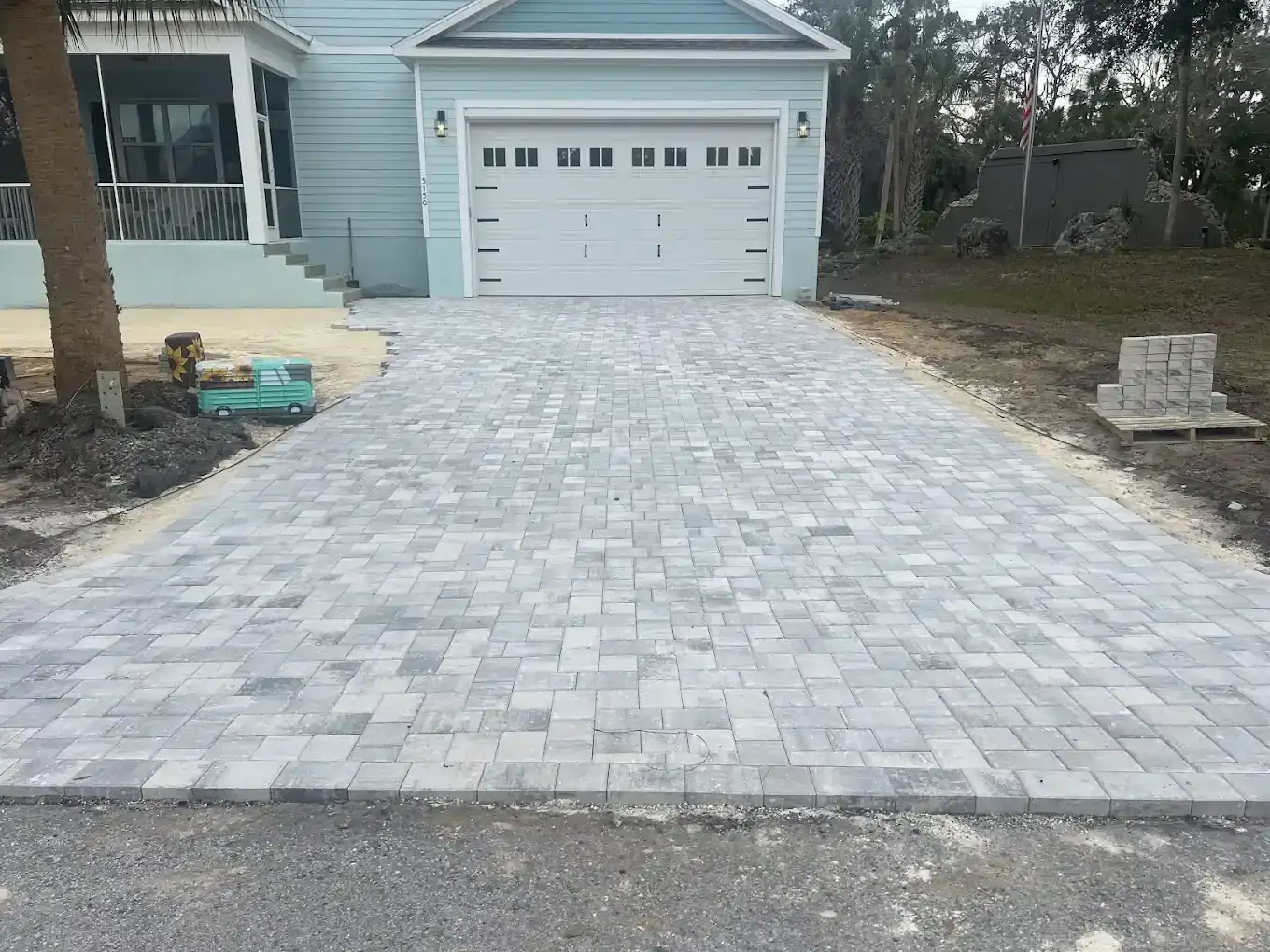
Professional paver sealing services start with thorough cleaning. Every bit of dirt, mold, algae, and old debris has to come off because sealer can only bond to clean surfaces. This isn’t a quick rinse—it’s methodical pressure washing that gets into every joint and pore, removing buildup that’s accumulated over time.
Once everything’s clean and completely dry—and that can take 24-48 hours in our humid climate—damaged joints get repaired and filled with commercial-grade silica sand. Not the polymeric sand from big box stores that fails in Florida humidity, but professional sand that hardens properly when sealed. This step is critical because the sealer’s effectiveness depends on having the right foundation.
Then comes the sealer application. Quality products manufactured specifically for Florida’s subtropical climate get applied in multiple coats using a flood technique. This ensures the sealer penetrates deep into your pavers and fully saturates the joint sand. The application rate, number of coats, and curing time all matter—shortcuts show up as failures within months.
Water-based sealers are essential in our climate. Solvent-based products trap moisture underneath and create that milky white haze you see on failed sealing jobs. Water-based formulations allow moisture vapor to escape from the ground while still blocking water from penetrating the surface. This breathability is what makes sealer last in conditions where moisture is constant.
In North Central Florida’s climate, professional sealing typically lasts 2-3 years. High-traffic areas like driveways may need attention sooner, while patios and walkways often go longer. The timeline depends on your exposure—full sun, heavy use, and constant moisture all accelerate wear.
You’ll know it’s time to reseal when water stops beading on the surface and starts soaking in within seconds. Color looks washed out, especially in sunny areas. Joint sand appears low or starts washing out after storms. Stains that used to wipe off easily now penetrate and won’t come clean. Weeds start appearing between joints after heavy rain.
One or two of these signs means your protection is wearing thin. Several at once means you’ve waited too long and damage has already started. The key is resealing before protection fails completely, not after problems develop. Preventative maintenance costs a fraction of restoration work.
The best sealing windows in Florida are March through May and October through December. These periods offer lower humidity and less frequent rain, allowing the sealer to cure properly on your surfaces. Avoid mid-summer when humidity peaks and hurricane season when moisture levels are unpredictable. Professional sealing applied during the right window, using products engineered for our climate, makes the difference between protection that lasts and sealer that fails prematurely.
Your pavers weren’t cheap, and they weren’t meant to be temporary. When installed and maintained correctly, they should last 30-50 years. But that only happens when you protect them from a climate that’s actively working against them every single day.
Sealing isn’t optional in North Central Florida—it’s preventative maintenance that saves you from expensive repairs or complete replacement down the road. It’s the difference between pavers that stay beautiful and functional for decades versus ones that deteriorate within years.
If your pavers have never been sealed, or if it’s been more than 2-3 years since the last application, now’s the time to address it. We’ve been protecting patio paver installation projects in Citrus County, FL since 1995, using commercial-grade products designed specifically for Florida’s demanding climate. We’re not the cheapest option—but we’re the ones you call when the cheap job fails.
Article details:
Share:
Continue learning: