Living along the Weeki Wachee River and its canal system is genuinely special — but the sandy, low-nutrient coastal soils that come with that address work against your landscape every single day. They drain fast, dry out faster, and give weeds exactly the open invitation they need. A properly applied layer of mulch changes that equation. It holds moisture in the root zone, slows evaporation during Hernando County’s dry season, and creates a physical barrier that stops weed seeds from getting the sunlight they need to germinate.
The waterway factor matters here in a way it doesn’t in most neighborhoods. When heavy summer rain hits unprotected beds on a canal-front or river-adjacent property in Weeki Wachee Gardens, it doesn’t just wash away your soil — it carries sediment and nutrients directly into the water. The Weeki Wachee River supports manatees, diverse fish populations, and one of the most ecologically intact spring systems in Florida. Mulch acts as a buffer that holds your soil in place and keeps that runoff from becoming your yard’s contribution to a problem no one in this community wants.
Beyond the environmental piece, the visual result is immediate. Fresh mulch gives every bed a clean, finished appearance that ties the whole property together — and in a community where waterfront homes command real value, that kind of curb appeal isn’t just cosmetic.
We’ve been family-owned and operating since 1995 — serving communities across Hernando and Citrus Counties long enough to know exactly what Florida’s coastal landscape demands. That’s not a tagline. It means the crew showing up at your Weeki Wachee Gardens property has worked in this soil, through these summers, on properties just like yours along Shoal Line Boulevard and the canal corridors feeding into the river.
We’re an Authorized Contractor for Tremron, Flagstone, and Belgard, and the exclusive Seal ‘n Lock distributor in our county. Those credentials reflect a level of accountability that most local lawn care operators simply don’t carry. When we commit to a job, the standard is what we call “beyond meticulous” — which in practice means complete coverage, clean edges, and the right depth the first time.
We also actively give back: hurricane cleanup assistance, Toys for Tots, youth skill-building programs, and membership in the Citrus County Chamber of Commerce. Military and First Responder discounts are available and genuinely applied.
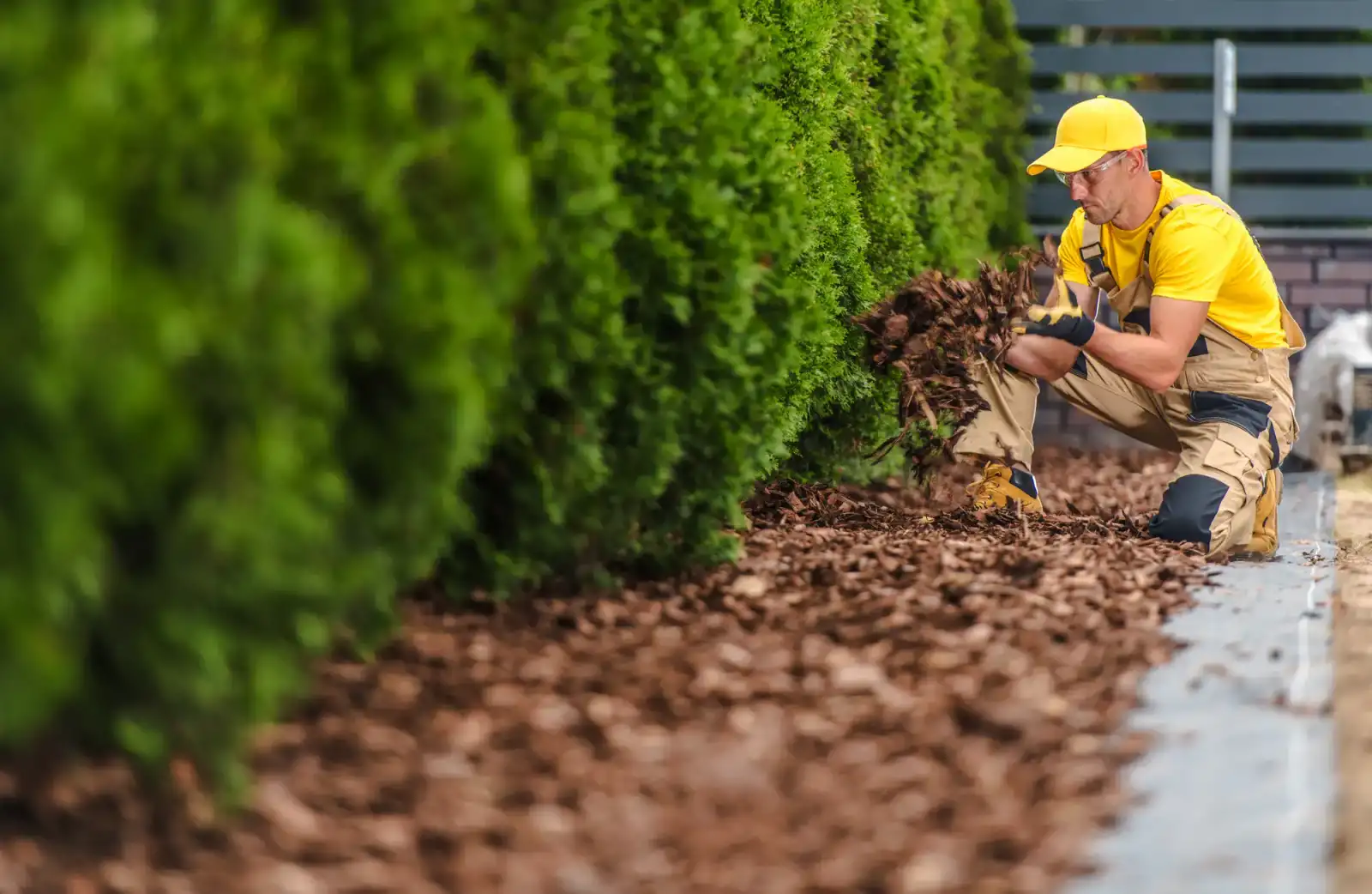
It starts with a straightforward conversation about your property — bed size, existing plant material, any areas near the water’s edge that need special attention. In Weeki Wachee Gardens, that waterway proximity genuinely shapes how we do the work. Beds that border canals or sit close to the river require careful, controlled application to avoid displacement during the heavy rain events that roll through Hernando County from June through September. That’s not something every crew thinks about, but it’s something we plan for.
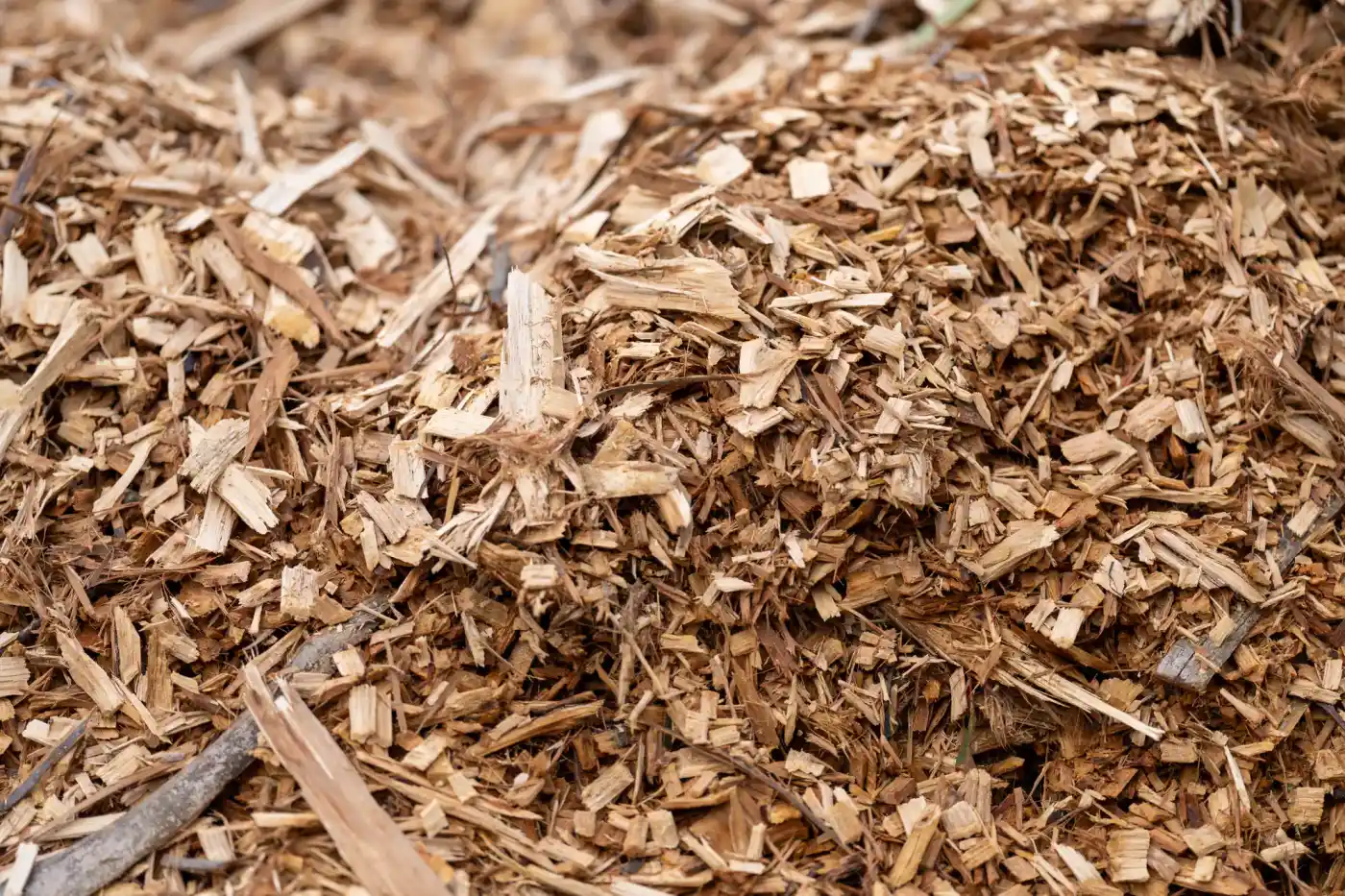
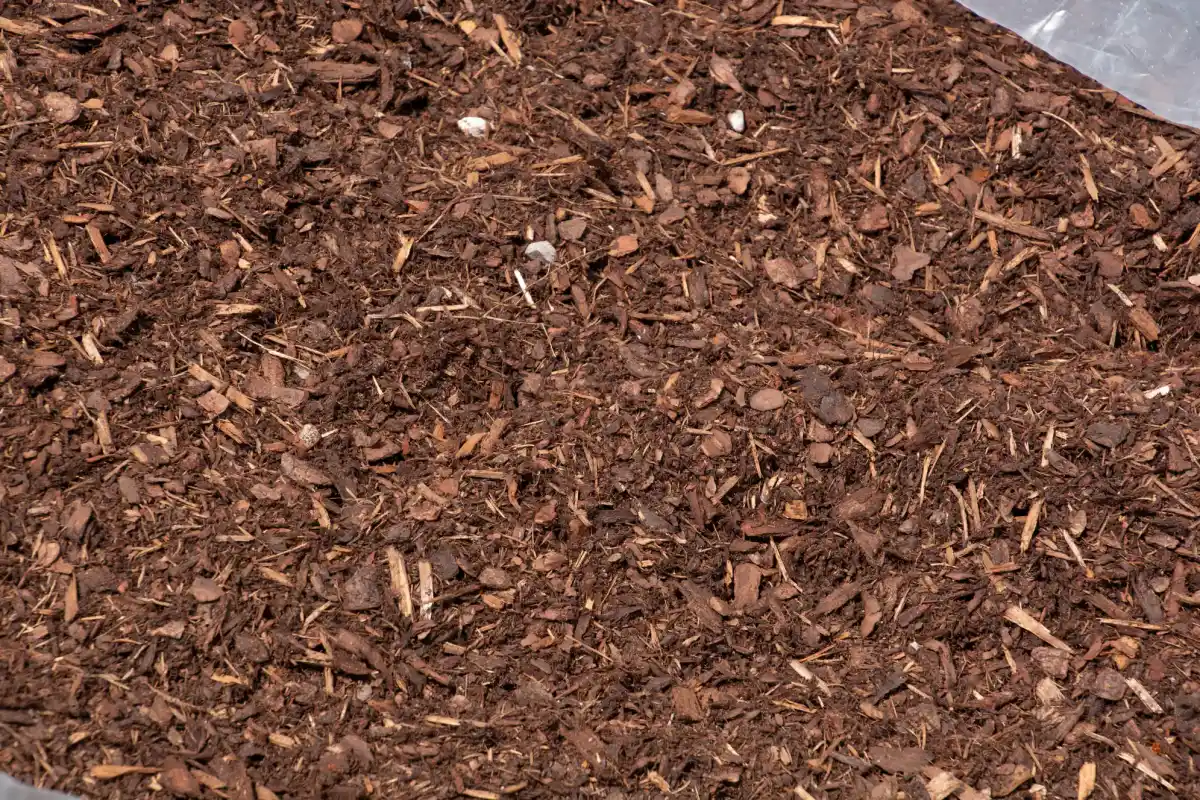
Once the scope is clear, we select the right mulch type for your specific conditions. Sandy coastal soils benefit most from organic options — pine bark, eucalyptus, or hardwood — that break down over time and add organic matter back into soil that naturally lacks it. The application depth matters just as much as the material. Too thin and you’re not getting the weed suppression or moisture retention you’re paying for. Too thick around root crowns and you’re creating the kind of moisture buildup that causes rot. The target is consistent two-to-three inch coverage across the entire bed.
After the mulch is down, we clean edges, clear excess from walkways and hardscape surfaces, and the finished result is exactly what it should look like — intentional, clean, and built to last through the season.
Ready to get started?
We provide residential mulching services in Weeki Wachee Gardens covering everything from foundation beds and ornamental borders to tree rings, slope areas, and any beds running along your canal or waterfront edge. Florida Statute §373.185 specifically recognizes mulching as a Florida-Friendly Landscaping practice — meaning that even in communities with HOA oversight, your right to mulch is protected under state law, though individual communities like Palm Grove Colony may specify acceptable mulch types or colors in their architectural guidelines.
The mulch materials we work with are selected for what actually performs in Zone 9a/9b conditions — not just what looks good in a photo. Organic mulches that enrich Hernando County’s sandy coastal soils over time, options that hold up through the wet season without compacting or developing fungal issues, and materials appropriate for properties where runoff management near the water is a real consideration. The goal is a result that looks sharp on day one and still holds up three months into the dry season.
Because we’re a full-service landscaping operation, mulching doesn’t exist in a silo. If your beds need edging, if your irrigation needs adjustment before the dry season hits, or if you’re thinking about hardscape work down the line, you’re already working with the team that handles all of it.
The sandy, low-organic soils common along the western Hernando County coast are the main reason mulch selection matters more here than in areas with heavier, nutrient-richer soil. For most properties in Weeki Wachee Gardens, organic mulches — pine bark, shredded hardwood, or eucalyptus — are the strongest choice. They do double duty: suppressing weeds and retaining moisture on the surface while gradually breaking down and adding organic matter back into soil that naturally lacks it. Over a few seasons, that decomposition genuinely improves your soil’s structure and water-holding capacity.
Inorganic options like rubber mulch or decorative stone don’t offer that soil-building benefit, though they can be appropriate in specific situations — high-traffic areas, decorative borders, or spots where you want a permanent solution with zero decomposition. The best choice depends on what’s planted, how close you are to the water, and what you’re trying to accomplish long-term. That’s a conversation worth having before anything gets ordered.
In most parts of Florida, once a year is the standard recommendation — and that holds true for Weeki Wachee Gardens. The combination of heat, humidity, and rainfall that defines Hernando County’s climate accelerates the decomposition of organic mulch faster than in cooler climates, so what looks sufficient in October can be noticeably thin by the following spring. The goal is to maintain a two-to-three inch layer consistently. Once you’re down below an inch of coverage, you’ve lost most of the weed suppression and moisture retention benefits you were paying for.
The best window for a fresh application in this area is late fall or early spring — before the dry season really sets in, or right as it’s ending. That timing gives your beds maximum protection heading into the months when moisture retention matters most. If you experienced any flooding or significant wind events from a tropical storm, it’s also worth checking your mulch depth after the fact, since storm activity can scatter or compact a layer that looked fine before the weather hit.
Yes — and it’s one of the more underappreciated reasons to mulch if your property borders a canal or sits near the river in Weeki Wachee Gardens. During Hernando County’s wet season, heavy rainfall on bare or loosely planted beds generates runoff that picks up soil particles, fertilizer residue, and organic matter and carries them directly into adjacent waterways. On canal-front properties in Weeki Wachee Gardens, that runoff has a very short path to the Weeki Wachee River and its estuarine tributaries.
A properly applied mulch layer acts as a physical buffer. It absorbs the initial impact of rainfall, slows the movement of water across the soil surface, and holds particles in place rather than letting them wash away. It also reduces your need for supplemental fertilizer applications — because mulch improves soil health over time, your plants become less dependent on chemical inputs that can contribute to nutrient runoff. For residents who chose this community specifically because of the river, the springs, and the manatee habitat, mulching is one of the simplest and most effective things you can do at the property level to support the water quality that makes this place worth living in.
It does — and Florida’s year-round growing season is exactly why it matters so much here compared to northern climates where weeds go dormant for several months. In Weeki Wachee Gardens, there is no real off-season for weed pressure. The warm temperatures and wet summers that make this part of Hernando County so livable also create ideal conditions for weed germination essentially every month of the year.
A consistent two-to-three inch layer of mulch blocks sunlight from reaching the soil surface, which is what weed seeds need to germinate. It won’t eliminate every weed — seeds that blow in on top of the mulch can still sprout — but it dramatically reduces the volume of weeds pushing up from the soil below, which is where the majority of your weed burden comes from. Most homeowners who maintain a proper mulch depth report spending significantly less time and money on weed control compared to unmulched beds. For properties with large ornamental borders or foundation plantings, that time savings alone often justifies the cost of a professional application.
Mulching around trees is not only safe — it’s one of the best things you can do for them, especially during Hernando County’s dry season. The key is keeping mulch a few inches away from the actual trunk. Piling mulch directly against the bark creates a moisture trap that can lead to rot and disease over time. Done correctly, with a clean gap around the base and a consistent layer extending out to the drip line, mulch dramatically reduces evaporation from the root zone and keeps soil temperatures more stable during both summer heat and the occasional cold snap that hits Zone 9a in winter.
For mature trees — the live oaks, palms, and established ornamentals that are common on Weeki Wachee Gardens properties — that root zone protection is especially valuable. These trees represent years of growth and real investment in your property. During the dry months from October through May, when rainfall drops off and sandy coastal soils lose moisture quickly, a properly mulched tree ring can be the difference between a tree that coasts through the dry season and one that shows stress by March.
Yes. We offer discounts for Military and First Responder clients, and that applies to customers in Weeki Wachee Gardens. Hernando County has a significant population of veterans, active-duty families, and first responders — many of whom chose communities like this one specifically for the quality of life, the waterfront access, and the quieter pace compared to the Tampa metro. Offering a real discount to those clients is a straightforward way of acknowledging that.
When you call or reach out, just mention your status and we’ll apply it to your service. There’s no complicated process or fine print attached to it. If you’re a veteran, active-duty service member, or work in law enforcement, fire, or emergency medical services, you qualify. It’s that simple.
Useful Links
Other Services we provide in Weeki Wachee Gardens