Stamped concrete looks like the budget-friendly choice. But in Citrus County's climate, the math changes fast. Here's what the full picture actually looks like.
Share:
Summary:
You’ve probably already gotten a quote for pavers and thought: that’s a lot more than I expected. Then someone mentioned stamped concrete, and suddenly it looks like the smarter move. We get it. The upfront number is real, and it’s not small.
But here’s the thing most comparison articles won’t tell you — the installation price is only part of what you’ll spend. In Citrus County, with sandy soil, relentless UV, and a hurricane season that tests everything you put in the ground, the cheaper option on day one isn’t always the cheaper option over time. This page is about the full picture.
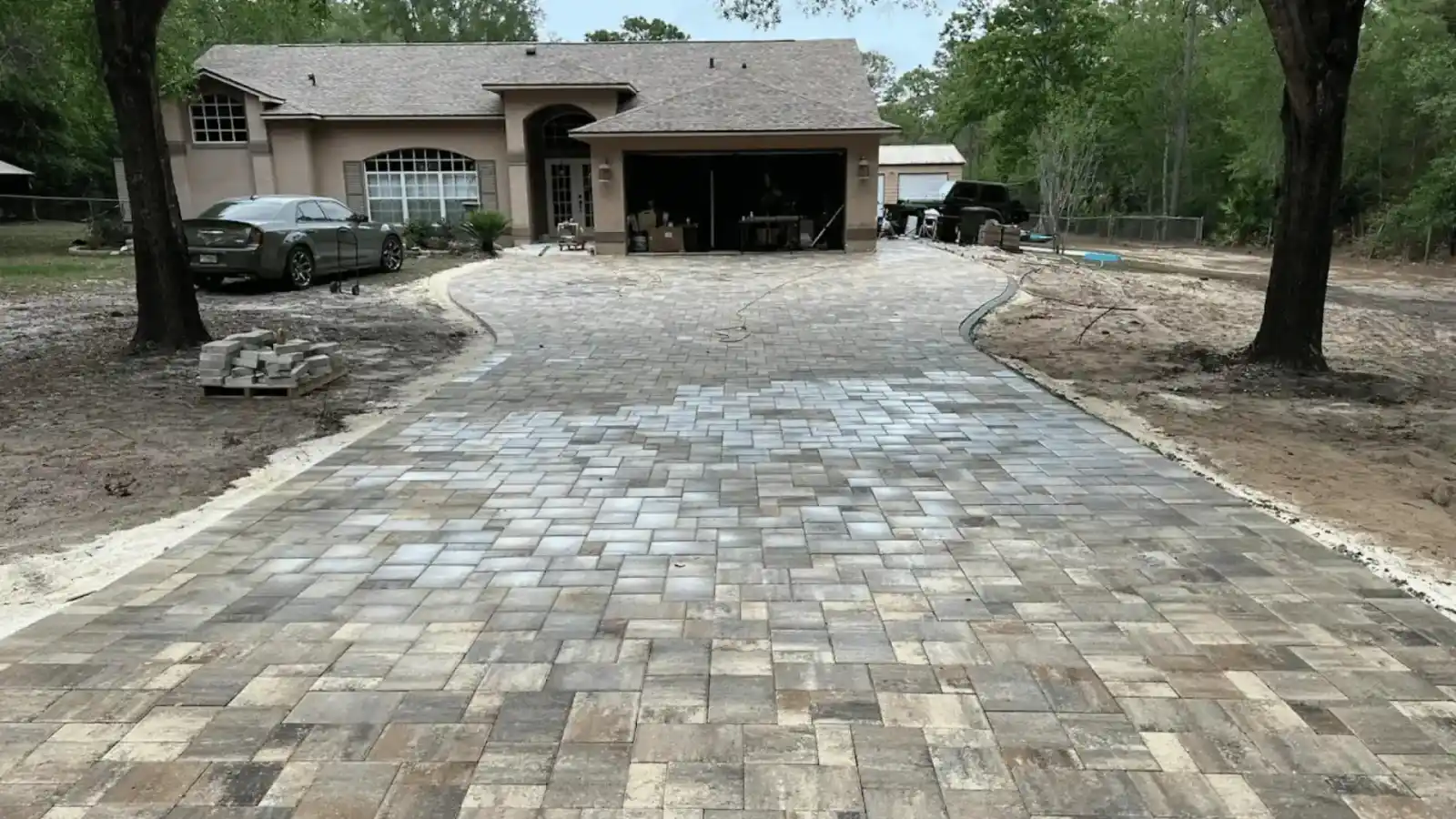
Let’s start with what’s real. Stamped concrete typically runs $12 to $18 per square foot in Florida for a new pour. Pavers generally come in between $20 and $30 per square foot installed, depending on the material, pattern complexity, and site conditions. For a paver driveway in Citrus County, most homeowners spend somewhere between $6,000 and $18,000, with the average landing around $12,000.
That gap is real, and we’re not going to pretend it isn’t. Stamped concrete is usually 10 to 25 percent less expensive upfront. The reason pavers cost more to install is mostly labor — laying individual units takes roughly twice as long as pouring and stamping a concrete slab. You’re paying for precision, and that time adds up.
So if you’re working with a tight budget and need something done now, stamped concrete isn’t a bad material. It’s a legitimate choice. The question is what happens after installation day — and that’s where the comparison gets more interesting.
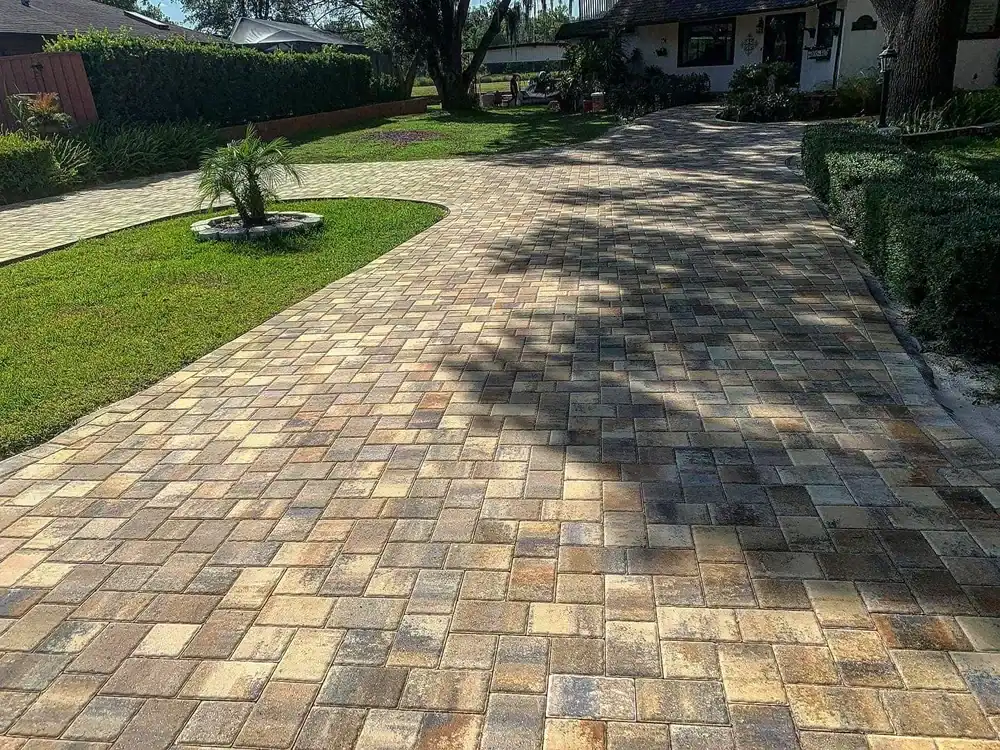
Here’s where the “cheaper” label starts to get complicated. Stamped concrete requires resealing every two to three years to maintain its appearance and protect the surface from moisture. In most parts of the country, that’s a manageable routine. In Citrus County, it’s more urgent — UV intensity and humidity break down sealers faster here than in cooler, drier climates. Skip a cycle, and you’re not just looking at a dull surface. You’re accelerating erosion and giving existing cracks a path to deepen.
And cracks are the real issue. Citrus County sits on Florida’s sandy coastal plain, and that soil moves. It settles, shifts with moisture, and responds to every heavy rain event. A concrete slab — even a well-installed one — is one rigid piece. When the ground beneath it moves, the slab doesn’t flex. It fractures.
In sandy soil conditions like ours, stamped concrete commonly develops cracks within five to ten years.
Repairing stamped concrete is where the cost story changes most dramatically. When a section cracks, you have to cut it out and patch it. The problem is that the patch never quite matches — the original surface has faded and weathered, and no matter how carefully the repair is done, you’ll see it. That’s not a contractor problem. It’s a material reality.
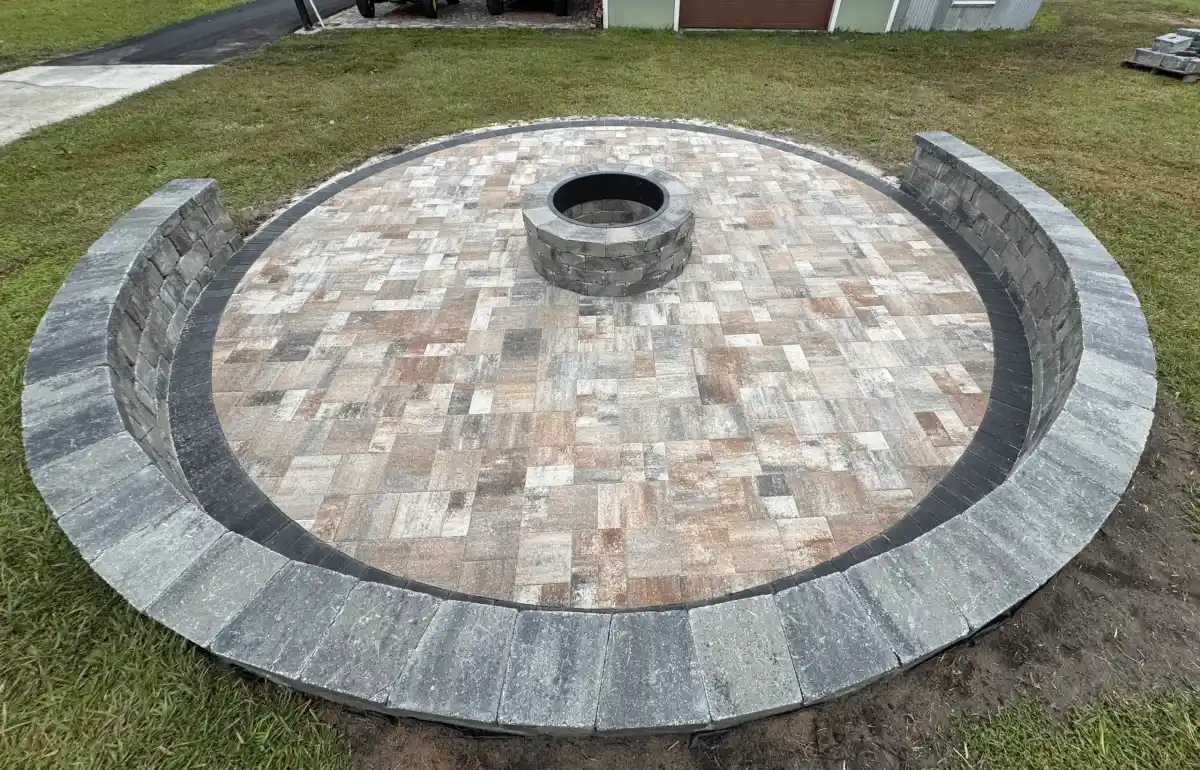
Pavers handle this completely differently. If an individual paver cracks or gets stained, we pull it out and replace it. Since pavers are manufactured with color integrated throughout the unit — not applied as a surface layer — a replacement blends in naturally over time. There’s no visible patch. No disruption to the overall look. And if a utility line ever needs access beneath your driveway or patio, we can pull up the relevant section and relay it without leaving a mark.
The structural difference matters too. Concrete pavers can handle up to 8,000 PSI of pressure. Standard poured concrete typically manages 3,000 to 4,000 PSI. Pavers also flex slightly with soil movement rather than cracking as a single unit. In Citrus County’s conditions, that flexibility isn’t a nice-to-have — it’s why paver installations hold up where concrete slabs fail.
Whether you choose stamped concrete or pavers, sealing is part of the equation. But the sealing conversation looks different depending on which material you’re working with — and it looks different in Citrus County than it does in most other markets.
For stamped concrete, the sealer is load-bearing in a real sense. It’s what holds the color in place and keeps moisture from working into the slab. Once that sealer degrades — which happens faster in Citrus County’s heat and humidity than anywhere in the northern half of the country — the surface is exposed. Resealing is non-negotiable if you want the material to perform the way it was installed.
For pavers, sealing is about protection and longevity, not structural survival. A quality sealer locks in the joint sand, prevents weed growth, enhances color, and makes the surface easier to clean. It extends the life of the installation and keeps it looking the way it did when it was first laid. But a paver that hasn’t been recently sealed isn’t failing — it’s just less protected than it could be.
We’re the exclusive Seal ‘n Lock distributor in Citrus County. That means we’re the only company in the county that can apply this specific product, which is one of the better paver care systems available. When we install your pavers, we can also seal and maintain them with a product no other local contractor offers. That matters for long-term cost because consistent, quality sealing is what separates a paver installation that looks great at year fifteen from one that looks tired at year seven.
Citrus County homeowners also use their outdoor spaces year-round in a way that northern markets simply don’t. Your patio, pool deck, or driveway doesn’t get a winter break. It’s in continuous use twelve months a year, which amplifies every maintenance difference between materials. That’s the context in which the sealing question should be answered — not the national average, but what actually happens here.
Want live answers?
Connect with a MainStreet Landscaping expert for fast, friendly support.
This is the question most people are really asking when they search stamped concrete vs. pavers cost. The honest answer: pavers cost more to install and less to own — in most cases, especially in Florida.
The upfront gap is real. But when you factor in resealing every two to three years, the cost of crack repairs that never match perfectly, and the possibility of significant repour costs if damage is extensive, the savings from stamped concrete tend to erode within the first repair cycle. By year ten or fifteen, the total cost of ownership often favors pavers — particularly in a climate that accelerates every maintenance timeline.
There’s also the property value side of the equation. Quality hardscape installation can boost home values by 15 to 20 percent. In a market where Citrus County’s median property values rose nearly 10 percent in a single year, that’s not a small consideration. Buyers looking at homes here know what Florida weather does to outdoor surfaces, and they notice the difference between a paver installation that’s held up and a patched concrete slab.
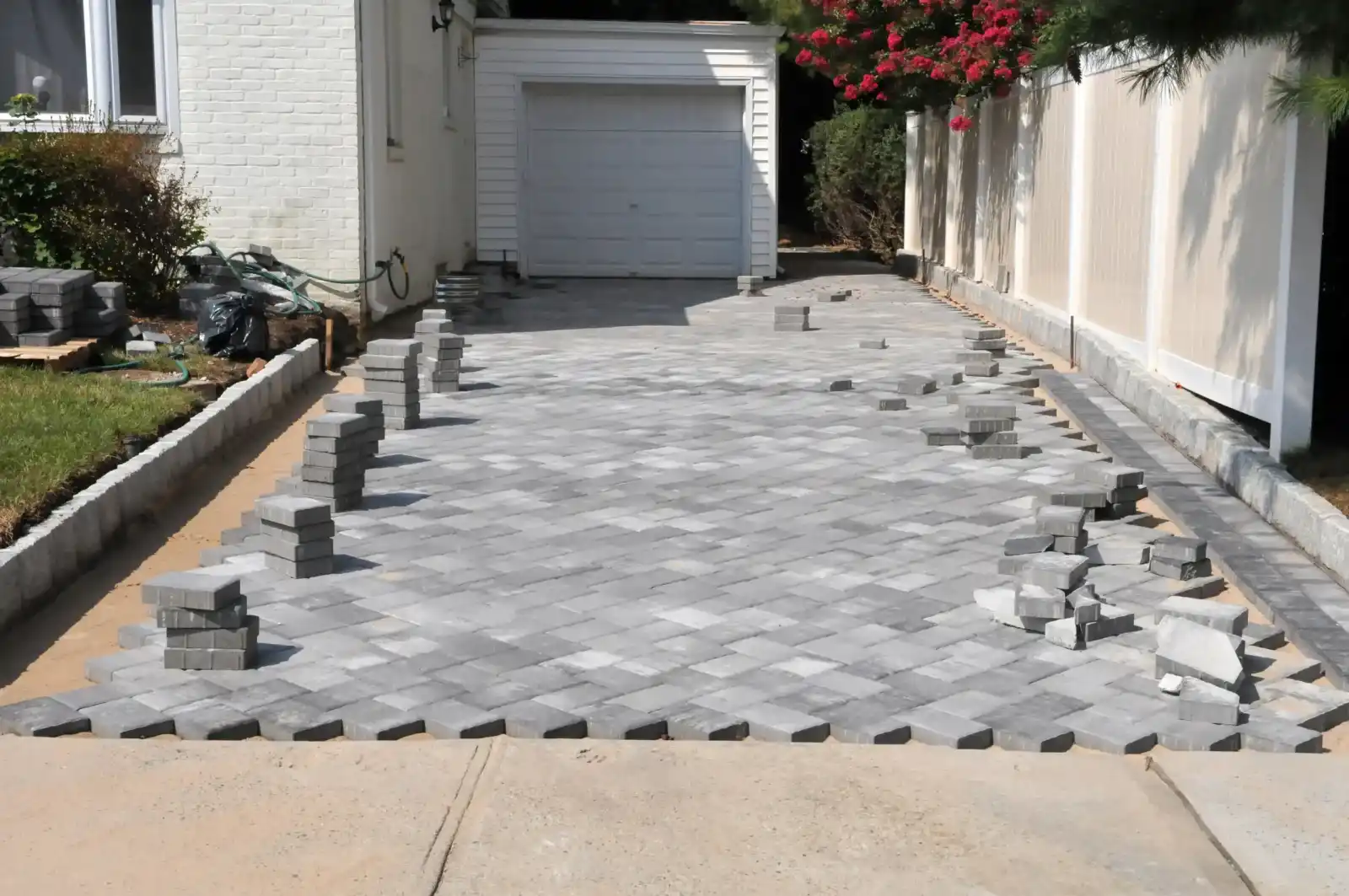
Most people don’t know that “authorized contractor” status is something a company has to earn — and that it directly affects what warranty coverage you receive on your installation.
To become a Belgard Authorized Contractor, a company must have at least one ICPI-certified staff member, meet Belgard’s installation standards, carry proper insurance, and hold a valid state license. It’s not a title you buy. It’s a qualification that manufacturers grant to contractors whose work meets their standards — and it’s tied to the manufacturer’s warranty coverage on the product.
We’re authorized contractors for Tremron, Flagstone, and Belgard. That means when we install your pavers, the installation meets the standards those manufacturers require to back their products. Belgard pavers, for instance, are warrantied to last the life of the home, with a transferable warranty. That warranty is only in play when the installation is done by an authorized contractor. Hire someone without that status, and you’re on your own if something goes wrong.
This matters for the cost comparison in a direct way. A paver installation done without proper base preparation, by a contractor who hasn’t been vetted by the manufacturer, without quality sealing — that’s a different product than what we deliver. The sticker price might look similar. The long-term cost won’t be. Pavers installed to manufacturer standards, sealed with the right products, and backed by a transferable warranty are a fundamentally different investment than pavers installed by whoever had availability.
When you’re comparing quotes, this is the question worth asking: is this contractor authorized by the manufacturer whose product they’re recommending? If they’re not, the warranty that’s supposed to protect your investment doesn’t apply.
**Is stamped concrete slippery near a pool?**
This comes up constantly, and it’s worth a direct answer. Sealed stamped concrete can be slippery when wet — which is a real safety concern on a pool deck where bare feet and water are the norm. Pavers have natural texture and joint structure that provides better traction, even when the surface is wet. If you’re comparing materials specifically for a pool deck application in Citrus County, where you’ll be using that space ten to twelve months a year, the slip resistance difference matters.
**What happens if a paver shifts or sinks?**
The short answer: we fix it. Individual pavers can be pulled up, the base can be corrected, and the units can be relaid. If the base preparation was done correctly to begin with — compacted properly, with the right depth and drainage — settling is rare. The cases where pavers shift and sink are almost always the result of poor base work, not a material failure. That’s why who installs them matters as much as what gets installed.
**How does Citrus County’s soil affect this decision?**
More than most homeowners realize. The sandy coastal plain soil here is more prone to settling and shifting than clay-heavy soils in other parts of Florida. That movement creates stress on rigid concrete slabs — which is one of the primary reasons stamped concrete commonly develops cracks in this region within five to ten years. Pavers flex individually with minor ground movement rather than fracturing as a single slab. For Citrus County specifically, that flexibility is one of the stronger arguments for pavers over concrete.
**Do weeds really grow between pavers?**
They used to be a bigger problem than they are now. Modern polymer joint sand, combined with a quality sealer like Seal ‘n Lock, locks the joints and virtually eliminates weed growth. It’s a legitimate concern if the joints aren’t properly filled and sealed — but with the right products applied correctly, it’s largely a solved problem.
If you’re looking for the honest answer: stamped concrete is a reasonable material installed under the right conditions, but pavers are the stronger long-term investment for most Citrus County properties. The sandy soil, year-round use, UV exposure, and hurricane-season drainage demands here create conditions that favor flexibility, repairability, and structural strength — all of which pavers deliver more consistently than a concrete slab.
The upfront cost difference is real. But so is the difference between a surface that looks great at year fifteen and one that’s been patched twice and is showing its age. In a market where property values are rising and homeowners are making decisions they expect to live with for decades, that long-term picture matters.
If you’re still working through the decision — or you’ve gotten quotes that don’t quite make sense — Mainstreet Landscaping has been doing this work in Citrus County since 1995. Reach out and talk to someone who knows this soil, this climate, and what actually holds up here.
Article details:
Share:
Continue learning: