The window right after a storm matters more than most homeowners realize. Here's what to look at first, and why the order matters.
Share:
Summary:
The storm has passed. The wind is gone, the rain has stopped, and now you’re standing in your yard trying to figure out where to even begin. There’s debris everywhere. A tree is leaning in a direction it wasn’t before. Your lawn looks brown and beaten. And somewhere under all of it, your pavers and irrigation system may have taken a hit too.
The instinct is to start cleaning up immediately — or to wait and see what recovers on its own. Both approaches can cost you. What the first 48 hours actually call for is a clear-eyed assessment, done in the right order, before you touch anything. Here’s how to do it.
Trees are where most homeowners focus first, and for good reason — a compromised tree near a structure is the most immediate safety risk on your property. But not every leaning tree is a crisis, and not every tree that looks damaged actually needs to come down. The assessment matters more than the reaction.
Start with proximity. A tree that’s leaning away from your house, fence, and power lines is a different situation than one that’s shifted toward them. Look at the root zone — if the ground has heaved or cracked around the base, the root system may have lost its anchor, and the tree can fail days after the storm without any warning. That’s the scenario that catches people off guard.
The signs that warrant professional removal aren’t always obvious from the outside. A tree can look upright and intact while carrying internal decay that the storm stress exposed. A split trunk, even a partial one, is a structural failure — it won’t heal on its own. Exposed roots on one side of the tree, especially combined with any lean, mean the anchoring system is compromised. Hanging limbs — what arborists call “widow makers” — are exactly what they sound like. They look like they’re resting. They’re not.
What doesn’t automatically mean removal: a few broken branches, surface bark damage, or a tree that dropped limbs but is otherwise structurally sound. UF/IFAS research from Hurricane Irma found that 90% of the urban forest in the Naples area survived a Category 1 storm with minimal to no damage. Live Oaks, Sabal Palms, and Southern Magnolias — the same species we incorporate into our landscape designs here in Citrus County — ranked among the highest for storm survivability. A damaged tree is not always a dead tree.
What you want to avoid is making that call yourself with a chainsaw. DIY tree removal near a structure, a fence, or a utility line is genuinely dangerous after a storm. Limbs under tension behave unpredictably when cut. Root systems that look stable can shift. And if you’re anywhere near a SECO Energy line, the stakes are obvious. A professional assessment first — before any cutting — is the right sequence.
After Hurricane Helene made landfall in September 2024 and pushed ten feet of storm surge into parts of Citrus County, we saw firsthand how mature trees on larger residential lots responded differently than younger plantings. The county’s older neighborhoods — the kind with established Live Oaks and big canopy coverage — had more complex cleanup situations than newer developments. That context matters when you’re deciding what needs to go and what’s worth saving.
Every major storm brings a wave of unlicensed contractors into residential neighborhoods. They show up door to door, offer low quotes, ask for cash upfront, and disappear before the work is finished — or worse, cause additional damage that leaves you with no recourse. It’s a well-documented pattern in Florida, and Citrus County is not exempt from it.
The simplest filter: ask for proof of liability insurance and workers’ compensation before anyone sets foot on your property. A legitimate tree service or landscaping company will have both and won’t hesitate to show you. If they push back or change the subject, that’s your answer. Also ask for a written estimate before work begins — not a verbal quote, a written one. Any company worth hiring will provide it without being asked twice.
Local longevity matters here too. A company that has been operating in Citrus County for decades has a reputation to protect and a community to answer to. A company that showed up the week after the storm does not. We’ve been in this county since 1995, and we’ve been through enough storm seasons to know the difference between work that holds and work that doesn’t. That accountability doesn’t disappear when the debris is cleared.
One more thing: if a contractor recommends removing every tree on your property, get a second opinion. Overzealous removal is a common post-storm upsell. Some trees genuinely need to go. Many don’t. An honest assessment tells you which is which — and a contractor who tells you a tree is fine when it is actually fine is one you can trust with the work that does need to happen.
Want live answers?
Connect with a MainStreet Landscaping expert for fast, friendly support.
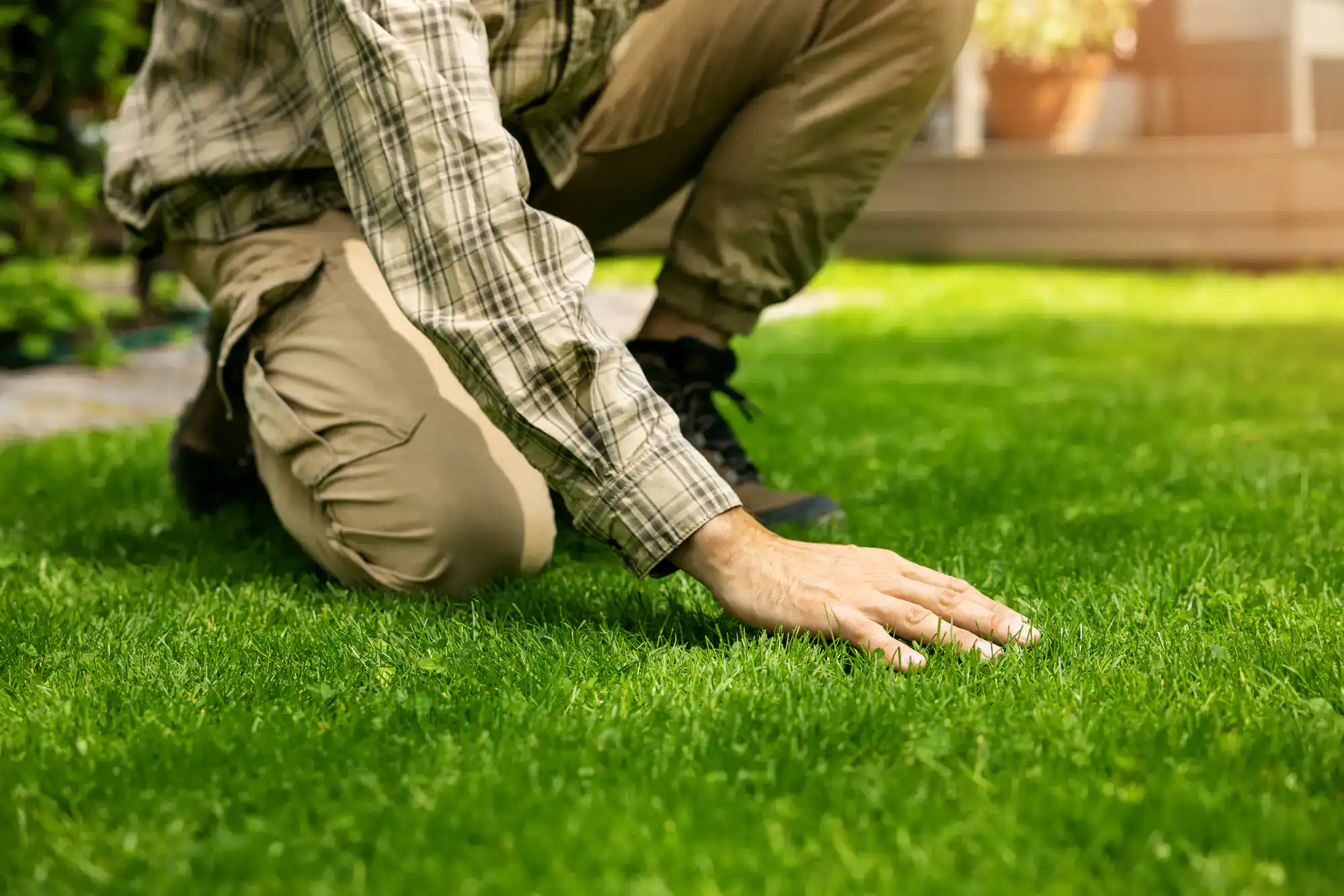
Once you’ve addressed immediate tree hazards, the next priority is what’s covering your lawn. Debris — branches, leaves, palm fronds, displaced mulch — blocks sunlight and traps moisture against the turf. Within 24 to 48 hours, that coverage starts killing the grass underneath it. What looks like storm damage to the lawn is sometimes just debris damage, and it’s preventable if you move quickly.
The bigger concern in a Gulf Coast county like Citrus County is saltwater. When storm surge reaches inland — as it did during Hurricane Helene — saltwater doesn’t just flood the surface. It penetrates the root zone, displaces nutrients, and pulls moisture away from grass roots. The lawn can look brown and destroyed within days. Whether that grass is dead or dormant depends on how quickly you respond.

This is the question we hear most often after a major storm, and the honest answer is: it depends on what happened to it and how fast you act. St. Augustine grass, bermudagrass, and zoysiagrass — the most common turf varieties in Citrus County — all have moderate salt tolerance. That means they can recover from saltwater exposure, but the window is short and the process has to be done correctly.
If saltwater reached your lawn, the first step is flushing. Running your irrigation system with freshwater dilutes the salt concentration in the soil and gives the root zone a chance to recover. The key word there is “if your irrigation system is working” — we’ll get to that. If you don’t have irrigation, hand watering with a hose is better than nothing, but coverage is uneven and the volume needed is significant.
What you should not do right after a storm is fertilize. Fertilizer contains sodium, and adding sodium to a lawn already stressed by saltwater makes the problem worse, not better. Wait until the soil has had time to dry out and you’ve had a chance to assess what’s actually recovering before you apply anything. The same goes for mowing — running a mower over saturated soil creates ruts that compress the root zone and make recovery harder. Let the lawn dry completely before you cut it.
For lawns that took a direct hit from prolonged flooding or heavy debris coverage, some sections may not come back. Brown patches that show no new growth after two to three weeks are likely dead rather than dormant. At that point, aeration, fresh soil amendment, and sod replacement are the path forward. UF/IFAS recommends gypsum application — roughly 50 pounds per 1,000 square feet — to help displace salt ions from the soil before replanting. It’s a specific step that makes a real difference in how well new sod establishes.
Citrus County’s sandy soil actually works in your favor here. Sandy soil drains faster than clay, which means saltwater moves through the root zone more quickly with active flushing. The flip side is that sandy soil also loses nutrients faster, so once the salt is gone, the lawn will need thoughtful restoration to rebuild what the storm stripped out.
Two things that often get overlooked in the first post-storm sweep: hardscape surfaces and irrigation systems. Both can look fine from the outside while carrying damage that gets worse the longer it goes unaddressed.
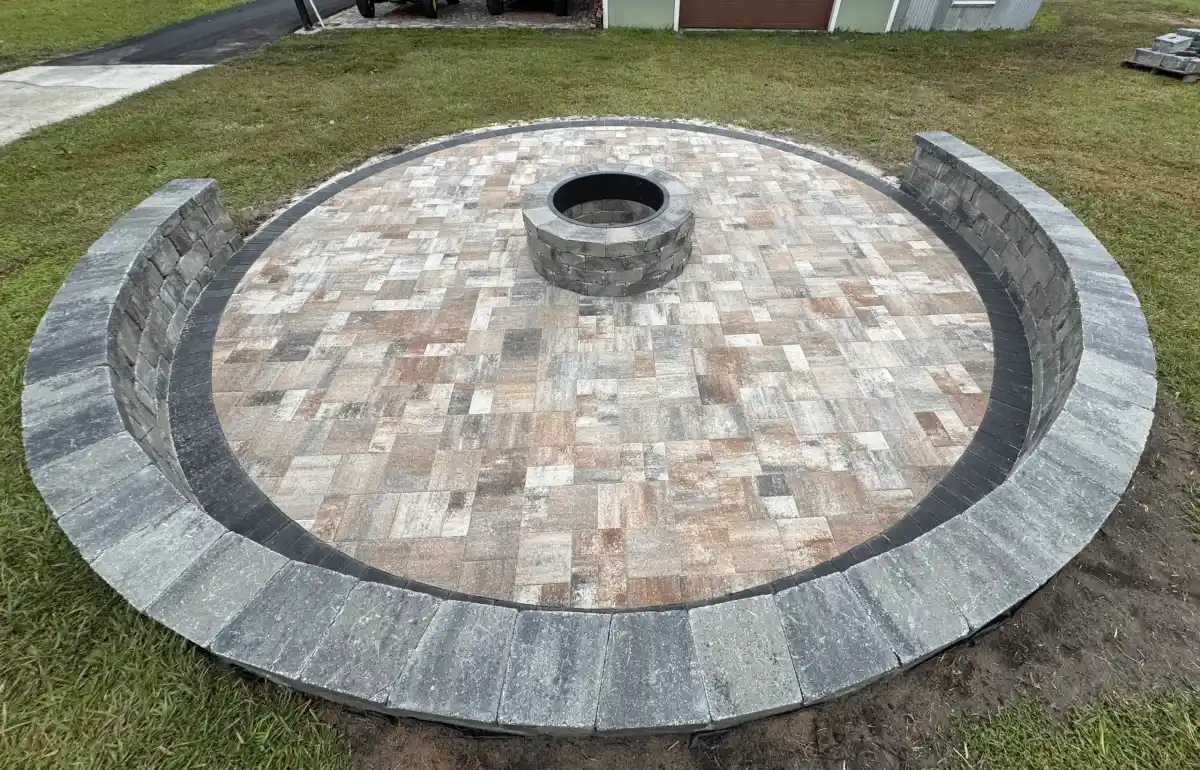
With pavers — driveways, walkways, pool decks, patios — the concern isn’t usually the surface. It’s what’s underneath it. Heavy rain and flooding wash out the joint sand that holds pavers in place and locks the surface together. When that sand erodes, individual pavers start to shift, the surface becomes uneven, and the drainage pattern the installation was designed around gets disrupted. You may not see it immediately, but you’ll feel it underfoot within a few weeks as settling progresses. If you notice pavers that rock when you step on them, visible gaps between units, or sand washing out from the joints, that’s not cosmetic — it’s a base issue that needs attention before it compounds.
As Citrus County’s exclusive Seal ‘n Lock distributor and an authorized contractor for Tremron, Flagstone, and Belgard, we handle paver restoration after storm damage regularly. A proper post-storm paver assessment looks at joint sand integrity, base stability, and whether the drainage slope has been affected — not just whether the surface looks level. Surface appearance is often the last thing to show a problem.
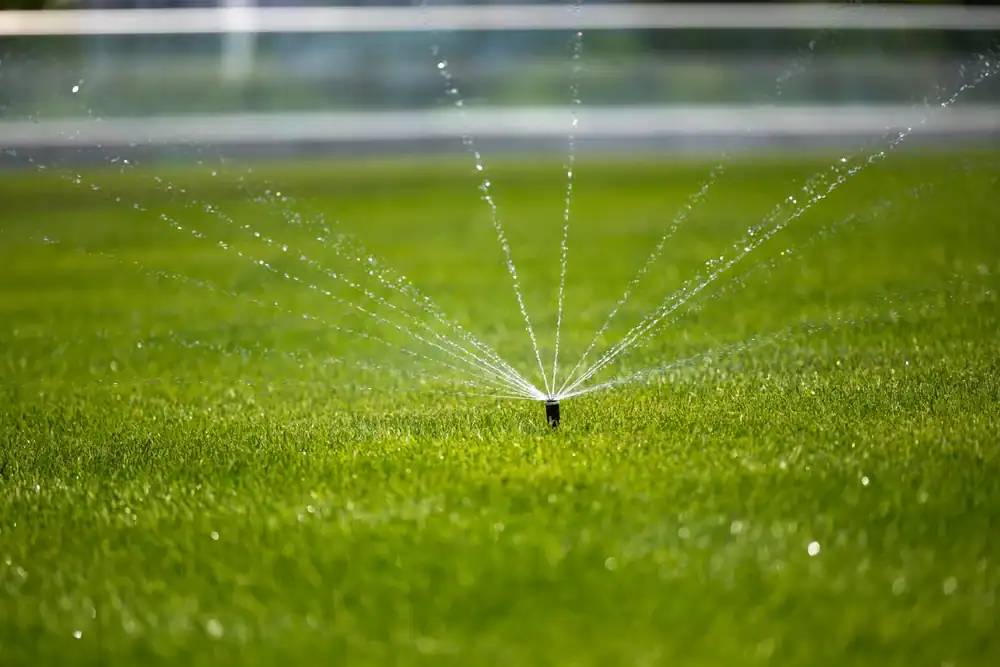
For irrigation, the first question is whether the system itself took damage. Flooded control boxes, shifted or broken heads, and debris-impacted lines are all common after a storm. Before you run the system to flush saltwater from your lawn — which, as noted above, is one of the most important early recovery steps — you want to know the system is intact. A broken head running at full pressure can erode a planting bed or wash out paver joint sand faster than the storm did. We’re a state-licensed irrigation contractor, which means we can assess and repair the system as part of the same visit where we’re evaluating the rest of your yard. That matters when you’re trying to move quickly and not coordinate five different companies.
One practical note for Citrus County homeowners: the county has specific irrigation watering restrictions, and post-storm emergency flushing may fall outside your normal permitted schedule. It’s worth a quick check before you run extended cycles, or ask your contractor to advise on what’s appropriate given current conditions.
The frustration most homeowners run into after a storm isn’t just the damage — it’s the coordination. The tree company doesn’t do lawn restoration. The lawn company doesn’t touch pavers. Nobody wants to deal with the irrigation. You end up making four calls, waiting on four schedules, and trying to sequence work that’s supposed to happen together.
That’s the problem we built our business to solve. Trees, turf, hardscape, irrigation, landscape beds — we handle all of it, which means one assessment, one point of contact, and a recovery plan that treats your yard as a whole rather than a collection of separate problems.
If your yard took a hit from the last storm, or you want to be ready before the next one, reach out to Mainstreet Landscaping. We’ve been in Citrus County since 1995, and post-storm recovery is something we know from the ground up.
Article details:
Share:
Continue learning: