
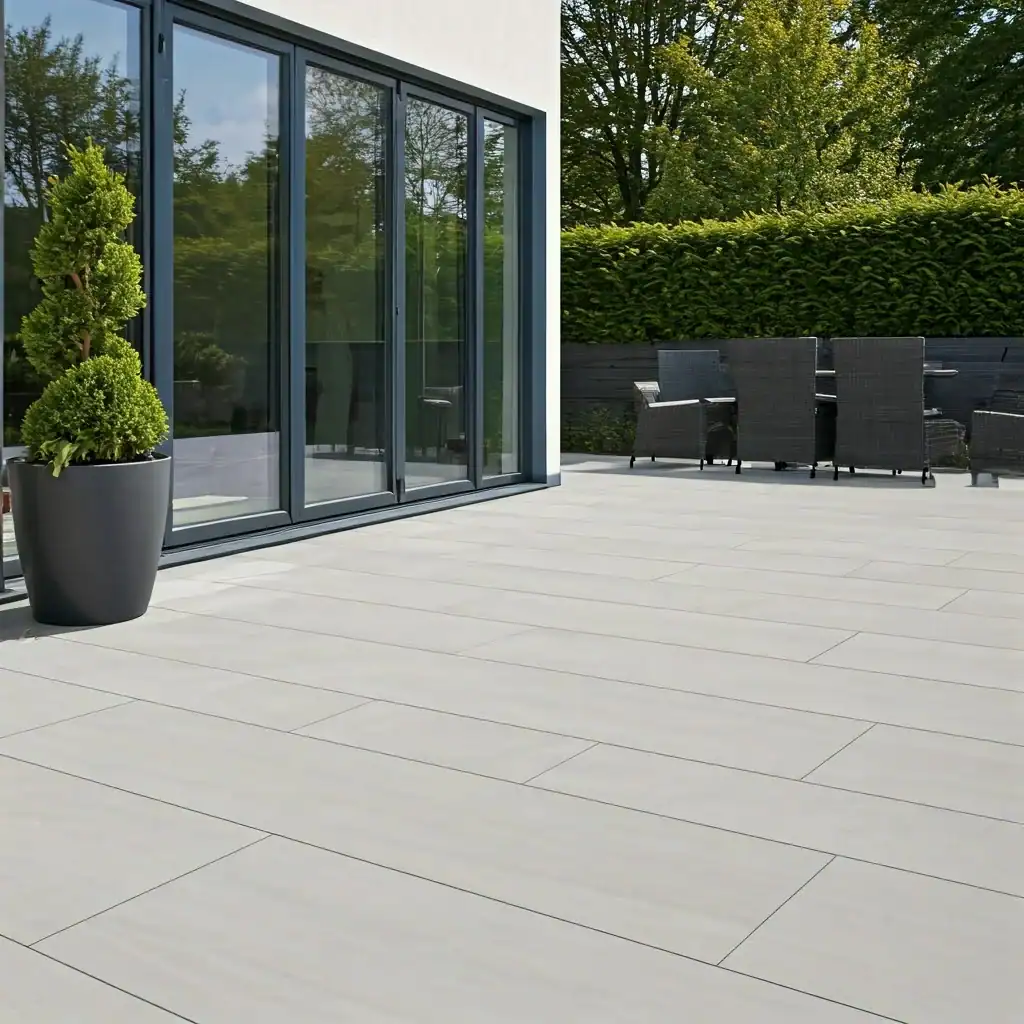
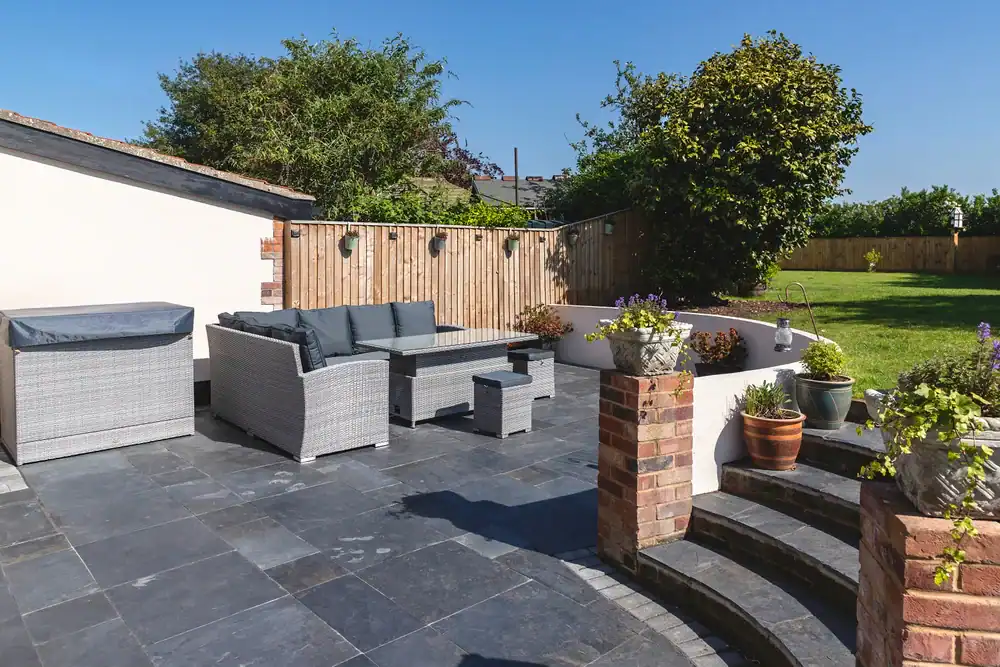
You get an outdoor space that doesn’t crack like concrete after one rainy season. Pavers flex with Florida’s soil movement and temperature swings instead of fighting against them.
Your mornings look different when you’re not staring at a deteriorating slab. You’re enjoying coffee on a surface that still looks clean, level, and intentional years after installation.
The drainage works. Water doesn’t pool after summer storms because the base was built correctly from the start. That means no standing water, no mosquito breeding grounds, and no erosion eating away at your investment.
You’re not calling someone back out to fix settling or shifting. Proper compaction and base prep mean the surface stays even. And if you ever need to access utilities underneath, individual pavers lift out and go back in without leaving a patch job.
This is what happens when the installation is done right. Your outdoor living space actually lives up to what you paid for it.
We’ve been working in Citrus County for nearly 30 years. We know what Sugarmill Woods soil does to improperly installed hardscapes. We’ve seen what shortcuts look like three years later.
We’re authorized contractors for Tremron, Flagstone, and Belgard, which means we’re trained on proper installation methods and have access to materials that actually hold up here. We’re also the only Seal ‘n Lock distributor in the county, so your pavers get protection that keeps them looking new longer.
You’re working with people who’ve been doing this in your neighborhood since before paver patios were the standard. We’re not learning on your property.
First, we look at your yard’s drainage and grade. Florida gets 50+ inches of rain a year, and Sugarmill Woods is no exception. If water doesn’t move away from your patio, nothing else matters. We map out where water goes before we dig.
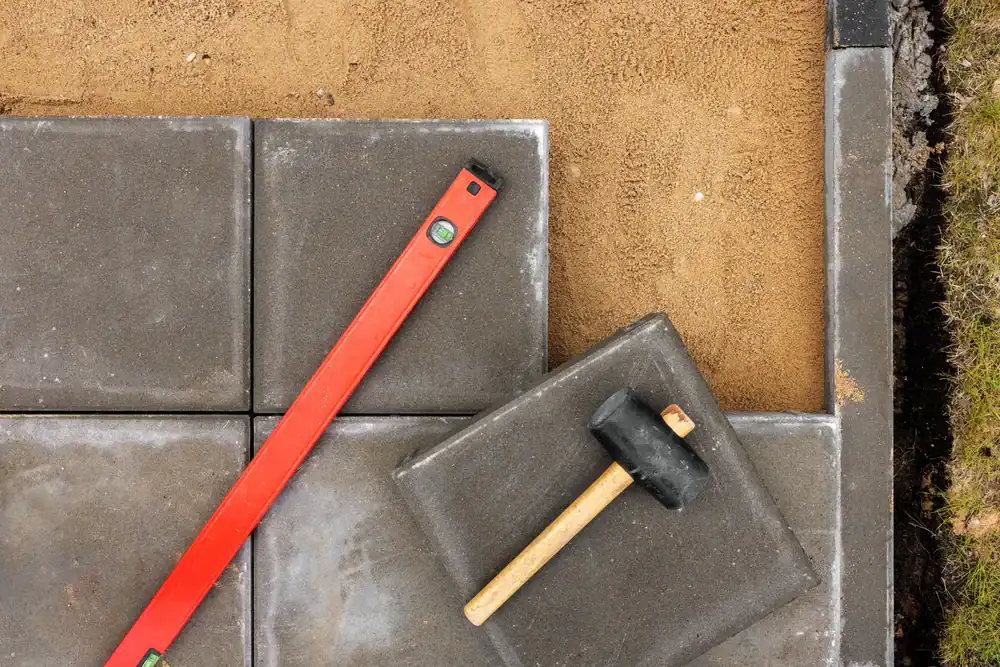
Then comes excavation and base prep. We remove enough soil to fit 4-6 inches of compacted base material, depending on your soil type and what the patio will support. This base gets compacted in layers, not all at once. That’s the difference between a patio that settles and one that doesn’t.
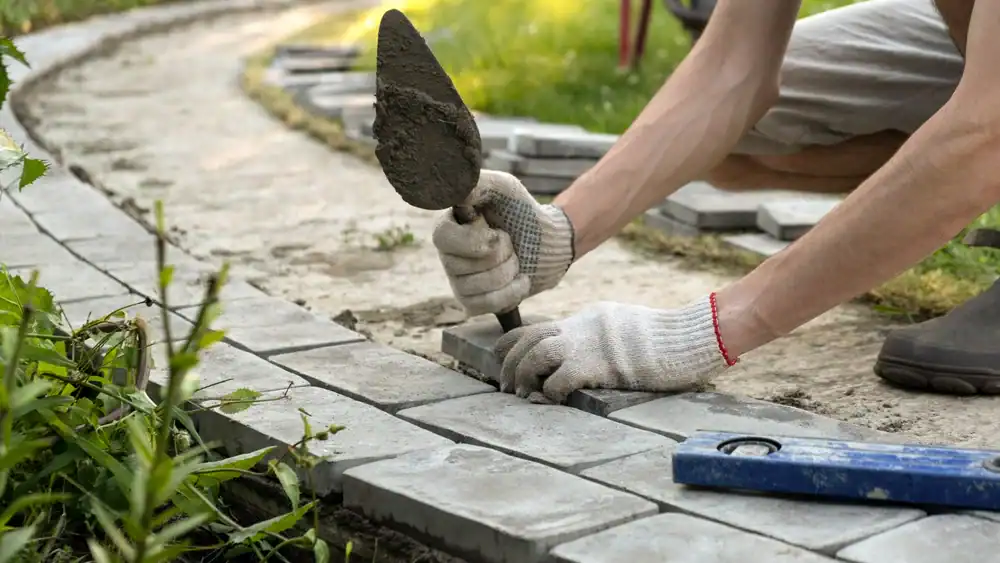
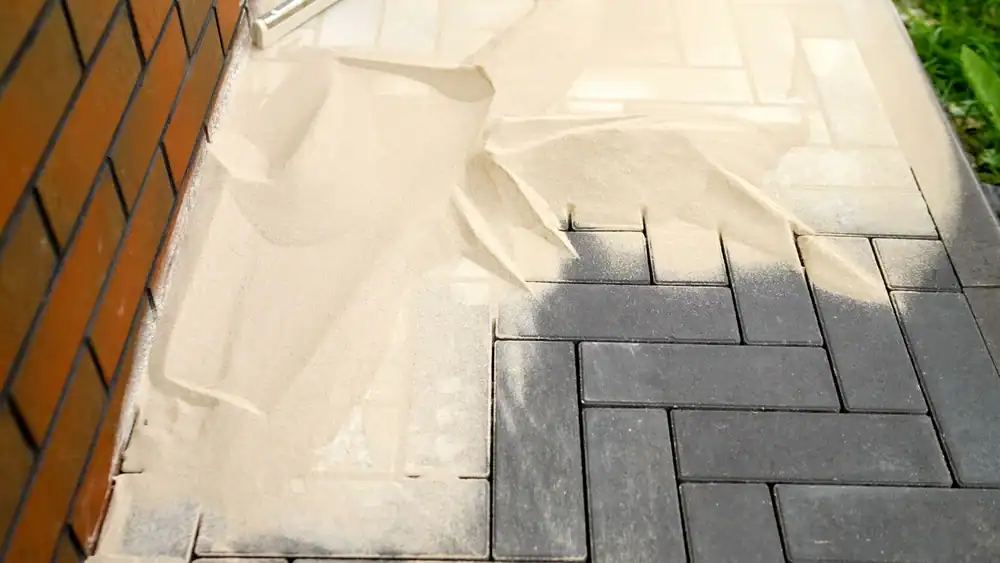
The pavers go down on a leveling sand bed, cut and fit to your space. Edges get restrained so nothing shifts outward over time. Joints get filled with polymeric sand that locks everything together and keeps weeds out.
Finally, we clean and seal if you want that extra protection. Sealing isn’t required, but it does make cleaning easier and helps color stay vibrant under UV exposure.
The whole process typically takes 40-50 hours depending on size and complexity. You’ll know the timeline before we start.
Ready to get started?
You get proper site assessment and grading so water moves away from your home and doesn’t pool on the patio. This matters more in Sugarmill Woods than people realize—our water table is high, and summer storms are intense.
Base preparation includes the right depth for your soil conditions and intended use. Pool decks need different base specs than a simple sitting area. We adjust for what you’re actually building.
Professional-grade materials come standard. We install Tremron, Belgard, and Flagstone pavers—brands that warranty their products and have a track record in coastal Florida. You’re not getting big-box store pavers that fade in two years.
Edge restraint and polymeric sand jointing keep everything locked in place. Without proper edging, pavers shift outward. Without polymeric sand, you get weeds and ant hills in every joint.
Optional Seal ‘n Lock protection adds a layer of defense against stains, fading, and moisture penetration. It’s not required, but most Sugarmill Woods homeowners choose it because it cuts maintenance time significantly.
The work comes with our quality guarantee. If something’s not right, we come back and make it right. We’ve been here since 1995—we’re not disappearing after the job.
A properly installed paver patio lasts 25-50 years in Florida, sometimes longer. The key word is “properly installed.”
Pavers themselves are incredibly durable. They’re designed to handle freeze-thaw cycles up north, so Florida’s heat and humidity don’t break them down. What fails is usually the installation—poor base prep, inadequate compaction, or wrong materials for the soil type.
In Sugarmill Woods specifically, you’re dealing with sandy soil and a high water table. That means the base needs to be thicker and better compacted than it would be in other parts of the country. Shortcuts here show up fast—usually within the first year when you see settling or shifting after rainy season.
The pavers we install from Tremron, Belgard, and Flagstone are manufactured to withstand UV exposure without significant fading. Sealed pavers hold their color even better. You’re looking at decades of use if the foundation is right.
Concrete cracks. Pavers don’t. That’s the short answer, and it’s the one that matters most in Florida.
Concrete is rigid, so when soil shifts or tree roots push or temperature changes cause expansion, the concrete has nowhere to go except crack. And once it cracks, water gets in, which makes the crack worse. Repairs mean cutting out sections and patching, which never matches and often cracks again.
Pavers are individual units with joints between them. When soil moves, pavers adjust without cracking. If you ever need to access plumbing or irrigation lines underneath, you lift out the pavers, do the work, and put them back. Try that with concrete.
Drainage is better with pavers too. Water can permeate through the joints instead of sitting on top or running off to places you don’t want it. In a place like Sugarmill Woods where summer storms dump inches of rain in an hour, that drainage matters.
Cost-wise, pavers are more upfront but cheaper long-term. Concrete might save you money initially, but you’ll pay for repairs. Pavers typically return 65-70% of their cost in property value. Concrete slabs don’t move the needle much.
Most paver patios in Sugarmill Woods run between $2,400 and $7,000, with the average around $3,800 for a 280-square-foot space. But that range is wide because a lot of factors affect price.
Size is obvious—bigger costs more. But shape matters too. A simple rectangle is less labor than a curved design with multiple levels. Material choice plays a role. Standard pavers cost less than premium Tremron or Belgard options, but they also don’t hold up as well or look as good five years later.
Site conditions affect cost. If your yard has drainage issues that need correcting first, that adds to the project. If we’re removing an old concrete patio before installing pavers, that’s additional labor and disposal cost.
Extras like sealing, lighting, or built-in fire features increase the total. But these aren’t upsells—they’re options that genuinely improve how you use the space.
We give you an exact quote after seeing your property. No ballpark guesses. You’ll know what you’re paying and what you’re getting before any work starts.
No. Pavers are one of the lowest-maintenance outdoor surfaces you can install, especially compared to wood decks or concrete.
Regular maintenance means sweeping off leaves and debris, which you’d do with any outdoor surface. A hose or pressure washer handles most cleaning. If you get a stain—oil, rust, organic matter—it usually comes up with appropriate cleaner. Individual stained pavers can be replaced if needed.
Polymeric sand in the joints keeps weeds from sprouting and ants from building homes between pavers. It lasts years before needing a touch-up. When it does need refreshing, it’s a straightforward process.
Sealing is optional but recommended every 2-3 years if you want maximum protection and easiest cleaning. Sealed pavers resist stains better and keep their color longer under Florida sun. But even without sealing, quality pavers hold up fine—they just might need more scrubbing if something spills.
The biggest maintenance issue we see is when pavers weren’t installed correctly to begin with. If the base settles or edges weren’t restrained, you get shifting and unevenness. That requires repair, not maintenance. Proper installation from the start eliminates that problem.
Late fall through winter is ideal for paver installation in Sugarmill Woods. The weather is cooler and drier, which makes for better working conditions and optimal base compaction.
Cooler temperatures mean the base material compacts more predictably. In summer heat, materials can behave differently, and working in 95-degree heat with high humidity isn’t great for precision work. Winter gives us more control over the installation process.
Drier weather matters because we need the base to be at the right moisture level for compaction. Too wet and it doesn’t compact properly. Too dry and it doesn’t bind together. Winter months give us more consistent conditions.
There’s also a practical advantage: demand is lower in winter, so scheduling is easier and you might find better pricing. Summer is busy season for outdoor projects. Winter means we can often start sooner and give your project more focused attention.
That said, we install pavers year-round. If you need it done in summer, we make it work. The installation just requires more attention to moisture levels and timing around afternoon storms. The end result is the same—it just takes more planning during rainy season.
Yes. Pavers are actually one of the most hurricane-resistant outdoor surfaces you can install. They’re individual units, heavy, and interlocked—wind can’t lift them like it can patio furniture or loose materials.
Each paver weighs enough that it stays put in high winds. The polymeric sand jointing and edge restraint lock them together into a unified surface. We’ve been through multiple hurricane seasons in Citrus County since 1995, and properly installed pavers hold up remarkably well.
Heat isn’t an issue either. Pavers are designed to handle temperature extremes. They won’t crack from thermal expansion like concrete does. Some pavers get hot to walk on barefoot in direct summer sun, but lighter colors reflect more heat and stay cooler. That’s a selection choice, not a durability issue.
Heavy rain and flooding are where proper installation really shows its value. If the base was built correctly with appropriate drainage, water moves through and away from the patio. The surface doesn’t erode or wash out. We’ve seen improperly installed patios fail after one major storm. The ones we install are built to handle whatever Florida throws at them.
The only real weather consideration is falling debris during storms—branches, roof tiles, etc. But that damages any outdoor surface. Pavers have the advantage that if one breaks, you replace that one paver. You don’t have to redo the whole patio.
Useful Links
Other Services we provide in Sugarmill Woods