
Your pool deck won’t crack like concrete. It won’t sink after the next storm. And you won’t burn your feet walking to the water on a July afternoon.
That’s what happens when pool pavers in Center Hill are installed with Florida-specific base preparation. The kind that accounts for our sandy soil, heavy rains, and temperature swings that make other states’ methods fail here within two years.
You get a surface that drains properly. Pavers that stay level. Materials that resist algae and stay cooler underfoot. And if one ever does crack, you replace that single paver instead of jackhammering an entire slab.
This isn’t about making your backyard look nice. It’s about building something that actually lasts in Citrus County’s climate while keeping your family safe around the water.
We’ve spent nearly 30 years learning what works in Citrus County and what doesn’t. We’re certified installers for Tremron, Flagstone, and Belgard, and we’re the only Seal ‘n Lock distributor in the county.
That matters because we’re not experimenting with your property. We know which base depth prevents settling in Center Hill’s soil. We know which pavers handle our sun without becoming unusable by noon. And we know the HOA requirements throughout Citrus, Sumter, Marion, and Hernando Counties.
We’re a family-owned business. We’re state-licensed. And we’ve built our reputation by doing the job right the first time so you don’t have to call someone else to fix it three years later.
First, we excavate and build a proper base. In Florida, that means going deeper than most contractors think is necessary. Shallow bases are the number one reason pool pavers fail early here. We’re working with sandy soil and seasonal flooding, so the base has to be engineered for that.
Next, we grade for drainage. Water has to move away from your pool and your house. Poor drainage causes pavers to shift, sink, or flood. We slope everything correctly before a single paver goes down.
Then we install your chosen pavers with the right joint spacing and edge restraints. This isn’t decorative. It’s structural. Proper restraints keep your deck from spreading during storms.
Finally, we apply polymeric sand and sealant. The sand locks pavers in place. The sealant protects against stains, algae, and UV damage. Both are specific to Florida’s climate and have to be applied under the right conditions or they fail.
You’re left with a pool deck that handles our weather and looks exactly how you wanted it.
Ready to get started?
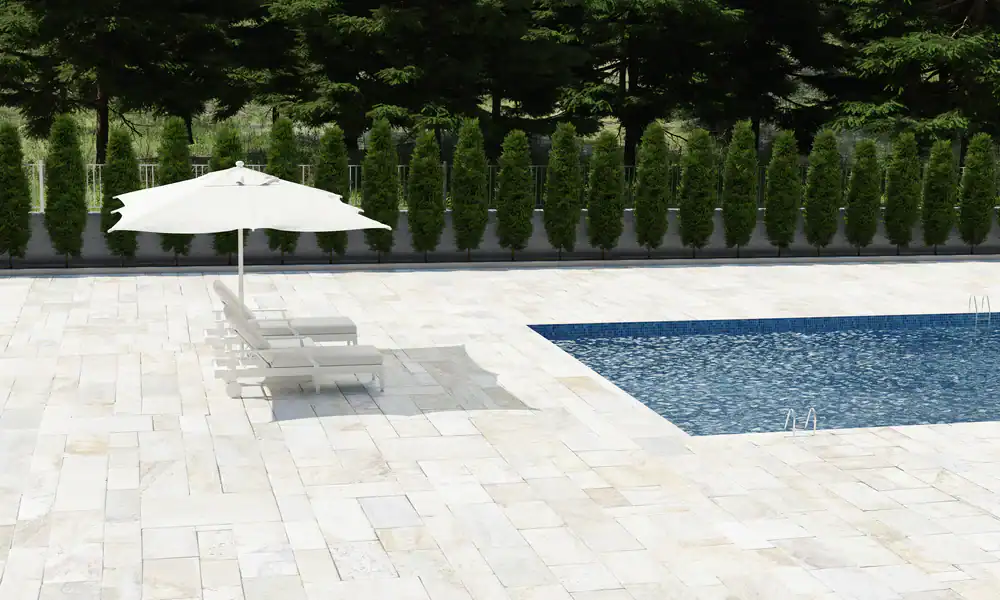
You’re getting travertine or porcelain pavers that stay cool in direct sun. That’s not marketing language. Travertine reflects heat instead of absorbing it, which is why it’s the most popular choice for swimming pool deck pavers in Florida.
You’re getting slip-resistant surfaces that meet safety standards around water. Textured pavers with proper drainage channels reduce standing water and improve traction when wet.
You’re getting materials that won’t crack under temperature changes. Florida goes from 95 degrees to a thunderstorm in 20 minutes. Pavers flex. Concrete doesn’t. That’s why nearly 57% of Florida homeowners who renovate their patios choose pavers over poured surfaces.
And you’re getting access to premium materials through our manufacturer partnerships. As certified Tremron, Flagstone, and Belgard installers, we can source pavers that aren’t available at big box stores and back them with real warranties.
This is about building something that works in Center Hill’s specific conditions. Not just something that looks good in a brochure.
Shallow base preparation. That’s the main reason. Contractors from other states use installation methods that work fine in stable soil and mild climates. Those same methods fail here because Florida has sandy soil, heavy seasonal rains, and ground movement from temperature swings and storms.
When the base isn’t deep enough or properly compacted, pavers start sinking or heaving within two years. You’ll see low spots that collect water. You’ll see edges that lift. And you’ll see joints that separate as the ground shifts underneath.
The fix isn’t cheap because it means tearing everything out and starting over with proper excavation and base materials. That’s why the installation matters more than the pavers themselves. Beautiful materials on a bad base will always fail in this climate.
Travertine stays cooler than most other paver materials when exposed to direct Florida sun. The stone’s natural composition reflects heat instead of absorbing it. That means you can walk barefoot on your pool deck in July without burning your feet.
It’s also naturally slip-resistant because of its textured surface. That texture provides traction even when wet, which is exactly what you need around a pool. And travertine is porous, so water drains through it instead of pooling on top.
The durability matters too. Travertine handles Florida’s humidity, salt air if you’re near the coast, and temperature fluctuations without breaking down. It won’t fade like some pavers do under constant UV exposure. And if you ever need to replace one, travertine pavers are easy to pull and swap out without disturbing the surrounding area.
Most pool deck paver projects in Citrus County run between $15 and $30 per square foot installed. That range depends on the material you choose, the size of your deck, site access, and how much prep work is needed.
Travertine typically costs more than concrete pavers but less than premium porcelain. If your yard has drainage issues or needs significant grading, that adds to the cost. If we’re removing old concrete or pavers first, that’s additional labor and disposal.
Here’s what matters: cheaper installations almost always mean shortcuts on the base. And in Florida, that base is everything. You can save $3 per square foot now and spend $20 per square foot in three years to fix a failed installation. Or you can pay for proper excavation, compaction, and materials once and have a deck that lasts 20+ years.
We give you an exact quote after seeing your property. No surprises, no upselling. Just what your specific project actually requires.
Sometimes, but only if the existing concrete is in good condition. If your concrete is cracked, settling, or has drainage problems, installing pavers over it just transfers those problems to your new surface. You’ll end up with pavers that follow the same cracks and slopes.
If the concrete is solid and level, we can install a thin paver overlay system. This uses pavers specifically designed to go over concrete with minimal height increase. We still have to ensure proper drainage and make sure the existing slab can support the additional weight.
Most of the time, removing the old concrete and starting fresh is the better choice. It costs more upfront, but it lets us build the proper base for Florida conditions. You get better drainage, better longevity, and you’re not gambling on the condition of what’s underneath. We’ll assess your existing deck and tell you honestly which approach makes sense for your situation.
Most pool deck installations take one to two weeks depending on size and complexity. A standard 500-square-foot deck around an average pool usually takes about a week. Larger decks, complex patterns, or projects that include other hardscaping features take longer.
Weather affects the timeline because we can’t install pavers or apply polymeric sand in the rain. We also can’t seal pavers if rain is forecast within 24 hours. In Florida, that means we sometimes have to pause and wait for the right conditions. Rushing those steps causes failures.
Demo and base prep take the most time. That’s where the quality of the installation is determined. Once the base is right, the actual paver installation moves quickly. We’re not going to cut corners on the foundation just to finish faster.
We’ll give you a realistic timeline when we quote your project. And we’ll keep you updated if weather or site conditions change that timeline. You’ll know what’s happening and why.
Yes, and here’s why. Sealing protects your pavers from stains, algae growth, UV fading, and moisture penetration. Around a pool, you’re dealing with chlorine, sunscreen, drinks, and constant water exposure. Unsealed pavers absorb all of that.
The right sealer also enhances the color of your pavers and makes them easier to clean. Dirt and organic material sit on the surface instead of soaking in. A quick rinse keeps them looking new instead of requiring aggressive scrubbing.
In Florida’s climate, you should reseal every two to three years depending on sun exposure and traffic. That maintenance is simple and inexpensive compared to replacing stained or deteriorated pavers. We use sealers designed specifically for Florida’s UV intensity and humidity levels.
We seal your pavers as part of the installation. Then you just maintain that seal on a regular schedule. It’s the easiest way to protect your investment and keep your pool deck looking the way it did the day we finished.
Useful Links
Other Services we provide in Center Hill